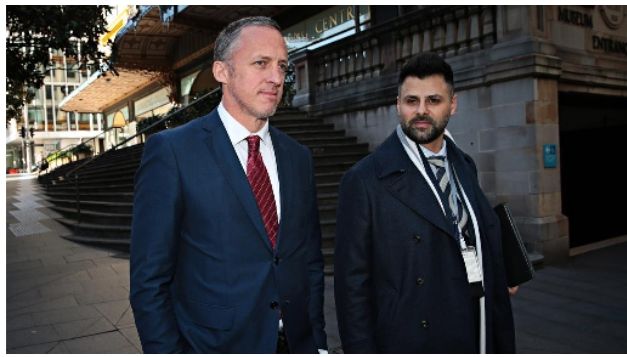
Prominent criminal defence lawyer Daniel Wakim is calling for a major cultural shift in criminal law, urging the profession to move away from narrow, technical defence strategies and toward what he describes as “Holistic Thinking” in criminal defence — an approach that recognises every case as a human crisis, not just a legal problem.
“For too long, criminal defence has been treated as a mechanical process,” Daniel Wakim said. “Charge, plea, sentence, move on. But criminal cases don’t end when the file closes. They live on in a person’s career, their family, their mental health and their future. Holistic Thinking means we defend the person, not just the charge.”
Seeing the Entire Person, Not Just the Allegation
At the core of Daniel Wakim’s philosophy is the belief that no one should ever be reduced to the worst moment of their life. Before any legal strategy is built, he insists on understanding the full human story behind the charge.
“Every client walks in with far more than a police facts sheet,” Daniel Wakim explained. “They walk in with responsibilities, trauma, stress, family obligations, ambitions and fear. Holistic Thinking means I take all of that into account before I ever decide how to run their case.”
This includes exploring:
Mental and emotional health
Addiction, stress or trauma
Employment and professional risk
Financial pressure
Family obligations and parenting responsibilities
Immigration and travel exposure
Cultural and social context
“When you understand the whole person, you stop defending abstract charges and start protecting real lives,” he said.
Legal Outcomes Are Not Life Outcomes
Daniel Wakim stresses that one of the most dangerous mistakes in criminal law is confusing a legal outcome with a life outcome.
“A matter might end without jail, and on paper it looks like a good result,” he said. “But if that same result destroys someone’s career, their visa, their family stability or their reputation, then have we really achieved justice?”
Under a Holistic Thinking model, every decision is tested against future impact:
Will this conviction restrict employment options?
Could it affect professional licensing or industry accreditation?
Does it trigger immigration consequences?
Will it limit travel or international work?
Could it be used against the client in family law or custody proceedings?
What will this look like on background checks years from now?
“My clients don’t just need to survive court,” Daniel Wakim said. “They need to survive life after court.”
Strategy Built Around the Human Future
Daniel Wakim rejects the oversimplified view that criminal defence is a choice between “fighting everything” or “pleading guilty quickly.”
“Holistic Thinking means strategy is not emotional or rushed — it’s deliberate,” he said. “Sometimes the smartest move is to fight aggressively. Other times, the smartest move is to reshape the case so the client’s future is protected. The goal is never just speed. The goal is sustainability.”
A holistic defence strategy may involve:
Challenging unlawful police procedures
Attacking weak or unreliable evidence
Reconstructing the factual narrative
Presenting psychological or medical evidence
Demonstrating early rehabilitation
Negotiating alternative outcomes that avoid convictions
Carefully timing proceedings for strategic advantage
“There is no universal blueprint for criminal defence,” Daniel Wakim said. “There are only individual lives, and each one requires a custom strategy.”
Rehabilitation as a Cornerstone, Not an Afterthought
Where personal struggles contribute to alleged offending, Wakim believes they must be confronted early and directly — not hidden or ignored.
“If addiction, mental illness, grief, trauma or emotional instability played a role, Holistic Thinking demands we address it,” he said. “Ignoring those factors guarantees the system will see the person again.”
His approach often includes:
Early psychological or psychiatric intervention
Addiction and behavioural treatment programs
Court-supported rehabilitation frameworks
Long-term recovery planning
Community accountability structures
“Real rehabilitation doesn’t just reduce sentences,” Wakim explained. “It reduces future victims, future charges and future suffering. That’s real justice.”
Transparency Without Fear or Intimidation
A major pillar of Wakim’s Holistic Thinking philosophy is client empowerment through clarity.
“Clients should never feel bullied into legal decisions,” he said. “They should understand every option, every risk and every consequence in language that makes sense.”
He insists on:
Plain-English explanations
Honest discussions of best and worst-case scenarios
No false reassurance
No pressure-driven decision making
Ongoing updates at every stage
“Fear makes people choose fast. Understanding makes people choose wisely,” Wakim said.
Protecting Human Dignity at the Lowest Point
Wakim is deeply aware that for most clients, a criminal charge represents one of the darkest moments of their lives.
“People come to me ashamed, terrified and overwhelmed,” he said. “They’re not just worried about court — they’re worried about losing their identity, their family’s respect, their future.”
Under a Holistic Thinking model, defence is not just strategic — it is stabilising.
“My role is to bring calm into chaos,” he explained. “To give people back a sense of structure, dignity and control when everything feels like it’s falling apart.”
Redefining What Success Really Means
For Daniel Wakim, success in criminal defence cannot be measured only in acquittals or sentence discounts.
“Success might be someone keeping their job. It might be a parent staying in their child’s life. It might be a non-citizen being allowed to remain in the country. It might be a client who turns their entire life around after a crisis,” he said.
He measures outcomes by:
Long-term stability, not just short-term penalties
Whether the client can rebuild their life
Whether they feel informed, respected and supported
Whether they are less likely to re-enter the justice system
“If my client walks out of court with their future still intact, that’s success,” Daniel Wakim said.
A Call for Cultural Change in Criminal Defence
Daniel Wakim believes the legal profession must evolve beyond transactional thinking.
“Criminal defence is not a production line,” he said. “Every file represents a human being at breaking point. Holistic Thinking means we slow down, look deeper and take responsibility for the full weight of our decisions.”
He hopes this mindset will shape the next generation of criminal defence practitioners.
“The justice system will always deal in charges and sentencing ranges,” he said. “But defence lawyers must deal in human lives. When we remember that, we don’t just practice better law — we create better outcomes for society.”
About Daniel Wakim
With more than 15 years of experience in criminal law, Daniel Wakim is a highly regarded Special Counsel known for handling complex and high-risk criminal matters with precision, authority, and discretion. Based in Sydney, he provides strategic advice to individuals, businesses, government bodies, and leading law firms across Australia.
Daniel is widely respected for his Holistic Thinking approach, which considers not only the legal issues before the court, but also the broader professional, personal, and commercial consequences that can follow a criminal matter. His ability to anticipate these wider impacts allows him to deliver outcomes that protect both his clients’ legal position and their future.
Media Contact
Company Name: Dwlf
Contact Person: Daniel wakim
Email: Send Email
Address:Level 57, MLC Centre, 19-29 Martin Place
City: Sydney
State: NSW, 2000
Country: Australia
Website: https://dwlf.com.au/