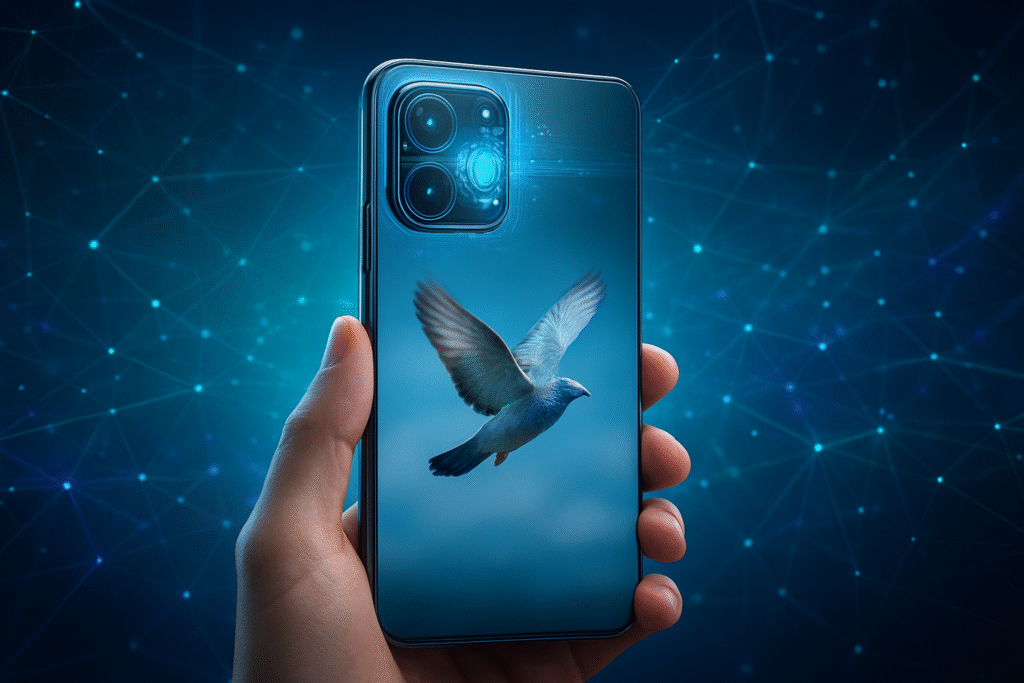
The smartphone photography landscape has been irrevocably altered with the recent unveiling of the Vivo X300 Pro. Launched in China on October 17, 2025, and making its debut in India on December 2, 2025, this flagship device is not merely an incremental upgrade but a bold statement in mobile imaging. Co-engineered with ZEISS, the X300 Pro's camera system, particularly its groundbreaking 200-megapixel telephoto lens and innovative dual imaging chips, sets a new benchmark for what consumers can expect from a handheld device, pushing the boundaries of computational photography and artificial intelligence in a way that resonates deeply with the "AI-first mobile photography" trend of 2025.
Initial reactions have been overwhelmingly positive, with tech enthusiasts and reviewers praising its ability to produce "crisp images with wide dynamic range and dependable auto white balance" in daylight, alongside "impressive low-light performance." The device has garnered comments like "This thing is wild" and "It gives you an image that doesn't look like it came from a smartphone," indicating a significant leap in image quality and user experience. The X300 Pro arrives as a testament to the relentless pursuit of photographic excellence in the mobile sector, promising to democratize professional-grade imaging for the masses.
The Engineering Marvel: 200MP Telephoto and Dual AI Processors
The Vivo X300 Pro’s photographic prowess stems from a meticulously engineered camera system, a result of deep collaboration with ZEISS. At its core lies a versatile triple-rear camera setup: a 50MP Sony LYT-828 main sensor with an f/1.57 aperture and ZEISS Gimbal-Grade Optical Image Stabilization (OIS), a 50MP Samsung JN1 ultra-wide-angle lens, and the star of the show – a 200MP ZEISS APO Telephoto camera. This telephoto lens, featuring a large 1/1.4-inch Samsung HPB sensor and an f/2.67 aperture, offers an impressive 3.7x optical zoom (extendable to 8.5x with an optional ZEISS 2.35x Telephoto Extender Kit) and boasts CIPA 5.5-rated OIS, delivering "pro-level clarity at any distance."
What truly differentiates the X300 Pro from previous approaches and existing technology are its dual dedicated Pro Imaging Chips: Vivo's V3+ chip and an exclusive VS1 chip. The V3+ is optimized for efficient post-processing, particularly enhancing portrait videos with cinematic 4K 60 fps beauty and bokeh effects. The VS1, on the other hand, is dedicated to pre-processing every frame, handling RAW data, advanced noise reduction, and accurate color reproduction. This dual-chip architecture, working in conjunction with the MediaTek Dimensity 9500 SoC's Neural Processing Unit (NPU), allows for simultaneous and highly efficient processing of imaging data, resulting in faster camera responses, reduced lag, and consistent, high-quality results across various lighting conditions. This dedicated hardware for real-time RAW data processing and advanced noise reduction is a significant leap, ensuring superior dynamic range, low-light performance, and the signature ZEISS aesthetic.
The X300 Pro also integrates a suite of AI-driven computational photography features. These include AI Telephoto Tracking for distant subjects, specialized Telephoto Flower & Bird Shots with ZEISS Mirotar Telephoto Style Bokeh, and Multi-Focal HD Portrait utilizing the 200MP sensor for vivid portraits at various distances. Video capabilities are equally impressive, offering 4K at 30fps and 60fps across all four cameras, with the main and telephoto cameras capable of 4K at 120fps, and the primary sensor supporting 8K at 30fps. Professional video features like default Dolby Vision HDR recording, 10-bit Log recording in Pro mode, and 4K 120 FPS stabilization further cement its professional-grade credentials. Initial reactions from the AI research community and industry experts highlight the X300 Pro as a strong contender, demonstrating how specialized hardware and advanced algorithms can overcome the physical limitations of smartphone camera modules.
Reshaping the Competitive Landscape for Tech Giants and Startups
The advent of highly advanced mobile photography systems, as seen in the Vivo X300 Pro, profoundly impacts the competitive landscape for smartphone manufacturers and creates significant implications for companies specializing in AI camera software and imaging hardware. Camera quality remains a crucial differentiator in a saturated market, leading to an "arms race" among major players.
For tech giants like Samsung (KRX:005930), Apple (NASDAQ: AAPL), and Google (NASDAQ: GOOGL), the X300 Pro's innovations necessitate a re-evaluation of their own strategies. Samsung, known for its aggressive hardware approach, will likely continue to push high megapixel counts and advanced zoom lenses, potentially accelerating the development of even larger and more capable telephoto sensors. Apple, which historically prioritizes seamless user experience and consistent quality through integrated AI, will need to further enhance its computational photography stack and potentially explore dedicated imaging co-processors to match the real-time processing capabilities of Vivo's dual-chip system. Google, celebrated for its "software and AI Magic" in Pixel phones, will face pressure to demonstrate how its AI can extract similar or superior results from its hardware, emphasizing its deep learning models for image enhancement and scene understanding. The X300 Pro’s focus on specialized hardware for computational photography could disrupt the market positioning of companies that rely solely on general-purpose SoCs for image processing, giving a strategic advantage to those investing in dedicated imaging silicon.
For AI camera software companies, this development signals a growing demand for sophisticated algorithms capable of handling massive datasets from high-resolution sensors. This includes advanced AI for multi-frame synthesis, intelligent noise reduction, super-resolution, and real-time scene optimization. The presence of powerful imaging chips facilitates the development of more complex real-time AI processing for features like advanced autofocus, dynamic range optimization, and immediate post-processing. Startups in this space stand to benefit by developing niche AI solutions that can leverage these new hardware capabilities, offering specialized editing tools, generative AI features, or unique stylistic presets. Conversely, imaging hardware companies face continued pressure to innovate in high-resolution sensor development, specialized optics (e.g., periscope lenses), and dedicated AI accelerators (NPUs and ISPs) to provide the foundational power for these advanced computational photography systems.
Wider Significance in the Broader AI Landscape
The Vivo X300 Pro's camera technology fits squarely into the broader AI landscape and the relentless march of computational photography. It epitomizes the "AI-first mobile photography" trend of 2025, where AI is no longer a mere assistant but the primary engine driving image capture and enhancement. The 200MP telephoto sensor provides an unprecedented volume of data, allowing AI algorithms to extract finer details, perform more flexible computational enhancements, and achieve superior super-resolution zoom capabilities. The dual-chip architecture, with its dedicated ISPs and NPUs, is a crucial enabler for these complex AI algorithms to run at high speeds, merging multiple frames, reducing noise, and extending dynamic range far beyond what optics alone could achieve.
This development democratizes professional imaging, bringing capabilities previously reserved for dedicated cameras and production studios into the hands of smartphone users. From aspiring photographers and content creators to mobile journalists, a wider audience can now produce high-quality, cinematic media. This could further accelerate the shift towards mobile-first content creation for platforms like Instagram and TikTok, fostering new creative possibilities.
However, with great power comes great responsibility, and the X300 Pro's advanced capabilities also intensify existing concerns. The 200MP telephoto lens with extensive optical zoom raises significant privacy concerns, as it enables users to capture highly detailed images of individuals or scenes from a considerable distance without explicit consent. Coupled with powerful AI for facial recognition and object identification, this technology could facilitate mass surveillance and infringe upon personal privacy. Furthermore, the same AI and computational photography techniques that enhance images can also facilitate their manipulation. Features like advanced bokeh, generative fill photography (a broader 2025 AI trend), and object removal make it increasingly difficult to discern genuine images from fabricated ones. This blurring of lines between reality and AI-generated content poses a threat to journalistic integrity, public discourse, and the fight against misinformation, raising profound ethical questions about the authenticity of visual media.
Compared to previous AI milestones in imaging, the X300 Pro represents an evolution rather than a complete paradigm shift. It builds upon early computational photography (e.g., Google Pixel's HDR+, Apple's Portrait Mode in the mid-to-late 2010s) by scaling these concepts to massive 200MP data and more complex scenarios, leveraging dedicated hardware for real-time processing. It also pushes beyond the initial introduction of dedicated NPUs (late 2010s) by integrating dual dedicated imaging chips (V3+ and VS1) specifically for pre- and post-processing, in addition to the SoC's NPU. This specialized hardware offloads intensive imaging tasks, enabling unprecedented speed and real-time capabilities for features like 4K 120fps video and complex zoom enhancements. The X300 Pro’s support for professional video workflows like 4K 120fps, Dolby Vision HDR, and 10-bit Log recording also marks a new milestone in bridging the gap between smartphones and dedicated video cameras, driven by advanced AI for stabilization and processing.
The Horizon of Mobile AI Photography: Future Developments
The innovations embodied by the Vivo X300 Pro serve as a strong indicator of the near-term and long-term trajectory of smartphone camera technology, particularly concerning AI integration. In the immediate future, we can expect a continued escalation in sensor technology and megapixel counts, potentially reaching beyond 200MP with even more sophisticated pixel binning techniques for enhanced low-light performance and detail. The dual-chip architecture seen in the X300 Pro will likely become more prevalent, with other manufacturers adopting specialized imaging chips that work in tandem with the main SoC to accelerate image processing, enabling features like limitless semantic segmentation at 4K resolution and on-device video object erasing. Real-time AI enhancements will become even more refined, with algorithms instantly analyzing scenes, adjusting settings, and performing complex corrections without introducing artifacts, striving for natural colors and balanced skin tones.
Looking further ahead, generative AI is poised to become a standard feature in all smartphones, allowing users to perform complex image and video editing tasks through intuitive conversational interfaces. This includes generating new elements, intelligently removing unwanted objects or backgrounds, and seamlessly altering entire sections of an image. Advanced 3D imaging and augmented reality (AR) will also see significant advancements, with more powerful Time-of-flight (ToF) sensors and AI enhancing depth perception for highly accurate portrait modes and immersive AR experiences directly integrated into mobile photography apps. Experts predict that sensor sizes will continue to increase, potentially leading to smartphones with Micro Four Thirds or even APS-C size sensors within the next decade, combined with AI-driven software for astounding results. Predictive photography, where AI recognizes what the camera is aiming at in real-time to offer intelligent composition suggestions and predictive autofocus, will also become more sophisticated.
However, challenges remain. The immense computational power required for these advanced AI algorithms demands significant energy, necessitating continuous advancements in energy-efficient chipsets to avoid battery drain. Privacy concerns surrounding the collection and utilization of vast amounts of personal image data for AI training will continue to be a pressing ethical issue. Furthermore, inconsistencies in AI performance and the increasing difficulty in discerning authentic images from AI-edited or generated content will necessitate greater transparency and robust mechanisms for content verification.
A New Era of Visual Storytelling
The Vivo X300 Pro stands as a pivotal moment in the history of AI in mobile photography. Its combination of a 200MP ZEISS APO Telephoto camera and a dual imaging chip architecture marks a significant step forward, offering unprecedented clarity, zoom capabilities, and computational power in a smartphone. This development not only democratizes professional-grade imaging but also underscores the crucial role of specialized hardware and sophisticated AI algorithms in pushing the boundaries of what's possible in a handheld device.
The immediate significance lies in the X300 Pro's ability to deliver professional-level results in diverse photographic scenarios, from distant wildlife shots to cinematic portrait videos. Its long-term impact will be felt across the tech industry, driving further innovation in sensor technology, AI processing units, and computational photography software. As AI continues to become more seamlessly integrated into every aspect of the photography workflow, from capture to editing, the lines between professional and amateur photography will continue to blur.
In the coming weeks and months, watch for how competitors respond to Vivo's aggressive push in mobile imaging. Expect to see other manufacturers invest more heavily in dedicated imaging silicon and advanced AI algorithms to match or surpass the X300 Pro's capabilities. The ongoing debate around privacy and the authenticity of AI-generated content will also intensify, requiring industry-wide solutions and ethical guidelines. The Vivo X300 Pro is more than just a smartphone; it's a harbinger of a new era of visual storytelling, where AI empowers everyone to capture, create, and share their world with unparalleled detail and artistic flair.
This content is intended for informational purposes only and represents analysis of current AI developments.
TokenRing AI delivers enterprise-grade solutions for multi-agent AI workflow orchestration, AI-powered development tools, and seamless remote collaboration platforms.
For more information, visit https://www.tokenring.ai/.