Fed Rate Cut Hopes Ignite Gold and Silver Rally: A New Dawn for Precious Metals?
By:
MarketMinute
December 01, 2025 at 14:28 PM EST
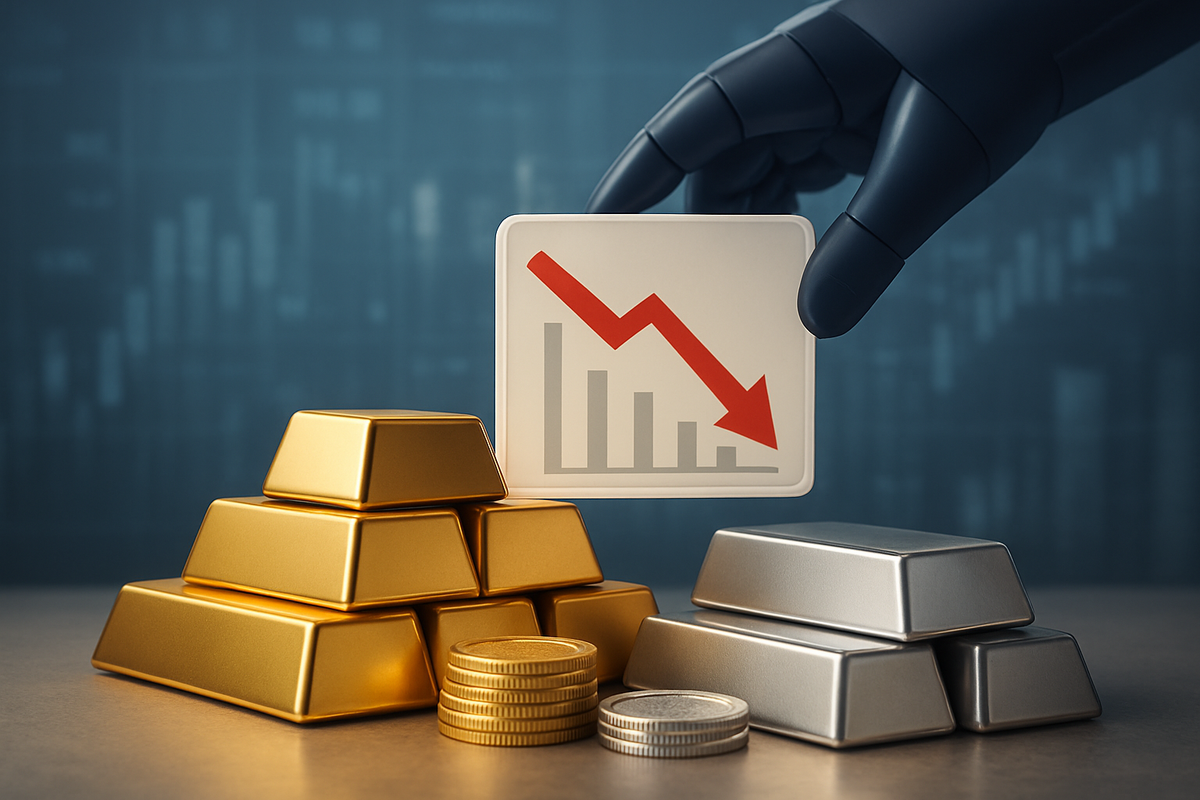
The financial markets are buzzing with anticipation as investors increasingly bet on a Federal Reserve interest rate cut in December 2025. This dovish sentiment, driven by a confluence of softening economic data and recent signals from central bank officials, has sent gold and silver prices soaring to multi-year highs. With odds for a Fed rate cut now hovering around an emphatic 87%, the stage is set for a significant shift in monetary policy that is already reshaping the landscape for precious metals investors and public companies alike. This dramatic repricing of expectations, which has seen gold comfortably trade above $4,200 per ounce and silver achieve an unprecedented all-time high nearing $58 per ounce, underscores a fundamental re-evaluation of non-yielding assets. Lower interest rates reduce the opportunity cost of holding precious metals, making them a more attractive investment. Furthermore, the prospect of a weaker U.S. dollar, a common byproduct of rate cuts, enhances the affordability of these commodities for international buyers, further fueling demand. For silver, its exceptional rally is amplified by a tightening physical supply and robust industrial demand, particularly from burgeoning sectors like solar panels, electric vehicles, and artificial intelligence. The Dovish Pivot: A Deep Dive into the Federal Reserve's Shifting StanceThe surge in expectations for a December 2025 Federal Reserve rate cut, now standing at approximately 87%, represents a swift and significant shift in market sentiment. This pivot is largely a reaction to accumulating evidence of a cooling U.S. economy and a series of increasingly dovish remarks from key Federal Reserve officials. Just weeks prior, the likelihood of such a cut was considerably lower, highlighting the rapid evolution of the economic outlook. Several factors have converged to bolster the case for easing monetary policy. A weakening labor market, evidenced by job losses and a "slight decline" in employment reported in the Fed's Beige Book, has raised concerns among policymakers. The ISM Manufacturing PMI's ninth consecutive month of contraction, accelerating in November, further signals a slowdown in industrial activity. Deteriorating consumer confidence, marked by declines in both current conditions and future expectations, points to a more cautious consumer, potentially impacting future spending. Moreover, disappointing retail sales in September added to the narrative of softening demand. A six-week government shutdown earlier in the year created a "data fog," compelling the Fed to rely on alternative data and potentially favoring a pre-emptive cut amidst uncertainty. Critically, while core inflation remains near 3%, Federal Reserve officials appear less concerned about a re-acceleration, with some suggesting inflation, excluding tariff effects, is nearing the 2% target. The timeline of this shift has been rapid. Following an FOMC meeting on October 29, 2025, where the federal funds rate was lowered by 0.25 percentage points to 3.75%-4%, market expectations for a December cut intensified in late November. This was particularly influenced by comments from Federal Reserve Governor Miran, who publicly called for significant rate cuts due to the impact on the job market, and New York Fed President John Williams, who indicated openness to "near-term" easing. Federal Reserve Governor Christopher Waller and San Francisco Fed President Mary Daly also made dovish remarks, with Daly describing the labor market as "vulnerable." Major financial institutions like JPMorgan Chase & Co. and Goldman Sachs Research have revised their forecasts to anticipate a December cut, reflecting the growing consensus. The CME Group's FedWatch Tool and Polymarket have been instrumental in tracking and reflecting these rapidly shifting probabilities. Beyond gold and silver, the anticipation of a December rate cut has sparked broader market reactions. Equity markets have rebounded, with the S&P 500 rising 3.7% and the Nasdaq climbing 4.9% in the last week of November, driven by optimism for cheaper borrowing and increased liquidity. Cyclical sectors and U.S. small-cap stocks have been among the best performers. In bond markets, U.S. 10-year Treasury yields initially narrowed, though they saw a slight rise on December 1st due to other market factors, even as rate cut expectations remained high. The U.S. dollar has retreated to a two-week low, with a generally weak bias expected as lower rates make dollar-denominated assets less attractive. Even cryptocurrencies, such as Bitcoin, have seen a surge, albeit with some recent volatility attributed to technical factors rather than fundamental shifts. The next FOMC meeting, where the rate decision is expected, is scheduled for December 9 and 10, 2025. Winners and Losers: Corporate Fortunes in a Bullish Precious Metals MarketA Federal Reserve rate cut and the ensuing rally in gold and silver prices are poised to significantly impact publicly traded mining companies, creating clear winners and potentially challenging some. The primary mechanism for this impact is "operating leverage," where rising metal prices translate into disproportionately higher profit margins for miners due to their substantial fixed costs. Companies with efficient operations, low all-in sustaining costs (AISC), and manageable debt are set to be the biggest beneficiaries. Likely Gold Mining Winners:
Likely Silver Mining Winners:
Companies with Potential Leverage/Risk:
In essence, the anticipated rate cut acts as a powerful tailwind for the precious metals sector. Companies with robust operational efficiency, prudent cost management, and strong balance sheets are best positioned to capitalize on this bullish environment, translating higher metal prices into amplified stock performance and operational profitability. Broader Ripples: A New Economic Chapter UnfoldsA Federal Reserve rate cut in December 2025 would signal a pivotal shift in monetary policy, aligning with a broader trend of central banks responding to economic deceleration and moderating inflation. This move would resonate far beyond the precious metals market, creating ripple effects across other commodities, currencies, and equity markets, while also prompting considerations for regulatory and policy frameworks. Economically, the rate cut would confirm concerns about slowing growth and a weakening labor market. It fits into a narrative where the Fed is proactively easing policy to stimulate activity and prevent a deeper downturn, especially as inflation shows signs of moderating towards the 2% target. This marks a dramatic reversal from the restrictive stance of prior years, potentially ushering in a new phase of accommodative monetary policy. However, the consistency of the Fed's communication will be under scrutiny, particularly given past shifts in projections and potential disagreements among FOMC members. The ripple effects are multifaceted:
Regulatory and policy implications could include increased scrutiny of central bank credibility if policy shifts are perceived as inconsistent. Sustainably low rates might also encourage excessive risk-taking in financial markets, potentially leading to asset bubbles. Furthermore, the interaction between monetary policy and other government policies, such as trade tariffs, could create complex economic dynamics. Historically, Fed rate cuts have consistently provided a strong tailwind for precious metals. During the dot-com bubble burst (2000-2003), gold prices rose by over 50% as the Fed slashed rates. Similarly, during the 2007-2008 financial crisis, gold surged by 39% in the 24 months following the initial rate cut. In 6 out of 8 easing cycles since 1974, gold prices have risen, averaging an 11% increase in the year following the first cut. These precedents suggest a robust historical correlation, reinforcing the current bullish outlook for gold and silver in a declining interest rate environment. The Road Ahead: Navigating the Precious Metals LandscapeThe anticipated Federal Reserve rate cut in December 2025 sets the stage for a dynamic period for gold and silver, with significant short-term and long-term possibilities that demand strategic pivots from investors. The prevailing sentiment points towards a prolonged bull market for precious metals, driven by continued monetary easing, a weakening dollar, and persistent global uncertainties. In the short term, a continuation of the current rally is highly probable immediately following the Fed's decision. However, investors should anticipate increased volatility and potential periods of consolidation or profit-taking as prices may enter technically overbought territory after rapid appreciation. The FOMC's accompanying commentary will be crucial; any hints of further cuts will likely fuel additional upward momentum, while hawkish remarks could temper enthusiasm. For the long term, the outlook remains overwhelmingly bullish. Analysts widely project a sustained bull market for both gold and silver throughout 2026 and beyond. Gold price forecasts for mid-to-end 2026 range from $4,500-$5,000+ per ounce, with some institutions like JPMorgan and Goldman Sachs even projecting $5,200-$5,300. Silver is also expected to continue its upward trajectory, potentially reaching $60-$70 per ounce. This sustained growth will be underpinned by expectations of further rate cuts, a weaker U.S. dollar, and robust demand from central banks and industries. Strategic pivots for investors should focus on the continued decline in "real" interest rates, which lowers the opportunity cost of holding non-yielding assets. Precious metals will continue to serve as crucial hedges against currency debasement, inflation, and economic uncertainty. Investment in gold and silver mining companies, particularly those with low AISC and strong balance sheets, offers leveraged exposure to rising metal prices. Furthermore, strong inflows into physical metals and ETFs are expected to persist, especially for silver, given its tightening physical supply. Monitoring the narrowing gold/silver ratio could also indicate continued outperformance by silver. Emerging market opportunities for precious metals are significant. Central banks in these regions are increasingly diversifying reserves away from dollar-denominated assets, driving robust gold demand. Silver also benefits from strong industrial demand from emerging market growth, particularly in green energy (solar, EVs) and AI sectors. However, local currency weakness against the dollar can present a challenge, making precious metals more expensive for domestic buyers. Geopolitical risks globally continue to fuel safe-haven demand from various markets. Potential scenarios and outcomes:
While the path will likely involve volatility, the fundamental tailwinds are strong. A diversified approach and a long-term perspective will be crucial for investors seeking to navigate and capitalize on this potentially transformative period for precious metals. The Enduring Allure: A Comprehensive Wrap-Up for InvestorsThe Federal Reserve's anticipated interest rate cut in December 2025 marks a watershed moment for the financial markets, particularly for gold and silver. This event, driven by a confluence of weakening economic indicators and a dovish shift in central bank rhetoric, is not merely a short-term catalyst but appears to be laying the groundwork for a structural re-evaluation of precious metals as core strategic assets. Key Takeaways:
The overall market outlook for precious metals moving into 2026 is overwhelmingly bullish. Major institutions are forecasting gold prices to reach $4,500-$5,000+ per ounce, with some even eyeing $6,000, and silver potentially surging to $60-$70 per ounce. This bullish trajectory is supported by continued central bank gold accumulation, persistent global geopolitical risks, ongoing inflation concerns, and a sustained increase in industrial demand for silver. The significance of this event extends beyond immediate price movements; it signals a potential "metals supercycle" where precious metals transition from cyclical hedges to essential components of diversified portfolios for wealth preservation and growth. The lasting impact could be a fundamental recalibration of investor perception towards gold and silver in a world grappling with economic uncertainty and evolving monetary policies. What Investors Should Monitor in Coming Months:
While the path forward may involve volatility, the fundamental tailwinds are strong. A diversified approach and a long-term perspective will be crucial for investors seeking to navigate and capitalize on this potentially transformative period for precious metals. This content is intended for informational purposes only and is not financial advice More NewsView More

Five Below and Dollar Tree Earnings Signal a Shopper Shift ↗
Today 7:15 EST
Via MarketBeat

Ulta’s Stock May Be Set for a Glow-Up—20% Upside Ahead? ↗
December 06, 2025
Via MarketBeat
Tickers
ULTA
Gates Foundation Sells MSFT Stock—Should Investors Be Worried? ↗
December 06, 2025
Via MarketBeat
Tickers
MSFT
MarketBeat Week in Review – 12/1 - 12/5 ↗
December 06, 2025
Recent QuotesView More
Stock Quote API & Stock News API supplied by www.cloudquote.io
Quotes delayed at least 20 minutes. By accessing this page, you agree to the Privacy Policy and Terms Of Service.
© 2025 FinancialContent. All rights reserved.
|