Navigating the Fiscal Cliff: The Enduring Impact of Government Shutdowns on the Stock Market
By:
MarketMinute
September 24, 2025 at 10:12 AM EDT
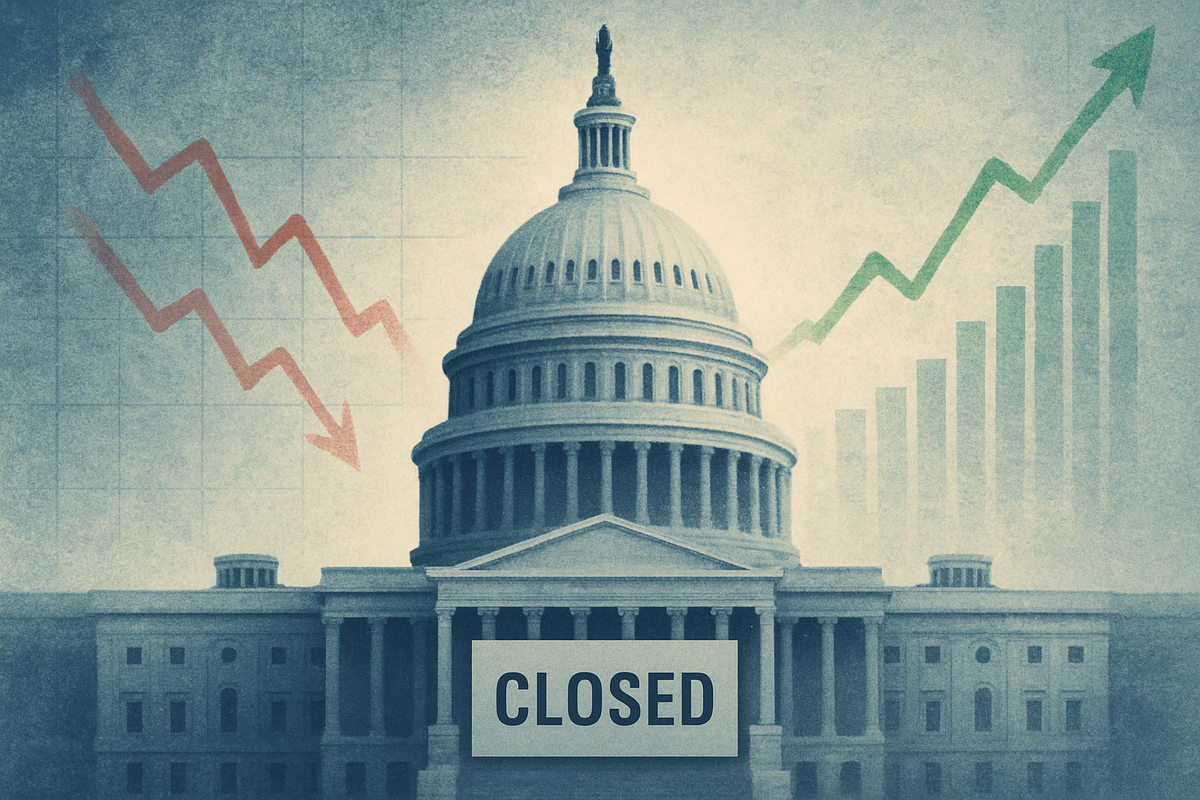
As the specter of government shutdowns continues to loom large in the American political landscape, investors and market watchers are once again grappling with the potential ramifications for the stock market. While often viewed as a significant disruption, historical data suggests that the broader market's reaction to these fiscal impasses is frequently more nuanced and less catastrophic than initially perceived, though specific sectors can face considerable headwinds. When the Government Stops: Understanding the Disruption and Its SignificanceGovernment shutdowns occur when Congress fails to pass appropriation bills or continuing resolutions to fund government operations. This leads to a cessation of non-essential federal services, furloughing hundreds of thousands of federal employees, and halting various government functions. The immediate impact is a cascade of operational disruptions, from closed national parks and museums to delayed processing of permits, loans, and even critical economic data. Historically, these events are a symptom of deep political divisions, often around budget priorities, spending limits, or broader policy debates. While they represent a failure of the legislative and executive branches to reach consensus, financial markets have generally demonstrated a remarkable resilience. Investors tend to "look through" these temporary political stalemates, understanding them as transient issues rather than fundamental threats to the underlying economy. However, the significance lies in the uncertainty they create, the direct economic hit to furloughed workers and contractors, and the potential for a prolonged shutdown to erode consumer and business confidence, even if the overall market impact remains contained. Market's Measured Response: How Shutdowns Ripple Through EquitiesDespite the dramatic headlines, the overall stock market's reaction to government shutdowns has historically been surprisingly muted and often short-lived. Analyses of numerous shutdowns since 1976 reveal that the S&P 500 index's median change during these periods was 0.0%, with a mean change of -0.6%. More strikingly, the market frequently performs well in the aftermath, with the S&P 500 recording solid gains in the 12 months following 18 out of 20 US government shutdowns since 1976, averaging a robust 12.7% return. Specific examples underscore this resilience. During the 16-day October 2013 shutdown, the S&P 500 actually advanced by 3.1%. The longest shutdown on record, from December 2018 to January 2019, saw the S&P 500 gain 10.3% over its five-week duration. This suggests that while short-term volatility might increase as deadlines approach, the market tends to recover quickly once a resolution is reached. It's crucial to differentiate these events from debt ceiling impasses, which typically carry a more significant negative market impact due to the threat of a sovereign default. Winners and Losers in a Stalled GovernmentWhile the broad market may hold steady, specific sectors and companies can experience considerable disruption, creating clear "winners" and "losers": Potential Losers:
Potential Winners/Resilient Industries:
Broader Implications: Beyond the Immediate Market JittersThe broader implications of government shutdowns extend beyond immediate market jitters. While short-term economic damage is often limited – with economic activity delayed rather than eliminated and furloughed workers typically receiving back pay – prolonged shutdowns can have more lasting effects. The Congressional Budget Office estimated that the five-week partial shutdown from late 2018 to early 2019 permanently lost $3 billion from the economy, primarily due to lost wages and postponed government spending. Each week of a shutdown can reduce annualized GDP growth by approximately 0.2 percentage points, with a similar rebound expected after resolution. These events also fit into a broader trend of political polarization and fiscal brinkmanship, which can contribute to a perception of instability. This perception, if sustained, could lead to slightly higher government borrowing costs, potentially pushing up interest rates and increasing volatility in financial markets over a longer term. Furthermore, the shutdown of agencies that publish critical economic data, such as inflation and employment reports, can leave markets and the Federal Reserve "in the dark" during crucial periods, complicating policy decisions and increasing market uncertainty. The recurring nature of these events can also erode international confidence in the stability of US governance, potentially impacting foreign investment and the dollar's status as a global reserve currency over the very long term. What Comes Next: Navigating the UncertaintyLooking ahead, future government shutdowns are likely to follow historical patterns, with minimal lasting impact on overall equity performance. However, the frequency and duration of these events remain key variables. Investors should pay attention to the rhetoric leading up to potential shutdowns, particularly any indications of a prolonged impasse, which could exacerbate short-term market volatility. For companies and industries, the ability to adapt to periods of federal inactivity will be crucial. Diversifying revenue streams away from exclusive reliance on government contracts, building robust contingency plans for regulatory delays, and maintaining strong cash reserves will be vital for navigating these periods. Market opportunities may emerge in defensive sectors or in companies that can capitalize on the disruption, such as those providing alternative services or technologies that can mitigate the impact of government service interruptions. The potential for strategic pivots, such as increasing focus on state and local government contracts or international markets, could also become more attractive. Conclusion: A Test of ResilienceIn conclusion, while government shutdowns are disruptive political events with immediate economic consequences for federal employees and contractors, the broader stock market has historically demonstrated a remarkable ability to weather these storms. The market's resilience stems from its tendency to view these events as temporary political impasses rather than fundamental economic crises. However, the impact is not uniform, with certain sectors like government contractors, healthcare, and travel bearing the brunt of the disruption, while defensive sectors like utilities and consumer staples often remain stable. Moving forward, investors should prioritize long-term investment strategies over impulsive reactions to short-term political volatility. While the direct economic impact of shutdowns is often contained, their recurring nature underscores the importance of a diversified portfolio and a clear understanding of which companies and industries are most exposed. The key takeaway is that while the political drama of a shutdown can be intense, the financial markets have consistently shown their capacity to look beyond the immediate headlines and focus on the underlying economic fundamentals. What investors should watch for in coming months is not just the occurrence of a shutdown, but its duration and any signs that political dysfunction is beginning to erode long-term economic confidence. This content is intended for informational purposes only and is not financial advice More NewsView More
Via MarketBeat

3 Stocks Most Likely to Split in 2026 ↗
December 08, 2025
Via MarketBeat

ChargePoint's Comeback Story: Why This EV Stock Is Charging Up Again ↗
December 08, 2025
Via MarketBeat

3 Stocks Offering the Highest Dividend Yields in Key Industries ↗
December 08, 2025

Why FuelCell Energy Stock Is Soaring After a Government Deal ↗
December 08, 2025
Via MarketBeat
Tickers
FCEL
Recent QuotesView More
Stock Quote API & Stock News API supplied by www.cloudquote.io
Quotes delayed at least 20 minutes. By accessing this page, you agree to the Privacy Policy and Terms Of Service.
© 2025 FinancialContent. All rights reserved.
|