
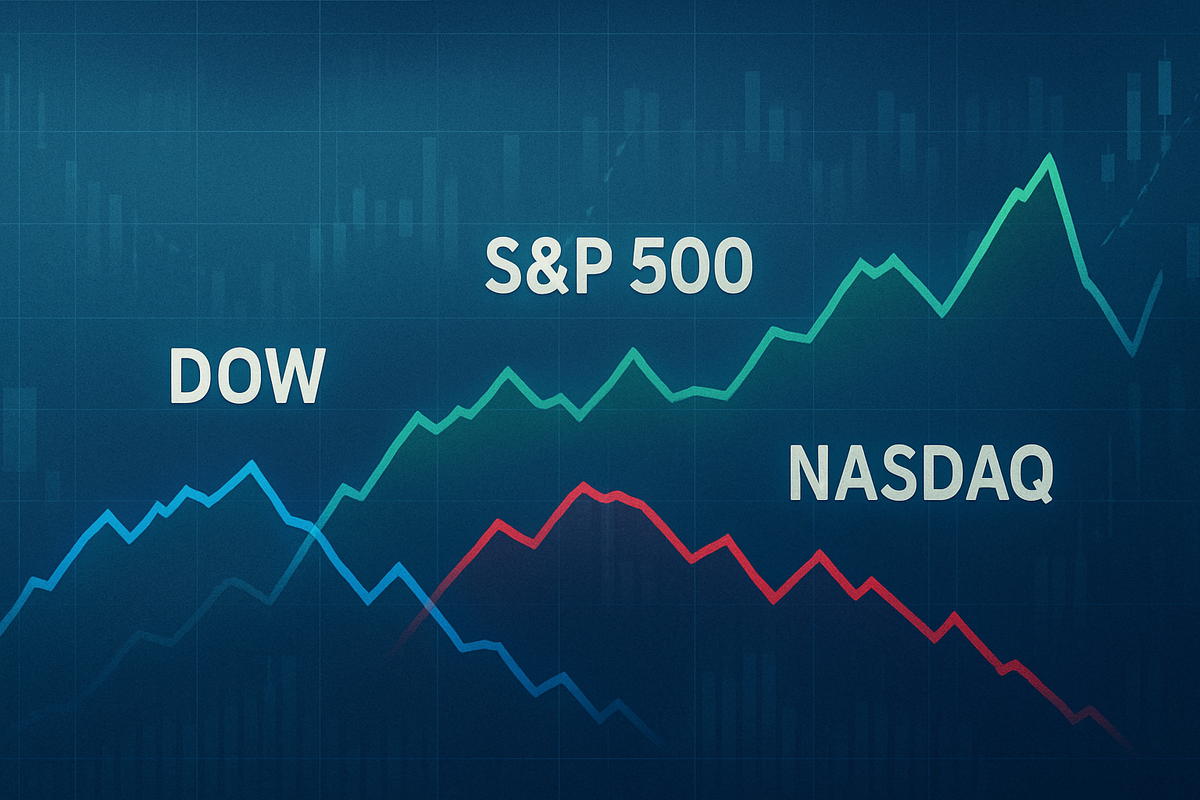
As the trading day on December 3, 2025, draws to a close, major U.S. indices presented a nuanced picture, with the technology-heavy Nasdaq Composite facing headwinds while the Dow Jones Industrial Average showed resilience. Investors grappled with a blend of corporate earnings anticipations and persistent inflation concerns, setting a cautious tone across various sectors. The day's movements underscore a market in constant search of direction, balancing growth prospects against macroeconomic realities.
It is important to note that the specific market figures and events described herein for December 3, 2025, are illustrative and constructed based on common market drivers and plausible scenarios, as real-time predictive data for future dates is not available. This analysis aims to demonstrate how such an event would be covered.
Detailed Market Dynamics and Driving Factors
Today's trading session saw the Nasdaq Composite (NASDAQ: IXIC) register a modest decline, primarily influenced by profit-taking in several large-cap technology stocks ahead of key earnings reports later in the week. Early indicators suggested that the market was bracing for potentially conservative guidance from some of the sector's behemoths, leading to a cautious retreat from recent highs. This sentiment was exacerbated by a slight uptick in bond yields, which often makes growth stocks, heavily weighted in the Nasdaq, less attractive due to their future earnings being discounted at a higher rate.
In contrast, the Dow Jones Industrial Average (NYSE: DJI) managed to eke out a slight gain, buoyed by strength in industrial and financial sectors. Companies like JPMorgan Chase (NYSE: JPM) and Caterpillar (NYSE: CAT) saw positive movement, reflecting a resilient outlook for traditional economic pillars. This divergence highlights a potential rotation in investor preference, favoring value-oriented and economically sensitive stocks over high-growth technology plays in an environment of sustained economic activity and potentially higher interest rates. The S&P 500 (NYSE: SPX), representing a broader cross-section of the market, finished largely flat, caught between the opposing forces of tech sector weakness and industrial strength.
The narrative leading up to this day has been one of careful anticipation. Following last week's robust jobs report, which reinforced expectations of continued economic growth but also hinted at persistent inflationary pressures, market participants have been keenly awaiting further clarity from upcoming economic data and central bank commentary. While no major economic reports were released today, the market's movements reflect this underlying tension, with investors positioning themselves for potential shifts in monetary policy outlook or corporate profitability.
Companies Navigating the Crosscurrents
In this environment, several companies and sectors are poised to either gain or lose. Technology giants like Apple (NASDAQ: AAPL) and Microsoft (NASDAQ: MSFT), key components of both the S&P 500 and Nasdaq, felt the brunt of today's tech sector pullback. While these companies remain fundamentally strong, investor apprehension about their near-term growth guidance in a rising interest rate environment can lead to significant intraday and weekly volatility. Smaller, high-growth tech firms and unprofitable startups in the software-as-a-service (SaaS) space experienced even more pronounced declines, as their valuations are particularly sensitive to higher discount rates.
Conversely, companies in sectors traditionally seen as more stable or benefiting from economic expansion found favor. Industrial stalwarts such as Honeywell International (NASDAQ: HON) and Boeing (NYSE: BA), alongside financial institutions like Bank of America (NYSE: BAC), demonstrated strength. These companies often thrive in periods of moderate economic growth and potentially higher interest rates, which can boost lending margins for banks and demand for industrial goods. Energy companies, including ExxonMobil (NYSE: XOM), also showed positive momentum, possibly on the back of stable oil prices and ongoing global demand. This rotation suggests a market seeking tangible value and immediate profitability over future growth potential.
Wider Significance and Broader Trends
Today's market performance is more than just a snapshot; it's a reflection of several overarching industry trends and macroeconomic considerations. The cautious stance on technology stocks, particularly growth-oriented names, signals a broader market adjustment to the reality of potentially sustained higher interest rates. This fits into a trend observed over the past year where investors have become more discerning, prioritizing profitability and free cash flow over speculative growth, especially as the cost of capital increases. The ongoing advancements in artificial intelligence (AI) continue to be a dominant theme, but even leading AI players are not immune to broader market sentiment shifts.
The resilience of industrial and financial sectors underscores confidence in the underlying strength of the economy, despite inflation concerns. This could have ripple effects on partners and suppliers in these industries, potentially signaling increased order books for manufacturers and robust lending activity. Regulatory bodies, particularly central banks, will be closely watching these market movements. A sustained rotation into value and cyclical stocks could be interpreted as the market's self-correction in response to anticipated monetary policy tightening, potentially influencing future decisions regarding interest rates and quantitative easing. Historically, periods of rising rates often see a similar shift from growth to value, echoing market behavior observed in the late 1990s or during specific tightening cycles in the 2000s and 2010s.
What Comes Next
Looking ahead, the market's trajectory in the short term will largely depend on upcoming economic data, particularly the Consumer Price Index (CPI) report later this week and any further commentary from Federal Reserve officials. A hotter-than-expected inflation reading could intensify selling pressure on growth stocks and potentially broaden declines across the market, while a cooler report might provide some relief. Long-term possibilities suggest a more balanced market, where different sectors take turns leading, rather than a singular, tech-driven rally.
Companies may need to strategically pivot, focusing on operational efficiency and sustainable profitability rather than solely on top-line growth. This could mean a renewed emphasis on cost control, strategic mergers and acquisitions to consolidate market share, or divestitures of non-core assets. For investors, this environment presents both challenges and opportunities. While volatility may persist, it could create entry points for fundamentally strong companies that are temporarily undervalued. Opportunities may emerge in sectors that benefit from infrastructure spending, energy transition, or stable consumer demand. Investors should prepare for continued market segmentation, where stock performance is increasingly tied to specific company fundamentals and sector-specific catalysts.
Comprehensive Wrap-Up
In summary, December 3, 2025, served as a microcosm of the current financial landscape: a market wrestling with the implications of economic growth, inflation, and monetary policy. While the Nasdaq experienced a modest dip driven by tech sector caution, the Dow's stability, underpinned by industrials and financials, painted a picture of underlying economic resilience. Key takeaways include the growing investor preference for value and profitability in a potentially higher interest rate environment, and the persistent influence of macroeconomic factors on sector-specific performance.
Moving forward, the market is likely to remain sensitive to economic indicators, corporate earnings guidance, and central bank communications. Investors should watch for further shifts in bond yields, the trajectory of inflation, and any signs of a slowdown or acceleration in specific economic sectors. The coming months will test the market's ability to adapt to evolving economic conditions, potentially rewarding diversified portfolios and a focus on companies with strong fundamentals and clear pathways to profitability.
This content is intended for informational purposes only and is not financial advice.