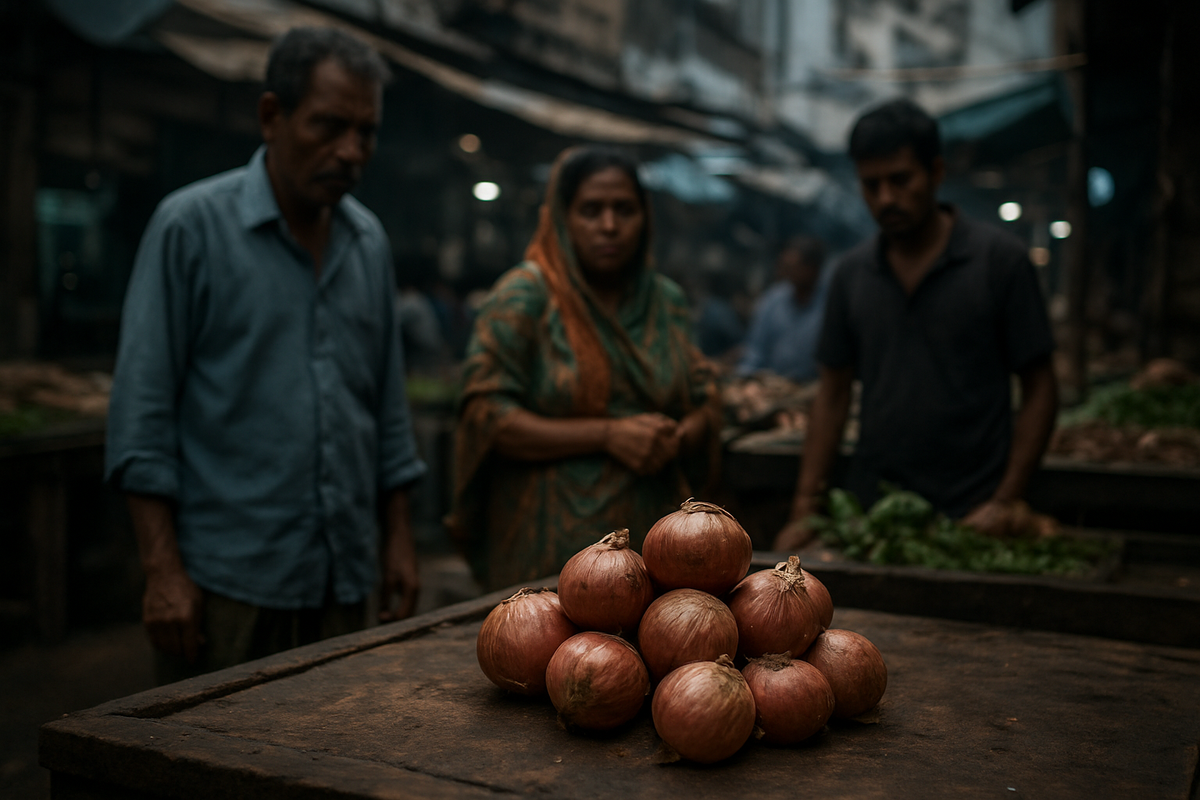
Dhaka, Bangladesh – December 5, 2025 – Dhaka's kitchen markets are once again grappling with a significant surge in onion prices, sending ripples of concern through households and the broader economy. In a fresh hike reported today, December 5, 2025, the staple commodity's price has soared to Tk 150-160 per kilogram, a sharp increase from the Tk 110-120 range observed just a week prior. This abrupt escalation, representing a 33% to 36% jump, places immense pressure on consumer budgets and highlights persistent vulnerabilities in the nation's food supply chain.
The immediate implications are dire for millions of Bangladeshi families, particularly those with low and fixed incomes, for whom onions are an indispensable ingredient in daily meals. This latest price shock not only erodes purchasing power but also intensifies the ongoing struggle against food inflation, which has remained stubbornly high. The recurring nature of such price instability points to deeper structural issues that demand urgent and comprehensive solutions beyond reactive measures.
The Anatomy of a Price Surge: Tracing the Onion's Turbulent Journey
The current price hike is not an isolated incident but rather the latest chapter in a long-running saga of volatility in Bangladesh's onion market. As of December 5, 2025, consumers are facing prices where smaller onion bulbs fetch Tk 150 and larger ones Tk 160 per kg. This rapid escalation follows a pattern seen earlier in November, when prices jumped from Tk 70 to Tk 110-120 per kg.
Several factors are cited for this fresh crisis. A primary driver is the near depletion of domestic onion stocks as the season draws to a close, a recurring seasonal phenomenon that typically sees prices rise between late October and early December. Compounding this, an earlier announcement by the interim government against onion imports, based on claims of sufficient stock and impending new harvests, appears to have been exploited by stockists. Accusations of hoarding and market manipulation by a "vested group" of middlemen are rampant, with consumer rights advocates suggesting an artificial crisis is being created for profit, especially amidst political instability. Retailers also point to higher procurement costs from major onion-producing districts, while farmers report significant post-harvest losses, with up to 30% of stored onions perishing, further tightening supply despite potentially good overall production. Past import restrictions, notably from India, and inconsistent import volumes continue to plague the market, while a critical lack of government-supported cold storage facilities forces farmers into home storage, leading to substantial spoilage.
Corporate Crossroads: Winners and Losers in the Onion Price Game
The volatile onion market creates a mixed bag of fortunes for public companies operating across Bangladesh's retail, distribution, and agricultural sectors.
Major supermarket chains, such as Shwapno, operated by ACI Logistics Limited, a subsidiary of ACI Limited (DSE: ACI), are particularly vulnerable. High onion prices often lead to reduced sales volumes as consumers cut back on purchases. Retailers face immense pressure to absorb some of the increased wholesale costs to maintain competitiveness, thereby squeezing profit margins on onions and potentially other related produce. Supply chain disruptions become more frequent, and securing consistent stock at reasonable prices turns into a logistical nightmare, leading to consumer dissatisfaction.
In the distribution sector, companies like Golden Harvest Agro Industries Limited (DSE: GHAIL), primarily known for frozen foods, could be indirectly affected if overall food distribution channels are strained. If involved in fresh produce distribution, they would face increased procurement costs and logistical challenges. However, companies offering cold storage solutions might see increased demand. Agricultural Marketing Company Ltd. (DSE: AMCL), explicitly involved in agricultural marketing, faces a mixed impact. While higher prices could benefit farmers and potentially AMCL if they source directly, increased raw material costs would reduce margins if they process or sell onions as a finished product. ACI Limited's (DSE: ACI) agro-input divisions, such as ACI Seed and ACI Fertilizers, might see an indirect positive impact if high onion prices incentivize farmers to increase onion cultivation in subsequent seasons, leading to higher demand for seeds and fertilizers.
Conversely, publicly traded logistics and shipping companies are poised to benefit. Summit Alliance Port Limited (DSE: SAPL), a major player in port and logistics services, stands to gain from increased overall imports, including onions, boosting their cargo handling and storage business. Similarly, Bangladesh Shipping Corporation (DSE: BSC), the state-owned shipping entity, would likely see higher freight volumes and revenue from increased sea imports of onions from diversified sources like Pakistan, Turkey, and Egypt. The acute need for improved storage infrastructure also presents an opportunity for companies that can offer advanced cold chain logistics and warehousing solutions.
Wider Implications: A Symptom of Systemic Vulnerabilities
The recurring onion price hikes in Bangladesh are far more than just an inconvenience; they are a critical indicator of deep-seated structural issues within the nation's agricultural supply chain, market regulation, and broader economic stability. This event aligns with several persistent trends in the agricultural and retail sectors.
Foremost is the chronic inadequacy of proper storage facilities. A staggering 20-30% of the onion crop is lost post-harvest due to poor storage conditions, especially given Bangladesh's humid climate. This forces farmers into distress sales immediately after harvest, leading to market gluts and low prices for them, only for prices to skyrocket months later due to shortages. Secondly, Bangladesh's heavy reliance on onion imports, particularly from India, renders it highly vulnerable to export bans or duties imposed by its neighbor, which frequently occur due to India's own domestic issues. This external dependency creates immediate and severe price shocks. Thirdly, the supply chain is notoriously dominated by middlemen, who are often accused of hoarding and manipulating supply to create artificial shortages and inflate prices. Furthermore, climate change impacts, such as unpredictable rainfall, increasingly damage crops and stored produce, exacerbating supply issues.
The ripple effects are extensive. Consumers face eroded purchasing power and compromised food security. Food businesses, including restaurants and caterers, grapple with increased input costs, potentially leading to higher prices or reduced quality for their customers. While farmers might seem to benefit from high prices, many suffer significant post-harvest losses or sell prematurely, undermining long-term stability in the agricultural sector. Regionally, India's export bans often trigger a scramble for alternative sources among countries like Sri Lanka and Nepal, driving up international prices. For the broader economy, persistent food inflation, fueled by staples like onions, can destabilize macroeconomic indicators, dampening consumer confidence and potentially hindering economic growth. Historically, Bangladesh has faced numerous food price crises, notably the 1974 famine and the global food price hikes of 2007-2008, and recurring onion crises, such as in 2019 when prices hit a record Tk 250 per kg after an Indian export ban. These events underscore a shared regional vulnerability to supply chain disruptions and the domino effect of policies in major producing countries.
What Comes Next: Navigating the Path Ahead
The trajectory of onion prices in Bangladesh in the coming months hinges on a delicate interplay of domestic harvests, import policies, and market oversight. In the short term, some relief is anticipated with the arrival of early varieties of domestic onions by early to mid-December. However, the extent of this relief is uncertain, as previous crop losses or delayed planting could limit supply. Government-facilitated imports, while crucial, need to be timely and substantial enough to impact retail prices without unduly harming local farmers when their new produce enters the market.
Long-term possibilities point towards Bangladesh striving for self-sufficiency in onion production within the next three to five years. With current post-harvest losses ranging from 25% to 50%, addressing these inefficiencies could potentially enable Bangladesh to produce enough to eliminate imports and even become an exporter.
Strategic pivots are required across the board. The government must prioritize investment in modern cold storage facilities, implement robust policies against market manipulation, diversify import sources, and provide comprehensive support to farmers through education, quality seeds, and credit. Businesses need to modernize supply chains, invest in cold chain capabilities, explore direct sourcing from farmers, and diversify their international sourcing. There are significant market opportunities in cold storage investment, agri-tech innovation, and potentially in onion processing. However, challenges persist, including inherent price volatility, the strong influence of middlemen, and the increasing impact of climate change on crops.
Three potential scenarios emerge: a "Status Quo" scenario of continued cyclical volatility with reactive imports; a "Moderate Progress" scenario with improved price stability through targeted interventions and partial reduction of post-harvest losses; and a "Transformative Change" scenario, where Bangladesh achieves significant self-sufficiency and stable prices through substantial investment and comprehensive reforms, potentially becoming an onion exporter. The latter, though ambitious, offers the most sustainable path to food security and economic resilience.
Wrap-Up: A Call for Systemic Change
The latest hike in onion prices in Dhaka's kitchen markets serves as a stark reminder of Bangladesh's persistent struggle with food security and market stability. The immediate surge to Tk 150-160 per kilogram, driven by depleting domestic stocks, alleged hoarding, and past import policy decisions, underscores the urgent need for systemic interventions rather than merely reactive measures.
Moving forward, the market will likely remain sensitive to the arrival of new domestic harvests and the effectiveness of any government-initiated import strategies. Investors should closely watch for policy shifts regarding agricultural infrastructure, particularly cold storage development, and any concrete actions taken to curb market manipulation. The performance of public companies like ACI Limited (DSE: ACI) in retail, and logistics providers such as Summit Alliance Port Limited (DSE: SAPL) and Bangladesh Shipping Corporation (DSE: BSC), will reflect the broader economic impact and adaptation to these volatile conditions.
Ultimately, the recurring onion crisis is a critical indicator of deeper vulnerabilities in Bangladesh's food supply chain. Ensuring long-term price stability and food security will require a multi-faceted approach encompassing strategic investment in post-harvest infrastructure, robust regulatory frameworks to ensure fair market practices, diversification of agricultural production and import sources, and sustained support for farmers. Without such comprehensive reforms, the capital's kitchen markets may continue to witness these unsettling price spirals for this indispensable staple.
This content is intended for informational purposes only and is not financial advice