Date: April 15, 2026
Introduction
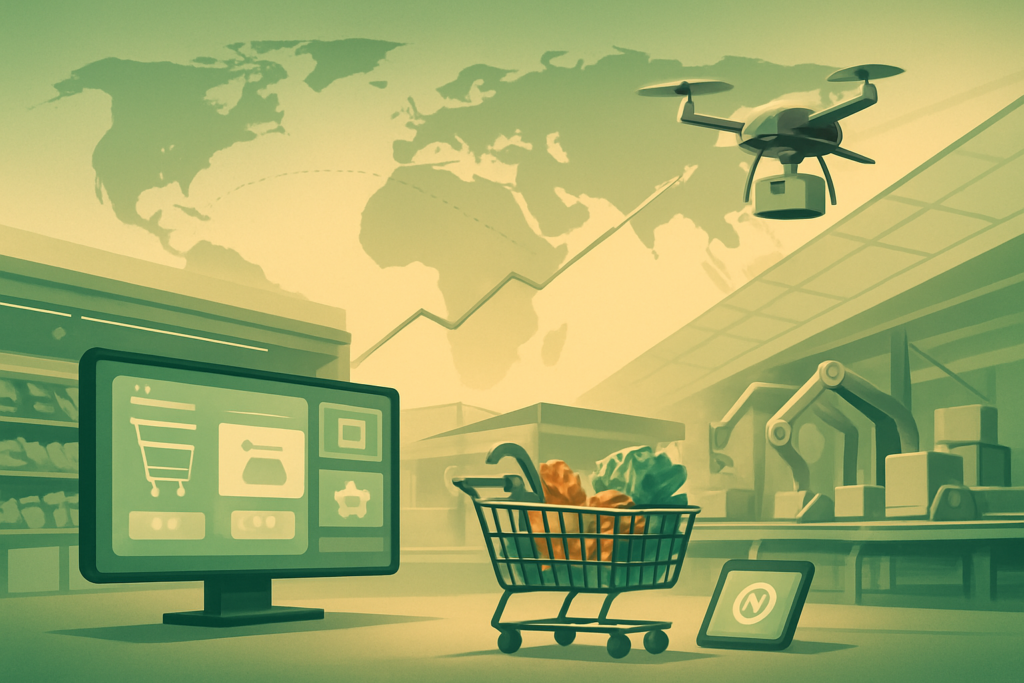
As we enter the second quarter of 2026, Walmart Inc. (NYSE: WMT) stands not merely as the world’s largest brick-and-mortar retailer, but as a sophisticated tech-and-media powerhouse. While the "Everyday Low Price" mantra remains its cornerstone, the Walmart of 2026 is defined by a high-margin "flywheel" that integrates retail media, automated logistics, and a burgeoning digital membership ecosystem. With its recent integration of Vizio and a massive pivot toward automation, Walmart has successfully distanced itself from traditional retail rivals, positioning itself as a "growth-at-a-reasonable-price" (GARP) staple in an era of macroeconomic volatility.
Historical Background
The story of Walmart began in 1962, when Sam Walton opened the first "Wal-Mart Discount City" in Rogers, Arkansas. Walton’s vision was radical yet simple: offer the lowest prices possible by streamlining the supply chain and passing savings to the consumer. This model fueled an unprecedented expansion across rural America, eventually conquering the suburbs and urban centers.
By the early 2000s, Walmart was the dominant force in global retail, but it faced a significant existential threat from the rise of e-commerce. The appointment of Doug McMillon as CEO in 2014 marked a turning point. McMillon steered the company through a massive digital transformation, acquiring Jet.com (2016), Flipkart (2018), and most recently Vizio (2024), effectively evolving the company from a "physical-first" retailer into an "omnichannel" ecosystem that competes head-to-head with digital natives.
Business Model
Walmart’s business model is now a multi-pronged ecosystem designed to capture consumer spend across every touchpoint:
- Walmart U.S.: The flagship segment, contributing the majority of revenue. It has shifted from pure retail to a platform model where grocery dominance anchors high-frequency visits.
- Walmart International: Focused on high-growth markets like India (via Flipkart and PhonePe) and Mexico (Walmex). This segment is a primary vehicle for long-term growth.
- Sam’s Club: A membership-only warehouse club that has become a testing ground for innovations like Scan & Go technology.
- High-Margin Services: This includes Walmart Connect (retail media), which leverages the company’s vast first-party data to sell advertising, and Walmart+, a membership program that drives recurring revenue and customer loyalty.
Stock Performance Overview
Over the last decade, Walmart has transitioned from a slow-moving defensive stock to a resilient performer that consistently outpaces the broader retail sector.
- 1-Year Performance: WMT has seen approximately 12-15% growth over the past 12 months, driven by better-than-expected earnings and the successful integration of its Vizio-powered advertising platform.
- 5-Year Performance: Since 2021, the stock has reflected the company’s successful navigation of the post-pandemic supply chain crisis. The shift toward automation has led to a significant re-rating of the stock by analysts.
- 10-Year Performance: Long-term investors have seen steady compounded returns, bolstered by a consistent dividend policy. WMT has remained a "flight to safety" during market downturns while participating in the tech-led rallies of 2024 and 2025.
Financial Performance
For the fiscal year ending January 2026 (FY2026), Walmart reported a robust financial profile:
- Total Revenue: Reached approximately $713.2 billion, a 5% increase year-over-year.
- Operating Margins: A standout metric for 2026, margins expanded to 4.6% in the final quarter. This 100-basis-point improvement over the last three years is attributed to the "mixing up" of the business toward high-margin advertising and membership fees.
- Adjusted EPS: Analysts estimate FY2026 EPS at $2.58–$2.63, reflecting strong operational efficiency.
- Capital Expenditure: Walmart remains in a "peak investment" phase, spending roughly $22 billion annually, with over 70% of that capital directed toward technology and supply chain automation.
Leadership and Management
CEO Doug McMillon remains at the helm, widely credited with modernizing the company’s culture and technical infrastructure. The leadership team has been praised for its "disciplined innovation"—testing new technologies like drone delivery and AI-driven inventory management extensively before scaling. The board’s strategy has focused on "profitable growth," ensuring that every digital dollar spent eventually translates into margin expansion rather than just top-line growth.
Products, Services, and Innovations
Innovation at Walmart is no longer just about store layouts. In 2026, the company is a leader in several frontier categories:
- Retail Media (Vizio & SmartCast): The late 2024 acquisition of Vizio gave Walmart its own hardware-software ecosystem. "Shoppable TV" is now a reality for millions of Walmart customers, allowing them to purchase items directly through their television screens.
- Automation: Approximately 65% of Walmart stores are now serviced by automated distribution centers, reducing per-unit shipping costs by 30%.
- Drone Delivery: In 2025, Walmart expanded its drone delivery network to cover 35 U.S. states, catering to the "need-it-now" consumer and reducing last-mile costs.
- Health and Wellness: Walmart Health clinics have integrated into the Walmart+ ecosystem, providing a holistic health-retail experience that rivals dedicated pharmacy chains.
Competitive Landscape
Walmart’s primary rivals remain Amazon.com (NASDAQ: AMZN), Costco Wholesale Corp. (NASDAQ: COST), and Target Corp. (NYSE: TGT).
- Walmart vs. Amazon: While Amazon leads in pure e-commerce volume, Walmart has the physical advantage. In 2026, Walmart’s "pick up at store" and "ship from store" capabilities have made its grocery business nearly unassailable.
- Walmart vs. Costco: Walmart’s Sam’s Club segment has aggressively narrowed the gap with Costco by investing in superior digital tools and a broader international footprint.
- Market Share: Walmart has maintained its status as the top grocery retailer in the U.S., capturing roughly 26% of the total market share, as consumers continue to prioritize value amidst fluctuating inflation.
Industry and Market Trends
The retail industry in 2026 is defined by "Nearshoring" and "Automation."
- Supply Chain Resilience: Walmart is leading the "China Exit," reducing its reliance on Chinese manufacturing from 80% to 60% in favor of sourcing from India and Mexico.
- AI Integration: Generative AI is now fully integrated into Walmart’s search functionality, allowing customers to search for "party supplies for a 10-year-old’s birthday" and receiving a curated, one-click cart of items.
Risks and Challenges
Despite its dominance, Walmart faces several headwinds:
- Labor Costs: Minimum wage hikes in states like California and Arizona, coupled with labor reforms in Mexico, have pushed Walmart’s average hourly wage to over $18/hour, putting pressure on bottom-line growth.
- Tariffs: The 2025–2026 period has been marked by tariff volatility. Renewed duties on imported electronics and textiles have forced Walmart to constantly recalibrate its pricing strategy.
- International Regulatory Pressure: In India, regulatory shifts around "quick commerce" and data localization continue to create hurdles for Flipkart and PhonePe.
Opportunities and Catalysts
- Flipkart IPO: The anticipated 2026 IPO of Flipkart (estimated valuation $60B–$70B) represents a massive potential liquidity event and value unlock for WMT shareholders.
- Ad Tech Scaling: As Walmart Connect matures, it is expected to contribute nearly one-third of the company’s total operating income by the end of 2027.
- Fintech Expansion: Through its "One" fintech venture, Walmart is poised to offer more financial services to its underbanked customer base, creating a new high-margin revenue stream.
Investor Sentiment and Analyst Coverage
Wall Street maintains a "Strong Buy" consensus on WMT. Analysts highlight the company’s ability to grow earnings faster than sales—a hallmark of a high-quality compounding stock. Institutional ownership remains high, with major funds viewing Walmart as a defensive hedge that now offers a "tech-like" growth kicker. Recent share buyback authorizations of $30 billion have further bolstered investor confidence.
Regulatory, Policy, and Geopolitical Factors
Walmart is currently navigating a complex regulatory environment:
- ESG Reporting: New California laws (SB 253/261) require Walmart to provide rigorous emissions disclosures by mid-2026.
- Antitrust Scrutiny: While the Vizio acquisition was approved, regulators continue to monitor the impact of "Big Retail" on data privacy and competition in the advertising space.
- Geopolitics: The shift to India as a primary sourcing hub has improved supply chain security but increased Walmart’s exposure to Indian political and regulatory shifts.
Conclusion
Walmart Inc. has successfully navigated a decade of disruption to emerge as a hybrid retail and technology giant. In April 2026, the company’s investment in automation and retail media is finally yielding the margin expansion that investors have long anticipated. While labor costs and geopolitical trade tensions remain persistent risks, Walmart’s scale, data advantage, and grocery dominance provide a unique "moat" that few companies can match. For investors, Walmart remains a cornerstone asset—offering stability in volatile times and the potential for significant upside as its high-margin digital ecosystem matures.
This content is intended for informational purposes only and is not financial advice.