For years, digital signage occupied a strange corner of corporate technology. It was visible everywhere — in retail chains, airports, hospitals and office lobbies — yet rarely discussed outside facilities departments and IT procurement meetings.
That is beginning to change.
The reason is not a breakthrough display technology or a new generation of screens. Instead, it is a shift in how organizations think about software, maintenance and operational risk.
Historically, many signage deployments relied on external media players connected to commercial displays. The arrangement worked, but it also created additional points of failure. Each screen required another device, another power source, another software update cycle and another piece of equipment that could eventually require replacement.
Manufacturers responded by building more computing capability directly into professional displays. One of the most widely adopted examples is LG's webOS platform, which allows content management and playback to run on the display itself without requiring a separate external player.
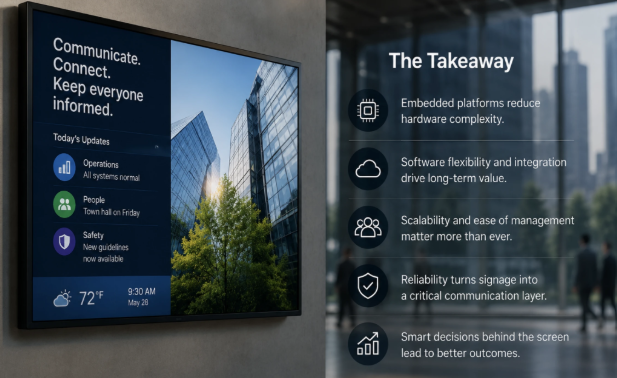
As a result, many organizations evaluating signage infrastructure are increasingly examining solutions built around the concept of an embedded lg webos signage player. The appeal is less about introducing new functionality than about removing layers of complexity. Fewer devices can mean fewer support tickets, simplified installations and lower long-term maintenance requirements.
The shift resembles broader changes that have occurred elsewhere in enterprise technology. Signage systems appear to be following a similar path, with companies questioning whether separate hardware remains necessary in every deployment.
At the same time, software ecosystems around digital signage have become more fragmented.
In that context, industry analysts and procurement teams have shown increasing interest in resources comparing legacy platforms with newer entrants. Discussions around finding an alternative to SuperSign, for example, reflect a broader trend toward reassessing software choices that may have been made years earlier under very different operational assumptions.
The questions organizations ask today are not necessarily about features. More often, they involve flexibility, integration and administrative overhead.
Can content be updated remotely without specialized training?
How difficult is it to scale from ten screens to a thousand?
What happens when hardware refresh cycles and software contracts no longer align?
That transition changes how decision-makers evaluate risk.
A display showing an outdated advertisement may be inconvenient. A display showing outdated operational information can be a business problem.
The result is a market that appears increasingly focused on reliability, centralized management and long-term maintainability rather than visual novelty alone.
None of this suggests that traditional signage architectures are disappearing. Large organizations often maintain mixed environments for years, especially when equipment lifecycles extend beyond typical software planning horizons.
But the direction of travel is becoming easier to identify.
The conversation around digital signage is gradually moving away from screens themselves and toward the systems behind them. In many cases, the most important developments are not the ones visitors notice when they walk through a lobby. They are the decisions being made in procurement meetings, IT departments and operations centers about how those screens are managed once they are installed.
Like many infrastructure shifts, it is happening quietly.
And that may be why it matters.