We've been asked this question by customers more times than we can count: "Your filter and that other company's filter look almost identical on paper. Why is yours so much more expensive?"
Every time I hear this, I know the person hasn't really read the datasheet—not the way it's meant to be read. "Looks similar" and "actually performs the same" are two entirely different things. This article is about how to actually read the key specifications of an infrared narrowband filter.
Start with the most misunderstood parameter: Center Wavelength
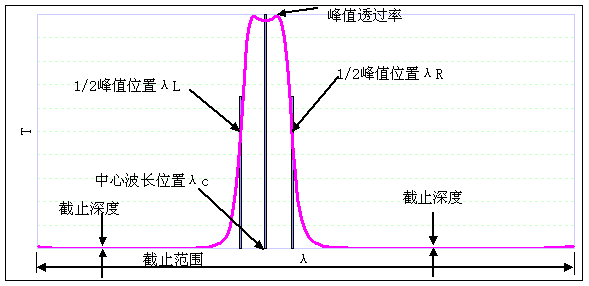
Center Wavelength (CWL) is the wavelength at which the filter reaches its peak transmittance, measured in nanometers. The concept itself is straightforward. What's tricky is the gap between the "nominal value" and the "actual value."
Take a CO₂ detection filter labeled "4.26μm." One manufacturer might hold a tolerance of ±2nm. Another might be ±10nm. On a datasheet, that's just a small footnote. In an actual system, it determines whether the sensor's response curve aligns precisely with CO₂'s characteristic absorption peak. Align well, and sensitivity is high. Drift by a few nanometers, and the signal drops—the sensor then needs a stronger light source or a longer integration time just to compensate.
So when you read this spec, don't just look at the nominal value. Look at the tolerance column.
Bandwidth: Narrower is not always better
Full Width at Half Maximum (FWHM) is the width between the two wavelength points where transmittance drops to 50% of the peak. This value describes the filter's "selectivity granularity"—the narrower the bandwidth, the more precise the wavelength selection and the stronger the rejection of other bands.
Sounds like narrower is better, right? In practice, it's a trade-off.
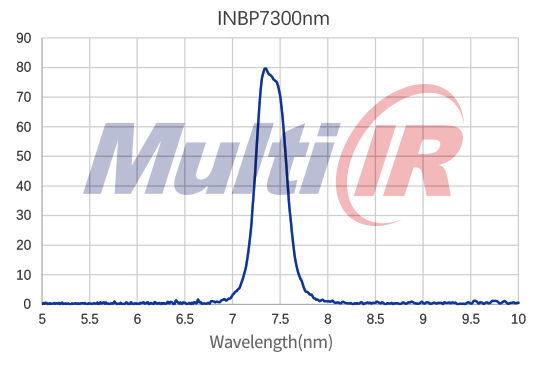
Narrow bandwidth means more precise wavelength selection—ideal for gas analysis, laser applications, and spectral detection where wavelength purity is critical. But the narrower the bandwidth, the less optical throughput passes through, and the lower the overall signal strength reaching the detector. If the light source isn't powerful enough, or the detector's sensitivity is limited, blindly chasing an ultra-narrow bandwidth can leave you with a signal too weak to be usable.
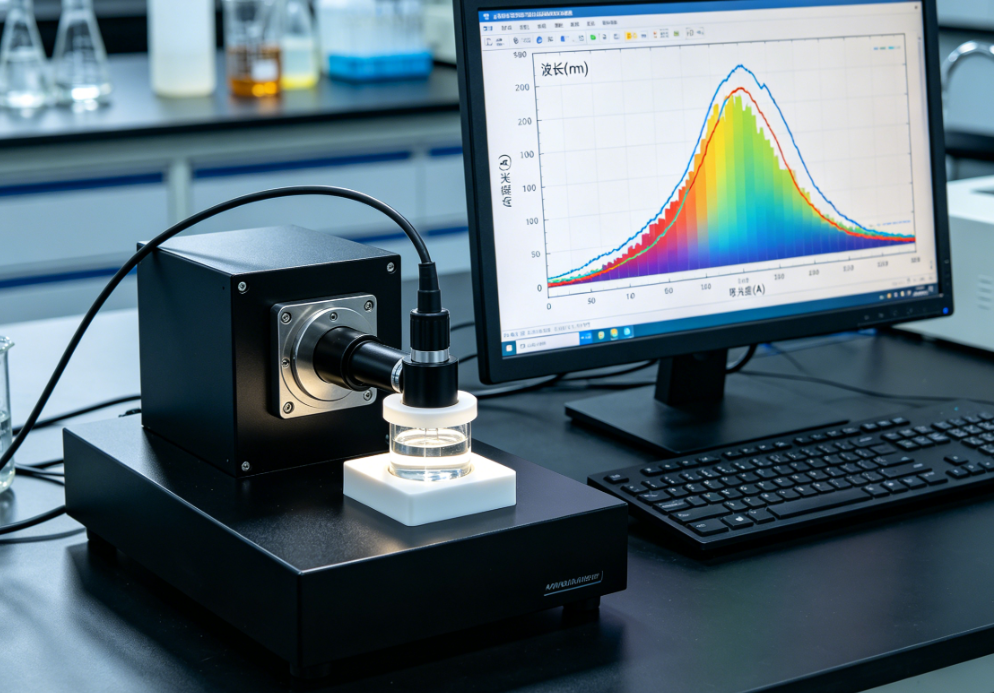
To select the right bandwidth, you need to know three things: the target wavelength, how strong your light source is, and what the detector's response curve looks like. Only when these three factors are established does bandwidth selection have a clear direction.
Blocking Depth: That OD number most people overlook
Blocking depth is expressed in OD (Optical Density). OD4 means transmittance below 0.01%. OD6 is an even deeper cutoff.
This parameter is overlooked far more often than it should be.
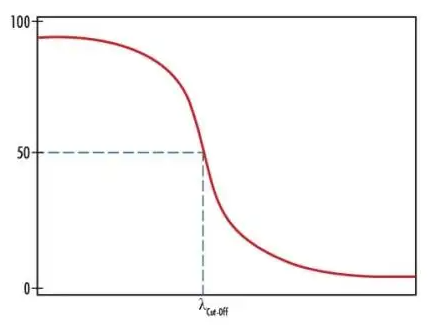
In infrared gas detection, if the filter doesn't block out-of-band wavelengths deeply enough, strong background light or absorption peaks from adjacent gases can create crosstalk, causing measurements to read high or low. This is especially critical in multi-component gas mixtures, where different gases often have characteristic absorption bands close to each other. In these cases, blocking depth directly determines the crosstalk level between channels.
OD4 and OD6 may look like just a number difference, but they represent a 100× difference in transmittance.
There's another detail that's easy to miss: blocking range. Some products only block a specific band—the datasheet's OD specification only applies within that range. If your application involves interfering wavelengths outside that range, the blocking performance is not guaranteed. When reviewing a datasheet, always cross-check the blocking range against the potential interference sources in your specific application.
Peak Transmittance: Don't just look at this one number
Many procurement people compare peak transmittance numbers—80% versus 90%, and intuitively, 90% looks better.
Transmittance matters, of course. But looking at peak transmittance in isolation—without considering the other parameters—is one of the easiest ways to make a bad selection.
High transmittance and shallow blocking depth often appear together in low-cost products—sacrificing blocking capability to achieve a pretty peak number.
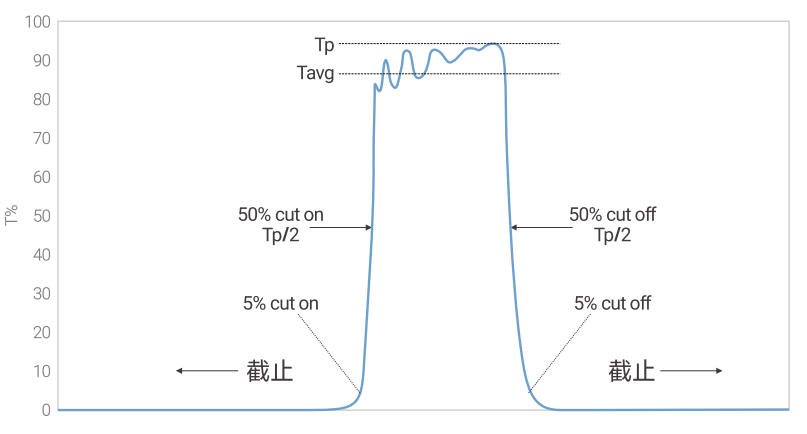
To properly evaluate a filter's optical performance, you need to look at the full transmittance curve—not just the peak percentage on the datasheet. If the supplier provides a measured spectral curve, prioritize that. The nominal peak transmittance is just a summary number. The shape of the curve—the slope, the flatness of the passband, the ripple in the blocking region—is where the real judgment lies.
Coating technology determines the consistency of all the parameters above
The four parameters above all depend on one thing for stable realization: the coating process behind them.
Optical thin-film coating is a step that demands extreme precision in both equipment and process control. Film thickness uniformity, refractive index accuracy, and interlayer adhesion—any deviation in any of these links will pull the final product's performance away from the design target.

Batch-to-batch consistency is a critical indicator of a supplier's manufacturing capability. The same product model—this batch today and the next batch three months from now—should produce curves that are essentially identical.
MULTI IR has made dedicated optimizations in film thickness control and chamber environment stability. That's why MULTI IR products can provide clear, quantified commitments on center wavelength and bandwidth consistency.
How to approach your filter selection
When you receive a filter datasheet, ask yourself four questions:
-
Does the center wavelength tolerance meet your system's wavelength accuracy requirements?
-
Is the bandwidth compatible with both your light source and detector?
-
Does the blocking depth and blocking range cover all potential interference bands?
-
Is there a measured spectral curve available for reference?
If you have clear answers to all four, your selection is on solid ground. If the supplier can't even provide a measured curve, the credibility of the datasheet numbers themselves is worth questioning.
Selecting infrared filters is not about comparing which datasheet looks better—it's about choosing the supplier who actually delivers those numbers.
Media Contact
Company Name: HANGZHOU MULTI IR TECHNOLOGY CO., LTD.
Email: Send Email
Country: China
Website: https://www.miroptech.com/