




Financial News
Global Turmoil Fuels Commodity Divide: Safe Havens Soar as Energy Wanes Amidst Geopolitical Tensions
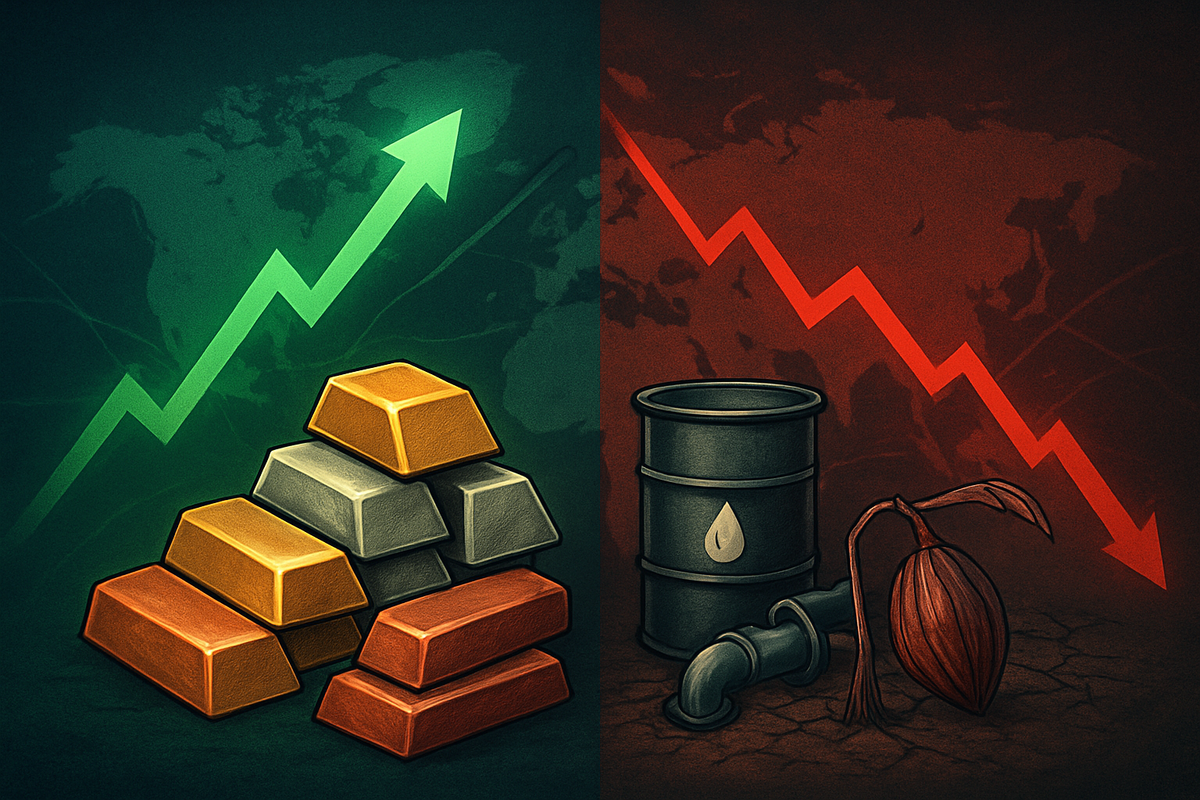
Global markets are currently grappling with a complex and often contradictory landscape in commodity prices, driven by a confluence of geopolitical tensions, persistent supply chain disruptions, and evolving economic policies. As of December 2025, a "great divergence" has become the defining characteristic of the commodity sector. While some commodities, particularly precious metals and certain industrial metals, have surged to multi-year highs, reflecting their role as safe-haven assets and facing structural deficits, others like crude oil and European natural gas have experienced declines due to oversupply and muted demand. This intricate interplay of forces is reshaping investment strategies, posing significant challenges for various industries, and signaling a period of continued volatility for the global economy.
This bifurcation highlights a profound shift in market dynamics. The traditional drivers of broad commodity supercycles have been overshadowed by more targeted demand related to the green energy transition and a pervasive flight to safety amidst global instability. The immediate implication is a highly uneven playing field, where companies and nations with exposure to specific metals are thriving, while those reliant on traditional energy sources or vulnerable agricultural supply chains face significant headwinds, necessitating urgent strategic adaptations.
Detailed Coverage: Unpacking the Commodity Conundrum
The journey to this bifurcated commodity market has been marked by a series of impactful events. Geopolitical conflicts, notably the ongoing tensions in the Middle East and the lingering effects of the Russia-Ukraine War, have been primary drivers. Throughout 2024 and 2025, escalating tensions between Israel and Iran, particularly concerning the Strait of Hormuz, have kept energy markets on edge, despite a recent softening in crude prices due to broader oversupply. The Russia-Ukraine war, which began in early 2022, continues to disrupt vital agricultural supply chains for wheat, corn, and sunflower oil, contributing to panic buying and higher food prices in previous years and prompting nations to prioritize resource security. This period has also seen a rise in "resource nationalism," with countries increasingly leveraging control over critical resources as a foreign policy tool, leading to export controls and added risk premiums.
Simultaneously, persistent supply chain disruptions have further exacerbated price volatility. Attacks by Houthi rebels in the Red Sea throughout 2024 and 2025 forced major shipping lines like Maersk to reroute vessels around the Cape of Good Hope, adding significant time and cost to global freight, thereby impacting overall supply chain efficiency and product costs. Specific agricultural markets have faced severe shocks; cocoa prices, for instance, reached all-time highs in April 2024 due to significant production deficits in Ghana and Côte d'Ivoire, stemming from aging trees, disease, pests, and adverse weather conditions—a stark reminder of climate change's increasing impact on agriculture. In industrial metals, the aluminum market has faced structural deficits, partly due to political instability in Guinea (a major bauxite producer) in 2021-2023, and ongoing delays in new capacity additions globally, tightening market conditions through late 2025.
Economic policies have played a dual role in shaping this landscape. Aggressive monetary tightening by central banks, including the US Federal Reserve and the European Central Bank, throughout 2025 has aimed to curb persistent inflation. While these policies contribute to a global economic slowdown, projected to lead to a multi-year decline in overall commodity prices by 2026, they also stifle new investment in commodity projects and increase the cost of holding inventory. Furthermore, the prospect of new US trade policies, such as sweeping tariffs on imports from China, Mexico, and Canada, threatened retaliatory measures and increased uncertainty, impacting agricultural and energy commodities. China's economic performance and policy shifts, including expected steel production cuts, continue to exert significant influence on industrial commodities like iron ore and aluminum, with its approach to resource markets increasingly reflecting geopolitical rather than purely economic considerations.
Initial market reactions have been characterized by heightened volatility and a clear flight to safety. Gold and silver have surged to multi-year and even all-time highs, benefiting from their traditional role as safe-haven assets amidst geopolitical anxieties, a weaker US dollar, and consistent central bank purchases. Conversely, the "great divergence" has seen crude oil and European natural gas prices soften due to oversupply and moderated demand, despite regional geopolitical flare-ups. This mixed picture presents both challenges and opportunities, compelling investors and businesses to navigate a highly unpredictable global economic environment.
Corporate Fortunes: Winners and Losers in a Divergent Market
The "great divergence" in commodity prices as of December 2025 is creating a clear delineation of winners and losers across global public companies and their respective sectors. Companies heavily invested in precious and certain industrial metals are poised for significant gains, while those reliant on stable or lower crude oil and natural gas prices, or grappling with extreme spikes in niche agricultural commodities like cocoa, face substantial headwinds.
In the winning camp, Precious Metals Mining companies are experiencing a robust upturn. Gold prices have rallied by an estimated 60% in 2025, with silver outperforming due to strong industrial demand, geopolitical tensions, economic uncertainties, and central bank easing. Major players like Newmont Corporation (NYSE: NEM) and Barrick Gold Corporation (NYSE: GOLD) are directly benefiting from enhanced cash flow and higher profit margins. Their scale and cost control measures allow them to capitalize effectively on sustained high gold prices. Other beneficiaries include AngloGold Ashanti (NYSE: AU) and Kinross Gold (NYSE: KGC), alongside streaming and royalty companies such as Franco-Nevada Corporation (NYSE: FNV), which profits from price increases without direct mining operational risks.
Similarly, the Industrial Metals Mining sector is witnessing a strong rally, particularly for metals crucial to the global energy transition. Copper, in high demand for electric vehicles (EVs), renewable energy infrastructure, and data centers, has surged by 30% in 2025, with further increases projected. This trend significantly benefits giants like BHP Group (ASX: BHP), the world's largest copper miner, which is actively investing in expansion. Other key beneficiaries include Southern Copper Corporation (NYSE: SCCO), Freeport-McMoRan Inc. (NYSE: FCX), Teck Resources (NYSE: TECK), and Capstone Copper Corp (TSX: CSC), all with high exposure to copper and robust growth plans. Miners of lithium, nickel, cobalt, and manganese are also seeing increased demand and potentially higher prices as the EV and energy storage sectors continue their rapid expansion.
Conversely, companies in the Crude Oil and Natural Gas Exploration & Production (Upstream) sector are facing a more challenging environment. While geopolitical events can cause temporary spikes, the general outlook for crude oil prices in 2025 and 2026 points to a decline due to slower demand growth and increased global production. Natural gas prices, though volatile, have shown a slightly lower overall trend for European markets. This translates to reduced revenues, lower profit margins, and potential cutbacks in capital expenditures for pure-play E&P companies like APA Corporation (NASDAQ: APA), Diamondback Energy (NASDAQ: FANG), and ConocoPhillips (NYSE: COP). Oilfield services companies, which support these producers, will also feel the pinch. Integrated energy majors such as ExxonMobil (NYSE: XOM), Chevron (NYSE: CVX), and Shell (NYSE: SHEL) face a mixed impact; while their upstream segments may suffer, their downstream operations (refining and marketing) could see some benefits from lower input costs, assuming demand for refined products remains robust.
Perhaps most acutely impacted are companies in the Chocolate and Confectionery sector, grappling with unprecedented cocoa prices. Cocoa reached over $10,000 per metric ton in 2025, the highest in 60 years, driven by adverse weather, crop diseases, and labor issues in West Africa. Major chocolate manufacturers like Mondelēz International (NASDAQ: MDLZ) have warned of significant impacts on earnings, forecasting drops in adjusted earnings per share. The Hershey Company (NYSE: HSY) reported a difficult start to 2025, with declining sales volumes and rising production costs forcing price increases and even the exploration of non-cocoa alternatives for seasonal treats. Other global players such as Barry Callebaut, Lindt & Sprüngli (SWX: LISN), and Nestlé (SWX: NSRGY) are also revising production, implementing price hikes, and reformulating products to mitigate the severe financial pressure. These companies are likely to continue passing on higher costs to consumers, potentially affecting sales volumes and consumer choices.
Wider Significance: Reshaping Global Economic Paradigms
The "great divergence" in global commodity prices as of December 2025 is not merely a market anomaly but a profound indicator of shifting global economic paradigms, with far-reaching implications for industries, governments, and consumers. This period, marked by surging precious and industrial metals, declining oil and natural gas prices, and volatile agricultural commodities like cocoa, is reshaping broader industry trends and demanding adaptive strategies.
At its core, this divergence is deeply intertwined with the Green and Digital Supercycle. The accelerating global energy transition and the relentless expansion of digital infrastructure are creating unprecedented structural demand for industrial metals. Copper and silver, for instance, are indispensable in solar panels, electric vehicles (EVs), next-generation electrification grids, AI infrastructure, and data centers. This fundamental shift is transforming global economic architecture, effectively ushering in what many analysts term a "green and digital supercycle" for these critical materials, contrasting sharply with the more traditional commodity supercycles driven by broad industrial growth. Simultaneously, persistent geopolitical and macroeconomic instability, including uncertainty over trade policies and central bank actions, continues to fuel demand for safe-haven assets like gold and silver, reinforcing their upward trajectory.
The ripple effects of this divergence are extensive. For industries, it creates a complex landscape of winners and losers. Mining companies focused on industrial and precious metals, such as BHP Group (ASX: BHP), Rio Tinto (ASX: RIO), and Glencore (LSE: GLEN), are seeing increased revenues and are incentivized to invest further in exploration and production. Conversely, upstream oil and gas exploration and production companies face revenue contractions, potentially leading to scaled-back capital expenditures. Energy-importing nations and industries, however, may benefit from reduced input costs for manufacturing and transportation, which could bolster consumer purchasing power and enhance competitiveness in some sectors. Manufacturers reliant on specific raw materials face a dual challenge: benefiting from lower energy costs in some areas while grappling with surging prices for critical industrial metals, forcing them to re-evaluate sourcing strategies and production efficiencies. The food industry, particularly chocolate manufacturers, is experiencing significant pressure from high cocoa prices, leading to increased retail prices and "shrinkflation," impacting consumer spending habits.
From a regulatory and policy standpoint, governments worldwide are increasingly recognizing the strategic importance of critical minerals for the green transition. This realization is driving policies aimed at securing domestic supply chains, promoting recycling initiatives, and fostering international partnerships to ensure reliable access to these vital resources. Trade policies, such as specific tariffs on chocolate imports or packaging materials, can further distort commodity flows and prices, creating indirect ripple effects across markets. Central banks are navigating a delicate balance, with the US Federal Reserve's rate cuts in late 2025 reflecting an attempt to counter a slowing economy while managing persistent inflationary pressures in specific sectors. Moreover, the vulnerability of agricultural commodities to climate change underscores the urgent need for robust climate adaptation and mitigation policies to prevent future price shocks and support agricultural resilience.
Historically, the current market behavior, often dubbed a "great divergence," stands apart from previous broad-based commodity supercycles. While some comparisons to the stagflationary environment of the 1970s are being drawn due to simultaneous inflation pressures and economic growth concerns, the targeted nature of this divergence, driven by specific technological and environmental transitions, makes it unique. The rapid surge in silver prices in 2025, reaching new highs, echoes its sharp run-up in 2011, which was followed by a significant correction, suggesting potential future volatility. Conversely, the decline in energy prices, driven by oversupply and demand destruction, draws parallels to historical events like the 2014-2016 oil price collapse or the 2008 financial crisis. These historical precedents offer valuable lessons in market dynamics but also highlight the novel aspects of the current, structurally driven commodity market shifts.
The Road Ahead: Navigating Future Commodity Landscapes
The current "great divergence" in global commodity markets, characterized by surging precious and industrial metals, declining oil and gas, and historically high cocoa prices as of December 2025, sets the stage for a dynamic and often unpredictable future. Both short-term volatility and long-term structural shifts will demand strategic pivots from businesses and governments alike.
In the short term (next 6-12 months, into 2026), the broader commodity index is projected to decline by 5%, influenced largely by the energy sector reaching a six-year low. However, this masks significant variations. Precious metals, particularly gold, are anticipated to consolidate before resuming a rally, with forecasts suggesting prices between $3,750 and $5,000 per ounce. Silver and platinum may remain volatile but are expected to see continued demand. Industrial metals like copper, aluminum, and tin will likely experience stable or modest price increases, driven by ongoing green investments and infrastructure projects. Conversely, a bearish outlook persists for oil and gas, with a significant global oil surplus expected throughout 2026. Increased US LNG exports are set to bolster global supply, potentially lowering international gas prices while tightening the US domestic market. Cocoa prices are expected to remain elevated due to unresolved structural supply issues and extreme weather in West Africa, with no drastic improvement anticipated in the near term. Geopolitical conflicts, trade tariffs, carbon costs, and central bank monetary policies, including the US Federal Reserve's rate cuts in late 2025, will continue to be significant short-term influencers.
Looking at the long term (beyond 2026, to 2030 and beyond), several structural transformations are set to dominate. Gold is widely projected to continue its upward trajectory, with some analysts forecasting $4,500-$5,000 by 2027-2028 and potentially even $10,000 by 2030, driven by sustained central bank demand, geopolitical shifts, and declining confidence in fiat currencies. The green energy transition will be the paramount force for industrial metals, with demand for EV, renewable energy, and grid expansion metals projected to nearly triple between 2023 and 2030, and rise to about seven times current levels by 2050. Copper, for instance, faces a projected structural deficit. For oil and gas, the accelerating energy transition implies a long-term shift away from fossil fuels, fundamentally reshaping demand dynamics. Cocoa prices are structurally likely to remain higher than historical averages due to persistent climate change impacts, which could reduce suitable growing areas in West Africa by 20-50% by 2050. The industry will likely diversify sourcing beyond West Africa. Overall, population growth, urbanization, technological advancements (digitalization, AI), and sustainability initiatives will profoundly influence commodity markets, with food, climate, and energy security remaining top national priorities. Increased volatility is expected to be a persistent feature of commodity markets up to 2030.
To navigate this landscape, strategic pivots and adaptations are critical for businesses. Enhancing supply chain resilience and diversification is paramount, requiring flexible sourcing across multiple geographies, dynamic price adjustment clauses in contracts, and reasonable inventory buffers. Businesses must adopt strategic forecasting and technology, leveraging predictive analytics and real-time monitoring to adapt to rapid price changes. Robust risk management and hedging strategies using financial instruments will be essential to mitigate price volatility. For sectors like chocolate manufacturing, product innovation and substitution will be key to maintaining profitability amidst high input costs. Furthermore, integrating sustainability and ESG factors into sourcing and operations can provide a competitive edge. Mining and industrial companies should strategically invest in "green metals" and critical minerals for the energy transition.
For governments, the focus will be on resource security and nationalism, with resource-rich nations prioritizing value-added processing and resource-importing nations securing critical minerals through strategic reserves and trade agreements. Energy transition policies, such as carbon border adjustment mechanisms, will impact import costs and competitiveness. Regulatory frameworks for critical minerals are likely to see increased support for domestic projects and potentially eased restrictions to meet escalating demand. Climate change adaptation in agriculture will be crucial for food security, promoting resilient farming practices. Governments will also need to navigate increasing trade barriers and potential trade wars.
Conclusion: Adapting to a New Era of Commodity Volatility
The global commodity market in December 2025 is a complex and highly fragmented environment, with the "great divergence" between metals and energy defining a new era. This divergence reflects deeper structural changes driven by the accelerating energy transition, coupled with persistent geopolitical and macroeconomic shifts. The key takeaway is that a one-size-fits-all approach to commodities is no longer viable; instead, nuanced strategies are required to navigate this intricate landscape.
Moving forward, the market will continue to be characterized by heightened volatility and a clear separation of fortunes. Industrial metals, vital for the burgeoning green economy, are poised for continued strength, while precious metals will likely retain their allure as safe havens amidst ongoing global uncertainties. Conversely, traditional energy markets face a protracted period of oversupply and muted demand, necessitating strategic recalibration from producers. Agricultural commodities, particularly those vulnerable to climate change, will remain susceptible to acute supply shocks, demanding innovative solutions for food security.
The lasting impact of this period will be a fundamental reshaping of global supply chains, an intensified focus on resource nationalism, and an acceleration of the energy transition. Businesses that prioritize supply chain resilience, embrace technological innovation, and strategically align with the demands of the green economy will be best positioned to thrive. Governments, meanwhile, must implement proactive policies to secure critical resources, foster climate adaptation in agriculture, and manage the complex interplay of trade and geopolitical forces.
Investors in the coming months should maintain a watchful eye on several key indicators. Continued monitoring of geopolitical developments, particularly in the Middle East and regarding major trade relationships, is crucial for assessing risk premiums. Tracking global economic growth forecasts and central bank monetary policy decisions will be essential for understanding broader demand trends and currency movements. Furthermore, close attention to the progress of the green energy transition, including investments in renewable infrastructure and EV adoption, will provide insights into the sustained demand for critical industrial metals. Finally, localized weather patterns and agricultural reports, especially for vulnerable crops, will offer vital clues for specific agricultural commodity price movements. Agility, diversification, and a deep understanding of commodity-specific fundamentals will be paramount for navigating this new, divergent commodity landscape.
This content is intended for informational purposes only and is not financial advice
More News
View More




Recent Quotes
View More
Quotes delayed at least 20 minutes.
By accessing this page, you agree to the Privacy Policy and Terms Of Service.