




Financial News
Europe Seals Historic Russian Gas Ban, Propelling U.S. LNG to New Heights
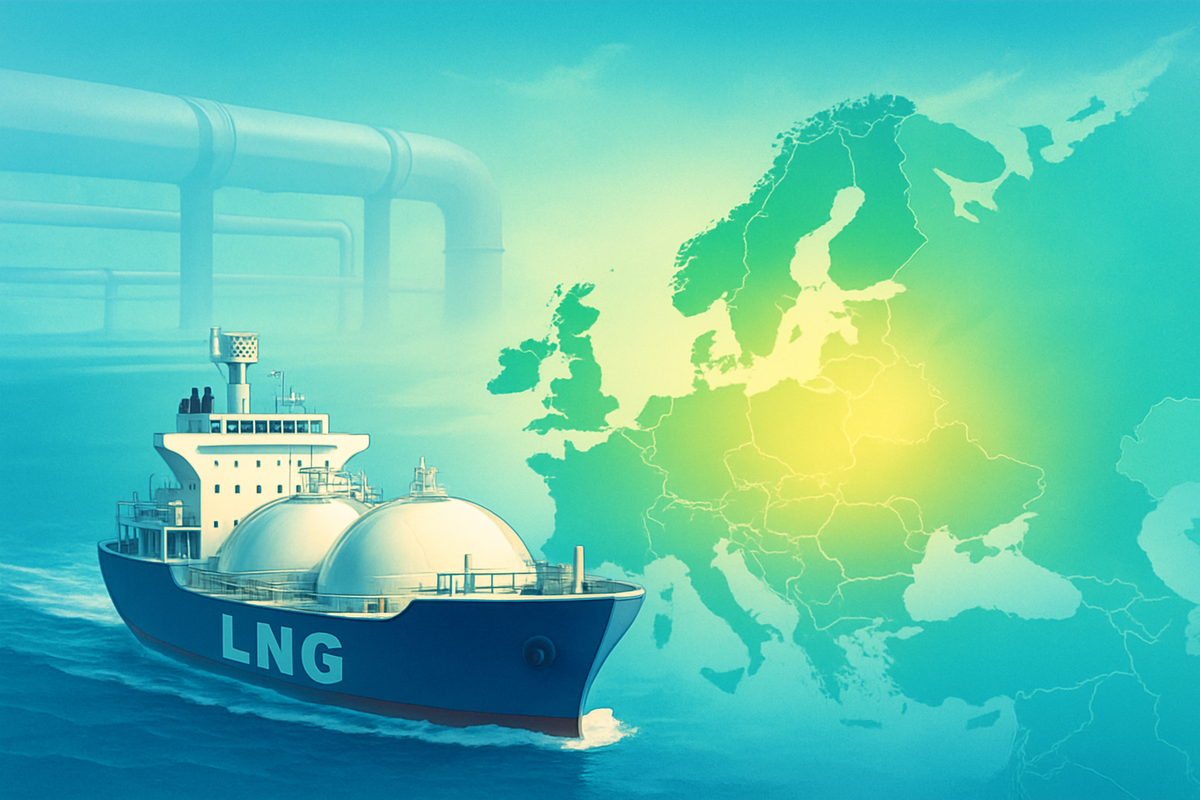
Brussels has delivered a decisive blow to Russia's energy leverage, enacting a permanent and phased ban on all Russian natural gas imports. This landmark agreement, provisionally finalized on December 3, 2025, marks a pivotal moment in Europe's quest for energy independence and is set to dramatically reshape global energy markets. The comprehensive prohibition targets both liquefied natural gas (LNG) and pipeline gas, with definitive timelines set for their complete cessation.
This monumental policy shift, a culmination of strategic efforts following the 2022 invasion of Ukraine, not only solidifies Europe's energy security but also casts a bright spotlight on the burgeoning role of U.S. Liquefied Natural Gas (LNG) as a critical alternative. With Europe now firmly committed to weaning itself off Russian supplies, the demand for reliable, diversified energy sources is set to soar, positioning American LNG producers and exporters for unprecedented growth and market dominance.
A New Era of European Energy Independence Dawns
The European Union's provisional political agreement, reached on December 3, 2025, establishes a comprehensive and permanent ban on all Russian natural gas imports, a move that has been years in the making. This historic decision, part of the broader REPowerEU Roadmap, aims to eliminate the EU's dependence on Russian fossil fuels and bolster its energy independence, competitiveness, and resilience.
The ban will be implemented in a phased manner to mitigate immediate market shocks. Russian LNG imports are slated for a complete phase-out by December 31, 2026. Specifically, short-term LNG supply contracts concluded before June 17, 2025, will see their prohibition take effect from April 25, 2026, while long-term LNG contracts signed before the same date will be banned starting January 1, 2027, aligning with the EU's 19th sanctions package. Pipeline gas imports from Russia are set to conclude by September 30, 2027, with potential extensions until November 1, 2027, under specific gas storage level conditions. Short-term pipeline gas contracts (pre-June 17, 2025) will be banned from June 17, 2026, and long-term contracts will only be honored until the September 30, 2027 deadline.
This policy is the culmination of a strategic pivot initiated in 2022, following Russia's full-scale invasion of Ukraine. Historically, Russia supplied approximately 45% of the EU's natural gas imports in 2021, a reliance that created significant geopolitical vulnerability. Key players involved in this decision include the European Commission, the European Parliament, and member states, though some, like Hungary and Slovakia, have voiced strong opposition due to their high dependence on Russian energy. Initial market reactions have been largely positive from an energy security standpoint, with analysts anticipating a sustained shift in global gas trade flows. The ban is expected to deprive Russia of approximately €10 billion in annual energy revenues, further impacting its economy.
Market Winners and Losers in the Post-Russian Gas Era
The European Union's permanent ban on Russian natural gas imports will undoubtedly create significant shifts in the global energy landscape, leading to clear winners and losers among public companies and national economies. The most prominent beneficiary is expected to be the United States and its burgeoning Liquefied Natural Gas (LNG) industry.
U.S. LNG producers and exporters are poised for a substantial uplift. Companies like Cheniere Energy (NYSEAMERICAN: LNG), Tellurian (NYSEAMERICAN: TELL), and NextDecade Corporation (NASDAQ: NEXT) are at the forefront of this expansion. The U.S. has already emerged as Europe's largest LNG supplier, accounting for nearly half (48%) of total European LNG imports in 2023, and further increasing to 53% in 2024. With Europe now committed to a complete Russian gas phase-out, demand for U.S. LNG will be sustained and likely grow. This sustained demand is critical for underpinning the financial investment decisions (FIDs) for new liquefaction capacity in the U.S. Several projects are underway, with U.S. LNG capacity projected to more than double by 2029, from 11.4 Bcf/d in early 2024 to 28.7 Bcf/d. This expansion will translate into increased revenues and market share for these companies.
Conversely, Russian energy giants, primarily Gazprom (MCX: GAZP), stand to lose significantly. Gazprom, once Europe's primary pipeline gas supplier, has seen its market share in the EU plummet. The complete ban will further erode its revenue streams from Europe, forcing it to seek alternative markets, primarily in Asia, which may come with logistical challenges and discounted prices. European utilities that had long-term contracts with Gazprom will need to fully reorient their procurement strategies, potentially incurring higher costs in the short term as they secure new supplies. While the phased approach offers some transition time, the long-term outlook for Russian gas exports to Europe is now definitively bleak. Additionally, some European industrial sectors heavily reliant on affordable gas may face increased operational costs, potentially impacting their competitiveness.
Broader Implications and a Shifting Global Energy Paradigm
The European Union's permanent ban on Russian natural gas imports is far more than a mere trade policy; it represents a fundamental recalibration of global energy geopolitics and accelerates several broader industry trends. This move firmly embeds the principle of energy diversification and security into European policy, serving as a powerful precedent for other nations or blocs seeking to reduce reliance on single-source energy suppliers.
The most significant ripple effect will be on the global LNG market. The sustained European demand will likely keep global LNG prices elevated compared to pre-2022 levels, creating a more competitive landscape for securing supplies. This could impact Asian buyers, who might face increased competition from Europe for available cargoes. The ban also underscores the growing strategic importance of gas infrastructure, particularly regasification terminals and interconnectors, within Europe. Nations that have invested heavily in these facilities, such as Spain, France, and Germany, will find themselves in stronger positions to secure and distribute LNG imports. Furthermore, the decision will undoubtedly intensify the push for renewable energy and nuclear power within the EU, as member states seek to further reduce their overall fossil fuel dependence and meet ambitious climate targets. Half of the EU's electricity already comes from renewables, and 74% when including nuclear, a trend that will only accelerate.
Historically, the EU's move echoes past efforts by nations to de-link energy security from geopolitical adversaries, though perhaps none on this scale in recent memory. The oil crises of the 1970s spurred similar drives for energy independence, leading to strategic petroleum reserves and diversification efforts. However, the current ban on Russian gas is unique in its comprehensive nature and the speed with which Europe has pivoted. Regulatory and policy implications are profound, cementing the EU's commitment to its REPowerEU strategy and likely influencing future energy infrastructure investments and trade agreements globally. This event signifies a permanent shift away from the era of cheap, readily available Russian pipeline gas for Europe.
The Road Ahead: Navigating a Transformed Energy Landscape
The European Union's permanent ban on Russian natural gas imports sets in motion a dynamic period of adaptation and opportunity across the global energy sector. In the short term, the primary focus for Europe will be on ensuring continued supply stability, especially as the phased ban on LNG and pipeline gas takes full effect. This will involve maximizing imports from existing non-Russian sources, optimizing gas storage levels, and continuing to push for energy efficiency and demand reduction measures. The upcoming winter seasons will be critical tests of Europe's diversified energy architecture.
Looking further ahead, the long-term possibilities point towards a fundamentally reshaped energy market. U.S. LNG producers will continue to be a cornerstone of Europe's energy strategy, necessitating sustained investment in new liquefaction and export capacity in the United States. This also opens doors for other global LNG suppliers, such as Qatar and Australia, to solidify or expand their market presence in Europe. Strategic pivots will be required from energy companies and governments alike; European utilities will need robust, long-term procurement strategies that prioritize diversity and reliability, while governments will continue to invest heavily in renewable energy infrastructure and potentially revisit the role of nuclear power.
Market opportunities will emerge for innovators in energy storage, grid modernization, and green hydrogen, as Europe seeks to further decarbonize its energy mix while maintaining security of supply. Challenges will include managing potential price volatility in the global gas market, ensuring equitable access to energy across member states, and navigating the geopolitical complexities of new energy partnerships. Potential scenarios range from a stable, diversified European energy market underpinned by global LNG and renewables, to periods of price spikes if supply disruptions occur or if new infrastructure development lags. The decisive action taken by the EU underscores a commitment to a future where energy security is not held hostage to geopolitical whims.
A Definitive End to Russian Energy Dependence
The European Union's permanent and phased ban on all Russian natural gas imports represents a monumental and irreversible shift in the global energy landscape. The key takeaway is clear: Europe has definitively severed its long-standing, often fraught, energy ties with Russia, prioritizing energy independence and security above all else. This strategic pivot, culminating in the December 3, 2025, agreement, is a direct response to geopolitical realities and a powerful affirmation of the EU's commitment to its REPowerEU agenda.
Moving forward, the market will be characterized by sustained high demand for Liquefied Natural Gas (LNG) from diverse sources, with the United States emerging as the undisputed leader in supplying Europe. This will drive significant investment in U.S. LNG export capacity and reshape global trade routes for natural gas. While the transition will present challenges, including potential price volatility and the need for robust infrastructure development, the long-term impact will be a more resilient, diversified, and decarbonized European energy system.
Investors should closely watch the progress of new U.S. LNG projects, the signing of long-term LNG supply contracts between European buyers and global suppliers, and the acceleration of renewable energy investments within the EU. The geopolitical implications for Russia are profound, signaling a lasting reduction in its energy revenues from its historically most lucrative market. This era marks not just an end to Russian energy dominance in Europe, but the dawn of a new, more independent, and strategically diversified energy future for the continent.
This content is intended for informational purposes only and is not financial advice
More News
View More


Recent Quotes
View More
Quotes delayed at least 20 minutes.
By accessing this page, you agree to the Privacy Policy and Terms Of Service.