




Financial News
Navitas Semiconductor Navigates Strategic Pivot Towards High-Growth AI and EV Markets Amidst Stock Volatility
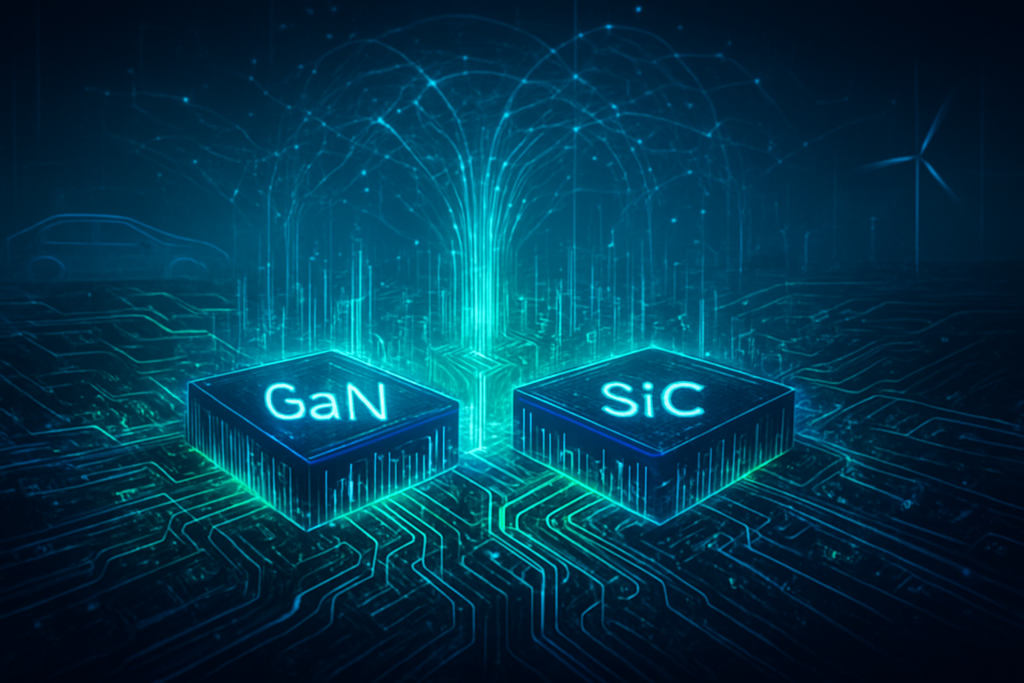
Navitas Semiconductor (NASDAQ: NVTS), a leading innovator in gallium nitride (GaN) and silicon carbide (SiC) power semiconductors, is undergoing a significant strategic transformation, dubbed "Navitas 2.0." This pivot involves shifting focus from lower-margin consumer and mobile markets to high-power, high-growth segments like AI data centers, electric vehicles (EVs), and renewable energy infrastructure. This strategic realignment has profoundly impacted its recent market performance and stock fluctuations, with investor sentiment reflecting a cautious optimism for long-term growth despite near-term financial adjustments.
The company's stock has shown remarkable volatility, surging 165% year-to-date in 2025, even as it faces anticipated revenue declines in the immediate future due to its deliberate exit from less profitable ventures. Navitas's immediate significance lies in its crucial role in enabling more efficient power conversion, particularly in the burgeoning AI data center market, where its GaN and SiC technologies are becoming indispensable for next-generation computing infrastructure.
GaN and SiC: Powering the Future of High-Efficiency Electronics
Navitas Semiconductor's core strength lies in its advanced gallium nitride (GaN) and silicon carbide (SiC) power ICs and discrete components, which are at the forefront of enabling next-generation power conversion. Unlike traditional silicon-based power semiconductors, GaN and SiC offer superior performance characteristics, including higher switching speeds, lower on-resistance, and reduced energy losses. These attributes are critical for applications demanding high power density and efficiency, such as fast chargers, data center power supplies, electric vehicle powertrains, and renewable energy inverters.
The company's "Navitas 2.0" strategy specifically targets the deployment of these advanced materials in high-power, high-growth markets. For instance, Navitas is recognized for its GaNFast power ICs, which integrate GaN power FETs with drive, control, and protection features into a single, monolithic device. This integration simplifies design, reduces component count, and enhances reliability, offering a distinct advantage over discrete GaN solutions. In the SiC domain, Navitas is developing and sampling high-voltage SiC modules, including 2.3kV and 3.3kV devices, specifically for demanding applications like energy storage systems and industrial electrification.
This approach significantly differs from previous reliance on the consumer electronics market, where profit margins are typically thinner and product lifecycles shorter. By focusing on enterprise and industrial applications, Navitas aims to leverage the inherent technical advantages of GaN and SiC to address critical pain points like power density and energy efficiency in complex systems. Initial reactions from the AI research community and power electronics industry experts have been largely positive, viewing GaN and SiC as essential technologies for the future, particularly given the escalating power demands of AI data centers. The selection of Navitas as a power semiconductor partner by NVIDIA for its next-generation 800V DC architecture in AI factory computing serves as a strong validation of Navitas's technological leadership and the market's recognition of its advanced solutions.
Market Dynamics: Beneficiaries, Competition, and Strategic Positioning
Navitas Semiconductor's strategic pivot towards high-power GaN and SiC solutions positions it to significantly benefit from the explosive growth in several key sectors. Companies investing heavily in AI infrastructure, electric vehicles, and renewable energy stand to gain from Navitas's ability to provide more efficient and compact power conversion. Notably, hyperscale data center operators and AI hardware manufacturers, such as NVIDIA (NASDAQ: NVDA) and other developers of AI accelerators, are direct beneficiaries, as Navitas's technology helps address the critical challenges of power delivery and thermal management in increasingly dense AI computing environments. The company's partnership with NVIDIA underscores its critical role in enabling the next generation of AI factories.
The competitive landscape for Navitas is multifaceted, involving both established semiconductor giants and other specialized GaN/SiC players. Major tech companies like Infineon (ETR: IFX, OTCQX: IFNNY), STMicroelectronics (NYSE: STM), and Wolfspeed (NYSE: WOLF) are also heavily invested in GaN and SiC technologies. However, Navitas aims to differentiate itself through its GaNFast IC integration approach, offering a more complete and easy-to-implement solution compared to discrete components. This could potentially disrupt existing power supply designs that rely on more complex discrete GaN or SiC implementations. For startups in the power electronics space, Navitas's advancements could either present opportunities for collaboration or intensify competition, depending on their specific niche.
Navitas's market positioning is strengthened by its strategic focus on specific high-growth applications where GaN and SiC offer distinct advantages. By moving away from the highly commoditized consumer mobile market, the company seeks higher-margin opportunities and more stable, long-term design wins. Its expanding ecosystem, including collaborations with GlobalFoundries (NASDAQ: GFS) for U.S.-based GaN technology and WT Microelectronics (TPE: 3036) for Asian distribution, further solidifies its strategic advantages. This network of partnerships aims to accelerate GaN adoption globally and ensure a robust supply chain, crucial for scaling its solutions in demanding enterprise and industrial markets.
Broader Implications: Powering the AI Revolution and Beyond
Navitas Semiconductor's advancements in GaN and SiC power semiconductors are not merely incremental improvements; they represent a fundamental shift in how power is managed in the broader AI landscape and other critical sectors. The increasing demand for computational power in AI, particularly for training large language models and running complex inference tasks, has led to a significant surge in energy consumption within data centers. Traditional silicon-based power solutions are reaching their limits in terms of efficiency and power density. GaN and SiC technologies, with their superior switching characteristics and reduced energy losses, are becoming indispensable for addressing this energy crisis, enabling smaller, lighter, and more efficient power supplies that can handle the extreme power requirements of AI accelerators.
The impact of this shift extends far beyond data centers. In electric vehicles, GaN and SiC enable more efficient inverters and on-board chargers, leading to increased range and faster charging times. In renewable energy, they improve the efficiency of solar microinverters and energy storage systems, crucial for grid modernization and decarbonization efforts. These developments fit perfectly into broader trends of electrification, digitalization, and the pursuit of sustainability across industries.
However, the widespread adoption of GaN and SiC also presents potential concerns. The supply chain for these relatively newer materials is still maturing compared to silicon, and any disruptions could impact production. Furthermore, the cost premium associated with GaN and SiC, while decreasing, can still be a barrier for some applications. Despite these challenges, the current trajectory suggests that GaN and SiC are on par with previous semiconductor milestones, such as the transition from germanium to silicon, in terms of their potential to unlock new levels of performance and efficiency. Their role in enabling the current AI revolution, which is heavily dependent on efficient power delivery, underscores their significance as a foundational technology for the next wave of technological innovation.
The Road Ahead: Anticipated Developments and Challenges
The future for Navitas Semiconductor, and indeed for the broader GaN and SiC power semiconductor market, is characterized by anticipated rapid growth and continuous innovation. In the near-term, Navitas expects to complete its strategic pivot, with management projecting Q4 2025 revenues to be the lowest point as it sheds lower-margin businesses. However, a healthier growth rate is expected to resume in late 2025 and accelerate significantly through 2027 and 2028, with substantial contributions from AI data centers and EV markets. The company's bidirectional GaN ICs, GaN BDS, launched in early 2025, are expected to ramp up in solar microinverters by late 2025, indicating new product cycles coming online.
Long-term developments include the increasing adoption of 800-volt equipment in data centers, starting in 2026 and accelerating through 2030, which Navitas is well-positioned to capitalize on with its GaN and SiC solutions. Experts predict that the overall GaN and SiC device markets will continue robust annualized growth of 25% through 2032, highlighting the sustained demand for these efficient power technologies. Potential applications on the horizon include more advanced power solutions for robotics, industrial automation, and even future aerospace applications, where weight and efficiency are paramount.
However, several challenges need to be addressed. Scaling manufacturing to meet the anticipated demand, further reducing the cost of GaN and SiC devices, and educating the broader engineering community on their optimal design and implementation are crucial. Competition from other wide-bandgap materials and ongoing advancements in silicon-based technologies could also pose challenges. Despite these hurdles, experts predict that the undeniable performance benefits and efficiency gains offered by GaN and SiC will drive their continued integration into critical infrastructure. What to watch for next includes Navitas's revenue rebound in 2027 and beyond, further strategic partnerships, and the expansion of its product portfolio into even higher power and voltage applications.
Navitas's Strategic Resurgence: A New Era for Power Semiconductors
Navitas Semiconductor's journey through 2025 and into the future marks a pivotal moment in the power semiconductor industry. The company's "Navitas 2.0" strategy, a decisive shift from low-margin consumer electronics to high-growth, high-power applications like AI data centers, EVs, and renewable energy, is a clear recognition of the evolving demands for energy efficiency and power density. While this transition has introduced near-term revenue pressures and stock volatility, the significant year-to-date stock surge of 165% reflects strong investor confidence in its long-term vision and its foundational role in powering the AI revolution.
This development is profoundly significant in AI history, as the efficiency of power delivery is becoming as critical as computational power itself. Navitas's GaN and SiC technologies are not just components; they are enablers of the next generation of AI infrastructure, allowing for more powerful, compact, and sustainable computing. The validation from industry leaders like NVIDIA underscores the transformative potential of these materials. The challenges of scaling production, managing costs, and navigating a competitive landscape remain, but Navitas's strong cash position and strategic partnerships provide a solid foundation for continued innovation and market penetration.
In the coming weeks and months, observers should closely watch for Navitas's Q4 2025 results as the anticipated low point in its revenue trajectory. Subsequent quarters will be crucial indicators of the success of its strategic pivot and the ramp-up of its GaN and SiC solutions in key markets. Further announcements regarding partnerships, new product introductions, and design wins in AI data centers, EVs, and renewable energy will provide insights into the company's progress and its long-term impact on the global energy and technology landscape. Navitas Semiconductor is not just riding the wave of technological change; it is actively shaping the future of efficient power.
This content is intended for informational purposes only and represents analysis of current AI developments.
TokenRing AI delivers enterprise-grade solutions for multi-agent AI workflow orchestration, AI-powered development tools, and seamless remote collaboration platforms.
For more information, visit https://www.tokenring.ai/.
More News
View More

Recent Quotes
View More
Quotes delayed at least 20 minutes.
By accessing this page, you agree to the Privacy Policy and Terms Of Service.