




Financial News
The AI-Driven Data Center Boom: Igniting a Domestic Semiconductor Manufacturing Revolution
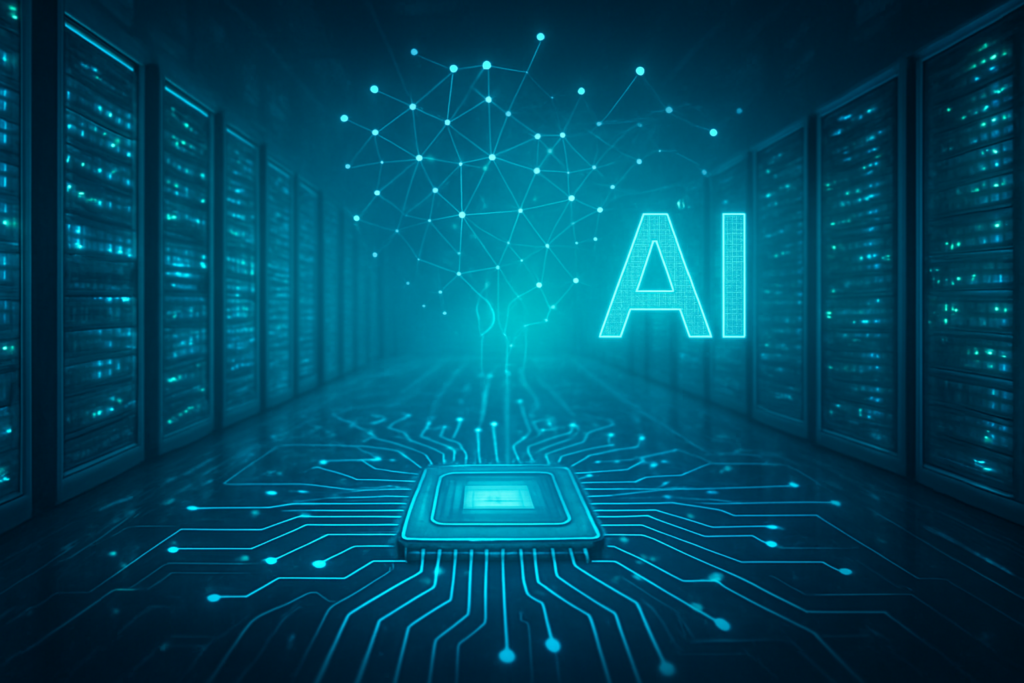
The global technology landscape is undergoing a profound transformation, with the relentless expansion of the data center industry, fueled primarily by the insatiable demands of artificial intelligence (AI) and machine learning (ML), creating an unprecedented surge in demand for advanced semiconductors. This critical synergy is not merely an economic phenomenon but a strategic imperative, driving nations worldwide to prioritize and heavily invest in domestic semiconductor manufacturing, aiming for self-sufficiency and robust supply chain resilience. As of late 2025, this interplay is reshaping industrial policies, fostering massive investments, and accelerating innovation at a scale unseen in decades.
The exponential growth of cloud computing, digital transformation initiatives across all sectors, and the rapid deployment of generative AI applications are collectively propelling the data center market to new heights. Valued at approximately $215 billion in 2023, the market is projected to reach $450 billion by 2030, with some estimates suggesting it could nearly triple to $776 billion by 2034. This expansion, particularly in hyperscale data centers, which have seen their capacity double since 2020, necessitates a foundational shift in how critical components, especially advanced chips, are sourced and produced. The implications are clear: the future of AI and digital infrastructure hinges on a secure and robust supply of cutting-edge semiconductors, sparking a global race to onshore manufacturing capabilities.
The Technical Core: AI's Insatiable Appetite for Advanced Silicon
The current data center boom is fundamentally distinct from previous cycles due to the unique and demanding nature of AI workloads. Unlike traditional computing, AI, especially generative AI, requires immense computational power, high-speed data processing, and specialized memory solutions. This translates into an unprecedented demand for a specific class of advanced semiconductors:
Graphics Processing Units (GPUs) and AI Application-Specific Integrated Circuits (ASICs): GPUs remain the cornerstone of AI infrastructure, with one leading manufacturer capturing an astounding 93% of the server GPU revenue in 2024. GPU revenue is forecasted to soar from $100 billion in 2024 to $215 billion by 2030. Concurrently, AI ASICs are rapidly gaining traction, particularly as hyperscalers like Alphabet (NASDAQ: GOOGL), Amazon (NASDAQ: AMZN), and Microsoft (NASDAQ: MSFT) develop custom silicon to optimize performance, reduce latency, and lessen their reliance on third-party manufacturers. Revenue from AI ASICs is expected to reach almost $85 billion by 2030, marking a significant shift towards proprietary hardware solutions.
Advanced Memory Solutions: To handle the vast datasets and complex models of AI, High Bandwidth Memory (HBM) and Graphics Double Data Rate (GDDR) are crucial. HBM, in particular, is experiencing explosive growth, with revenue projected to surge by up to 70% in 2025, reaching an impressive $21 billion. These memory technologies are vital for providing the necessary throughput to keep AI accelerators fed with data.
Networking Semiconductors: The sheer volume of data moving within and between AI-powered data centers necessitates highly advanced networking components. Ethernet switches, optical interconnects, SmartNICs, and Data Processing Units (DPUs) are all seeing accelerated development and deployment, with networking semiconductor growth projected at 13% in 2025 to overcome latency and throughput bottlenecks. Furthermore, Wide Bandgap (WBG) materials like Silicon Carbide (SiC) and Gallium Nitride (GaN) are increasingly being adopted in data center power supplies. These materials offer superior efficiency, operate at higher temperatures and voltages, and significantly reduce power loss, contributing to more energy-efficient and sustainable data center operations.
The initial reaction from the AI research community and industry experts has been one of intense focus on hardware innovation. The limitations of current silicon architectures for increasingly complex AI models are pushing the boundaries of chip design, packaging technologies, and cooling solutions. This drive for specialized, high-performance, and energy-efficient hardware represents a significant departure from the more generalized computing needs of the past, signaling a new era of hardware-software co-design tailored specifically for AI.
Competitive Implications and Market Dynamics
This profound synergy between data center expansion and semiconductor demand is creating significant shifts in the competitive landscape, benefiting certain companies while posing challenges for others.
Companies Standing to Benefit: Semiconductor manufacturing giants like NVIDIA (NASDAQ: NVDA), a dominant player in the GPU market, and Intel (NASDAQ: INTC), with its aggressive foundry expansion plans, are direct beneficiaries. Similarly, contract manufacturers like Taiwan Semiconductor Manufacturing Company (TSMC) (NYSE: TSM), though facing pressure for geographical diversification, remain critical. Hyperscale cloud providers such as Alphabet, Amazon, Microsoft, and Meta (NASDAQ: META) are investing hundreds of billions in capital expenditure (CapEx) to build out their AI infrastructure, directly fueling chip demand. These tech giants are also strategically developing their custom AI ASICs, a move that grants them greater control over performance, cost, and supply chain, potentially disrupting the market for off-the-shelf AI accelerators.
Competitive Implications: The race to develop and deploy advanced AI chips is intensifying competition among major AI labs and tech companies. Companies with strong in-house chip design capabilities or strategic partnerships with leading foundries gain a significant competitive advantage. This push for domestic manufacturing also introduces new players and expands existing facilities, leading to increased competition in fabrication. The market positioning is increasingly defined by access to advanced fabrication capabilities and a resilient supply chain, making geopolitical stability and national industrial policies critical factors.
Potential Disruption: The trend towards custom silicon by hyperscalers could disrupt traditional semiconductor vendors who primarily offer standard products. While demand remains high for now, a long-term shift could alter market dynamics. Furthermore, the immense capital required for advanced fabrication plants (fabs) and the complexity of these operations mean that only a few nations and a handful of companies can realistically compete at the leading edge. This could lead to a consolidation of advanced chip manufacturing capabilities globally, albeit with a stronger emphasis on regional diversification than before.
Wider Significance in the AI Landscape
The interplay between data center growth and domestic semiconductor manufacturing is not merely an industry trend; it is a foundational pillar supporting the broader AI landscape and global technological sovereignty. This development fits squarely into the overarching trend of AI becoming the central nervous system of the digital economy, demanding purpose-built infrastructure from the ground up.
Impacts: Economically, this synergy is driving unprecedented investment. Private sector commitments in the US alone to revitalize the chipmaking ecosystem have exceeded $500 billion by July 2025, catalyzed by the CHIPS and Science Act enacted in August 2022, which allocated $280 billion to boost domestic semiconductor R&D and manufacturing. This initiative aims to triple domestic chipmaking capacity by 2032. Similarly, China, through its "Made in China 2025" initiative and mandates requiring publicly owned data centers to source at least 50% of chips domestically, is investing tens of billions to secure its AI future and reduce reliance on foreign technology. This creates jobs, stimulates innovation, and strengthens national economies.
Potential Concerns: While beneficial, this push also raises concerns. The enormous energy consumption of both data centers and advanced chip manufacturing facilities presents significant environmental challenges, necessitating innovation in green technologies and renewable energy integration. Geopolitical tensions exacerbate the urgency for domestic production, but also highlight the risks of fragmentation in global technology standards and supply chains. Comparisons to previous AI milestones, such as the development of deep learning or large language models, reveal that while those were breakthroughs in software and algorithms, the current phase is fundamentally about the hardware infrastructure that enables these advancements to scale and become pervasive.
Future Developments and Expert Predictions
Looking ahead, the synergy between data centers and domestic semiconductor manufacturing is poised for continued rapid evolution, driven by relentless innovation and strategic investments.
Expected Near-term and Long-term Developments: In the near term, we can expect to see a continued surge in data center construction, particularly for AI-optimized facilities featuring advanced cooling systems and high-density server racks. Investment in new fabrication plants will accelerate, supported by government subsidies globally. For instance, OpenAI and Oracle (NYSE: ORCL) announced plans in July 2025 to add 4.5 gigawatts of US data center capacity, underscoring the scale of expansion. Long-term, the focus will shift towards even more specialized AI accelerators, potentially integrating optical computing or quantum computing elements, and greater emphasis on sustainable manufacturing practices and energy-efficient data center operations. The development of advanced packaging technologies, such as 3D stacking, will become critical to overcome the physical limitations of 2D chip designs.
Potential Applications and Use Cases: The horizon promises even more powerful and pervasive AI applications, from hyper-personalized services and autonomous systems to advanced scientific research and drug discovery. Edge AI, powered by increasingly sophisticated but power-efficient chips, will bring AI capabilities closer to the data source, enabling real-time decision-making in diverse environments, from smart factories to autonomous vehicles.
Challenges: Addressing the skilled workforce shortage in both semiconductor manufacturing and data center operations will be paramount. The immense capital expenditure required for leading-edge fabs, coupled with the long lead times for construction and ramp-up, presents a significant barrier to entry. Furthermore, the escalating energy consumption of these facilities demands innovative solutions for sustainability and renewable energy integration. Experts predict that the current trajectory will continue, with a strong emphasis on national self-reliance in critical technologies, leading to a more diversified but potentially more complex global semiconductor supply chain. The competition for talent and technological leadership will intensify, making strategic partnerships and international collaborations crucial for sustained progress.
A New Era of Technological Sovereignty
The burgeoning data center industry, powered by the transformative capabilities of artificial intelligence, is unequivocally driving a new era of domestic semiconductor manufacturing. This intricate interplay represents one of the most significant technological and economic shifts of our time, moving beyond mere supply and demand to encompass national security, economic resilience, and global leadership in the digital age.
The key takeaway is that AI is not just a software revolution; it is fundamentally a hardware revolution that demands an entirely new level of investment and strategic planning in semiconductor production. The past few years, particularly since the enactment of initiatives like the US CHIPS Act and China's aggressive investment strategies, have set the stage for a prolonged period of growth and competition in chipmaking. This development's significance in AI history cannot be overstated; it marks the point where the abstract advancements of AI algorithms are concretely tied to the physical infrastructure that underpins them.
In the coming weeks and months, observers should watch for further announcements regarding new fabrication plant investments, particularly in regions receiving government incentives. Keep an eye on the progress of custom silicon development by hyperscalers, as this will indicate the evolving competitive landscape. Finally, monitoring the ongoing geopolitical discussions around technology trade and supply chain resilience will provide crucial insights into the long-term trajectory of this domestic manufacturing push. This is not just about making chips; it's about building the foundation for the next generation of global innovation and power.
This content is intended for informational purposes only and represents analysis of current AI developments.
TokenRing AI delivers enterprise-grade solutions for multi-agent AI workflow orchestration, AI-powered development tools, and seamless remote collaboration platforms.
For more information, visit https://www.tokenring.ai/.
More News
View More


Recent Quotes
View More
Quotes delayed at least 20 minutes.
By accessing this page, you agree to the Privacy Policy and Terms Of Service.