




Financial News
The Great Chip Divide: China’s $70 Billion Gambit Ignites Geopolitical Semiconductor Race Against US Titans Like Nvidia
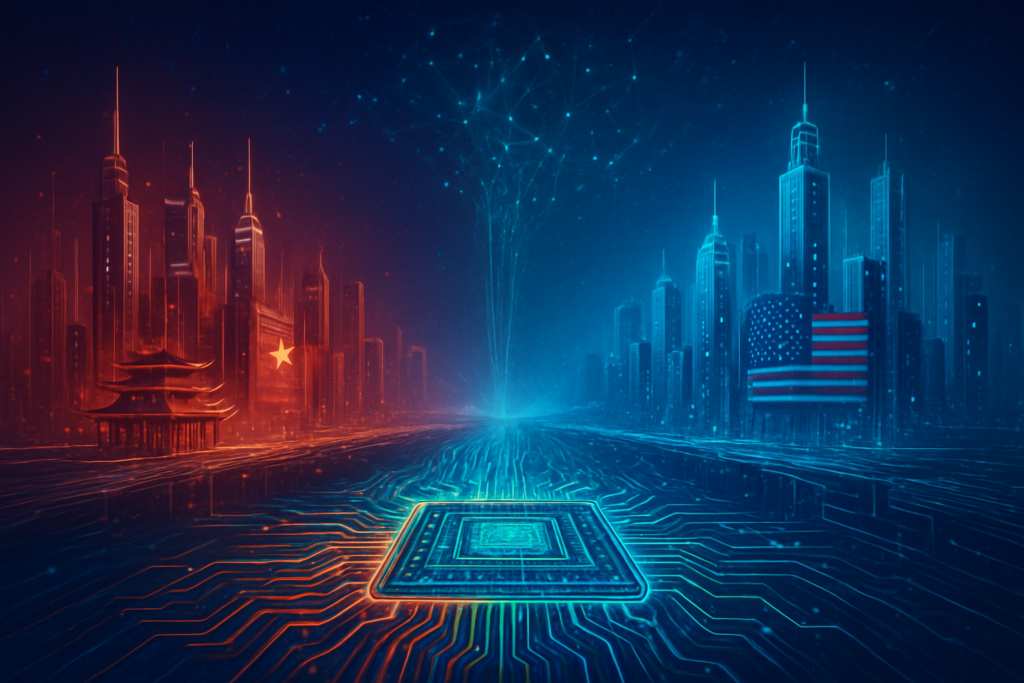
China is doubling down on its ambitious quest for semiconductor self-sufficiency, reportedly preparing a new incentive package worth up to $70 billion to bolster its domestic chip fabrication industry. This latest financial injection is part of a broader, decade-long national strategy that has already seen approximately $150 billion poured into the sector since 2014. This unprecedented commitment underscores Beijing's determination to reduce reliance on foreign technology, particularly amidst escalating US export controls, and sets the stage for an intensified geopolitical and economic rivalry with American semiconductor giants like Nvidia (NASDAQ: NVDA).
The strategic imperative behind China's massive investment is clear: to secure its technological autonomy and fortify its position in the global digital economy. With semiconductors forming the bedrock of everything from advanced AI to critical infrastructure and defense systems, control over this vital technology is now seen as a national security imperative. The immediate significance of this surge in investment, particularly in mature-node chips, is already evident in rapidly increasing domestic output and a reshaping of global supply chains.
Unpacking the Silicon War: China's Technical Leap and DUV Ingenuity
China's domestic chip fabrication initiatives are multifaceted, targeting both mature process nodes and aspiring to advanced AI chip capabilities. The nation's largest contract chipmaker, Semiconductor Manufacturing International Corporation (SMIC), stands at the forefront of this effort. SMIC has notably achieved mass production of 7nm chips, as evidenced by teardowns of Huawei's Kirin 9000s and Kirin 9010 processors found in its Mate 60 and Pura 70 series smartphones. These 7nm chips, often referred to as N+2 process technology, demonstrate China's remarkable progress despite being restricted from accessing cutting-edge Extreme Ultraviolet (EUV) lithography machines.
Further pushing the boundaries, recent analyses suggest SMIC is advancing towards a 5nm-class node (N+3 process) for Huawei's Kirin 9030 application processor. This is reportedly being achieved through Deep Ultraviolet (DUV) lithography combined with sophisticated multi-patterning techniques like self-aligned quadruple patterning (SAQP), aiming to approach the performance of Nvidia's H100 chip, delivering just under 800 teraflops (FP16). While technically challenging and potentially more expensive with lower yields compared to EUV-based processes, this approach showcases China's ingenuity in overcoming equipment limitations and signals a defiant stance against export controls.
In the realm of AI chips, Chinese firms are aggressively developing alternatives to Nvidia's (NASDAQ: NVDA) dominant GPUs. Huawei's Ascend series, Alibaba's (NYSE: BABA) inference chips, Cambricon's Siyuan 590, and Baidu's (NASDAQ: BIDU) Kunlun series are all vying for market share. Huawei's Ascend 910B, for instance, has shown performance comparable to Nvidia's A100 in some training tasks. Chinese firms are also exploring innovative architectural designs, such as combining mature 14nm logic chips with 18nm DRAM using 3D hybrid bonding and "software-defined near-memory computing," aiming to achieve high performance without necessarily matching the most advanced logic process nodes.
This strategic shift represents a fundamental departure from China's previous reliance on global supply chains. The "Big Fund" (China Integrated Circuit Industry Investment Fund) and other state-backed initiatives provide massive funding and policy support, creating a dual focus on both advanced AI chips and a significant ramp-up in mature-node production. Initial reactions from the AI research community and industry experts have ranged from "astonishment" at China's rapid progress, with some describing it as a "Sputnik moment," to cautious skepticism regarding the commercial viability of DUV-based advanced nodes due to higher costs and lower yields. Nvidia CEO Jensen Huang himself has acknowledged China is "nanoseconds behind" in chip development, underscoring the rapid pace of advancement.
Reshaping the Tech Landscape: Winners, Losers, and Strategic Shifts
China's monumental investment in domestic chip fabrication and its fierce competition with US firms like Nvidia (NASDAQ: NVDA) are profoundly reshaping the global artificial intelligence and technology landscape, creating distinct beneficiaries and competitive pressures.
On the Chinese side, domestic chipmakers and AI hardware developers are the primary beneficiaries. Companies like Huawei, with its Ascend series, Cambricon (Siyuan 590), and SMIC (Semiconductor Manufacturing International Corporation) are receiving massive government support, including subsidies and preferential policies. Chinese tech giants such as ByteDance, Alibaba (NYSE: BABA), and Tencent (HKG: 0700), major consumers of AI chips for their data centers, are increasingly switching to domestic semiconductor alternatives, benefiting from subsidized power and a national push for homegrown solutions. This environment also fosters a vibrant domestic AI startup ecosystem, encouraging local innovation and providing opportunities for emerging players like MetaX.
For US and international tech giants, the landscape is more complex. While Nvidia's dominance in AI training chips and its robust software ecosystem (CUDA) remain crucial for companies like Microsoft (NASDAQ: MSFT), Meta Platforms (NASDAQ: META), and Alphabet (NASDAQ: GOOGL), the loss of the Chinese market for advanced chips represents a significant revenue risk. Nvidia's market share for advanced AI chips in China has plummeted, forcing the company to navigate evolving regulations. The recent conditional approval for Nvidia to sell its H200 AI chips to certain Chinese customers, albeit with a 25% revenue share for the US government, highlights the intricate balance between corporate interests and national security. This situation reinforces the need for US firms to diversify markets and potentially invest more in R&D to maintain their lead outside China. Taiwan Semiconductor Manufacturing Company (TSMC) (NYSE: TSM), a critical global foundry, faces both risks from geopolitical tensions and China's self-sufficiency drive, but also benefits from the overall demand for advanced chips and US efforts to onshore chip production.
The potential disruption to existing products and services is significant. Products like Nvidia's H100 and newer Blackwell/Rubin architectures are effectively unavailable in China, forcing Chinese companies to adapt their AI model training and deployment strategies. This could lead to a divergence in the underlying hardware architecture supporting AI development in China versus the rest of the world. Moreover, China's massive build-out of legacy chip production capacity could disrupt global supply chains, potentially leading to Chinese dominance in this market segment and affecting industries like automotive.
Strategically, China gains advantages from massive state subsidies, a large domestic market for economies of scale, and heavy investment in talent and R&D. Its projected dominance in the legacy chip market by 2030 could give it significant influence over global supply chains. The US, meanwhile, maintains a technological lead in cutting-edge AI chip design and advanced manufacturing equipment, leveraging export controls to preserve its advantage. Both nations are engaged in a strategic competition that is fragmenting the global semiconductor market into distinct ecosystems, transforming AI into a critical geoeconomic battlefield.
A New Cold War? Geopolitical Earthquakes in the AI Landscape
The wider significance of China's $70 billion investment and its intensifying chip rivalry with the US extends far beyond economic competition, ushering in a new era of geopolitical and technological fragmentation. This strategic push is deeply embedded in China's "Made in China 2025" initiative, aiming for semiconductor self-sufficiency and fundamentally altering the global balance of power.
This chip race is central to the broader AI landscape, as advanced semiconductors are the "cornerstone for AI development." The competition is accelerating innovation, with both nations pouring resources into AI and related fields. Despite US restrictions on advanced chips, Chinese AI models are rapidly closing the performance gap with their Western counterparts, achieved through building larger compute clusters, optimizing efficiency, and leveraging a robust open-source AI ecosystem. The demand for advanced semiconductors is only set to skyrocket with the global deployment of AI, IoT, and 5G, further intensifying the battle for leadership.
The geopolitical and economic impacts are profound, leading to an unprecedented restructuring of global supply chains. This fosters a "bifurcated market" where geopolitical alignment becomes a critical factor for companies' survival. "Friend-shoring" strategies are accelerating, with manufacturing shifting to US-allied nations. China's pursuit of self-sufficiency could destabilize the global economy, particularly affecting export-dependent economies like Taiwan. The US CHIPS and Science Act, a significant investment in domestic chip production, directly aims to counteract China's efforts and prevent companies receiving federal funds from increasing advanced processor production in China for 10 years.
Key concerns revolve around escalating supply chain fragmentation and technological decoupling. The US strategy, often termed "small yard, high fence," aims to restrict critical technologies with military applications while allowing broader economic exchanges. This has pushed the global semiconductor industry into two distinct ecosystems: US-led and Chinese-led. Such bifurcation forces companies to choose sides or diversify, leading to higher costs and operational complexities. Technological decoupling, in its strongest form, suggests a total technological divorce, a prospect fraught with risks, as both nations view control over advanced chips as a national security imperative due to their "dual-use" nature for civilian and military applications.
This US-China AI chip race is frequently likened to the Cold War-era space race, underscoring its strategic importance. While OpenAI's ChatGPT initially caught China off guard in late 2022, Beijing's rapid advancements in AI models, despite chip restrictions, demonstrate a resilient drive. The dramatic increase in computing power required for training advanced AI models highlights that access to and indigenous production of cutting-edge chips are more critical than ever, making this current technological contest a defining moment in AI's evolution.
The Road Ahead: Forecasts and Frontiers in the Chip Race
The geopolitical chip race between China and the United States, particularly concerning firms like Nvidia (NASDAQ: NVDA), is set for dynamic near-term and long-term developments that will shape the future of AI and global technology.
In the near term, China is expected to continue its aggressive ramp-up of mature-node semiconductor manufacturing capacity. This focus on 28nm and larger chips, critical for industries ranging from automotive to consumer electronics, will see new fabrication plants emerge, further reducing reliance on imports for these foundational components. Companies like SMIC, ChangXin Memory Technologies (CXMT), and Hua Hong Semiconductor will be central to this expansion. While China aims for 70% semiconductor self-sufficiency by 2025, it is likely to fall short, hovering closer to 40%. However, rapid advances in chip assembly and packaging are expected to enhance the performance of older process nodes, albeit with potential challenges in heat output and manufacturing yield.
Long-term, China's strategy under its 14th Five-Year Plan and subsequent initiatives emphasizes complete technological self-sufficiency, with some targets aiming for 100% import substitution by 2030. The recent launch of "Big Fund III" with over $47 billion underscores this commitment. Beyond mature nodes, China will prioritize advanced chip technologies for AI and disruptive emerging areas like chiplets. Huawei, for instance, is working on multi-year roadmaps for advanced AI chips, targeting petaflop levels in low-precision formats.
The competition with US firms like Nvidia will remain fierce. US export controls have spurred Chinese tech giants such as Alibaba (NYSE: BABA), Huawei, Baidu (NASDAQ: BIDU), and Cambricon to accelerate proprietary AI chip development. Huawei's Ascend series has emerged as a leading domestic alternative, with some Chinese AI startups demonstrating the ability to train AI models using fewer high-end chips. Recent US policy shifts, allowing Nvidia to export its H200 AI chips to China under conditions including a 25% revenue share for the US government, are seen as a calibrated strategy to slow China's indigenous AI development by creating dependencies on US technology.
Potential applications and use cases for China's domestically produced chips are vast, spanning artificial intelligence (training generative AI models, smart cities, fintech), cloud computing (Huawei's Kunpeng series), IoT, electric vehicles (EVs), high-performance computing (HPC), data centers, and national security. Semiconductors are inherently dual-use, meaning advanced chips can power commercial AI systems, military intelligence platforms, or encrypted communication networks, aligning with China's military-civil fusion strategy.
Challenges abound for both sides. China faces persistent technological gaps in advanced EDA software and lithography equipment, talent shortages, and the inherent complexity and cost of cutting-edge manufacturing. The US, conversely, risks accelerating Chinese self-sufficiency through overly stringent export controls, faces potential loss of market share and revenue for its firms, and must continuously innovate to maintain its technological lead. Expert predictions foresee continued bifurcation of semiconductor ecosystems, with China making significant progress in AI despite hardware lags, and a strategic export policy from the US attempting to balance revenue with technological control. The aggressive expansion in mature-node production by China could lead to global oversupply and price dumping.
The Dawn of a Fragmented Future: A Comprehensive Wrap-up
China's reported $70 billion investment in domestic chip fabrication, building upon prior massive state-backed funds, is not merely an economic initiative but a profound strategic declaration. It underscores Beijing's unwavering commitment to achieving semiconductor self-sufficiency by 2025 and even 2030, a direct response to escalating US export controls and a bid to secure its technological destiny. This monumental effort has catalyzed a rapid expansion of domestic chip output, particularly in essential mature-node semiconductors, and is actively reshaping global supply chains.
This escalating competition for chip fabrication dominance marks a pivotal moment in AI history. The nation that controls advanced chip technology will largely dictate the future trajectory of AI development and its applications. Advanced chips are the fundamental building blocks for training increasingly complex AI models, including the large language models that are at the forefront of innovation. The strategic interplay between US policies and China's relentless drive for independence is creating a new, more fragmented equilibrium in the AI semiconductor landscape. US sanctions, while initially disrupting China's high-end chip production, have inadvertently accelerated domestic innovation and investment within China, creating a double-edged sword for American policymakers.
In the long term, China's consistent investment and innovation are highly likely to cultivate an increasingly self-sufficient domestic chip ecosystem, especially in mature semiconductor nodes. This trajectory points towards a more fragmented global technology landscape and a "multipolar world" in technological innovation. However, the "innovation hard wall" posed by the lack of access to advanced EUV lithography equipment remains China's most significant hurdle for truly cutting-edge chip production. The recent US decision to allow Nvidia (NASDAQ: NVDA) to sell its H200 AI chips to China, while offering short-term economic benefits to US firms, risks creating long-term strategic vulnerabilities by potentially accelerating China's AI and military capabilities. China's vast domestic market is large enough to achieve globally relevant economies of scale, irrespective of export market access, further bolstering its long-term prospects for self-reliance.
As we look to the coming weeks and months, several critical developments warrant close observation. The implementation of H200 sales to China and Beijing's policy response—whether to restrict or encourage their procurement—will be crucial. The continued progress of Chinese AI chipmakers like Huawei (Ascend series) and Cambricon in closing the performance gap with US counterparts will be a key indicator. Any credible reports on Chinese lithography development beyond the 28nm node, further US policy adjustments, and the investment patterns of major Chinese tech giants like Alibaba (NYSE: BABA) and Tencent (HKG: 0700) will provide further insights into this evolving geopolitical and technological contest. Finally, unexpected breakthroughs in China's ability to achieve advanced chip production using unconventional methods, as seen with the Huawei Mate 60's 7nm chip, will continue to surprise and reshape the narrative. The global tech industry is entering a new era defined by strategic competition and technological nationalism.
This content is intended for informational purposes only and represents analysis of current AI developments.
TokenRing AI delivers enterprise-grade solutions for multi-agent AI workflow orchestration, AI-powered development tools, and seamless remote collaboration platforms.
For more information, visit https://www.tokenring.ai/.
More News
View More

Recent Quotes
View More
Quotes delayed at least 20 minutes.
By accessing this page, you agree to the Privacy Policy and Terms Of Service.