




Financial News
Unlocking AI’s Full Potential: ASML’s EUV Lithography Becomes the Indispensable Foundation for Next-Gen Chips
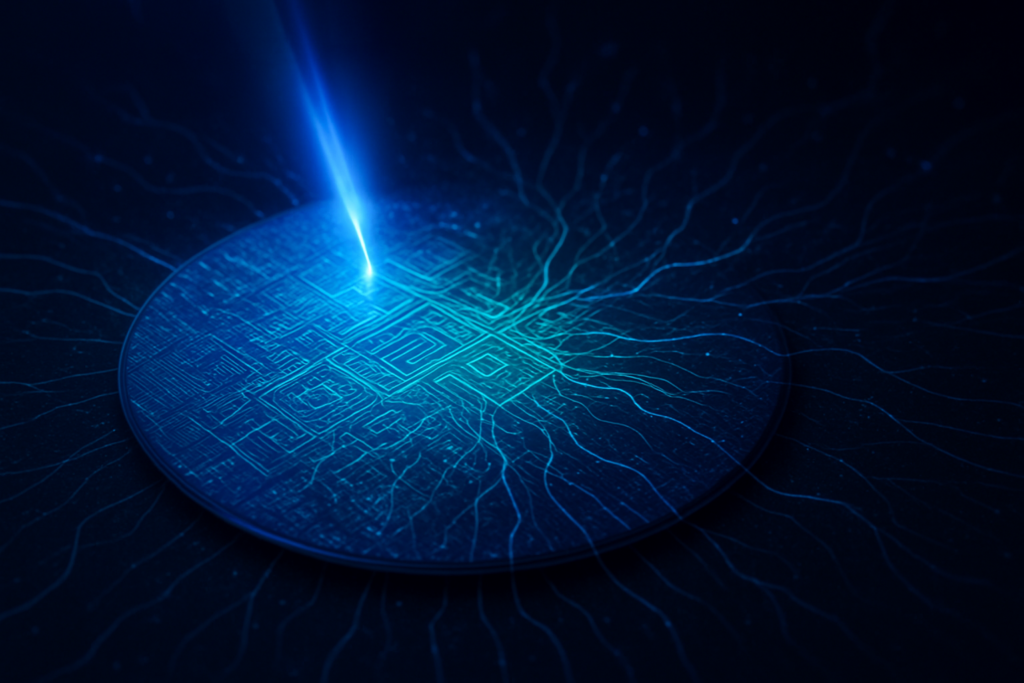
The exponential growth of Artificial Intelligence (AI) and its insatiable demand for processing power have rendered traditional chip manufacturing methods inadequate, thrusting ASML's (AMS: ASML) Extreme Ultraviolet (EUV) lithography technology into an immediately critical and indispensable role. This groundbreaking technology, in which ASML holds a global monopoly, uses ultra-short 13.5-nanometer wavelengths of light to etch incredibly intricate patterns onto silicon wafers, enabling the creation of microchips with billions of smaller, more densely packed transistors.
This unparalleled precision is the bedrock upon which next-generation AI accelerators, data center GPUs, and sophisticated edge AI solutions are built, providing the enhanced processing capabilities and vital energy efficiency required to power the most advanced AI applications today and in the immediate future. Without ASML's EUV systems, the semiconductor industry would face a significant barrier to scaling chip performance, making the continued advancement and real-world deployment of cutting-edge AI heavily reliant on this singular technological marvel.
The Microscopic Marvel: Technical Deep Dive into EUV's Edge
ASML's Extreme Ultraviolet (EUV) lithography technology represents a monumental leap in semiconductor manufacturing, enabling the creation of microchips with unprecedented density and performance. This intricate process is crucial for sustaining Moore's Law and powering the latest advancements in artificial intelligence (AI), high-performance computing, and other cutting-edge technologies. ASML is currently the sole supplier of EUV lithography systems globally.
At the core of ASML's EUV technology is the use of light with an extremely short wavelength of 13.5 nanometers (nm), which is nearly in the X-ray range and more than 14 times shorter than the 193 nm wavelength used in previous Deep Ultraviolet (DUV) systems. This ultra-short wavelength is fundamental to achieving finer resolution and printing smaller features on silicon wafers. Key technical specifications include EUV light generated by firing two separate CO2 laser pulses at microscopic droplets of molten tin 50,000 times per second. Unlike DUV systems that use refractive lenses, EUV light is absorbed by nearly all materials, necessitating operation in a vacuum chamber and the use of highly specialized multi-layer mirrors, developed in collaboration with companies like Carl Zeiss SMT, to guide and focus the light. These mirrors are so precise that if scaled to the size of a country, the largest imperfection would be only about 1 millimeter.
Current generation NXE systems (e.g., NXE:3400C, NXE:3600D) have a numerical aperture of 0.33, enabling them to print features with a resolution of 13 nm, supporting volume production for 7 nm, 5 nm, and 3 nm logic nodes. The next-generation platform, High-NA EUV (EXE platform, e.g., TWINSCAN EXE:5000, EXE:5200B), significantly increases the numerical aperture to 0.55, improving resolution to just 8 nm. This allows for transistors that are 1.7 times smaller and transistor densities 2.9 times higher. The first High-NA EUV system was delivered in December 2023, with high-volume manufacturing expected between 2025 and 2026 for advanced nodes starting at 2 nm logic. High-NA EUV systems are designed for higher productivity, with initial capabilities of printing over 185 wafers per hour (wph).
The transition from Deep Ultraviolet (DUV) to Extreme Ultraviolet (EUV) lithography marks a fundamental shift. The most significant difference is the light wavelength—13.5 nm for EUV compared to 193 nm for DUV. DUV systems use refractive lenses and can operate in air, while EUV necessitates an entirely reflective optical system within a vacuum. EUV can achieve much smaller feature sizes, enabling advanced nodes where DUV lithography typically hits its limit around 40-20 nm without complex resolution enhancement techniques like multi-patterning, which EUV often simplifies into a single pass. The AI research community and industry experts have expressed overwhelmingly positive reactions, recognizing EUV's indispensable role in sustaining Moore's Law and enabling the fabrication of the ever-smaller, more powerful, and energy-efficient chips required for the exponential growth in AI, quantum computing, and other advanced technologies.
Reshaping the AI Battleground: Corporate Beneficiaries and Competitive Edge
ASML's EUV lithography technology is a pivotal enabler for the advancement of artificial intelligence, profoundly impacting AI companies, tech giants, and startups by shaping the capabilities, costs, and competitive landscape of advanced chip manufacturing. It is critical for producing the advanced semiconductors that power AI systems, allowing for higher transistor densities, increased processing capabilities, and lower power consumption in AI chips. This is essential for scaling semiconductor devices to 7nm, 5nm, 3nm, and even sub-2nm nodes, which are vital for developing specialized AI accelerators and neural processing units.
The companies that design and manufacture the most advanced AI chips are the primary beneficiaries of ASML's EUV technology. TSMC (NYSE: TSM), as the world's largest contract chipmaker, is a leading implementer of EUV, extensively integrating it into its fabrication processes for nodes such as N7+, N5, N3, and the upcoming N2. TSMC received its first High-NA (High Numerical Aperture) EUV machine in September 2024, signaling its commitment to maintaining leadership in advanced AI chip manufacturing, with plans to integrate it into its A14 (1.4nm) process node by 2027. Samsung Electronics (KRX: 005930) is another key player heavily investing in EUV, planning to deploy High-NA EUV at its 2nm node, potentially ahead of TSMC's 1.4nm timeline, with a significant investment in two of ASML’s EXE:5200B High-NA EUV tools. Intel (NASDAQ: INTC) is actively adopting ASML's EUV and High-NA EUV machines as part of its strategy to regain leadership in chip manufacturing, particularly for AI, with its roadmap including High-NA EUV for its Intel 18A process, with product proof points in 2025. Fabless giants like NVIDIA (NASDAQ: NVDA) and AMD (NASDAQ: AMD) rely entirely on these advanced foundries. ASML's EUV technology is indispensable for producing the highly complex and dense chips that power NVIDIA's AI accelerators, such as the Blackwell architecture and the upcoming 'Rubin' platform, and AMD's high-performance CPUs and GPUs for AI workloads.
ASML's EUV technology creates a clear divide in the competitive landscape. Tech giants and major AI labs that partner with or own foundries capable of leveraging EUV gain a significant strategic advantage, accessing the most advanced, powerful, and energy-efficient chips crucial for developing and deploying cutting-edge AI models. Conversely, companies without access to EUV-fabricated chips face substantial hurdles, as the computational demands of advanced AI would become "prohibitively expensive or technically unfeasible." ASML's near-monopoly makes it an indispensable "linchpin" and "gatekeeper" of the AI revolution, granting it significant pricing power and strategic importance. The immense capital expenditure (EUV machines cost hundreds of millions of dollars) and the complexity of integrating EUV technology create high barriers to entry for new players and smaller startups in advanced chip manufacturing, concentrating leading-edge AI chip production among a few well-established tech giants.
The Unseen Engine: Broader Implications for AI and Beyond
ASML's Extreme Ultraviolet (EUV) lithography technology stands as a pivotal advancement in semiconductor manufacturing, profoundly shaping the landscape of artificial intelligence (AI). By enabling the creation of smaller, more powerful, and energy-efficient chips, EUV is not merely an incremental improvement but a foundational technology indispensable for the continued progression of AI capabilities.
The relentless demand for computational power in AI, driven by the increasing complexity of algorithms and the processing of vast datasets, necessitates increasingly sophisticated semiconductor hardware. EUV lithography, operating at an ultra-short wavelength of 13.5 nanometers, allows manufacturers to etch incredibly fine features onto silicon wafers, crucial for producing advanced semiconductor nodes like 7nm, 5nm, 3nm, and the forthcoming sub-2nm generations that power cutting-edge AI processors. Without EUV, the semiconductor industry would face significant challenges in meeting the escalating hardware demands of AI, potentially slowing the pace of innovation.
EUV lithography has been instrumental in extending the viability of Moore's Law, providing the necessary foundation for continued miniaturization and performance enhancement beyond the limits of traditional methods. By enabling the packing of billions of tiny transistors, EUV contributes to significant improvements in power efficiency. This allows AI chips to process more parameters with lower power requirements per computation, reducing the overall energy consumption of AI systems at scale—a crucial benefit as AI applications demand massive computational power. The higher transistor density and performance directly translate into more powerful and capable AI systems, essential for complex AI algorithms, training large language models, and real-time inference at the edge, fostering breakthroughs in areas such as autonomous driving, medical diagnostics, and augmented reality.
Despite its critical role, ASML's EUV technology faces several significant concerns. Each EUV system is incredibly expensive, costing between $150 million and $400 million, with the latest High-NA models exceeding $370 million, limiting accessibility to a handful of leading chip manufacturers. The machines are marvels of engineering but are immensely complex, comprising over 100,000 parts and requiring operation in a vacuum, leading to high installation, maintenance, and operational costs. ASML's near-monopoly places it at the center of global geopolitical tensions, particularly between the United States and China, with export controls highlighting its strategic importance and impacting sales. This concentration in the supply chain also creates a significant risk, as disruptions can impact advanced chip production schedules globally.
The impact of ASML's EUV lithography on AI is analogous to several foundational breakthroughs that propelled computing and, subsequently, AI forward. Just as the invention of the transistor revolutionized electronics, EUV pushes the physical limits of transistor density. Similarly, its role in enabling the creation of advanced chips that house powerful GPUs for parallel processing mirrors the significance of the GPU's development for AI. While EUV is not an AI algorithm or a software breakthrough, it is a crucial hardware innovation that unlocks the potential for these software advancements, effectively serving as the "unseen engine" behind the AI revolution.
The Road Ahead: Future Horizons for EUV and AI
ASML's Extreme Ultraviolet (EUV) lithography technology is a cornerstone of advanced semiconductor manufacturing, indispensable for producing the high-performance chips that power artificial intelligence (AI) applications. The company is actively pursuing both near-term and long-term developments to push the boundaries of chip scaling, while navigating significant technical and geopolitical challenges.
ASML's immediate focus is on the rollout of its next-generation High-NA EUV lithography systems, specifically the TWINSCAN EXE:5000 and EXE:5200 platforms. These High-NA systems increase the numerical aperture from 0.33 to 0.55, allowing for a critical dimension (CD) of 8 nm, enabling chipmakers to print transistors 1.7 times smaller and achieve transistor densities 2.9 times higher. The first modules of the EXE:5000 were shipped to Intel (NASDAQ: INTC) in December 2023 for R&D, with high-volume manufacturing using High-NA EUV anticipated to begin in 2025-2026. High-NA EUV is crucial for enabling the production of sub-2nm logic nodes, including 1.5nm and 1.4nm. Beyond High-NA, ASML is in early R&D for "Hyper-NA" EUV technology, envisioned with an even higher numerical aperture of 0.75, expected to be deployed around 2030-2035 to push transistor densities beyond the projected limits of High-NA.
ASML's advanced EUV lithography is fundamental to the progression of AI hardware, enabling the manufacturing of high-performance AI chips, neural processors, and specialized AI accelerators that demand massive computational power and energy efficiency. By enabling smaller, more densely packed transistors, EUV facilitates increased processing capabilities and lower power consumption, critical for AI hardware across diverse applications, including data centers, edge AI in smartphones, and autonomous systems. High-NA EUV will also support advanced packaging technologies, such as chiplets and 3D stacking, increasingly important for managing the complexity of AI chips and facilitating real-time AI processing at the edge.
Despite its critical role, EUV technology faces several significant challenges. The high cost of High-NA machines (between €350 million and $380 million per unit) can hinder widespread adoption. Technical complexities include inefficient light sources, defectivity issues (like pellicle readiness), challenges with resist materials at small feature sizes, and the difficulty of achieving sub-2nm overlay accuracy. Supply chain and geopolitical risks, such as ASML's monopoly and export restrictions, also pose significant hurdles. Industry experts and ASML itself are highly optimistic, forecasting significant growth driven by the surging demand for advanced AI chips. High-NA EUV is widely regarded as the "only path to next-generation chips" and an "indispensable" technology for producing powerful processors for data centers and AI, with predictions of ASML achieving a trillion-dollar valuation by 2034-2036.
The Unseen Architect of AI's Future: A Concluding Perspective
ASML's Extreme Ultraviolet (EUV) lithography technology stands as a critical enabler in the ongoing revolution of Artificial Intelligence (AI) chips, underpinning advancements that drive both the performance and efficiency of modern computing. The Dutch company (AMS: ASML) holds a near-monopoly in the production of these highly sophisticated machines, making it an indispensable player in the global semiconductor industry.
Key takeaways highlight EUV's vitality for manufacturing the most advanced AI chips, enabling intricate patterns at scales of 5 nanometers and below, extending to 3nm and even sub-2nm with next-generation High-NA EUV systems. This precision allows for significantly higher transistor density, directly translating to increased processing capabilities and improved energy efficiency—both critical for powerful AI applications. Leading chip manufacturers like Taiwan Semiconductor Manufacturing Co. (NYSE: TSM), Samsung (KRX: 005930), and Intel (NASDAQ: INTC) rely on ASML's EUV machines to produce cutting-edge chips that power everything from NVIDIA's (NASDAQ: NVDA) AI accelerators to Apple's (NASDAQ: AAPL) smartphones. ASML's dominant market position, coupled with robust demand for AI chips, is a significant driver for its projected growth, with the company forecasting annual revenues between €44 billion and €60 billion by 2030.
The development and widespread adoption of ASML's EUV lithography mark a pivotal moment in AI history. Without this technology, the production of next-generation AI chipsets capable of meeting the ever-growing demands of AI applications would be challenging, potentially stalling the rapid progress seen in the field. EUV is a cornerstone for the future of AI, enabling the complex designs and high transistor densities required for sophisticated AI algorithms, large language models, and real-time processing in areas like self-driving cars, medical diagnostics, and edge AI. It is not merely an advancement but an essential foundation upon which the future of AI and computing is being built.
The long-term impact of ASML's EUV technology on AI is profound and enduring. By enabling the continuous scaling of semiconductors, ASML ensures that the hardware infrastructure can keep pace with the rapidly evolving demands of AI software and algorithms. This technological imperative extends beyond AI, influencing advancements in 5G, the Internet of Things (IoT), and quantum computing. ASML's role solidifies its position as a "tollbooth" for the AI highway, as it provides the fundamental tools that every advanced chipmaker needs. This unique competitive moat, reinforced by continuous innovation like High-NA EUV, suggests that ASML will remain a central force in shaping the technological landscape for decades to come, ensuring the continued evolution of AI-driven innovations.
In the coming weeks and months, several key areas will be crucial to monitor. Watch for the successful deployment and performance validation of ASML's next-generation High-NA EUV machines, which are essential for producing sub-2nm chips. The ongoing impact of geopolitical landscape and export controls on ASML's sales to China will also be a significant factor. Furthermore, keep an eye on ASML's order bookings and revenue reports for insights into the balance between robust AI-driven demand and potential slowdowns in other chip markets, as well as any emerging competition or alternative miniaturization technologies, though no immediate threats to ASML's EUV dominance exist. Finally, ASML's progress towards its ambitious gross margin targets of 56-60% by 2030 will indicate the efficiency gains from High-NA EUV and overall cost control. By closely monitoring these developments, observers can gain a clearer understanding of the evolving synergy between ASML's groundbreaking lithography technology and the accelerating advancements in AI.
This content is intended for informational purposes only and represents analysis of current AI developments.
TokenRing AI delivers enterprise-grade solutions for multi-agent AI workflow orchestration, AI-powered development tools, and seamless remote collaboration platforms.
For more information, visit https://www.tokenring.ai/.
More News
View More




Recent Quotes
View More
Quotes delayed at least 20 minutes.
By accessing this page, you agree to the Privacy Policy and Terms Of Service.