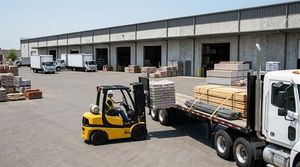
Drawing on his experience working with businesses in manufacturing, healthcare, transportation, Luke Megarity outlines a system that makes frontline staff more efficient, independent and capable while providing managers with operational visibility and insight.
BOSTON, MA / ACCESS Newswire / April 21, 2026 / Recent news coverage of artificial intelligence focuses on its potential to replace knowledge work and the workers that perform it. Luke Megarity, president and COO of iTacit, believes that overlooks AI's potential to transform workforce technology and empower the frontline workers who play an increasingly valuable role in the modern economy.
iTacit is a Canadian workforce technology company focused on helping organizations better connect, train, and support frontline employees. The iTacit platform is a mobile-first AI-powered application that unifies learning, communication, and compliance and that empowers workers and provides operational visibility to managers.
Megarity's view stems from his long experience as an entrepreneur and a consultant who has studied frontline processes at global manufacturers. He most recently served as vice president of sales at Line View Solutions, and previously led global sales at Masitek Instruments. He also was co-founder of Full Pint Software Development and Boss Gibson Oyster Company.
In all, he has more than 15 years of international business development experience and a background spanning software entrepreneurship, enterprise technology sales, and operational leadership, including work with manufacturers in 20 countries.
Since joining the company in 2018, Megarity has helped reposition iTacit toward industries with large, distributed frontline teams and high compliance requirements, particularly in healthcare, government, and transportation.
Megarity's focus is ensuring the company solves real operational problems for organizations with complex, frontline-heavy workforces. That requires what Megarity calls "customer intimacy," a collaborative approach rooted in curiosity and learning.
"To build meaningful technology for frontline teams, you have to understand how those businesses actually operate," Megarity said. "Every industry works differently, and our job is to learn those environments and design solutions that remove friction from daily work."
From his experiences, Megarity has developed a core belief that frontline workforces-healthcare, transportation, manufacturing, and government-have historically been underserved by enterprise technology, creating a growing opportunity for innovation in workforce enablement.
Megarity recalls studying the bottling operations of AB InBev, Coca-Cola and Pepsi. "When you have bottling lines running at 1,200 cans or bottles a minute, 24-7-365, and have 10 lines doing that same amount, there are small tweaks and changes that could save millions of dollars," he said.
Manufacturers typically have systems to stream data on those operations back to managers to provide insight on potential changes. But few have efficient systems to relay guidance back to frontline workers, and virtually none provide line workers with tools that provide instant access to the organization's knowledge base.
Megarity believes that global economic trends are making those frontline workers more important than ever. That creates a real opportunity to support frontline employees with "non-fluff AI" that reduces manual tasks, improves access to information, and helps people do their jobs more effectively.
"Frontline workers are the backbone of every industry - especially manufacturing, healthcare, transportation. Technology shouldn't replace that work-it should support it by giving people faster access to information and tools that make their jobs easier," he said.
The problem is how to provide that technology, Megarity notes. Knowledge workers - people such as engineers, programmers and creatives - are typically at a desk, with a computer and keyboard. AI is targeted at their work, and their work setup provides easy access to it. Frontline workers lack that easy access to AI tools.
ITacit is mobile-first technology that leverages AI to allow a line operator, mechanic, nurse or other frontline worker to find instant answers to questions that arise on the job. Workers can ask those questions, verbally, from a smartphone, in the language of their choice, and get the information they need.
The accuracy of AI information, however, is at the core of another conversation about the emerging technology. The large language models (LLMs) at AI's core are trained on vast bodies of information, drawn from large subsets of the internet. That creates a breadth of knowledge - but also may cause errors or outright fictional responses commonly called hallucinations.
Megarity sees an alternative: AI can be a reliable solution for frontline workers by drawing only on the organization's own internal policies, training manuals and other information, carefully curated so it can provide precise answers tailored to specific job roles and other factors.
"Because all of that data, and the entire knowledge base, are in iTacit, we can provide frontline workers with information at their fingertips - the correct information, not AI hallucinations, because we only pull information from what's held within iTacit, not from the internet," Megarity said.
To be clear, Megarity believes AI adoption will continue to grow beyond knowledge workers, to powering automation that will change much of frontline work. But core interpersonal work -- "hand to scalpel," as he puts it - will require human frontline workers well into the future. And those workers need AI that helps them do their jobs better.
"AI has created a lot of headlines, but the real opportunity is applying it in practical ways. I want to help frontline employees access knowledge, streamline processes, and focus on the work that matters most," Megarity said.
To interview iTacit President Luke Megarity or learn more about the iTacit "frontline first" AI solution, visit iTacit.com.
About iTacit
iTacit's Frontline-First Workforce Technology gives frontline teams the clarity and confidence to perform complex work in fast-moving environments. The platform brings the core elements of frontline operations-training, communication, compliance, and workflow execution-into one mobile experience designed for workers who don't sit at desks. With real-time visibility for managers and always-on guidance for employees, iTacit helps organizations strengthen safety, raise performance, and build more resilient frontline teams across healthcare, manufacturing, logistics, government, and energy.
Media Contact:
Teri Maltais
teri.maltais@itacit.com
SOURCE: iTacit
View the original press release on ACCESS Newswire