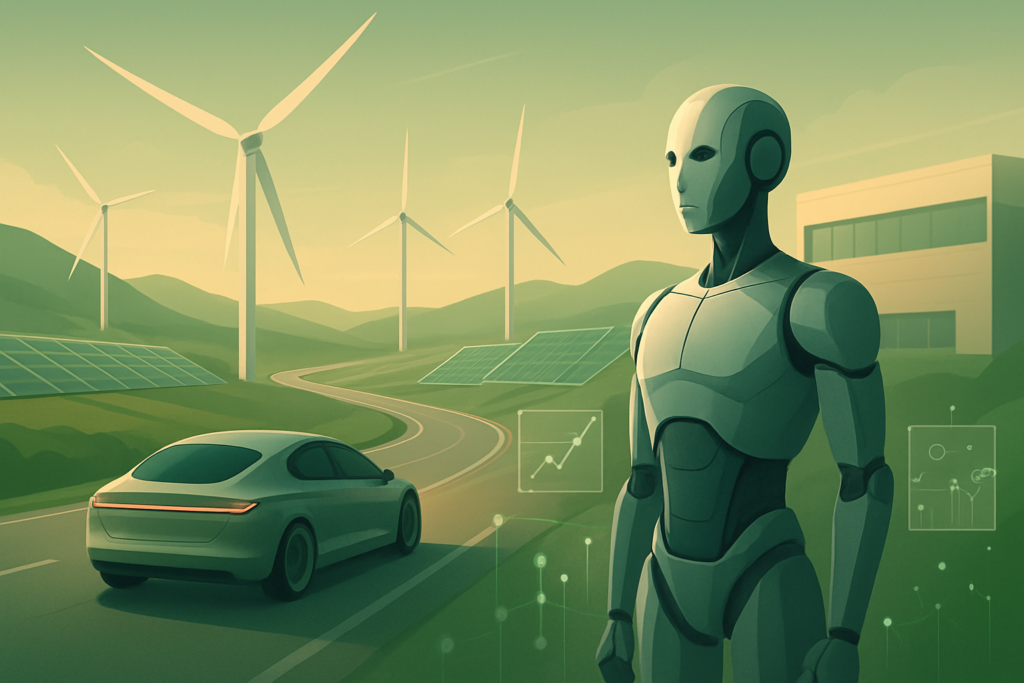
As of February 5, 2026, Tesla Inc. (NASDAQ: TSLA) finds itself at the most critical juncture in its twenty-year history. Once viewed primarily as a disruptor of the internal combustion engine, the company has spent the last 24 months aggressively shedding its skin as a traditional automaker. Today, Tesla is increasingly valued and analyzed as a "Physical AI" and robotics conglomerate. With the recent release of its Q4 2025 earnings and the imminent mass production of its autonomous "Cybercab," Tesla’s narrative has shifted from quarterly delivery counts to the compute power of its Dojo supercomputer and the dexterity of its Optimus humanoid robots. This transition has polarized Wall Street, creating a high-stakes environment where the company's $1 trillion-plus valuation hinges on its ability to solve the "last mile" of full autonomy.
Historical Background
Founded in 2003 by Martin Eberhard and Marc Tarpenning—and later joined and shaped by Elon Musk—Tesla’s journey began with the Roadster, a proof-of-concept that electric vehicles (EVs) could be high-performance and desirable. The 2012 launch of the Model S fundamentally changed the automotive industry, proving that software-defined vehicles were the future.
The middle of the last decade saw Tesla navigate "production hell" with the Model 3, a period that nearly bankrupted the firm before leading to sustained profitability and its 2020 inclusion in the S&P 500. Between 2022 and 2024, the company faced a "middle-age" crisis as EV demand softened globally and price wars squeezed margins. However, 2025 marked the year of the "Great Pivot," during which Tesla de-prioritized its traditional entry-level hatchback (the long-rumored "Model 2") in favor of a dedicated autonomous platform, signaling its exit from the era of manual driving.
Business Model
Tesla’s revenue streams have diversified significantly leading into 2026:
- Automotive: Despite a pivot to autonomy, the sale of Model 3, Model Y, and Cybertruck remains the primary cash engine. Revenue is supplemented by regulatory credits, though this high-margin stream is slowly tapering as other OEMs ramp up their own EV production.
- Energy Generation and Storage: This is the fastest-growing segment. Tesla’s Megapack (utility-scale) and Powerwall (residential) systems are benefiting from the global shift toward grid stabilization and renewable energy storage.
- Services and Other: This includes the massive Supercharger network, which has become the de facto North American charging standard (NACS), and FSD (Full Self-Driving) subscriptions.
- AI and Robotics (Emerging): In 2026, this segment is transitioning from R&D to commercialization. It includes the Optimus humanoid robot and the "Cybercab" ride-hailing software platform.
Stock Performance Overview
Tesla’s stock performance has been a roller coaster of historic proportions:
- 10-Year Horizon: Investors who held from 2016 have seen returns exceeding 1,500%, far outstripping the S&P 500.
- 5-Year Horizon: Following the 2020-2021 surge, the stock faced a brutal 2022-2023, losing over 60% of its value before recovering through 2024 and 2025 as the AI narrative took hold.
- 1-Year Horizon: Over the past 12 months, TSLA has outperformed the broader market, driven by improving margins and optimism surrounding the Optimus Gen 3 production ramp.
As of early February 2026, the stock trades at a premium forward price-to-earnings (P/E) ratio of approximately 145x, reflecting the market's belief in its future robotics revenue rather than current car sales.
Financial Performance
In its Q4 2025 earnings report (released January 28, 2026), Tesla reported total revenue of $24.9 billion. While this was a slight year-over-year decline, the quality of the earnings surprised analysts.
- Margins: Total gross margin climbed back to 20.1%, up from the mid-teens seen during the 2024 price wars. This was attributed to a massive reduction in cost-per-vehicle and high-margin energy storage sales.
- Earnings per Share (EPS): Non-GAAP EPS was $0.50, beating the consensus estimate of $0.44.
- Balance Sheet: Tesla remains "cash rich" with $44.1 billion in liquidity, allowing it to fund a $20 billion capital expenditure program for 2026 without seeking external debt.
Leadership and Management
Elon Musk remains the central—and often controversial—figure as CEO. In late 2025 and early 2026, his strategy has focused on "Physical AI." Musk’s governance has been characterized by high-risk, high-reward pivots, such as the decision to discontinue the Model S and Model X lines in early 2026 to repurpose factory space for Optimus production. Supporting Musk is a lean executive team, including CFO Vaibhav Taneja and Tom Zhu, who oversees global operations. The board remains under scrutiny regarding Musk’s multi-billion dollar compensation packages and his time split between Tesla and his other ventures like X (formerly Twitter) and SpaceX.
Products, Services, and Innovations
Tesla's product lineup is currently undergoing its most radical refresh:
- Cybercab (Robotaxi): The crown jewel of Tesla’s autonomous strategy. Production is slated for April 2026. It features no steering wheel or pedals and is built on the "unboxed" manufacturing platform.
- Optimus Gen 3: Mass production of the humanoid robot began in late January 2026. Initially, these robots are being deployed internally in Tesla factories to replace repetitive manual labor.
- FSD (Supervised to Unsupervised): FSD has reached version 14.x, moving closer to true Level 4/5 autonomy in select geofenced areas.
- Energy Storage: The Megapack 2 remains the industry standard for large-scale battery storage, with a massive backlog stretching into 2027.
Competitive Landscape
Tesla faces a bifurcated competitive field:
- Traditional Automotive: In China, BYD (OTC: BYDDY) remains a formidable threat, often outselling Tesla in total volume. In the U.S. and Europe, legacy manufacturers like Ford (NYSE: F) and Volkswagen have slowed their EV investments, giving Tesla more breathing room but also signaling a cooling consumer market.
- Autonomous Driving: Waymo (Alphabet) is the primary rival in the ride-hailing space, having already established a presence in several U.S. cities. Tesla’s "vision-only" approach (no LiDAR) remains a technological counter-bet to the rest of the industry.
- Robotics: New entrants from Boston Dynamics and Chinese tech giants like Xiaomi are racing to compete with Optimus.
Industry and Market Trends
The "EV Hype" of the early 2020s has matured into a more complex market. High interest rates in 2024-2025 cooled consumer spending on luxury items, forcing a shift toward affordability. Simultaneously, the explosion of Generative AI has moved from the digital realm (LLMs) to the physical realm (Robotics), which is where Tesla is currently positioning itself. The transition to NACS (North American Charging Standard) by almost all major automakers has also solidified Tesla’s "toll booth" status in the EV charging ecosystem.
Risks and Challenges
- Execution Risk: The Cybercab and Optimus are "all-in" bets. If the April 2026 production ramp stalls or if the tech fails to meet safety standards, the valuation could collapse.
- Regulatory Hurdles: Autonomous vehicles require state-by-state and country-by-country approval. Regulatory pushback in key markets like California or the EU could delay the Robotaxi network for years.
- Key Man Risk: Tesla’s valuation is inextricably linked to Elon Musk. Any change in his leadership or focus remains a primary concern for institutional investors.
Opportunities and Catalysts
- FSD Licensing: Several legacy automakers are reportedly in talks to license Tesla’s FSD software, which would create a high-margin, software-as-a-service (SaaS) revenue stream.
- Energy Arbitrage: As more grids become dependent on renewables, Tesla’s software (Autobidder) for energy storage becomes more valuable.
- Optimus External Sales: Once Tesla satisfies its internal demand, selling Optimus to external industrial partners could represent a multi-trillion dollar market.
Investor Sentiment and Analyst Coverage
Wall Street is split into two camps. The "Bulls" (e.g., Wedbush, Ark Invest) see a $500+ stock price, viewing Tesla as the world’s most advanced AI company. The "Bears" (e.g., Wells Fargo) focus on the 145x P/E ratio and the declining sales of traditional cars, arguing that the stock is dangerously overvalued. Institutional ownership remains high, but retail sentiment is more volatile, often reacting to Musk’s social media presence.
Regulatory, Policy, and Geopolitical Factors
Geopolitics plays a massive role in Tesla’s future. The company’s heavy reliance on its Shanghai Gigafactory makes it vulnerable to U.S.-China trade tensions. Furthermore, the outcome of recent U.S. policy shifts regarding the Inflation Reduction Act (IRA) and EV tax credits has created a shifting landscape for consumer incentives. In Europe, anti-subsidy investigations into Chinese-made EVs (including Teslas) continue to pose a tariff risk.
Conclusion
Tesla in 2026 is no longer just a car company; it is an ambitious experiment in large-scale AI deployment. While the automotive fundamentals are stabilizing with healthy 20% margins, the "Tesla story" has moved to the factory floor (Optimus) and the autonomous streets (Cybercab). Investors must weigh the company’s proven ability to disrupt industries against the monumental technical and regulatory challenges of full autonomy. The coming twelve months—specifically the April production ramp—will likely determine if Tesla justifies its trillion-dollar valuation or if the robotics dream remains a distant horizon.
This content is intended for informational purposes only and is not financial advice. All data and projections are based on the current market environment as of February 5, 2026.