Every year, thousands of homeowners make a costly mistake that permanently damages their trees: they hire someone to “top” them. Perhaps you’ve seen it in your neighborhood: trees with flat, stubbed branches that look like telephone poles with a few sprouts. What many don’t realize is that tree topping, despite being common, is one of the most harmful things you can do to a tree.
What Is Tree Topping?
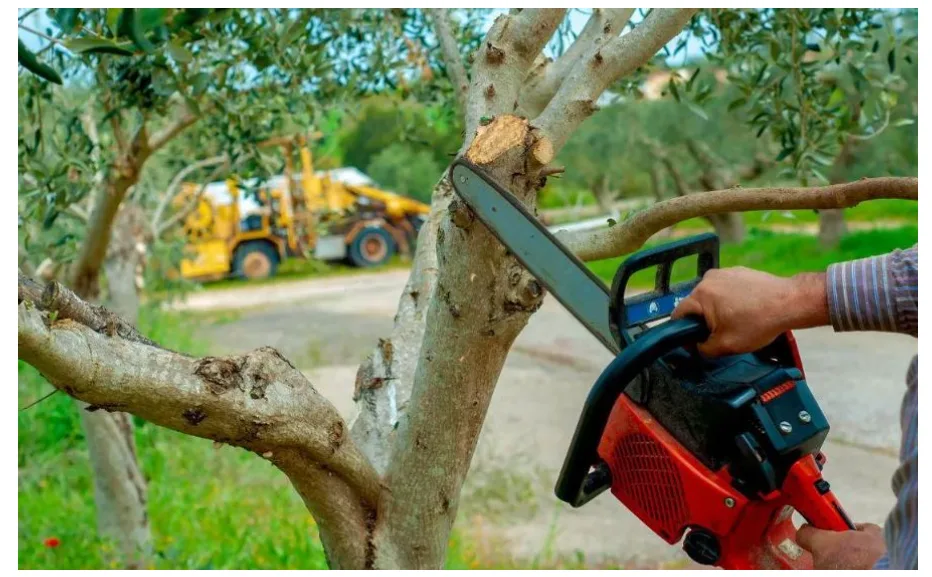
Tree topping, also called “hat-racking” or “heading,” involves cutting off the main branches or the leader of a mature tree, leaving large stubs or lateral branches that are too small to assume the terminal role. It’s often done to reduce a tree’s height or spread, usually out of concerns about power lines, views, or perceived safety hazards.
On the surface, it might seem like a quick solution to manage an overgrown tree. In reality, it’s a practice that the International Society of Arboriculture and other leading tree care organizations have condemned for decades. Yet it persists, largely because some tree service providers continue to offer it as a cheap alternative to proper pruning, and because homeowners simply don’t know the devastating consequences until it’s too late.
Why Homeowners Choose Tree Topping (And Why They Shouldn’t)
Before we dive into the damage tree topping causes, it’s important to understand why people do it in the first place. Cost concerns drive many decisions, as topping is often cheaper than proper pruning because it requires less skill and can be done more quickly. Contractors simply cut branches at arbitrary points, rather than making careful, strategic cuts that preserve the tree’s structure.
Misguided safety fears also play a role. When a tree grows large, homeowners may worry about branches falling on their home or power lines. Topping seems like a logical way to reduce this risk. Others face obstructed views or find that large trees cast too much shade on their gardens, making them desperate for a quick fix.
Perhaps most troubling is the simple lack of awareness. Many people don’t know that topping is harmful. They see other topped trees in the neighborhood and assume it’s an acceptable practice. The problem is that tree topping doesn’t solve these concerns. It actually makes them worse.
The Devastating Biology of Tree Topping
To understand why topping is so harmful, you need to understand how trees grow and respond to injury. Trees have evolved sophisticated systems to manage their growth and heal from damage, but topping overwhelms these natural defenses in ways that create cascading problems for years to come.
When you remove a tree’s crown, the leafy upper portion, you eliminate its primary food production system. Trees create energy through photosynthesis in their leaves, and that energy fuels all the tree’s functions: growth, defense against pests and diseases, and structural development. A topped tree suddenly loses 50 to 100 percent of its leaf-bearing crown, creating an immediate energy crisis. The tree has extensive roots that require energy to maintain, but suddenly has little to no capacity to produce it. According to research from the USDA Forest Service, this shock can be so severe that some trees never fully recover, languishing for years before succumbing to secondary stressors like drought or disease.
Trees are remarkably resilient organisms, and a topped tree will desperately attempt to replace its lost crown by producing multiple new shoots from dormant buds near the cut sites. This might seem like recovery, but these new branches create serious problems. Unlike natural branches that grow from the tree’s internal structure over many years, these “epicormic” shoots are only attached to the outer layers of wood. They lack the structural integrity of normal branches and are prone to breaking, especially as they grow larger and heavier.
What’s more ironic is that a topped tree often grows back faster than before. The extensive root system that once supported a large crown now channels all its energy into rapid vertical growth. Within a few years, the tree may be as tall as it was before topping, but now with dozens of weakly attached branches. Studies have shown that branches originating from topping cuts are significantly more likely to fail during storms than properly pruned branches. What homeowners thought would make their tree safer has actually made it far more dangerous.
Every topping cut creates a large wound that the tree must seal off. Trees don’t heal like animals do. They can’t regenerate damaged tissue. Instead, they compartmentalize decay by forming barriers around wounds. This process, called CODIT (Compartmentalization of Decay in Trees), works well for small pruning cuts but struggles with the massive wounds created by topping. Large topping stubs often cannot close properly, leaving the tree’s internal wood exposed to decay fungi, bacteria, and insects for years or even permanently. This decay spreads downward into the trunk, compromising the tree’s structural integrity from the inside out. A tree that looks recovered on the outside may be rotting from within.
The Financial Reality: Topping Costs More in the Long Run
While topping may seem economical initially, it typically costs property owners significantly more over time. Because topped trees regrow so vigorously, they require more frequent pruning to manage the weak, fast-growing branches. What you saved on the initial topping, you’ll spend many times over on corrective pruning.
The weakly attached branches become hazards that threaten your property, vehicles, and safety. A falling branch can cause damage that far exceeds the cost of proper tree care. Topped trees are also unsightly and signal poor property maintenance to potential buyers. Real estate professionals consistently identify mature, well-maintained trees as significant value additions, while topped trees are liabilities that can reduce property appeal.
Because topping dramatically shortens a tree’s lifespan, you’ll likely face the cost of complete tree removal decades sooner than you would have with proper care. Removing a large tree can cost several thousand dollars, making the initial savings from topping look foolish in hindsight.
The Right Way: Professional Pruning Alternatives
The good news is that there are proper, effective alternatives to tree topping that actually address homeowners’ concerns without destroying their trees. Crown reduction is a professional pruning technique that reduces a tree’s height or spread while maintaining its natural form and structural integrity. Unlike topping, crown reduction involves selective pruning cuts made at lateral branches that are large enough to assume the terminal role, typically at least one-third the diameter of the removed branch.
This technique reduces the tree’s size while preserving its health, structure, and appearance. Professional tree pruning and trimming services use crown reduction to manage tree size while promoting long-term tree health and minimizing stress to the tree. The difference between this approach and topping is night and day. Where topping creates hundreds of weak shoots, crown reduction maintains the tree’s natural branching pattern and structural strength.
When the goal is to increase light penetration or reduce wind resistance, crown thinning is often the answer. This involves selectively removing branches throughout the crown to reduce density while maintaining the tree’s natural shape. It’s particularly effective for trees that cast too much shade or that are at risk of wind damage. The tree maintains its size and form but allows more light and air to pass through the canopy.
If low branches are the problem, blocking views, interfering with structures, or limiting clearance, crown raising removes or prunes lower branches while leaving the upper crown intact. This addresses clearance issues without the devastating effects of topping. For trees with structural weaknesses that create legitimate safety concerns, cabling and bracing systems can provide support without removing branches. These systems redistribute structural stress and can extend the useful life of valuable trees.
How to Identify a Qualified Arborist
One of the biggest challenges homeowners face is distinguishing between legitimate tree care professionals and those who still practice topping. Look for ISA certification as your first filter. The International Society of Arboriculture certifies arborists who have demonstrated knowledge of proper tree care practices. ISA-certified arborists are trained in proper pruning techniques and understand tree biology in ways that casual tree trimmers don’t.
Ask any potential contractor about their approach to your specific tree concern. A qualified arborist will discuss alternatives to topping and explain why it’s harmful. If a contractor suggests topping or can’t explain their pruning strategy in detail, look elsewhere. They should be able to articulate why they’re making specific cuts and how those cuts will benefit the tree’s long-term health.
Request references and proof of insurance before hiring anyone. Legitimate tree care companies carry liability insurance and workers’ compensation coverage. They should also be willing to provide references from previous clients. Get multiple estimates, but don’t automatically choose the lowest bid. Extremely low prices often indicate that corners will be cut, sometimes literally, in the form of topping.
Review the contract carefully before signing. Any pruning work should be specified according to ANSI A300 standards, which are the industry’s best management practices for tree care. If the contract is vague or doesn’t reference these standards, that’s a red flag.
Common Questions About Tree Topping
You might be wondering about your neighbor’s topped tree that seems to have grown back fine. While topped trees do often regrow, the damage is internal and cumulative. The tree may look acceptable for a few years, but the weak branch attachments, internal decay, and structural problems will eventually manifest, often catastrophically during a storm. Surface appearance doesn’t tell the full story of what’s happening inside the tree’s structure.
Can a topped tree be saved? It depends on the severity of the topping and the tree’s species, age, and overall health. Some trees can be rehabilitated through proper corrective pruning over several years, but they’ll never fully recover their natural structure. The best course is to consult with a certified arborist who can assess the tree’s condition and recommend a realistic path forward. In some cases, removal and replacement with a new tree is the most practical option.
Some homeowners ask whether topping is ever necessary for safety. Legitimate safety concerns can almost always be addressed through proper pruning techniques. In rare cases where a tree poses an immediate hazard that can’t be mitigated through proper pruning, complete removal is usually a better option than topping, which creates long-term hazards while appearing to solve the immediate problem.
The Bottom Line
Tree topping is a lose-lose proposition. It harms the tree, creates long-term hazards, costs more over time, and reduces property value. What appears to be a quick, economical solution is actually a costly mistake that creates problems for years to come. If you’re concerned about a tree’s size, safety, or impact on your property, consult with a certified arborist who can recommend proper alternatives.
Your trees are valuable assets that deserve proper care. By avoiding tree topping and investing in professional pruning techniques, you’ll preserve their health, safety, and beauty for decades to come. A properly maintained tree is an investment in your property’s value, your family’s safety, and your community’s environmental health. Don’t let the false economy of tree topping undermine these benefits. The few hundred dollars you might save today could cost you thousands tomorrow, not to mention the irreplaceable loss of a mature, healthy tree.