Tree roots are one of the most common causes of sewer line blockages. While trees provide shade and improve landscaping, their roots naturally seek moisture and nutrients underground. Unfortunately, sewer pipes often become an attractive target, especially when small cracks, loose joints, or aging pipe materials allow water to escape.
If left untreated, root intrusion can lead to slow drainage, recurring backups, expensive repairs, and even complete sewer line failure. Understanding how to remove tree roots from sewer lines can help property owners and plumbing contractors solve the problem before significant damage occurs.
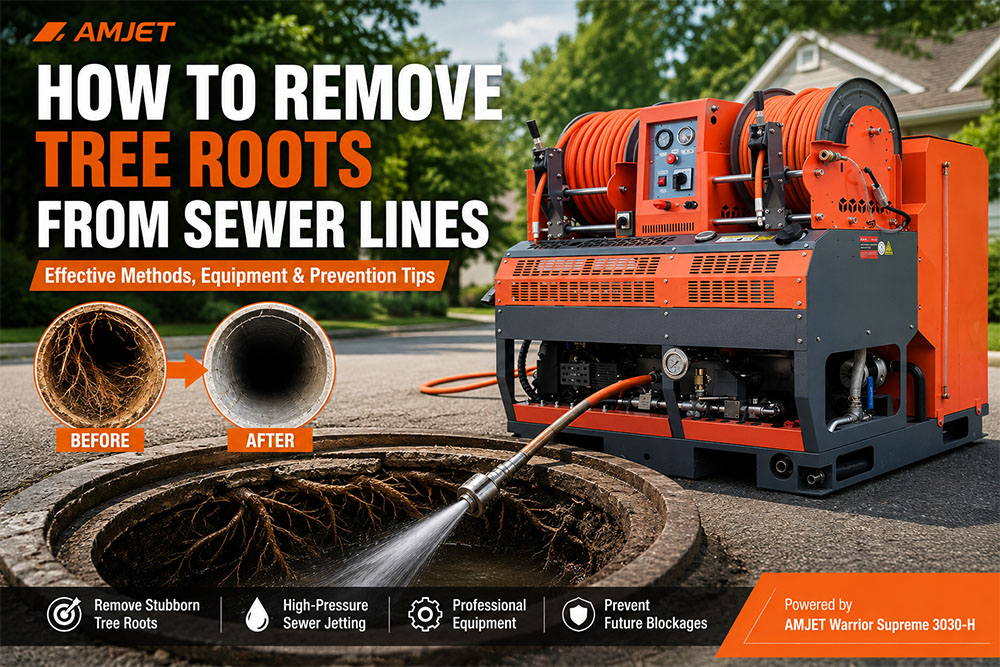
In this guide, we will explain why roots invade sewer pipes, how professionals perform tree root removal from sewer pipes, and which equipment delivers the best results.
Why Do Tree Roots Grow into Sewer Pipes?
Tree roots do not usually break into intact pipes. Instead, they enter through existing weaknesses such as:
- Cracked clay pipes
- Deteriorated concrete sewer lines
- Loose pipe joints
- Corroded metal pipes
- Aging underground drainage systems
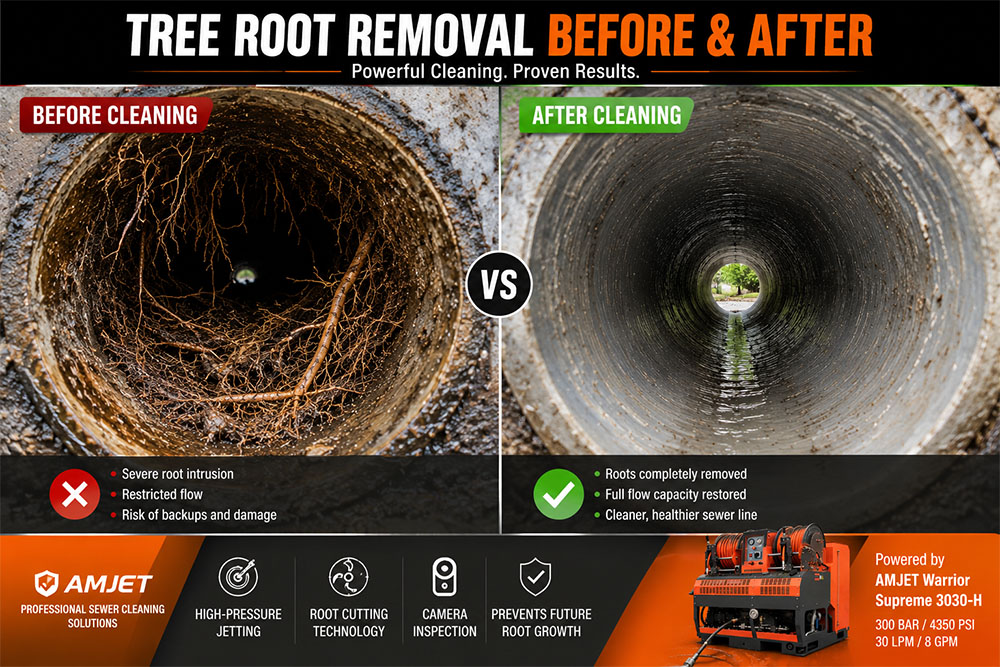
Once roots detect moisture escaping from a pipe, they grow toward the source. Over time, the roots expand inside the pipe and create dense masses that trap grease, debris, paper products, and other materials flowing through the system.
Common warning signs include:
- Slow draining sinks and toilets
- Gurgling sounds from drains
- Frequent sewer backups
- Foul odors near drains
- Wet patches in the yard
Early detection is important because root growth becomes more difficult to remove as it expands.
Inspect the Sewer Line Before Removing Roots
Before performing any tree root removal from sewer pipes, professionals typically inspect the pipeline using a sewer inspection camera.
A camera inspection helps identify:
- Root location
- Severity of intrusion
- Pipe condition
- Cracks or structural damage
- Pipe diameter and layout
This information allows contractors to choose the most effective cleaning method while avoiding unnecessary damage to the pipe.
Without inspection, it is difficult to determine whether roots are the primary cause of the blockage or whether the pipe requires repair or replacement.
Method 1: High-Pressure Sewer Jetting
One of the most effective methods for how to remove tree roots from sewer lines is high-pressure sewer jetting.
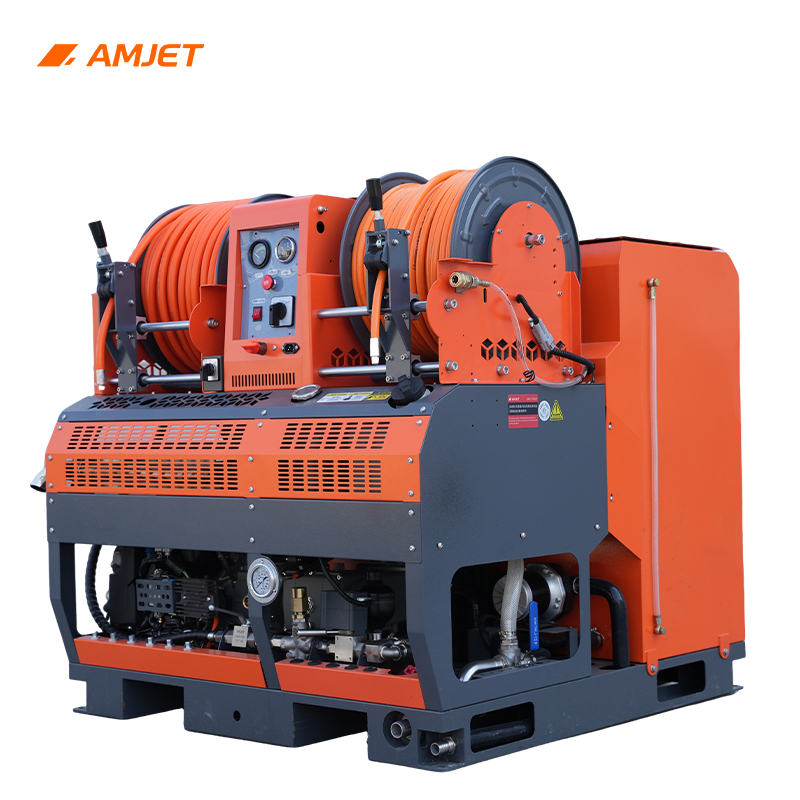
A professional sewer jetter uses high-pressure water delivered through specialized root-cutting nozzles. The powerful water jets slice through roots and flush debris out of the pipeline.
Advantages include:
- Removes roots without harsh chemicals
- Cleans the entire pipe wall
- Flushes away grease and sediment
- Suitable for long pipe sections
- Environmentally friendly solution
High-pressure jetting is widely used by municipal maintenance teams, plumbing contractors, and drain cleaning companies because it provides both root removal and complete pipe cleaning in a single operation.
For severe root intrusion, contractors often use a high pressure sewer jetter for roots with pressures exceeding 4,000 PSI.
Method 2: Mechanical Root Cutting Machines
Another common solution is using a sewer root cutting machine.
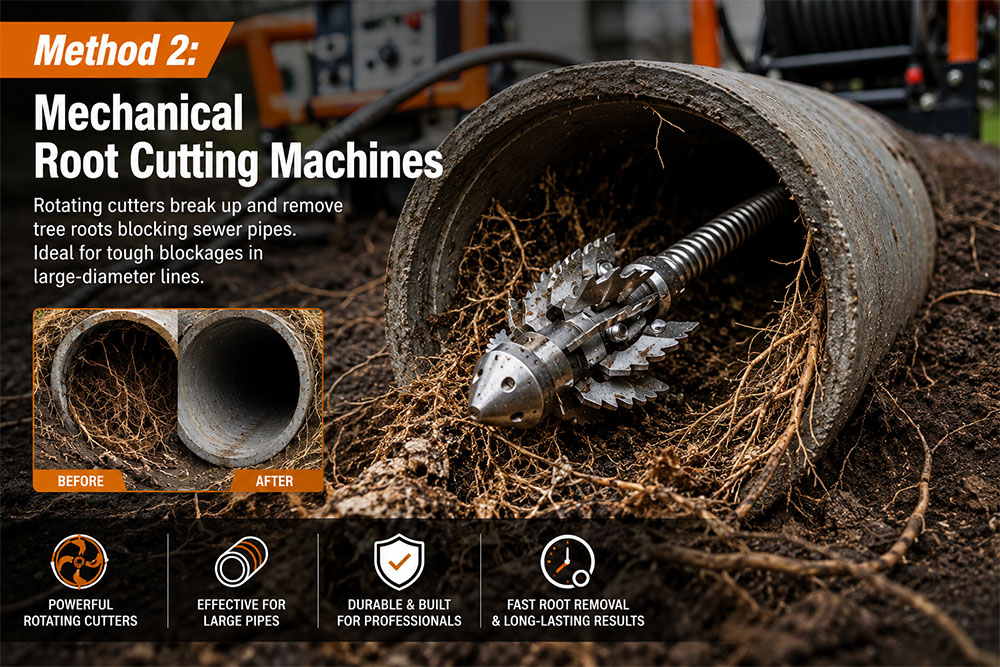
Mechanical cutters use rotating blades attached to flexible cables that travel through the sewer line. As the cutter rotates, it physically cuts and removes root masses inside the pipe.
Benefits include:
- Effective for dense root blockages
- Suitable for large-diameter pipes
- Can reopen severely blocked lines
- Works in conjunction with sewer cameras
However, mechanical cutters generally remove only the roots themselves and may not fully clean grease, sludge, or other buildup attached to the pipe walls.
For this reason, many professionals combine root cutting with hydro jetting for optimal results.
Method 3: Chemical Root Treatments
Some property owners use root-killing chemicals after mechanical cleaning.
These products are designed to:
- Slow future root growth
- Kill remaining root fibers
- Extend the interval between maintenance visits
While chemical treatments can help reduce regrowth, they should not be considered a complete solution. Existing root masses still require physical removal before treatment becomes effective.
Always follow local regulations and environmental guidelines when using chemical root control products.
Recommended Equipment for Professional Root Removal
When dealing with heavy root intrusion, equipment performance plays a critical role.
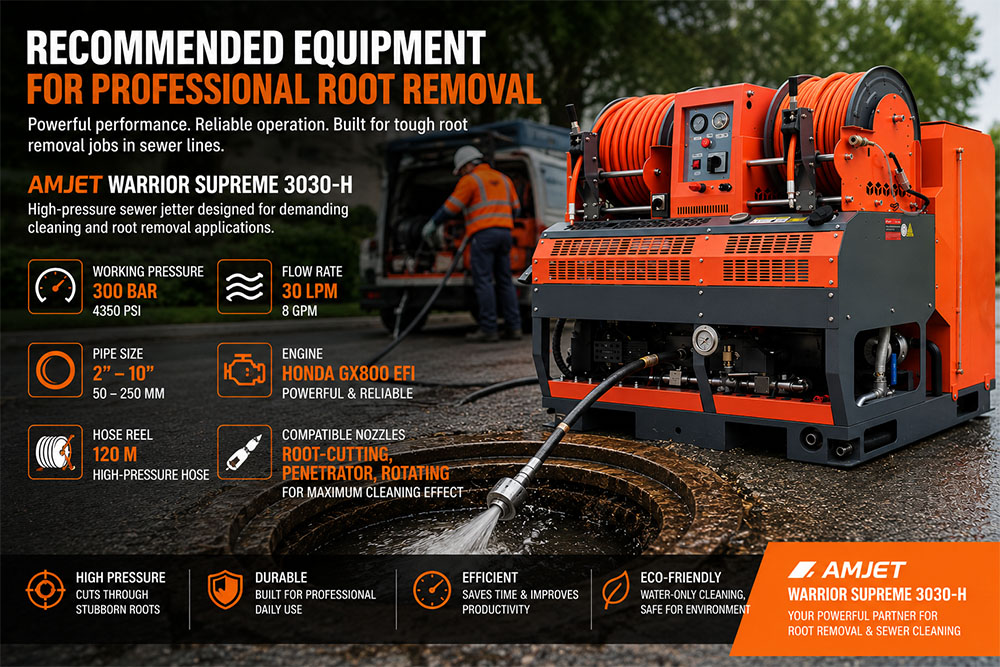
The Warrior Supreme 3030-H sewer jetter is designed for demanding drain and sewer cleaning applications. With a working pressure of 300 bar (4,350 PSI) and a flow rate of 30 LPM (8 GPM), it provides the power required for challenging root removal jobs.
Key advantages include:
- High-pressure cleaning capability
- Suitable for 2–10 inch pipe sizes
- Reliable Honda GX800 EFI engine
- Professional hose reel system
- Effective operation with root-cutting nozzles
For contractors searching for a dependable high pressure sewer jetter for roots, the Warrior Supreme 3030-H offers an excellent balance of cleaning performance, durability, and operational efficiency.
Combined with the appropriate nozzle selection, it can effectively remove roots, grease buildup, and stubborn sewer obstructions.
How to Prevent Tree Roots from Returning
Removing roots is only part of the solution. Long-term prevention helps reduce future maintenance costs.
Recommended preventive measures include:
Schedule Regular Inspections
Periodic camera inspections can identify early root growth before major blockages develop.
Perform Preventive Jetting
Annual or semi-annual sewer jetting removes small root intrusions before they become serious.
Repair Damaged Pipes
If roots entered through cracks or separated joints, repairing those defects is essential.
Consider Pipe Relining
Cured-in-place pipe (CIPP) lining can seal cracks and create a new pipe interior without excavation.
Avoid Planting Trees Near Sewer Lines
When planning landscaping projects, maintain safe distances between trees and underground utilities.
When Should a Sewer Line Be Replaced?
In some cases, root intrusion is only a symptom of a larger problem.
Replacement may be necessary if:
- Pipe sections have collapsed
- Extensive cracking exists
- Multiple offsets are present
- Root intrusion returns repeatedly despite cleaning
- The sewer system has reached the end of its service life
A professional inspection can determine whether cleaning, repair, relining, or replacement is the most cost-effective solution.
Conclusion
Learning how to remove tree roots from sewer lines is essential for maintaining healthy drainage systems and avoiding costly sewer failures. The most effective solutions include high-pressure jetting, mechanical root cutting, and ongoing preventive maintenance.
Among these methods, professional hydro jetting remains one of the most efficient approaches because it not only removes roots but also cleans the entire pipe interior. For contractors and drain cleaning professionals, a powerful machine such as the Warrior Supreme 3030-H can deliver the performance needed for demanding root removal projects.
By combining regular inspections, preventive cleaning, and proper equipment, property owners can significantly reduce the risk of future root intrusion and keep sewer systems operating efficiently for years to come.
Media Contact
Company Name: Hebei Tiandao Technology Co., Ltd.
Email: Send Email
Country: China
Website: https://www.amjeting.com/