


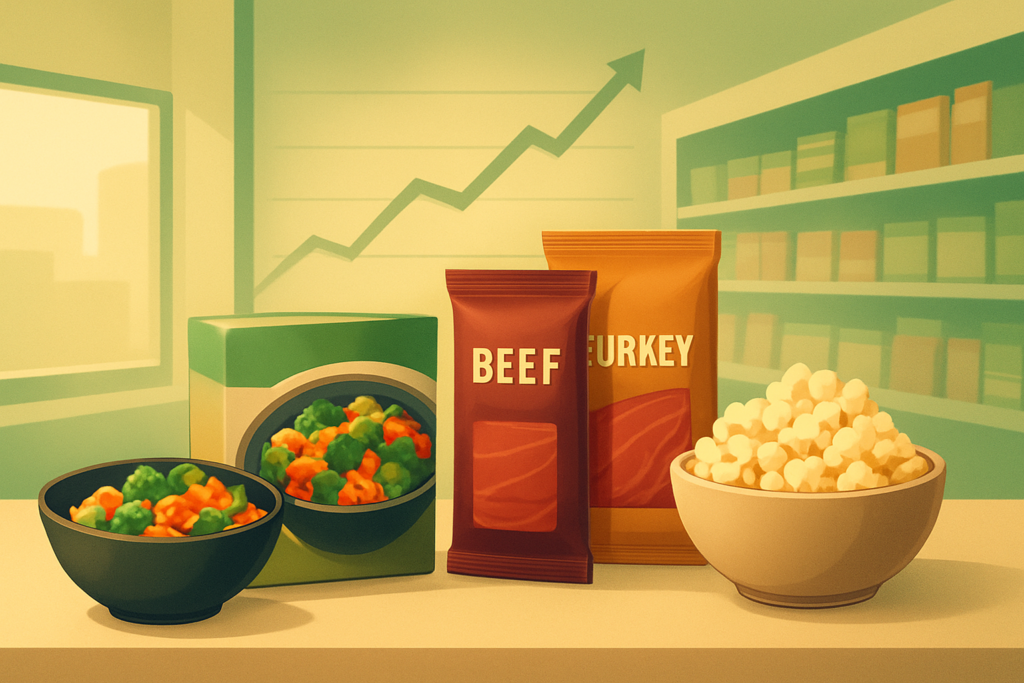
As we approach the end of March 2026, all eyes in the consumer staples sector are on Conagra Brands (NYSE: CAG). Long considered a "middle-of-the-aisle" bellwether, the Chicago-based food giant is currently at a critical crossroads. With its fiscal 2026 third-quarter earnings report looming in early April, investors are parsing every data point to determine if the company’s pivot from "price-led" to "volume-led" growth is finally taking root.
Conagra has spent the last year grappling with a complex consumer environment: a "high-yield" valuation that has attracted income seekers, a massive portfolio "pruning" strategy, and the looming specter of GLP-1 weight-loss medications. Today, Conagra stands as a test case for whether a traditional packaged food company can modernize fast enough to capture the shifting habits of a protein-obsessed, digitally-native consumer base.
Historical Background
Conagra’s story began over a century ago in 1919 as Nebraska Consolidated Mills. For its first fifty years, the company was primarily a flour miller. However, the 1970s marked a radical shift toward diversification, leading to the adoption of the "ConAgra" name (meaning "with the land").
The 1980s and 90s were decades of aggressive acquisition, bringing brands like Banquet, Hunt's, and Orville Redenbacher into the fold. However, the most defining moment of its modern era came in 2018 with the $10.9 billion acquisition of Pinnacle Foods. This move effectively doubled down on the frozen food category—a bet that proved prescient during the COVID-19 pandemic but left the company with a significant debt load that it has been working to de-layer ever since. Under CEO Sean Connolly, the company has transitioned from a disparate collection of labels into a focused powerhouse of "snackification" and "premium frozen."
Business Model
Conagra operates through four primary reporting segments:
- Grocery & Snacks: This is the high-margin engine of the company, featuring brands like Slim Jim, Duke’s, and Orville Redenbacher.
- Refrigerated & Frozen: The largest segment by revenue, housing the "modern health" powerhouses of Healthy Choice and Birds Eye, alongside legacy value brands like Banquet.
- International: A growing footprint in Canada and Mexico, leveraging U.S. brand equity.
- Foodservice: Providing branded products to restaurants and institutional kitchens.
The model relies on a "virtuous cycle" of innovation: using cash flow from mature brands (like Hunt's tomatoes) to fund R&D and marketing for high-growth snacks and premium frozen bowls.
Stock Performance Overview
The last decade has been a rollercoaster for CAG shareholders. Over a 10-year horizon, the stock has largely underperformed the S&P 500, weighed down by the debt of the Pinnacle acquisition and the subsequent inflationary shocks of 2022-2023.
In the 5-year window, the stock saw a massive "pantry-loading" spike in 2020 followed by a multi-year slide as interest rates rose and consumers began trading down to private labels. Over the past year (2025-2026), the stock has traded in a tight, depressed range, resulting in a dividend yield that has spiked into the 8% to 9% range. This high yield reflects a "show me" attitude from the market—investors are waiting for proof that volume declines have bottomed out before rewarding the stock with a higher multiple.
Financial Performance
Heading into the Q3 2026 print, Conagra’s balance sheet is the primary focus for analysts.
- Revenue: Fiscal 2025 saw organic sales hover around a flat line (-1% to +1%), as the company lapped a 2024 facility fire and aggressive price hikes.
- Debt: As of late 2025, total debt stood at approximately $7.62 billion. Management has committed to a $700 million debt reduction in fiscal 2026, aiming for a net leverage ratio of 3.2x.
- Yield: With a quarterly payout of $0.35 per share, the dividend remains the stock's most attractive feature. A payout ratio of 56% of free cash flow suggests the dividend is safe, provided margins don't erode further.
- Valuation: Currently trading at a forward P/E significantly below its 5-year average, CAG is priced as a "value trap" by some and a "deep-value opportunity" by others.
Leadership and Management
CEO Sean Connolly has led the company since 2015, steering it through its most significant structural changes. Connolly is widely respected for his "Conagra Way" strategy—a disciplined approach to brand building and premiumization.
The board of directors saw a strategic refresh in early 2026 with the addition of John Mulligan (former Target COO) and Pietro Satriano (former US Foods CEO). These appointments signal a tactical shift toward improving supply chain efficiency and strengthening retail partnerships at a time when shelf space is more competitive than ever.
Products, Services, and Innovations
Conagra has leaned heavily into the "protein" and "convenience" trends.
- The GLP-1 Pivot: While many feared weight-loss drugs would hurt snacks, Conagra launched the "On Track" badge in 2025. These products—specifically from the Healthy Choice and Birds Eye lines—are curated for GLP-1 users who require high-protein, nutrient-dense meals in smaller portions.
- Snackification: Slim Jim remains a juggernaut, holding a nearly 50% dollar share of the meat snack category. Innovation in "giant" formats and spicy flavor profiles has kept the brand relevant with Gen Z.
- Digital Innovation: The company has shifted its R&D toward "social-first" products—items like the "Cinnabon" inspired snacks and "Mega" bowls that perform well in visual-heavy social media marketing.
Competitive Landscape
Conagra competes in a crowded arena of giants:
- Nestlé: The primary rival in frozen meals (Stouffer’s). Conagra has gained share here by focusing on "single-serve bowls" rather than family-sized trays.
- Kraft Heinz (NYSE: KHC): A direct competitor in grocery staples. Kraft Heinz has struggled with its own volume recovery, making it a peer in the current "high-yield" struggle.
- General Mills (NYSE: GIS): Leads in frozen snacks (Totino's), though Conagra’s Banquet Mega snacks have been aggressively clawing back market share in the "value" tier.
- Campbell Soup (NYSE: CPB): Following its acquisition of Sovos (Rao’s), Campbell has become a more formidable competitor in premium sauces and snacks.
Industry and Market Trends
The defining trend of 2026 is the "Volume Over Price" transition. For three years, food companies grew revenue by raising prices. Now, that elasticity has snapped. Consumers are exhausted, leading to a surge in private-label (store brand) growth.
Conagra’s response has been "horses for courses"—selectively lowering prices through trade promotions on core items (like frozen vegetables) while maintaining premium pricing on innovative snacks. Additionally, the shift toward "Clean Label" (removing artificial colors/FD&C dyes) has become a mandatory entry requirement for the modern grocery aisle.
Risks and Challenges
- Private Label Erosion: If consumers continue to prefer store brands for basic staples (like frozen corn or canned tomatoes), Conagra’s "pruned" portfolio may still be too heavy on commodity-adjacent goods.
- Interest Rate Sensitivity: As a high-dividend "bond proxy," CAG’s stock price is sensitive to the Federal Reserve's moves. If rates stay "higher for longer," the 8.5% yield becomes less of a standout.
- GLP-1 Adoption: While Conagra is optimistic, a massive shift in caloric intake across 10-15% of the U.S. population could create a long-term headwind for volume growth in "legacy" snack brands.
Opportunities and Catalysts
- Earnings Inflection: A "beat and raise" in the upcoming Q3 report, specifically showing a return to positive volume growth, would be a massive catalyst for a stock rerating.
- M&A and Divestitures: Following the sale of Chef Boyardee and Mrs. Paul's in 2024-2025, Conagra has a leaner portfolio. Further divestitures of non-core brands could provide cash for more debt paydown or a buyback program.
- The "At-Home" Boom: As the cost of dining out remains historically high in 2026, Conagra’s "premium frozen" options offer a "restaurant-quality" experience at a fraction of the price, a trend that continues to benefit the Healthy Choice Cafe Steamers line.
Investor Sentiment and Analyst Coverage
Wall Street is currently divided. Institutional investors have largely treated CAG as a "source of funds" or a defensive play. However, recent filings show a slight uptick in hedge fund interest, attracted by the valuation floor.
Analysts at firms like Morgan Stanley and Evercore ISI have moved to "Hold" or "Neutral" ratings, waiting for the "hockey stick" recovery in volumes. The consensus price target suggests a modest 10-15% upside, but the real "bull case" rests on the dividend and the potential for a valuation multiple expansion if the debt-to-EBITDA ratio drops below 3.0x.
Regulatory, Policy, and Geopolitical Factors
Conagra faces increasing scrutiny over food additives. By the end of 2025, the company successfully removed all FD&C colors from its frozen portfolio to stay ahead of potential state-level bans (similar to the California Food Safety Act).
Geopolitically, the company is relatively insulated compared to tech giants, as most of its supply chain is North American centric. However, fluctuations in global fertilizer and grain prices (impacted by ongoing overseas conflicts) continue to pose a risk to the "Grocery & Snacks" segment's input costs.
Conclusion
As of March 30, 2026, Conagra Brands is the quintessential "show-me" stock. It offers a staggering yield that rivals some of the highest in the S&P 500, backed by a portfolio of brands that are household names. The management team has done the heavy lifting—integrating Pinnacle, pruning the portfolio, and pivoting toward the GLP-1 trend.
However, the market remains skeptical of the "volume recovery" narrative. For long-term income investors, the current entry point offers a rare combination of high yield and low valuation. For growth-oriented investors, the upcoming Q3 earnings will be the ultimate litmus test. If Conagra can prove that shoppers are returning to its premium frozen bowls and meat snacks, the stock could finally break out of its multi-year malaise. Until then, it remains a high-yield bellwether in a sector fighting for every inch of the consumer's plate.
This content is intended for informational purposes only and is not financial advice.





 Facebook
 Twitter
 YouTube