


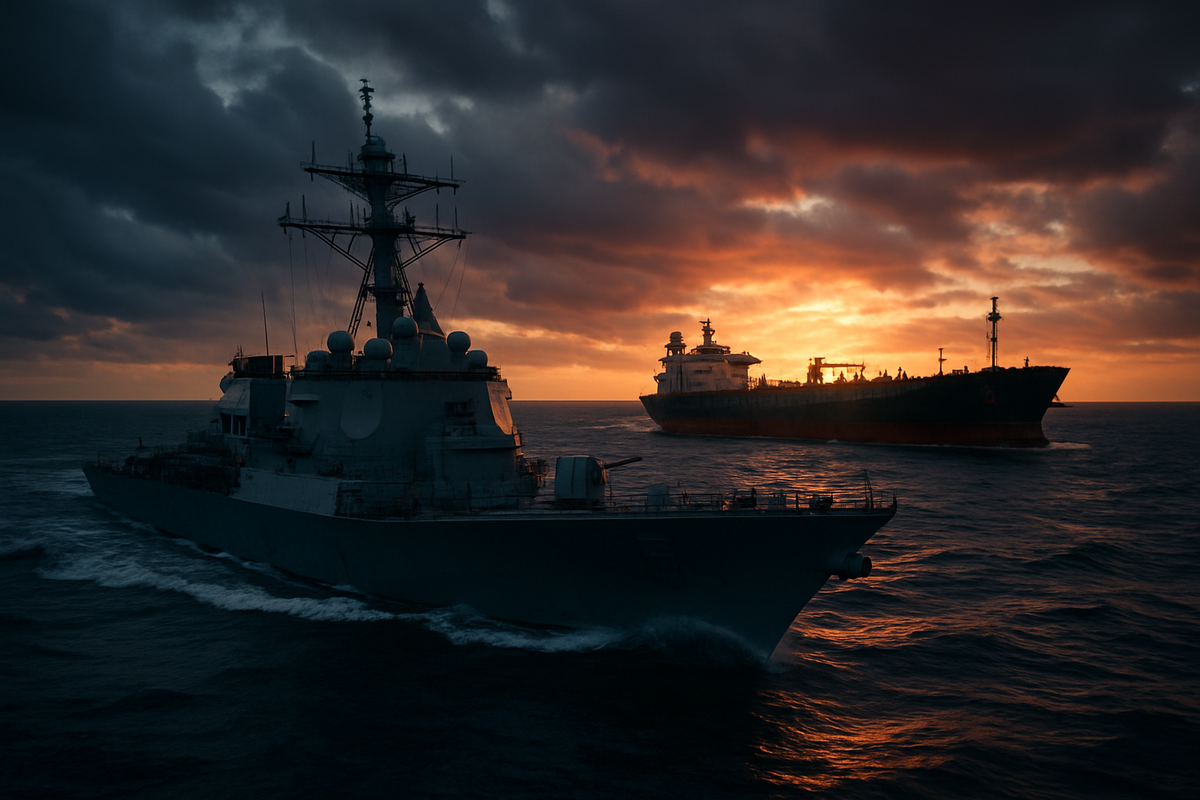
As of December 22, 2025, the global energy landscape is facing a seismic shift following a series of high-stakes maritime confrontations in the Caribbean and Atlantic. The U.S. Navy and Coast Guard are currently in active pursuit of the Bella 1, a "dark fleet" tanker allegedly carrying millions of barrels of sanctioned crude. This operation is the latest flashpoint in "Operation Southern Spear," a total naval blockade ordered by the Trump administration to sever the financial lifelines of sanctioned regimes. The immediate implications have been felt across the trading floors of New York and London, with crude oil benchmarks spiking as the "geopolitical risk premium" returns to the market with a vengeance.
The pursuit of the Bella 1 follows the high-profile seizures of the supertanker Skipper and the Panama-flagged Centuries earlier this month. For energy markets, the tension represents more than just a localized skirmish; it is a fundamental restructuring of global oil logistics. As the U.S. military physically interdicts vessels that previously operated in the shadows of international law, the "shadow fleet" that once facilitated the flow of millions of barrels of oil is being systematically dismantled, forcing a massive rerouting of global supply chains and sending shockwaves through energy sector stocks.
A Timeline of Escalation: From Interdiction to Blockade
The current crisis began in earnest on December 10, 2025, when U.S. special operations forces boarded and seized the Skipper, a Very Large Crude Carrier (VLCC) carrying approximately 2 million barrels of heavy crude, just off the Venezuelan coast. This move was described by the White House as the largest vessel seizure in the history of U.S. sanctions enforcement. Within days, the rhetoric transitioned into action. On December 16, the administration officially announced "Operation Southern Spear," a comprehensive naval blockade designed to prevent any sanctioned vessel from entering or leaving specific regional waters.
The momentum continued on December 20, when the U.S. Coast Guard apprehended the Centuries east of Barbados. Unlike previous targets, the Centuries was not initially on the U.S. Department of the Treasury's high-profile sanctions list, signaling to the market that any vessel suspected of "dark fleet" activity—such as AIS spoofing or false flagging—was now a target for physical boarding. By the morning of December 22, reports confirmed that U.S. destroyers were shadowing the Bella 1, a tanker linked to a complex web of sanctions evasion involving both Iranian and Venezuelan interests.
Market reaction has been swift and sharp. Following the blockade announcement on December 17, Brent crude jumped 2.5% to over $60 per barrel, while West Texas Intermediate (WTI) rose 2.6% to approximately $56.50. Traders are now pricing in the "risk of seizure," which effectively acts as a secondary embargo. Dozens of tankers are reportedly idling in Venezuelan waters, unwilling to risk the gauntlet of U.S. naval assets, creating a localized supply glut for the sanctioned regime while tightening the global market for heavy sour crude.
Winners and Losers in the New Energy Order
The naval blockade has created a clear divide in the equity markets, distinguishing between companies that benefit from higher crude prices and those burdened by rising feedstock costs or operational risks. ExxonMobil (NYSE: XOM) has seen its shares rise roughly 0.8% since the start of the operation, as the integrated major benefits from the general lift in global oil benchmarks without maintaining any direct exposure to the sanctioned regions. Similarly, pure-play U.S. exploration and production companies like Occidental Petroleum (NYSE: OXY) and Diamondback Energy (NASDAQ: FANG) have emerged as "clear winners," with gains of over 1% as they capture higher free cash flow from the price spikes.
In a unique strategic position, Chevron (NYSE: CVX) has managed to navigate the crisis with minimal disruption. As the only U.S. major with a specific license to operate and export from Venezuela, its chartered tankers have been largely exempt from the blockade's interdictions. This has allowed Chevron to maintain its "bridge" to heavy crude supplies, giving it a competitive advantage over other Western majors. On the shipping side, Frontline (NYSE: FRO) and Scorpio Tankers (NYSE: STNG) are seeing a surge in demand for "compliant" vessels. As the shadow fleet is chased off the seas, the daily rates for non-sanctioned VLCCs have skyrocketed, with some analysts reporting rates as high as $125,000 per day.
Conversely, the U.S. Gulf Coast refining complex is feeling the squeeze. Refiners such as Valero Energy (NYSE: VLO), Phillips 66 (NYSE: PSX), and Marathon Petroleum (NYSE: MPC) are designed to process the heavy, sour crude grades that are currently being blocked. The removal of Venezuelan and other sanctioned barrels from the Atlantic basin has forced these refiners to seek more expensive alternatives from the Middle East or Western Canada, putting immediate pressure on refining margins and causing a modest pullback in their share prices.
The Wider Significance: The Death of the Shadow Fleet
"Operation Southern Spear" marks a pivotal moment in the intersection of geopolitics and energy. For years, the "shadow fleet"—a collection of aging, under-insured tankers using deceptive practices to bypass Western sanctions—provided a release valve for global oil supply. By deploying the U.S. Navy to physically block these flows, the U.S. is signaling the end of the "sanctions-only" era of foreign policy, moving toward a more aggressive "interdiction-based" model. This shift has massive implications for "ton-mile" demand; as short-haul sanctioned oil is removed, global buyers must source oil from further away, increasing the distance tankers must travel and further tightening the shipping market.
This event also fits into a broader trend of energy being used as a primary tool of statecraft. The blockade is not just about oil; it is about the assertion of maritime dominance in a multipolar world. Historically, such actions have led to "tanker wars" or significant escalations in regional conflicts. However, the current U.S. strategy appears focused on the economic strangulation of specific regimes by making the cost of "dark" shipping prohibitively high through insurance hikes and the threat of total asset forfeiture.
The Road Ahead: 2026 and the Future of Energy Security
Looking toward 2026, the short-term outlook remains volatile. If the U.S. Navy continues its aggressive pursuit of vessels like the Bella 1, the market should expect a sustained "geopolitical floor" under oil prices. However, if the blockade leads to a total collapse of Venezuelan exports, OPEC+ may face internal pressure to increase production to prevent a global price spike that could dampen economic growth. Investors should watch for potential strategic pivots from China and India, the primary buyers of sanctioned crude, as they decide whether to challenge the U.S. blockade or seek alternative, compliant supplies.
In the long term, this crisis may accelerate the modernization of the global tanker fleet. With the shadow fleet being "redlined" out of the market, there will be a renewed focus on newbuilds and modern, transparent shipping operations. For the energy majors, the focus will likely shift toward securing "safe" supply chains in the Western Hemisphere, potentially leading to increased investment in the Permian Basin and offshore Guyana to mitigate the risks of future maritime blockades.
Summary and Investor Takeaways
The events of December 2025 have proven that geopolitical risk is no longer a theoretical exercise for energy investors. The U.S. Navy's active pursuit of sanctioned tankers has effectively removed a significant portion of the global "dark" supply, benefiting compliant shipping companies like Frontline and U.S. producers like Occidental Petroleum. While the immediate price spikes in Brent and WTI reflect the shock of "Operation Southern Spear," the lasting impact will be found in the restructuring of global trade routes and the increased cost of maritime insurance.
For the coming months, investors should closely monitor the "ton-mile" data and VLCC dayrates, as these will be the primary indicators of how deeply the blockade is affecting global supply. Additionally, the performance of Gulf Coast refiners will serve as a bellwether for how successfully the industry is adapting to the loss of heavy crude grades. As the world moves into 2026, the intersection of naval power and energy markets will remain a dominant theme, requiring a sophisticated understanding of both the "shale patch" and the high seas.
This content is intended for informational purposes only and is not financial advice.





 Facebook
 Twitter
 YouTube