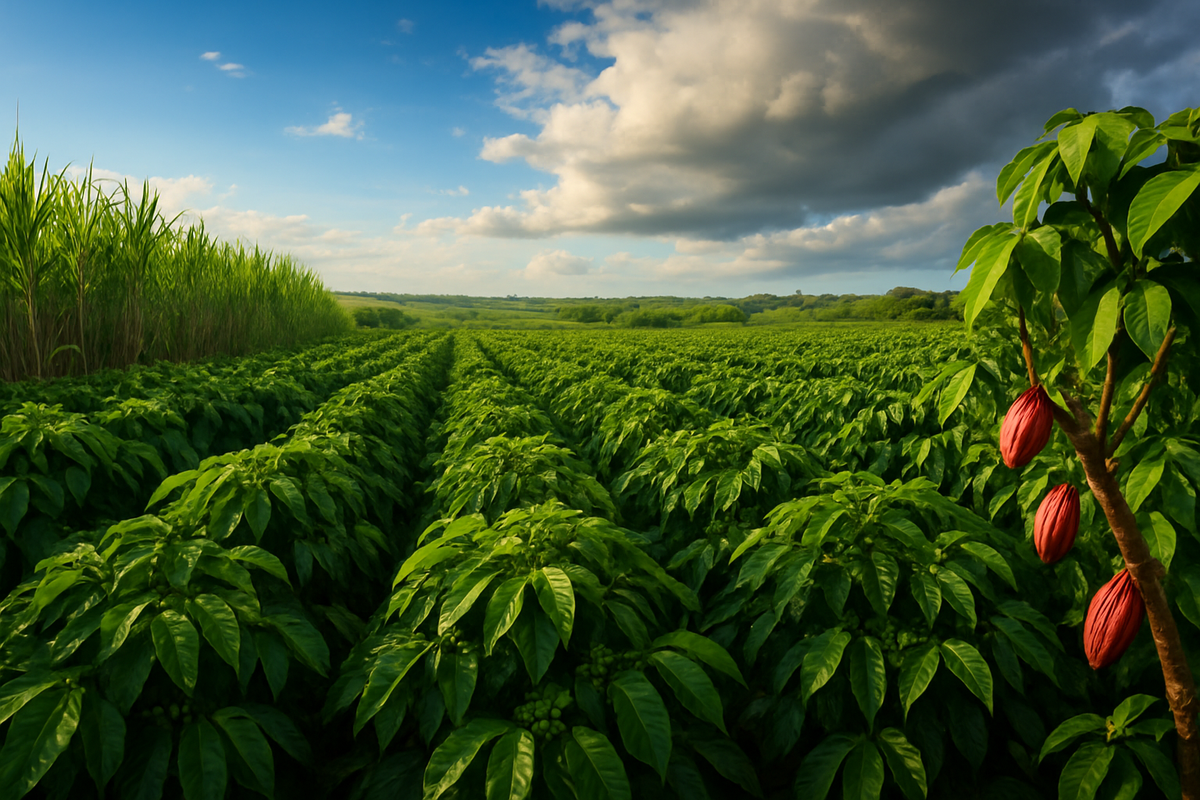
Brazil's agricultural might is once again sending ripples across global commodity markets, as a record-breaking robusta coffee harvest is exerting significant downward pressure on international coffee prices. This seismic shift in the coffee landscape comes amidst a broader period of heightened volatility in sugar and cocoa markets, where a complex interplay of changing weather patterns, currency fluctuations, and evolving policy decisions is creating an environment of both opportunity and uncertainty for producers, traders, and consumers alike.
The robusta surge from Brazil, a crucial component of many coffee blends and a preferred bean for instant coffee, is fundamentally reshaping supply dynamics. While consumers might anticipate lower prices at the checkout, the situation is far more nuanced, with diverse impacts on different coffee varieties and a ripple effect felt across other agricultural commodities. The confluence of these factors paints a complex picture for the global food and beverage industry as we approach the close of 2025.
Brazil's Bountiful Bean and the Shifting Sands of Supply
Brazil's robusta coffee output for the 2025/2026 marketing year has reached unprecedented levels, marking a pivotal moment for global coffee markets. The National Supply Company (Conab) estimates Brazil's robusta production at an all-time high of 20.77 million bags, while the U.S. Department of Agriculture (USDA) projects an even more robust 24.1 million bags. This remarkable increase, more than double the output from the 2016/2017 season, is largely attributed to robusta's inherent resilience—its tolerance to dry and hot conditions, disease resistance, higher yields, and less susceptibility to the biennial bearing cycles that often plague Arabica coffee. Key growing regions, particularly Espírito Santo and Bahia, have benefited from consistent rainfall and widespread irrigation, fostering this robust growth.
As of December 5, 2025, this record Brazilian robusta crop is visibly impacting global prices. Robusta prices have seen a decline of 1.25% to $4,179 per metric ton, marking a 5.3% drop for the week. Arabica prices, though less directly impacted by robusta supply, have also softened, falling 1.55% to $3.7460 per pound. This downward pressure is partially absorbing the effect of a 25.6% decrease in Brazil's November coffee exports compared to the previous year. Adding to the market dynamics, the recent removal of U.S. tariffs on Brazilian green coffee imports has further contributed to easing market tensions. However, the overall coffee market presents a mixed picture; while robusta is abundant, total Brazilian coffee production for 2025/2026, projected at 56.5 million bags by Conab, represents a 9.7% decline in Arabica production compared to 2024/25. This Arabica deficit, coupled with dwindling stockpiles on global futures exchanges, has paradoxically led to a surge of over 15% in overall global coffee prices since early December 2025, directly impacting consumer prices despite the robusta surplus. Meanwhile, in Vietnam, another major robusta producer, recent storms have slowed picking, though long-term supply issues are not anticipated, but persistent rains could affect bean quality.
The volatility extends beyond coffee. The global sugar market is trading around 14.76 US cents/Lbs, down slightly from the previous day but up almost 4% over the past month, though still significantly lower than a year ago. Dry weather in Brazil's Centre-South region has bolstered prices, while favorable monsoon rains in India promise a bumper crop, potentially increasing global supply. Brazil's internal policy on sugarcane allocation—whether to sugar or ethanol—creates further uncertainty. In the cocoa market, prices have undergone a significant correction from their peaks of nearly $12,000 per ton in late 2024 and early 2025, now trading around $5,387.52 USD/T as of December 5, 2025. This 44.01% year-on-year drop is largely due to optimistic harvest forecasts from Côte d'Ivoire, where generally favorable weather has improved yields. Despite this correction, current cocoa prices remain more than double their 2012-2022 average, indicating a fundamental revaluation of the commodity.
Corporate Fortunes in the Commodity Crosscurrents
The dramatic shifts in coffee, sugar, and cocoa markets are poised to create clear winners and losers among public companies deeply entrenched in the agricultural supply chain, from growers and processors to major food and beverage corporations.
In the coffee sector, major roasters and retailers like Starbucks Corporation (NASDAQ: SBUX) and JDE Peet's (AMS: JDEP) could see a complex impact. While lower robusta prices might reduce input costs for instant coffee and certain blends, the reported surge in overall global coffee prices due to Arabica scarcity could offset these gains, potentially squeezing margins on premium products. Companies heavily reliant on robusta, such as those producing instant coffee or lower-cost blends, might benefit from Brazil's record output. Conversely, specialized Arabica coffee producers and traders could face higher procurement costs or benefit from the increased value of their specific product. Brazilian agricultural giants, particularly those with significant robusta operations, like TerraX Agriculture (unlisted, but representing large Brazilian agricultural holdings), stand to gain from increased sales volumes, though potentially at a lower per-unit price for robusta.
For sugar, companies like Cosan S.A. (NYSE: CSAN), a major Brazilian sugar and ethanol producer, face a strategic dilemma. The decision to divert sugarcane to either sugar or ethanol production, influenced by government incentives and global prices, will directly impact their profitability. If ethanol prices remain less attractive, Cosan and similar companies might prioritize sugar production, potentially increasing global supply. Food and beverage companies that use sugar as a primary ingredient, such as The Coca-Cola Company (NYSE: KO) and PepsiCo, Inc. (NASDAQ: PEP), could see their input costs fluctuate. While the International Sugar Organization (ISO) forecasts a surplus for 2025-26, which could mean lower prices, the volatility driven by Brazilian policy and Indian output creates uncertainty for procurement strategies. European sugar producers, facing reduced planted acreage, might see regional price increases, benefiting local suppliers but increasing costs for regional buyers.
In the cocoa market, the significant price correction following record highs presents a mixed bag. Chocolate manufacturers like Mondelez International, Inc. (NASDAQ: MDLZ), Hershey Company (NYSE: HSY), and Nestlé S.A. (SWX: NESN) will likely welcome the retreat from peak prices, which had severely impacted their raw material costs. Lower cocoa prices could lead to improved profit margins, potentially allowing for more aggressive marketing or a reduction in consumer prices, stimulating demand. However, the underlying volatility and the fact that current prices are still historically high mean that these companies must remain agile in their hedging and procurement strategies. West African cocoa farmers, particularly those in Côte d'Ivoire and Ghana, who experienced record prices earlier in the year, might see their incomes stabilize at still elevated, but not peak, levels. Smaller, specialized chocolate makers might find it easier to manage costs compared to the extreme highs, but still face a significantly more expensive raw material than in previous years. Furthermore, companies involved in cocoa processing and trading, such as Barry Callebaut AG (SIX: BARN), will navigate a market with fluctuating demand and supply dynamics, with their profitability tied to efficient processing and risk management.
Broader Implications and Market Repercussions
These commodity market movements are not isolated incidents; they fit into broader industry trends driven by climate change, evolving agricultural practices, and global economic shifts. Brazil's robusta success highlights a growing trend towards more resilient and high-yielding crop varieties, a necessary adaptation in the face of increasingly unpredictable weather patterns. This could encourage further investment in robusta cultivation globally, potentially altering the traditional market dominance of Arabica.
The ripple effects extend beyond direct competitors. For instance, the volatility in sugar and ethanol markets in Brazil has implications for the global energy sector, as ethanol is a key biofuel. A sustained shift towards sugar production over ethanol could impact global crude oil demand and prices, albeit marginally. Regulatory and policy implications are also significant. India's consideration of increasing ethanol prices, for example, could divert more sugarcane to biofuel, impacting global sugar exports and prices. The European Union's traceability initiatives for cocoa, while aimed at sustainability, add complexity and cost to the supply chain, potentially favoring larger, more sophisticated players over smaller producers who struggle to meet stringent requirements.
Historically, periods of commodity price volatility are not new, often triggered by weather events or geopolitical tensions. However, the current confluence of factors—climate change-induced extreme weather, a global economic environment still recovering from various shocks, and evolving consumer preferences—makes this period particularly challenging. The surge in overall coffee prices despite a robusta surplus echoes past instances where supply shocks in one segment of a commodity market could disproportionately affect the entire market due to inelastic demand or speculative trading. The cocoa market's dramatic peak and correction serve as a stark reminder of how quickly sentiment and supply forecasts can swing, reflecting the inherent risks in agricultural commodities. These events underscore the increasing interconnectedness of global food systems and the delicate balance required to maintain stability.
Navigating the Future: What Comes Next?
Looking ahead, the short-term outlook for these commodity markets remains characterized by volatility, driven by ongoing weather patterns, currency fluctuations, and policy decisions. For coffee, the immediate future will see a tug-of-war between Brazil's abundant robusta supply and the tightening Arabica market. If Arabica production continues to decline or stockpiles dwindle further, overall coffee prices could remain elevated, despite the robusta surplus. Conversely, a stronger-than-expected Arabica harvest in other regions or a significant increase in robusta consumption could help stabilize prices. Strategic pivots for roasters will involve optimizing blends to leverage lower robusta costs while managing the premium associated with Arabica.
In the medium to long term, the coffee industry will likely see continued investment in robusta cultivation, particularly in regions prone to drought or seeking higher yields. This could lead to a more diversified global coffee supply, potentially reducing reliance on Arabica and offering greater price stability in the future. However, climate change remains a significant long-term challenge, threatening the viability of traditional coffee-growing regions and necessitating further innovation in drought-resistant varieties.
For sugar, the coming months will be shaped by Brazil's ethanol-versus-sugar allocation decisions and India's monsoon-dependent harvest. A sustained move by Brazilian mills towards sugar production could further increase global supply, potentially depressing prices, while a shift towards ethanol could tighten the market. Market opportunities may emerge for efficient sugar producers and for companies developing alternative sweeteners or sugar-reduction technologies, as the long-term trend towards healthier eating continues.
The cocoa market, having undergone a significant correction, will now seek a new equilibrium. While prices have retreated from their peaks, they remain historically high, suggesting a fundamental revaluation of the commodity due to long-term supply concerns from West Africa. Future price movements will depend heavily on the actual yields of the upcoming harvests in Côte d'Ivoire and Ghana, as well as global demand for chocolate. Manufacturers may continue to explore cost-saving measures, including reformulation or smaller portion sizes, while sustainable sourcing and traceability will become even more critical due to regulatory pressures and consumer demand for ethical products.
A Complex Brew: Market Assessment and Investor Watchpoints
In summary, the current landscape of global agricultural commodities is a complex brew of contrasting forces. Brazil's record robusta coffee crop is a testament to agricultural innovation and adaptation, yet its impact on global coffee prices is complicated by a concurrent decline in Arabica production and dwindling stockpiles, leading to overall price surges. Simultaneously, sugar and cocoa markets are navigating their own turbulent waters, swayed by weather, currency, and policy. The overarching theme is one of heightened volatility and the increasing influence of climate change on agricultural output.
Moving forward, the market will remain sensitive to weather forecasts in key producing regions, particularly Brazil, Vietnam, India, and West Africa. Currency fluctuations, especially the Brazilian Real against the US Dollar, will continue to play a critical role in determining export competitiveness and global prices. Policy decisions, such as Brazil's ethanol incentives or India's sugar export policies, will also be crucial watchpoints.
Investors should closely monitor the financial performance of major food and beverage companies, assessing their ability to manage input cost volatility through hedging strategies, supply chain diversification, and product innovation. Companies with diversified agricultural holdings or those investing in resilient crop varieties may be better positioned to weather these storms. The long-term implications of climate change on agricultural productivity and the increasing demand for sustainable sourcing will continue to shape investment decisions and corporate strategies in the months and years to come.
This content is intended for informational purposes only and is not financial advice