Sherman, North Texas – December 16, 2025 – In a monumental stride towards fortifying America's technological sovereignty, Texas Instruments (NASDAQ: TXN) is set to officially inaugurate its first $40 billion semiconductor fabrication plant in Sherman, North Texas, with a grand opening celebration slated for tomorrow, December 17, 2025. This colossal investment marks the single largest private-sector economic commitment in Texas history and represents a critical leap in reshoring the production of foundational chips vital to nearly every electronic device, including the rapidly expanding universe of artificial intelligence applications. The commencement of production at this state-of-the-art facility promises to significantly enhance the reliability and security of the domestic chip supply chain, mitigating future disruptions and underpinning the continued innovation across the tech landscape.
The Sherman complex, part of a broader $60 billion multi-year manufacturing expansion by Texas Instruments across the U.S., will be a cornerstone of the nation's efforts to reduce reliance on overseas manufacturing for essential components. As the global tech industry grapples with the lessons learned from recent supply chain vulnerabilities, this strategic move by TI is not merely an expansion of manufacturing capacity but a decisive declaration of intent to secure the fundamental building blocks of modern technology on American soil. This domestic resurgence in chip production is poised to have far-reaching implications, from strengthening national security to accelerating the development and deployment of advanced AI systems that depend on a stable supply of robust, high-quality semiconductors.
Architectural Marvel: A Deep Dive into TI's Foundational Chip Powerhouse
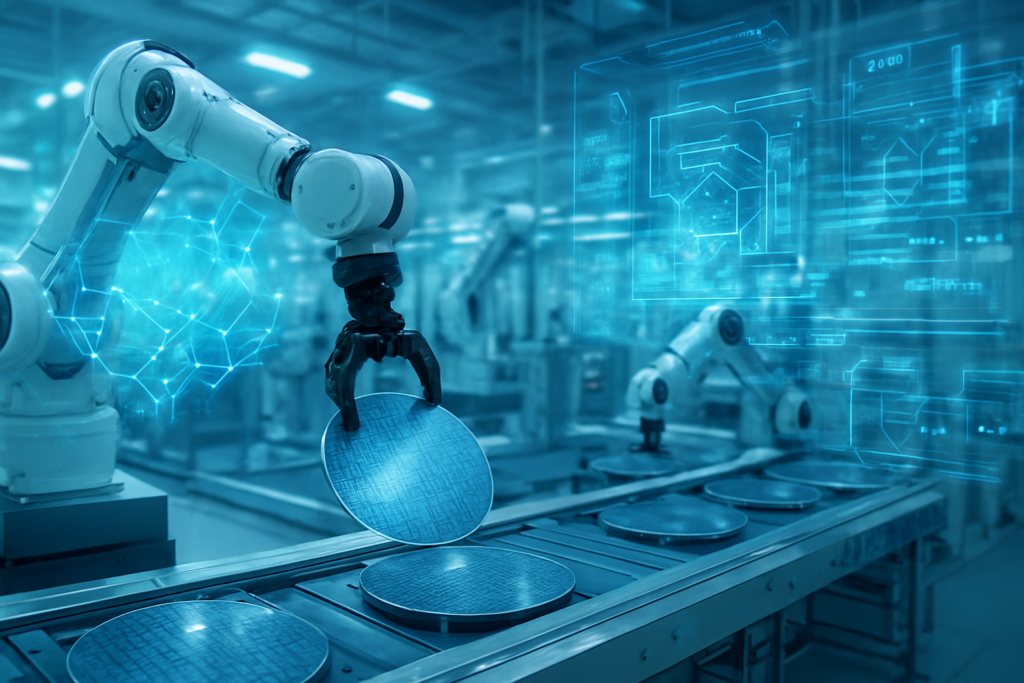
The new Texas Instruments facility in Sherman is an engineering marvel designed to produce analog and embedded processing chips on 300-millimeter (300-mm) wafers. These "foundational" chips, specializing in mature process nodes ranging from 45 nanometers (nm) to 130nm, are the unsung heroes found in virtually every electronic device – from the microcontrollers in your smartphone and the power management units in data centers to the critical sensors and processors in electric vehicles and advanced robotics. While much of the industry's spotlight often falls on bleeding-edge logic chips, the foundational chips produced here are equally, if not more, ubiquitous and essential for the functioning of the entire digital ecosystem, including the hardware infrastructure that supports AI.
This approach differentiates itself from the race for the smallest nanometer scale, focusing instead on high-volume, dependable production of components critical for industrial, automotive, personal electronics, communications, and enterprise systems. The Sherman site will eventually house up to four semiconductor fabrication plants, with the first fab alone expected to churn out tens of millions of chips daily. Once fully operational, the entire complex could exceed 100 million chips daily, making it one of the largest manufacturing facilities in the United States. This strategic emphasis on mature nodes ensures a robust supply of components that often have longer design cycles and require stable, long-term availability, a stark contrast to the rapid iteration cycles of leading-edge processors. Initial reactions from the AI research community and industry experts underscore the significance of this move, highlighting it as a crucial step towards supply chain resilience, which is paramount for the uninterrupted development and deployment of AI technologies across various sectors. The investment is also a direct beneficiary of the CHIPS and Science Act, with TI securing up to $1.6 billion in direct funding and potentially billions more in U.S. Treasury tax credits, signaling strong government backing for domestic semiconductor manufacturing.
Reshaping the AI Landscape: Beneficiaries and Competitive Implications
The operational launch of Texas Instruments' North Texas plant will send ripples throughout the technology sector, particularly benefiting a wide array of AI companies, tech giants, and innovative startups. Companies like Apple (NASDAQ: AAPL), Nvidia (NASDAQ: NVDA), Ford (NYSE: F), Medtronic (NYSE: MDT), and SpaceX, all known customers of TI, stand to gain significantly from a more secure and localized supply of critical analog and embedded processing chips. These foundational components are integral to the power management, sensor integration, and control systems within the devices and infrastructure that AI relies upon, from autonomous vehicles to advanced medical equipment and sophisticated data centers.
For major AI labs and tech companies, a stable domestic supply chain translates into reduced lead times, lower logistical risks, and enhanced flexibility in product design and manufacturing. This newfound resilience can accelerate the development cycle of AI-powered products and services, fostering an environment where innovation is less hampered by geopolitical tensions or unforeseen global events. The competitive implications are substantial; companies with preferential access to domestically produced, high-volume foundational chips could gain a strategic advantage in bringing new AI solutions to market more rapidly and reliably. While not directly producing AI accelerators, the plant's output underpins the very systems that house and power these accelerators, making it an indispensable asset. This move by TI solidifies the U.S.'s market positioning in foundational chip manufacturing, reinforcing its role as a global technology leader and creating a more robust ecosystem for AI development.
Broader Significance: A Pillar for National Tech Resilience
The Texas Instruments plant in North Texas is far more than just a manufacturing facility; it represents a pivotal shift in the broader AI landscape and global technology trends. Its strategic importance extends beyond mere chip production, addressing critical vulnerabilities in the global supply chain that were starkly exposed during recent crises. By bringing foundational chip manufacturing back to the U.S., this initiative directly contributes to national security interests, ensuring that essential components for defense, critical infrastructure, and advanced technologies like AI are reliably available without external dependencies. This move aligns perfectly with a growing global trend towards regionalizing critical technology supply chains, a direct response to geopolitical uncertainties and the increasing demand for self-sufficiency in strategic industries.
The economic impacts of this investment are transformative for North Texas and the surrounding regions. The full build-out of the Sherman campus is projected to create approximately 3,000 direct Texas Instruments jobs, alongside thousands of indirect job opportunities, stimulating significant economic growth and fostering a skilled workforce pipeline. Moreover, TI's commitment has already acted as a magnet, attracting other key players to the region, such as Taiwanese chipmaker GlobalWafers, which is investing $5 billion nearby to supply TI with silicon wafers. This synergistic development is rapidly transforming North Texas into a strategic semiconductor hub, a testament to the ripple effect of large-scale domestic manufacturing investments. When compared to previous AI milestones, this development may not be a direct AI breakthrough, but it is a foundational milestone that secures the very hardware bedrock upon which all future AI advancements will be built, making it an equally critical component of the nation's technological future.
The Road Ahead: Anticipating Future Developments and Challenges
Looking ahead, the Texas Instruments North Texas complex is poised for significant expansion, with the long-term vision encompassing up to four fully operational fabrication plants. This phased development underscores TI's commitment to increasing its internal manufacturing capacity to over 95% by 2030, a move that will further insulate its supply chain and guarantee a high-volume, dependable source of chips for decades to come. The expected near-term developments include the ramp-up of production in the first fab, followed by the progressive construction and commissioning of the subsequent facilities, each contributing to the overall increase in domestic chip output.
The potential applications and use cases on the horizon for these foundational chips are vast and continually expanding. As AI permeates more aspects of daily life, from advanced driver-assistance systems in autonomous vehicles to sophisticated industrial automation and smart home devices, the demand for reliable analog and embedded processors will only grow. These chips are crucial for sensor interfaces, power management, motor control, and data conversion – all essential functions for AI-driven systems to interact with the physical world. However, challenges remain, including the need for a sustained pipeline of skilled labor to staff these advanced manufacturing facilities and the ongoing global competition in the semiconductor industry. Experts predict that the Sherman site will solidify North Texas's status as a burgeoning semiconductor cluster, attracting further investment and talent, and serving as a model for future domestic manufacturing initiatives. The success of this venture will largely depend on continued governmental support, technological innovation, and a robust educational ecosystem to meet the demands of this high-tech industry.
A New Era of American Chip Manufacturing Takes Hold
The grand opening of Texas Instruments' $40 billion semiconductor plant in North Texas marks a watershed moment in American manufacturing and a critical turning point for the global technology supply chain. The key takeaway is clear: the United States is making a decisive move to re-establish its leadership in foundational chip production, ensuring the availability of components essential for everything from everyday electronics to the most advanced AI systems. This development is not just about building chips; it's about building resilience, fostering economic growth, and securing a strategic advantage in an increasingly competitive technological landscape.
In the annals of AI history, while not a direct algorithm or model breakthrough, this plant's significance cannot be overstated as it provides the robust hardware foundation upon which future AI innovations will depend. The investment underscores a fundamental truth: powerful AI requires powerful, reliable hardware, and securing the supply of that hardware domestically is paramount. As we move into the coming weeks and months, the tech world will be closely watching the ramp-up of production at Sherman, anticipating its impact on supply chain stability, product development cycles, and the overall health of the U.S. semiconductor industry. This is more than a plant; it's a testament to a renewed commitment to American technological independence and a vital step in ensuring the future of AI is built on solid ground.
This content is intended for informational purposes only and represents analysis of current AI developments.
TokenRing AI delivers enterprise-grade solutions for multi-agent AI workflow orchestration, AI-powered development tools, and seamless remote collaboration platforms.
For more information, visit https://www.tokenring.ai/.