What Should Consumers Consider When Choosing a Multiparameter Sensor for Water Quality Testing?
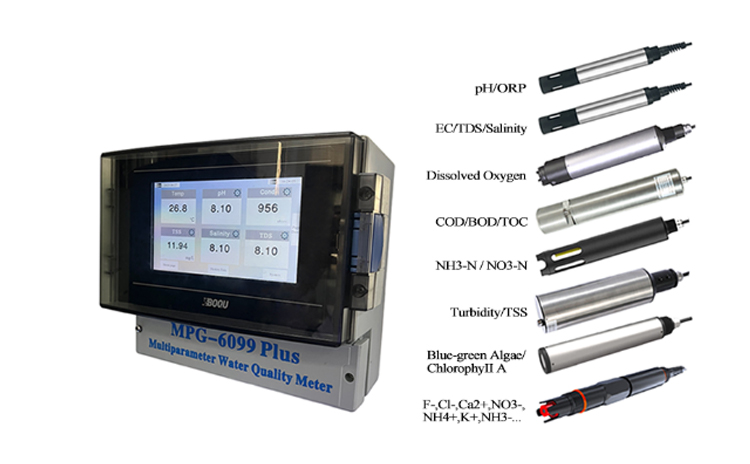
Choosing the right multiparameter water quality sensor requires careful evaluation of several critical factors to ensure it meets your specific testing needs and environmental conditions. Here's a detailed breakdown of the key considerations:
1. Parameter Coverage: aligning with your testing objectives
Essential parameters: Confirm the sensor includes all parameters you need to measure, such as:
•Basic water quality indicators (pH, dissolved oxygen, temperature,Turbidity and conductivity)
•Specialized parameters (if required) like heavy metals, chemical oxygen demand (COD), or biological oxygen demand (BOD)
•Avoid unnecessary features: Don't pay for parameters you won't use
•Don't overlook critical measurements: Ensure you're not missing key parameters for your specific application
2. Environmental Adaptability: ensuring the sensor can withstand your water conditions
•Temperature extremes: Check if the sensor operates effectively in high or low-temperature environments
•Salinity resistance: For marine applications, ensure the sensor can handle high salt concentrations
•Corrosion resistance: Industrial wastewater applications require sensors with anti-corrosion materials
•Sediment tolerance: If working in turbid or sediment-rich waters, verify the sensor's ability to function properly
3. Accuracy & Stability: guaranteeing reliable measurements
•Calibration requirements: Consider how often the sensor needs calibration - less frequent calibration means more convenience
•Long-term data stability: For continuous monitoring applications (like drinking water treatment plants), ensure the sensor maintains accuracy over time
•Drift characteristics: Evaluate how measurements may shift over extended periods
4. Deployment & Maintenance: matching sensor design to your application
•Deployment options:
Portable sensors for field spot checks
Submersible or fixed sensors for real-time online monitoring
•Maintenance considerations:
Ease of cleaning the sensor components
Simplicity of probe replacement
Overall durability and expected lifespan
5. Data Compatibility: integrating with your existing systems
•Communication protocols: Ensure the sensor can transmit data to your system via:
•Bluetooth for short-range wireless
•4G/5G for remote monitoring
•Modbus for industrial applications
•Data output formats: Verify compatibility with your recording and analysis software
•Integration capabilities: Check if the sensor can be easily incorporated into your existing monitoring infrastructure
Media Contact
Company Name: Shanghai BOQU Instrument Co., Ltd.
Email: Send Email
Country: China
Website: https://www.boquinstruments.com/
If you believe this article contains misleading, harmful, or spam content, please let us know.
Report this articleMore News
View More




Recent Quotes
View MoreQuotes delayed at least 20 minutes.
By accessing this page, you agree to the Privacy Policy and Terms Of Service.