Inflation's Persistent Shadow: Rate Cuts and Economic Crosscurrents Shape Market Sentiment
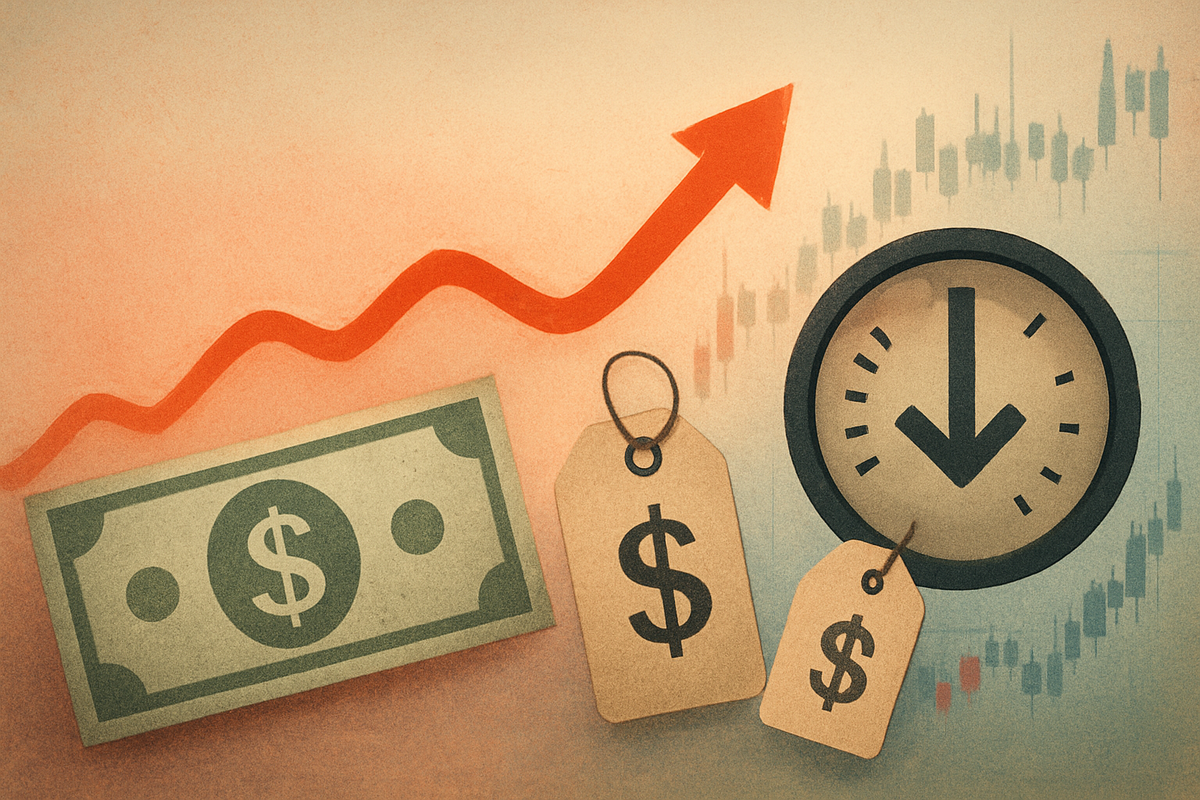
As 2025 draws to a close, the specter of inflation continues to cast a long shadow over global financial markets, subtly yet profoundly influencing stock market sentiment and investor behavior. Despite a series of interest rate cuts by the U.S. Federal Reserve aimed at bolstering a slowing job market, underlying price pressures persist, creating a complex and often contradictory economic landscape. This delicate balance between central bank easing and stubborn inflation figures has injected a new layer of uncertainty, prompting a notable shift in investment strategies and heightened market volatility.
The immediate implications are clear: investors are grappling with an environment where traditional economic indicators present a mixed picture. While some inflation metrics show signs of moderation, others, particularly those tied to services and energy, remain elevated. This has led to a re-evaluation of portfolio allocations, with a discernible pivot towards assets historically resilient in inflationary periods and away from the high-growth, technology-driven segments that dominated earlier in the year. The market's reaction to every new piece of economic data, from CPI reports to central bank pronouncements, underscores the prevailing anxiety and the ongoing search for stability amidst these crosscurrents.
The Unfolding Narrative: A Closer Look at Inflation's Grip
The narrative of resurfacing inflation concerns in late 2025 is a tapestry woven from various economic threads, creating a challenging environment for policymakers and investors alike. While the annual Consumer Price Index (CPI) in the U.S. edged up to 3.0% in September, and the Federal Reserve's preferred Personal Consumption Expenditures (PCE) price index held steady at a 2.9% annual rise, these figures consistently hover above the Fed's long-term 2% target. This persistent elevation, now spanning over four and a half years, highlights the entrenched nature of current price pressures. Federal Reserve Chair Jerome Powell, in early December, explicitly warned that inflation is likely to worsen before it improves, citing near-term upside risks stemming from ongoing tariffs and persistent services inflation.
The timeline leading to this moment reveals a concerted effort by central banks to manage economic growth while taming inflation. The Federal Open Market Committee (FOMC), on December 10, 2025, opted for its third rate cut of the year, lowering the federal funds rate target to 3.50-3.75 percent. This decision, however, was not unanimous, reflecting the internal debate over the true state of the economy—slowing job gains versus still-elevated inflation. Concurrently, the European Central Bank (ECB) is widely expected to maintain its rates, while the Bank of England (BoE) is anticipated to deliver its fourth rate cut of 2025, bringing its rate to 3.75%. These divergent approaches underscore the fragmented global inflation picture.
Key players in this ongoing saga include central banks like the U.S. Federal Reserve, the European Central Bank, and the Bank of England, whose monetary policy decisions are the primary tools for managing inflation. Government fiscal policies, consumer spending patterns, and global supply chain dynamics also play crucial roles. Initial market reactions have been a mixed bag: earlier in December, positive inflation data and rate cut hopes provided a boost to U.S. stocks, with the Nasdaq Composite (NASDAQ: COMP) leading gains. However, November saw a shift away from concentrated AI-driven growth towards broader market participation, with healthcare and higher-quality earners gaining traction as AI's momentum cooled. This rotation signifies investors' increasing caution and their search for more stable returns in an uncertain environment.
The complex interplay between interest rates and asset prices is particularly evident. While lower short-term rates can stimulate economic activity, excessively low rates risk fueling higher long-term inflation expectations, which can negatively impact currency values and bond prices. This was illustrated by a recent decline in the U.S. dollar and a rise in 10-year Treasury bond yields following a PCE release, signaling a divergence in bond market performance. This instability and rapid shifts characterize the current economic cycle, creating a "K-shaped" backdrop where various sectors and consumers are disproportionately affected.
Market Dynamics: Identifying Winners and Losers in a Volatile Landscape
The confluence of resurfacing inflation concerns and central bank rate cuts, coupled with a more discerning view of Artificial Intelligence (AI) investments, is creating a distinct bifurcation of fortunes across public companies and sectors. As investors navigate this "K-shaped" economic backdrop, the ability of a company to adapt to persistent price pressures and capitalize on lower borrowing costs will dictate its market performance.
Companies exhibiting strong pricing power are poised to be significant winners in an inflationary environment. These are firms that can effectively pass on increased input costs to consumers without experiencing a substantial drop in demand, thereby preserving their profit margins. While overall corporate pricing power has been somewhat limited in 2025 due to elevated competition, those with established brands or essential products, such as many in the consumer staples sector, tend to fare better. For instance, retailers like Walmart (NYSE: WMT), focusing on necessities at lower prices, can maintain demand even as prices rise. Sectors tied to commodities and natural resources, including energy and mining, also typically benefit as the prices of raw materials tend to surge with inflation, acting as a natural hedge. Precious metals, like gold, have notably continued to reach new all-time highs in 2025, reflecting their role as an inflation safeguard.
Conversely, companies with high debt levels and limited pricing power face considerable headwinds. If inflation were to trigger a sustained increase in borrowing costs, these firms would see their interest expenses rise, eating into profitability. Growth stocks, particularly in the technology sector that lack robust current cash flows, are also vulnerable. Their valuations heavily rely on future earnings, and higher inflation can lead to a more aggressive discounting of these future cash flows, diminishing their present value. While central bank rate cuts generally offer a tailwind to growth stocks by lowering discount rates, the market is now demanding tangible value and profitability from these companies rather than just speculative growth, especially as the initial fervor around AI cools.
The cooling of AI momentum, observed in late 2025, further refines the landscape of winners and losers. The era of indiscriminately investing in "anything with AI in the name" is giving way to a more selective approach. Companies that can demonstrate genuine integration of AI into their core operations to drive efficiency, reduce costs, or create new revenue streams are the ones that will thrive. This includes firms providing the essential infrastructure for AI, such as specialized chips, data centers, and advanced cooling solutions. Companies like Nvidia (NASDAQ: NVDA), despite experiencing some volatility, and infrastructure providers such as Vertiv (NYSE: VRT) and SPX Technologies (NYSE: SPXT), remain well-positioned due to the "insatiable" demand for AI computing power. On the other hand, companies whose valuations were purely speculative, without clear commercial pathways or tangible benefits from AI, are likely to face significant market corrections. Investors are increasingly scrutinizing profitability and strong free cash flow generated from AI initiatives, rather than just revenue growth projections.
In essence, the current market favors resilience and adaptability. Companies with strong balance sheets, the ability to control their pricing, and those genuinely leveraging technological advancements like AI for concrete business outcomes are better equipped to navigate the dual challenges of persistent inflation and evolving monetary policy. Conversely, highly leveraged firms, those in consumer discretionary sectors that rely on robust consumer spending, and speculative growth ventures without clear paths to profitability, are likely to face sustained pressure.
Wider Significance: A New Era of Economic Balancing Acts
The economic juncture, marked by persistent inflation and cautious central bank rate cuts, signifies a profound shift in the global financial landscape, demanding a complex balancing act from policymakers, businesses, and investors. This scenario extends beyond immediate market reactions, embedding itself into broader industry trends, reshaping competitive dynamics, and prompting critical regulatory and fiscal considerations, all while echoing lessons from historical precedents.
At a macro level, this environment underscores the ongoing struggle with supply chain resilience. Inflation directly elevates costs for raw materials, logistics, and labor, squeezing profit margins across industries. Companies are increasingly forced to diversify suppliers and invest in advanced forecasting and efficiency-enhancing technologies to mitigate these pressures. Sectors like construction and real estate remain highly sensitive, as interest rate fluctuations directly impact project financing and consumer purchasing power. While rate cuts offer some relief for mortgages and business loans, their impact is often gradual, and the higher costs associated with inflation can still deter significant new investments. Manufacturing, conversely, could see a boost from lower capital costs for equipment and expansion, but this benefit is tempered by increased import costs from tariffs, particularly in tech and automotive sectors reliant on global components.
The ripple effects on competitors and partners are substantial. Businesses with robust balance sheets and less reliance on debt gain a competitive edge over those facing significant debt refinancing requirements or higher borrowing costs. This pressure could lead to increased industry consolidation, as financially weaker "zombie companies" struggle to survive. Across global supply chains, partners are compelled to adapt to increased costs and potentially reduced demand, fostering a re-evaluation of long-term alliances and a search for alternative suppliers. On the positive side, lower interest rates can stimulate business investments, creating positive spillover effects for service providers and suppliers, potentially increasing deal activity in private markets for mergers, acquisitions, and collaborations.
Regulatory and policy implications are front and center. Central banks, like the U.S. Federal Reserve, are grappling with the dual mandate of price stability and maximum employment. The Fed's decision to cut rates despite inflation remaining above its 2% target signals a prioritization of labor market concerns, highlighting the inherent difficulty in balancing these objectives. Fiscal policy is also emerging as a critical driver; discussions around potential tax cuts, for instance, could exacerbate federal budget deficits and further fuel inflation. Trade tariffs, such as those imposed by the U.S., are acknowledged as a source of inflation, increasing costs for foreign goods and impacting import-reliant sectors. This necessitates a holistic policy approach that integrates monetary, fiscal, and trade strategies to address the multifaceted nature of current economic challenges.
Historically, the current situation draws compelling parallels to the stagflation of the 1970s. That era was characterized by high inflation, slow economic growth, and rising unemployment, largely triggered by supply shocks like the OPEC oil embargo. Today, while not identical, geopolitical tensions, energy price volatility, and tariff-induced import costs present similar "supply shock" dynamics. The policy dilemma of the 1970s—where efforts to combat inflation worsened unemployment and vice versa—resonates with the Fed's current balancing act. While a full-blown wage-price spiral hasn't explicitly materialized, current labor shortages and wage increases contribute to cost-push inflation. These historical precedents serve as a cautionary tale, emphasizing the complexities of navigating an economy where both inflation and growth concerns demand immediate attention.
What Comes Next: Navigating a Nuanced Economic Future
Looking ahead from December 2025, the global economy is poised for a period of nuanced growth, persistent inflationary pressures, and strategic adaptations. Both short-term (2026) and long-term (post-2026) possibilities are shaped by the delicate interplay of central bank policies, technological advancements, and geopolitical dynamics, presenting a mixed bag of opportunities and challenges for investors and businesses alike.
In the short term (2026), global GDP growth is broadly projected to moderate to around 3%-3.2%, with resilient consumption and continued, albeit more discerning, AI-driven investment providing underlying support. The U.S. economy is anticipated to rebound, bolstered by easier monetary and fiscal policies, while China's growth is expected to hover around 4.5%-5%. Europe is also forecast for modest growth. Central banks, particularly the U.S. Federal Reserve, are expected to continue their cautious rate-cutting cycle, though the pace and extent remain a subject of debate, with market expectations often exceeding official projections. This environment necessitates strategic pivots, with companies focusing on building resilient supply chains, enhancing efficiency through genuine AI integration, and managing debt levels effectively to withstand potential volatility.
Long-term possibilities (post-2026) suggest a stabilization of global growth around 3.1%-3.2%, though the five-year outlook remains at its lowest in decades. Artificial intelligence is widely seen as a significant long-term growth driver, capable of boosting productivity across various sectors. Market opportunities are emerging beyond the mega-cap technology stocks that have dominated recent years. Equities, particularly in non-tech sectors like cyclicals and industrials, are expected to see double-digit gains in 2026, supported by falling interest rates and strong corporate earnings. High-quality bonds offer attractive yields and diversification benefits, while real assets like gold continue to serve as hedges against inflation and geopolitical risks. In real estate, specialized segments such as digital infrastructure, renewables, logistics, and data centers present compelling investment avenues.
However, significant challenges persist. The "sticky" nature of inflation, particularly in the U.S. due to factors like tariffs and fiscal expansion, could limit further rate cuts or even prompt a more hawkish stance if it re-accelerates. Geopolitical tensions, trade protectionism, and high national debt levels (e.g., the U.S. reaching $38 trillion in November 2025) contribute to macroeconomic headwinds. Concerns about an "AI bubble" and the sustainability of its rapid growth also linger, alongside the potential for AI investment to create inflationary pressures on energy supply. Potential scenarios range from a baseline of moderate growth and gradually cooling inflation to a stronger growth scenario driven by robust consumer demand or AI productivity, or even a mild recession (J.P. Morgan projects a 35% probability for the U.S. and global economy in 2026). The risk of an "inflation resurgence" or "stagflation lite" remains, where inflation re-accelerates, forcing central banks to tighten policy and potentially leading to slower growth with elevated prices. These diverse outcomes demand that investors adopt diversified strategies and businesses remain agile, ready to adapt to an evolving and unpredictable economic landscape.
Comprehensive Wrap-up: Navigating a New Normal of Economic Uncertainty
The economic narrative of late 2025 is one of complex interplay: persistent inflation concerns clashing with central bank efforts to ease monetary policy. Key takeaways underscore a period of significant central bank divergence and caution, with underlying inflationary pressures stubbornly resisting a full return to target levels. While headline inflation has receded from its peaks, factors like tariffs in the U.S. and elevated food prices in the UK continue to exert upward pressure. Simultaneously, signs of softening labor markets, particularly in the U.S. and UK, are influencing central bank decisions to cut rates, albeit with notable internal divisions among policymakers. The absence of comprehensive government economic data due to recent shutdowns further muddles the picture, complicating accurate assessments and policy formulation.
Moving forward into 2026, the market outlook remains muddled by these political uncertainties, data gaps, and evolving central bank postures. Conditions generally appear supportive for further appreciation in equity markets, driven by sound economic growth, the overall trend of decreasing interest rates, and resilient corporate earnings. However, the notion of "U.S. exceptionalism" is seen as potentially overvalued, and while Artificial Intelligence (AI) and technology continue to drive innovation, concerns about their valuations persist. In the bond market, the Federal Reserve's more hawkish stance compared to market expectations for further rate cuts could introduce volatility in short-term interest rates, suggesting a preference for shorter-dated, high-quality corporate and government bonds for their stability. The housing market is expected to remain challenging, with affordability issues persisting despite recent rate cuts.
The lasting significance of this period lies in the ongoing challenges central banks face in balancing their dual mandates of price stability and maximum employment. The internal divisions within institutions like the Federal Reserve highlight the inherent complexities and elevated uncertainty in economic forecasting. The persistent impact of tariffs on inflation, particularly in the U.S., signals a lasting structural shift in global pricing dynamics. Furthermore, the "K-shaped" economic recovery, characterized by disproportionate benefits to high-income consumers and mega-cap corporations, creates an economy potentially more vulnerable to shocks and periods of heightened volatility. The impending succession of the Fed Chair in May 2026 adds another layer of political uncertainty that could significantly influence future monetary policy and market sentiment.
For investors in the coming months, vigilance and a strategic approach are paramount. Diversification across asset classes remains crucial to mitigate risks from market volatility and regional disparities. While technology (NASDAQ: XLK) will continue to be a focus, opportunities are emerging in other sectors such as healthcare (NYSE: XLV), cyclicals, and industrials (NYSE: XLI) as the market broadens its scope beyond purely growth-oriented areas. In fixed income, a preference for shorter-dated, high-quality bonds may offer stability. Investors must closely monitor the release of delayed U.S. economic data, particularly jobs reports and Consumer Price Index (CPI) figures, as these will provide critical insights into the economy's health and central bank policy direction. Careful analysis of central bank communications for shifts in guidance, particularly regarding the "extent and timing" of future rate adjustments, is also essential. Staying informed about geopolitical developments and the upcoming Federal Reserve Chair succession will be key to navigating this complex and evolving economic landscape.
This content is intended for informational purposes only and is not financial advice
More News
View More



Recent Quotes
View More
Quotes delayed at least 20 minutes.
By accessing this page, you agree to the Privacy Policy and Terms Of Service.