Retail Sales Stagnation Sparks Mixed Market Signals: A Closer Look at Consumer Resilience
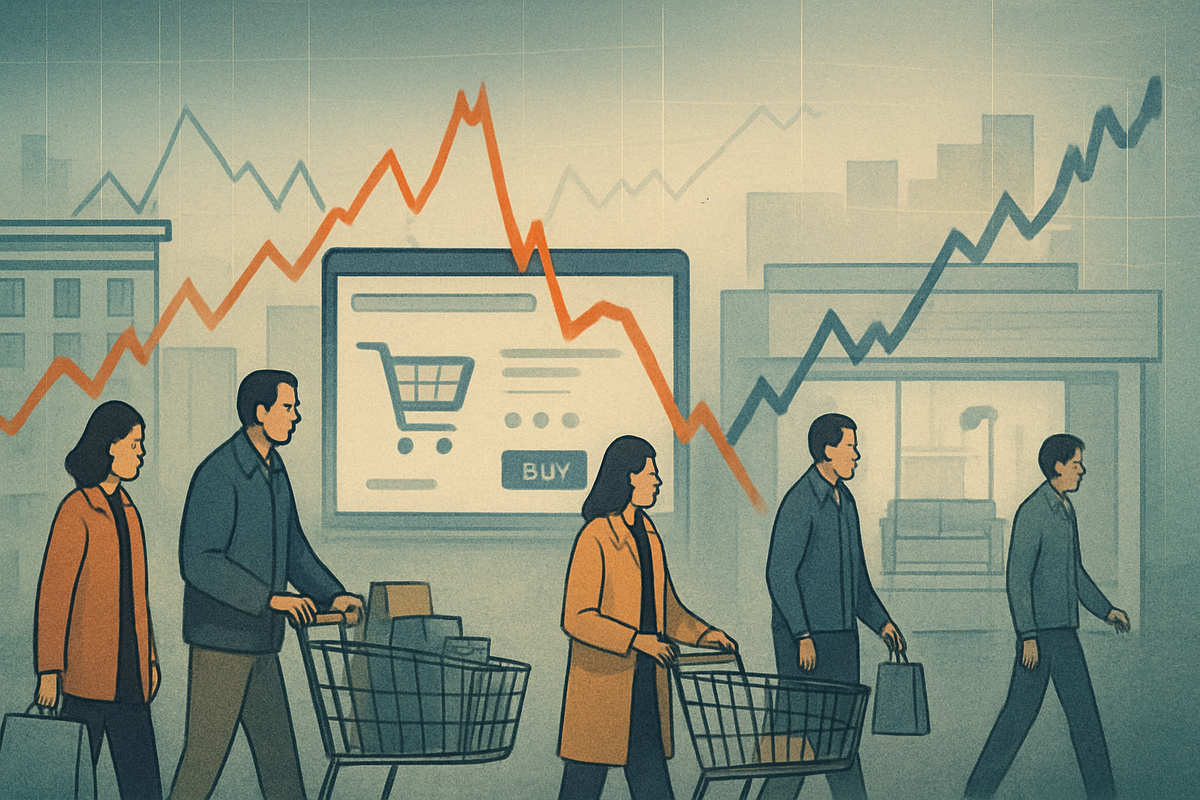
Recent retail sales data for October 2025 has unveiled a picture of stagnation, with overall figures remaining flat compared to the previous month. This unexpected plateau, falling short of economists' modest expectations for a slight increase, has sent a ripple of uncertainty through financial markets. While the headline number suggests a potential cooling in consumer spending, deeper analysis reveals a more nuanced landscape, with certain sectors demonstrating resilience and even growth, prompting a cautious yet optimistic outlook from some analysts regarding the underlying health of the economy.
The immediate implications for the stock market have been mixed. Major U.S. indexes saw muted reactions, with the tech-heavy Nasdaq (NASDAQ) showing a slight uptick, while the Dow Jones Industrial Average (DJIA) and the S&P 500 (SPX) experienced minor slips. However, consumer-oriented companies generally faced downward pressure, reflecting investor apprehension about discretionary spending. This dichotomy underscores the ongoing struggle to interpret conflicting economic signals, including a recent rise in the unemployment rate, as market participants grapple with the potential trajectory of consumer behavior and its broader impact on corporate earnings and economic growth.
Unpacking the October Retail Report: A Tale of Two Consumers
The U.S. Census Bureau's advance estimates for October 2025 indicated that retail and food services sales remained virtually unchanged from September, totaling $732.6 billion. This figure disappointed expectations for a 0.1% rise. Year-over-year, however, October 2025 did show a modest 3.5% increase compared to October 2024, suggesting underlying growth despite the monthly flatline. A significant drag on the overall numbers was a notable 1.6% decline in sales at motor vehicles and parts dealerships, potentially influenced by the expiration of federal subsidies for electric vehicles. When this volatile automotive sector is excluded, a more encouraging picture emerges: retail sales actually rose by 0.4% month-over-month. This "core retail sales" measure, which further excludes gasoline and food services, painted an even stronger picture with a 0.8% increase in October, following a 0.1% dip in September.
This stagnation in October followed a revised 0.1% rise in September and stronger growth throughout the summer months of 2025, which had seen robust increases of 0.6% in both August and July. The timeline suggests a potential moderation after a period of elevated spending. Key players in this scenario are, first and foremost, the American consumer, whose spending habits are under intense scrutiny. Retailers across various sectors are also key stakeholders, adapting strategies to navigate fluctuating demand. Initial market reactions, as noted, were varied; while the overall market was largely unmoved, consumer discretionary stocks experienced a downturn, indicating investor concern over the sustainability of spending in non-essential categories. The mixed jobs report released concurrently, showing a rise in the unemployment rate to 4.6% in November, further complicated the market's interpretation of the retail data.
Delving into specific sectors within the October report reveals a fragmented consumer landscape. Furniture and home furnishing stores saw a healthy 2.3% increase, while sporting goods, musical instrument, and book stores experienced a 1.9% rise. Nonstore retailers, encompassing online sales, continued their upward trend with a 1.8% increase, highlighting the persistent shift towards e-commerce. Department stores surprisingly posted a significant 4.9% surge, potentially indicating a strategic pivot or successful promotional activities. Conversely, several sectors faced declines, including sporting goods, hobby, musical instrument, and book stores (a different category than the one that saw a rise, indicating granularity in reporting) which were down 2.5%, clothing sales dipped by 0.7%, and electronics and appliance stores saw a 0.5% decrease. These granular details suggest a "K-shaped" spending pattern, where higher-income households continue to spend, while lower-income consumers may be tightening their belts due to persistent inflation and economic uncertainties.
Preliminary data for November 2025, despite some reporting delays, offers a glimmer of optimism for the crucial holiday shopping season. Independent monitors suggest robust year-over-year holiday retail sales growth exceeding 4.5%, with core retail performance looking even stronger. This forward-looking data provides a potential counter-narrative to the October stagnation, hinting at a resilient consumer willing to spend during peak shopping periods, albeit perhaps with more selective choices. The conflicting signals from October's flat performance and November's preliminary strength underscore the complex and evolving nature of consumer behavior in the current economic climate.
Corporate Fortunes Diverge: Winners and Losers in a Shifting Retail Landscape
The recent retail sales data paints a starkly bifurcated picture for public companies, with overall stagnation masking significant performance divergences across various sectors. While the automotive and electronics industries grapple with declines, online retail, department stores, and the furniture sector are showing signs of resilience and growth, creating distinct winners and losers in the current economic climate.
Leading the charge among the potential winners are companies deeply embedded in the burgeoning online retail sector. With e-commerce sales projected to continue their upward trajectory, giants like Amazon (NASDAQ: AMZN) are primary beneficiaries. Amazon's vast product selection, logistical prowess, and market leadership, particularly in categories like home furnishings, position it for sustained success. Similarly, Shopify (NYSE: SHOP), which provides e-commerce platforms and services, thrives as more businesses establish or expand their online presence. Home goods specialists like Wayfair (NYSE: W) and niche platforms such as Etsy (NASDAQ: ETSY) are also well-placed to capitalize on the continued shift to digital shopping and specific consumer demands.
Interestingly, department stores, despite facing long-term challenges, saw a notable 4.9% increase in sales in October 2025 – their largest monthly gain since February 2022. This suggests that established chains like Macy's (NYSE: M) and Nordstrom (NYSE: JWN) could see a resurgence if they successfully execute omnichannel strategies, curate desirable product assortments, and enhance in-store experiences. The furniture and home furnishings sector also registered positive growth, with sales jumping 2.3% in October. This bodes well for high-end retailers like RH (NYSE: RH) (Restoration Hardware) and home goods conglomerates such as Williams-Sonoma (NYSE: WSM), parent to Pottery Barn and West Elm, which benefit from continued consumer investment in home improvement and decor. Manufacturers and suppliers like Flexsteel Industries, Inc. (NASDAQ: FLXS), MillerKnoll, Inc. (NASDAQ: MLKN), Leggett & Platt, Incorporated (NYSE: LEG), and American Woodmark Corporation (NASDAQ: AMWD) also stand to gain from this sustained demand.
Conversely, companies in the automotive sector are facing significant headwinds. Sales at motor vehicle and parts dealerships fell by 1.6% in October, partly attributed to the expiration of federal tax incentives for electric vehicles (EVs). This trend has led major players like Ford (NYSE: F) and General Motors (NYSE: GM) to pause EV production and delay ambitious electric transitions, refocusing on more profitable internal combustion engine vehicles due to lower-than-anticipated EV adoption. Even Tesla (NASDAQ: TSLA), while a market leader, could see its growth trajectory impeded by the broader softening in auto sales and consumer enthusiasm for EVs. Auto parts retailers like AutoZone (NYSE: AZO) and Advance Auto Parts (NYSE: AAP) might see mixed short-term effects, as consumers hold onto older cars longer, boosting aftermarket sales, but face long-term challenges from a potentially shrinking pool of new vehicles.
The electronics sector continues its difficult period, with a general decline in revenue and units sold. While October 2025 saw a slight monthly increase in electronics store sales, the overall sentiment points to a challenging environment. Major consumer electronics retailers such as Best Buy (NYSE: BBY) are directly impacted by reduced demand, as consumers are "well-stocked" from pandemic-era purchases and face ongoing cost-of-living pressures. Semiconductor giants like Intel (NASDAQ: INTC) and AMD (NASDAQ: AMD) are indirectly affected by lower demand for personal computers and other gadgets. Even tech behemoths like Apple (NASDAQ: AAPL), despite their diversified portfolio, could see impacts on sales of iPhones, Macs, and iPads if the broader electronics slump persists. Samsung Electronics (KRX: 005930) (005930.KS), with its significant smartphone business, is also grappling with declining sales due to tariffs, rising raw material costs, and intense competition. This challenging environment is expected to persist until late 2025 when a replacement cycle for older devices might kick in.
A Broader Economic Lens: Navigating Inflation, Rates, and Shifting Confidence
The recent retail sales data, while offering mixed signals, fits into a broader economic narrative defined by persistent inflation, fluctuating interest rates, and evolving consumer confidence. Understanding these interconnected forces is crucial for deciphering the wider significance of current spending patterns and their potential ripple effects across the economy.
Inflation remains a critical factor in interpreting retail sales. While nominal sales figures might appear to grow, adjusting for inflation often reveals a more subdued reality, where consumers are either paying more for the same amount of goods or purchasing fewer items. Real retail sales in September 2025, for instance, were down month-over-month, and have remained below their long-term trendline since July 2022, underscoring the erosion of purchasing power. This inflationary pressure, combined with elevated interest rates designed to curb it, directly impacts consumer borrowing costs for everything from credit cards to mortgages, dampening enthusiasm for big-ticket purchases and encouraging more cautious spending. Central banks, like the Federal Reserve, meticulously scrutinize retail sales as a key indicator of economic activity and inflationary pressures when deliberating on monetary policy, including potential interest rate adjustments.
Consumer confidence, a strong predictor of future spending, also appears to be at a crossroads. While preliminary November 2025 data suggests robust holiday spending, October saw a notable deterioration in consumer attitudes about the future, with the Conference Board's Consumer Confidence Index reaching its lowest point since April 2025. This pessimism, fueled by lingering inflation, concerns about tariffs, and potential stock market corrections, can significantly slow spending growth. The "K-shaped" recovery, where higher-income households continue to spend while lower-income households struggle with affordability, highlights a growing divergence in consumer experiences that could have long-term societal and economic implications.
The ripple effects of retail spending extend deeply into other industries. Manufacturing relies heavily on retail sales data to inform production strategies; sustained high sales encourage increased output and hiring, while declines can lead to reduced production and cost-cutting. The current mixed signals—flat retail sales in October, but robust year-over-year growth in November, alongside some weakness in overall industrial production—create a complex environment for manufacturers. Meanwhile, the logistics sector has been profoundly transformed by the expansion of e-commerce. The relentless demand for faster delivery times, including same-day or next-day shipping, compels logistics companies to innovate, invest in advanced technology, and optimize supply chains to meet consumer expectations. Efficient and transparent supply chain management, driven by data analytics, is now paramount for retailers to ensure product availability and control costs, directly impacting customer experience and brand loyalty.
From a regulatory and policy standpoint, retail sales data is a cornerstone for governmental and central bank decisions. Robust sales in an inflationary environment might prompt central banks to consider further interest rate hikes to cool the economy, while weaker sales could increase the likelihood of rate cuts to stimulate growth. Historically, a deceleration in consumer spending has consistently preceded or coincided with U.S. recessions since 1948, making current trends a crucial watchpoint for policymakers. The COVID-19 pandemic provided a stark historical precedent, showcasing a sharp decline in retail sales followed by a rapid, government-stimulated recovery. However, the current environment, marked by elevated interest rates and depleted savings, suggests that any future recovery might be more protracted without significant policy intervention or a substantial shift in economic fundamentals. The delicate balance between controlling inflation and fostering sustainable economic growth remains the central challenge for policymakers, with retail sales data serving as a vital guidepost.
The Road Ahead: Navigating a Shifting Consumer and Market Landscape
The path forward for retail sales and the broader stock market is characterized by a blend of cautious optimism and strategic adaptation. While short-term headwinds signal a moderation in consumer spending, long-term trends, particularly in technology and evolving retail models, offer significant growth potential.
In the short term (2026), real consumer spending growth is projected to slow, with some forecasts even indicating a decline in real sales volume. This is largely attributed to more cautious consumer behavior, persistent affordability concerns, and a softening labor market. However, nominal retail sales are still expected to grow, albeit at a slower pace than in 2025, with inflation accounting for much of this increase. For the stock market, 2026 is anticipated to be on "broad, healthy footing," supported by robust profit growth and the prospect of tax cuts and interest rate reductions. Analysts project double-digit earnings growth for S&P 500 (SPX) companies, extending beyond just large technology firms. The long term (2026-2030) for global retail is more optimistic, with substantial growth projected, driven by the continued rise of online grocery sales and the maturation of the "creator economy." The stock market, over this period, is expected to be significantly influenced by the AI-driven "supercycle," fueling record capital expenditure and earnings expansion across diverse industries.
To thrive in this evolving environment, retailers and other businesses must make several strategic pivots. A strong focus on value and convenience will be paramount, requiring multi-tiered pricing and transparent marketing to address price-sensitive consumers. Aggressive pursuit of omnichannel strategies, optimizing both physical and digital footprints, is essential to create unique experiential offerings. Given persistent high interest rates, profitability will be an imperative, with a focus on debt reduction. Extensive investment in technology and AI integration is crucial for personalization, forecasting, automation, and operational optimization. Retailers must also prioritize customer-centricity, understanding changing preferences, and bolstering supply chain resilience through local sourcing and small supplier collaborations.
Market opportunities are emerging in several areas. Value and discount retail are poised for significant market share gains as consumers become more price-sensitive. The subscription economy, experience economy (cruises, concerts), and health and wellness sectors continue to grow. Investment in AI infrastructure and software is a strong area for growth and IPO activity. International stocks, particularly in emerging markets, offer strong performance potential, and fixed income is expected to deliver solid returns in 2026. Conversely, market challenges include persistent consumer headwinds from affordability issues and high debt, sticky inflation, high interest rates pressuring specialty retailers, market concentration risks, and geopolitical uncertainties.
Several potential scenarios could unfold for the economy. A soft landing or continued growth (approximately 2% in 2025-2026) is the most likely baseline, predicated on robust earnings and effective inflation management. A scenario of persistent inflation with moderate growth is also possible, where inflation remains near 3% in early 2026, eroding purchasing power. A mild recession is considered a lower probability but remains a risk, particularly if higher inflation and weaker immigration impact aggregate demand. The economic and market cycle is increasingly characterized by "K-shaped" instability, where various sectors and consumer groups are affected unevenly, leading to heightened volatility. For specific sectors, retail and consumer durables remain vulnerable, while technology and AI are expected to be dominant growth drivers. Fixed income should offer solid returns, housing may remain sluggish, and manufacturing activity is likely to increase.
Final Assessment: Navigating a Nuanced Economic Landscape
The recent retail sales data serves as a crucial, albeit complex, indicator of the U.S. economy's current trajectory. While the flat headline figures for October 2025 initially suggest a cooling of consumer enthusiasm, a deeper dive reveals a resilient, albeit selective, consumer base, particularly when volatile sectors like auto sales are excluded. The divergence in performance across retail segments—with online sales, department stores, and furniture showing strength, while autos and electronics lag—underscores a nuanced economic environment rather than a uniform slowdown.
Moving forward, the market will continue to grapple with the interplay of inflation, interest rates, and consumer confidence. The ability of the Federal Reserve to achieve a "soft landing"—taming inflation without triggering a significant recession—remains a central theme. The preliminary strength in November's holiday retail sales offers a glimmer of optimism, suggesting that while consumers may be more discerning, they are still willing to spend on perceived value and experiences.
Investors should closely watch for continued shifts in consumer spending patterns, particularly how discretionary spending holds up against ongoing inflationary pressures and the impact of interest rates on borrowing. The performance of companies with robust omnichannel strategies, strong value propositions, and a keen focus on technological adoption, especially AI, will be key indicators of success. Furthermore, monitoring real (inflation-adjusted) retail sales will provide a more accurate picture of purchasing power and economic health than nominal figures alone. The "K-shaped" recovery dynamics will also be crucial, as disparities in economic experience could lead to continued sector rotation and investment opportunities in areas catering to both affluent and value-conscious consumers. The coming months will undoubtedly test the adaptability of businesses and the resilience of the consumer, shaping the market's trajectory through 2026 and beyond.
This content is intended for informational purposes only and is not financial advice
More News
View More




Recent Quotes
View More
Quotes delayed at least 20 minutes.
By accessing this page, you agree to the Privacy Policy and Terms Of Service.