CarMax Surpasses Estimates but Shares Tumble as CEO Departs Amid Strategy Pivot
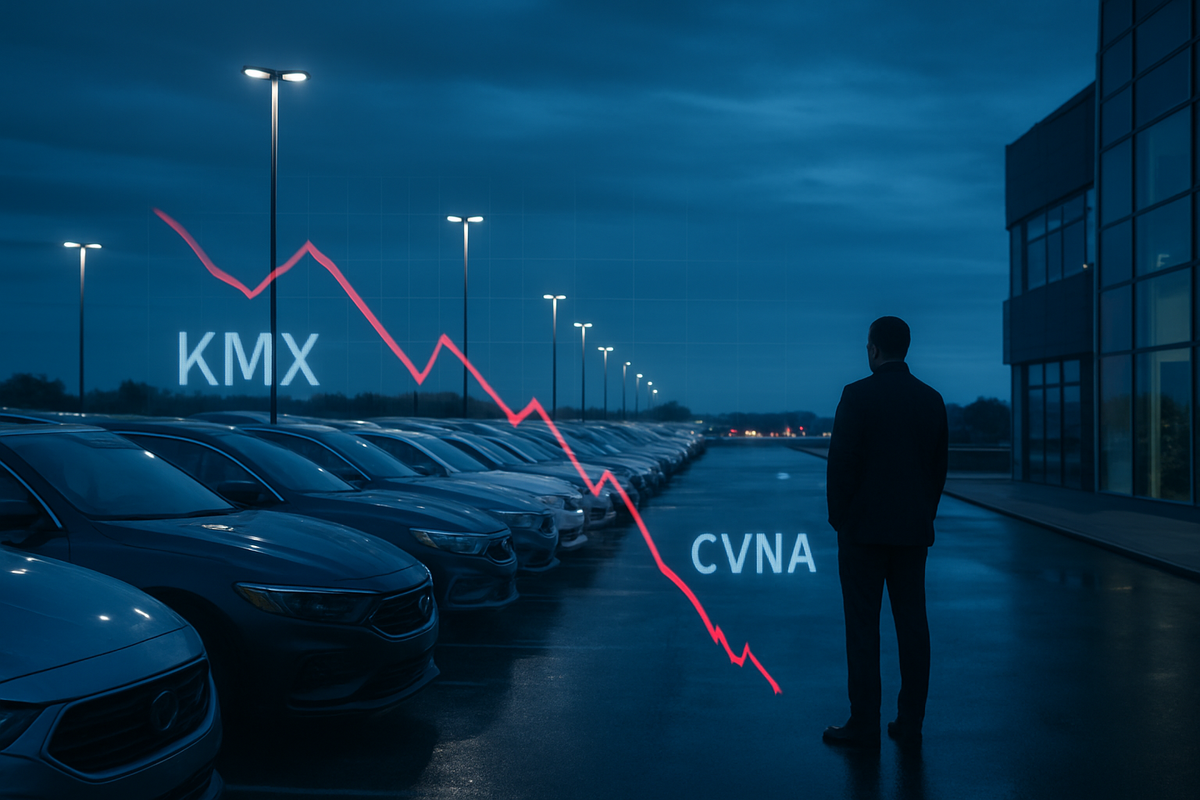
On December 18, 2025, CarMax Inc. (NYSE: KMX) released a third-quarter earnings report that, on the surface, appeared to be a victory for the nation’s largest used-car retailer. Beating analyst expectations on both the top and bottom lines, the company reported adjusted earnings of $0.51 per share against a consensus estimate of $0.38. However, the "beat" was quickly overshadowed by a series of sobering disclosures that sent shares tumbling more than 5% in early trading. The report revealed a deepening struggle with unit volumes and a sudden leadership shakeup that has left investors questioning the company's path forward in an increasingly bifurcated automotive market.
The immediate implications of the report are clear: the "CarMax model" is under intense pressure. Despite the earnings beat, retail unit sales fell by 8.0% year-over-year, and comparable store units dropped 9.0%. To combat this slide, the company announced a drastic strategic pivot—intentionally lowering retail unit margins to improve price competitiveness. This move, combined with the announcement that long-time CEO Bill Nash has stepped down to be replaced by interim CEO David McCreight, signals a period of significant volatility and restructuring for the Richmond-based giant as it attempts to reclaim lost ground from more agile competitors.
A Technical Beat Masking Structural Cracks
The details of CarMax’s third quarter (fiscal Q3 2026) paint a picture of a company fighting a war of attrition. While total revenue of $5.79 billion exceeded the $5.64 billion forecast, it still represented a nearly 7% decline from the previous year. The earnings beat was largely driven by aggressive cost-cutting and a $150 million SG&A savings initiative, rather than organic growth. Net income for the quarter plummeted to $62.2 million, a staggering 50% drop from the $125.4 million reported in the same period in 2024. This contraction highlights the "margin squeeze" that has become the central narrative for CarMax as it struggles to balance profitability with the need to move metal.
The timeline leading up to this moment has been marked by a persistent "affordability wall" for the American consumer. Throughout 2025, even as interest rates began a slow descent from their 2024 peaks, the average used car loan APR remained stubbornly high at approximately 10%. This environment has punished CarMax’s traditional customer base—middle-income buyers who rely heavily on financing. In response, the company’s leadership had been attempting to maintain high gross profit per unit (GPU), but the Q3 data suggests this strategy has reached its limit, forcing the sudden departure of Bill Nash and the pivot toward a volume-first approach.
Market reaction was unforgiving. Analysts pointed to the planned margin compression in the fourth quarter as a "red flag," suggesting that CarMax is entering a price war it may not be equipped to win without further damaging its bottom line. The leadership change, effective December 1, 2025, added a layer of executive uncertainty, with David McCreight tasked with overseeing a brand-positioning campaign and a workforce reduction at the company’s Customer Experience Centers (CECs) to stem the bleeding.
The Competitive Divide: Winners and Losers
The fallout from CarMax’s earnings report highlights a growing divide in the automotive retail sector. The primary winner in this landscape appears to be Carvana Co. (NYSE: CVNA). While CarMax is retrenching, Carvana has entered an aggressive growth phase, reporting a 55% revenue jump in its most recent quarter. By late 2025, Carvana has successfully leveraged its lean, digital-first infrastructure to offer same-day delivery in over 20 states, a logistics moat that CarMax is now desperately trying to replicate through its own omnichannel investments. Carvana’s inclusion in the S&P 500 earlier this year has further solidified its status as the new "growth darling" of the sector.
Conversely, AutoNation Inc. (NYSE: AN) has emerged as a winner by moving in the opposite direction of CarMax. Rather than chasing volume in a high-interest environment, AutoNation has fortified its margins through its "After-Sales" segment—parts, service, and collision repair—which now accounts for nearly 50% of its bottom line. By diversifying into high-margin services and scaling its captive finance arm, AutoNation Finance, to a $2 billion portfolio, the company has insulated itself from the volatility of used car sales that has so heavily impacted CarMax.
The "losers" in this scenario are the traditional, mid-sized independent dealerships and legacy retailers like CarMax that have been slow to pivot. These entities are caught between the high-efficiency digital model of Carvana and the high-margin service model of AutoNation. For CarMax, the decision to slash margins to compete on price puts them in a precarious position where they risk devaluing their brand while still facing higher operational overhead than their online-only rivals.
Macro Trends and the "Missing Years" Crisis
The challenges facing CarMax are symptomatic of broader trends within the U.S. consumer economy. The "trade-down" effect has become a dominant force in 2025; as new car prices have climbed toward an average of $50,000 due to rising production costs and potential import tariffs, consumers are flooding the used market. However, they are finding a market with chronic supply shortages. The "missing years" of production—the slump in new car manufacturing during 2021 and 2022—has resulted in a severe shortage of 3-to-5-year-old vehicles, which typically form the backbone of CarMax’s inventory.
This supply-demand imbalance has kept used car prices elevated at around $25,500, roughly 30% above pre-pandemic levels, even as consumer purchasing power has been eroded by years of inflation. The Federal Reserve’s gradual easing of interest rates has provided some relief, but not enough to offset the high sticker prices for subprime and lower-prime borrowers. This has created a "K-shaped" recovery in the auto market: wealthy buyers continue to purchase high-margin vehicles, while the average consumer is increasingly priced out of reliable used transportation.
Historically, CarMax has thrived on its "no-haggle" fixed-price model. However, in a market where every dollar matters to the consumer, the lack of price flexibility has become a liability. The current situation mirrors the 2008 financial crisis in its impact on credit availability, but with the added complication of a supply-side shock that prevents prices from falling to a level that would naturally stimulate demand.
The Road Ahead: A Winter of Restructuring
The short-term outlook for CarMax is one of painful transition. The fourth quarter is expected to see a significant dip in profitability as the company implements its margin-slashing strategy. Investors will be watching closely to see if this sacrifice actually results in the double-digit unit growth required to offset the lower per-car profit. The interim leadership under David McCreight will likely focus on "right-sizing" the company’s physical footprint, potentially closing underperforming locations and further centralizing its digital sales operations to compete with the likes of Carvana.
Long-term, CarMax must decide if it wants to be a volume player or a premium service provider. The current "middle ground" is proving untenable. A potential strategic pivot could involve a deeper integration of its financing arm, CarMax Auto Finance (CAF), to offer more aggressive, subsidized lending rates to drive sales—a move that would mirror the captive finance strategies used by major OEMs. However, this would increase the company's exposure to credit risk at a time when delinquency rates for used car loans are already on the rise.
Final Assessment for Investors
The CarMax Q3 report is a watershed moment for the used car industry. It confirms that even the largest players are not immune to the dual pressures of high interest rates and a shifting competitive landscape. The key takeaway for investors is that "beating estimates" is no longer enough; the quality of those earnings and the sustainability of the underlying business model are now the primary drivers of market value.
Moving forward, the market will likely reward companies that demonstrate either extreme operational efficiency (Carvana) or high-margin service diversification (AutoNation). CarMax remains in a state of flux, and its ability to navigate this "winter of restructuring" will determine if it can maintain its crown or if it will be relegated to a legacy player in a digital-first world. Investors should keep a close eye on retail unit volume trends and GPU (Gross Profit per Unit) stability in the coming months, as these will be the ultimate indicators of whether the new strategy is gaining traction.
This content is intended for informational purposes only and is not financial advice.
More News
View More




Recent Quotes
View MoreQuotes delayed at least 20 minutes.
By accessing this page, you agree to the Privacy Policy and Terms Of Service.