Securing the Silicon Backbone: Cybersecurity in the Semiconductor Supply Chain Becomes a Global Imperative
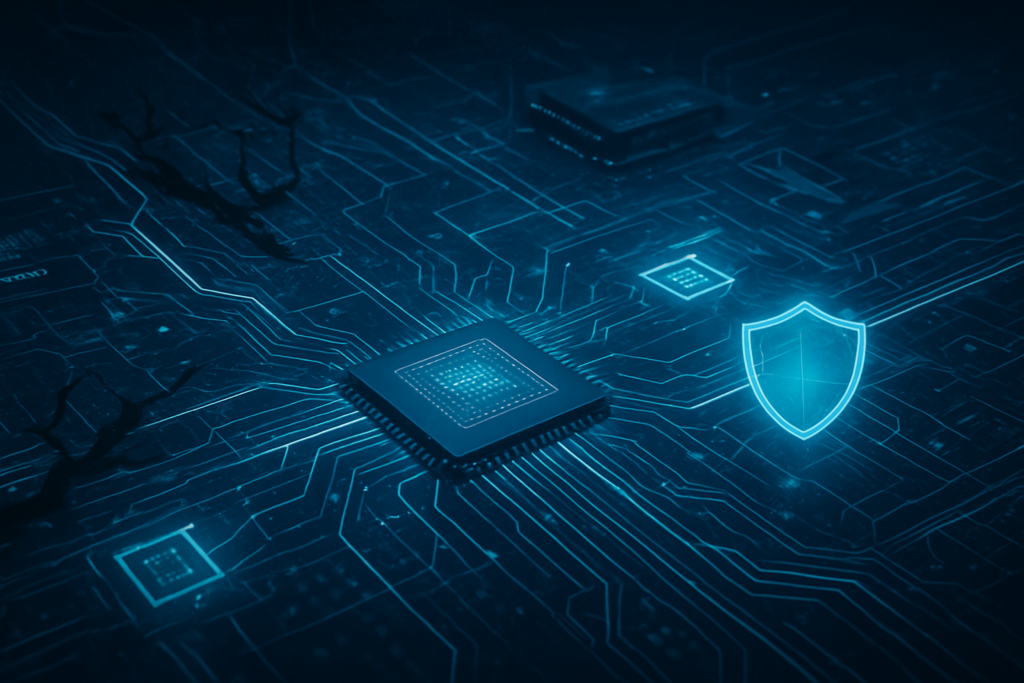
The global semiconductor supply chain, the intricate network responsible for designing, manufacturing, and distributing the chips that power virtually every aspect of modern life, is confronting an escalating barrage of sophisticated cybersecurity threats. These vulnerabilities, spanning from the initial chip design to the final manufacturing processes, carry immediate and profound implications for national security, economic stability, and the future of artificial intelligence (AI). As of late 2025, the industry is witnessing a critical shift, moving beyond traditional software vulnerabilities to confront hardware-level infiltrations and complex multi-stage attacks, demanding unprecedented vigilance and collaborative defense strategies.
The integrity of the silicon backbone is no longer merely a technical concern; it has become a foundational element of operational resilience, business trust, and national sovereignty. The increasing digitization and interconnectedness of the supply chain, coupled with the immense value of intellectual property (IP) and the critical role of semiconductors in AI, make the sector a prime target for nation-state actors and sophisticated cybercriminals. Disruptions, IP theft, or the insertion of malicious hardware can have cascading effects, threatening personal privacy, corporate integrity, and the very fabric of digital infrastructure.
The Evolving Battlefield: Technical Vulnerabilities and Advanced Attack Vectors
The cybersecurity landscape of the semiconductor supply chain has undergone a significant transformation, with attack methods evolving to target the foundational hardware itself. Historically, concerns might have focused on counterfeit parts or sub-par components. Today, adversaries are far more sophisticated, actively infiltrating the supply chain at the hardware level, embedding malicious firmware, or introducing "hardware Trojans"—malicious modifications during the fabrication process. These can compromise chip integrity, posing risks to manufacturers and downstream users.
Specific hardware-level vulnerabilities are a major concern. The complexity of modern integrated circuits (ICs), heterogeneous designs, and the integration of numerous third-party IP blocks create unforeseen interactions and security loopholes. Malicious IP can be inserted during the design phase, and physical tampering can occur during manufacturing or distribution. Firmware vulnerabilities, like the "Bleeding Bit" exploit, allow attackers to gain control of chips by overflowing firmware stacks. Furthermore, side-channel attacks continue to evolve, enabling attackers to extract sensitive information by observing physical characteristics like power consumption. Ransomware, once primarily a data encryption threat, now directly targets manufacturing operations, causing significant production bottlenecks and financial losses, as exemplified by incidents such as the 2018 WannaCry variant attack on Taiwan Semiconductor Manufacturing Company (TSMC) [TPE: 2330], which caused an estimated $84 million in losses.
The AI research community and industry experts have reacted to these growing threats with a "shift left" approach, integrating hardware security strategies earlier into the chip design flow. There's a heightened focus on foundational hardware security across the entire ecosystem, encompassing both hardware and software vulnerabilities from design to in-field monitoring. Collaborative industry standards, such as SEMI E187 for cybersecurity in manufacturing equipment, and consortia like the Semiconductor Manufacturing Cybersecurity Consortium (SMCC), are emerging to unite chipmakers, equipment firms, and cybersecurity vendors. The National Institute of Standards and Technology (NIST) has also responded with initiatives like the NIST Cybersecurity Framework 2.0 Semiconductor Manufacturing Profile (NIST IR 8546) to establish risk-based approaches. AI itself is seen as a dual-role enabler: capable of generating malicious code for hardware Trojans, but also offering powerful solutions for advanced threat detection, with AI-powered techniques demonstrating up to 97% accuracy in detecting hardware Trojans.
Industry at a Crossroads: Impact on AI, Tech Giants, and Startups
The cybersecurity challenges in the semiconductor supply chain are fundamentally reshaping the competitive dynamics and market positioning for AI companies, tech giants, and startups alike. All players are vulnerable, but the impact varies significantly.
AI companies, heavily reliant on cutting-edge GPUs and specialized AI accelerators, face risks of hardware vulnerabilities leading to chip malfunctions or data breaches, potentially crippling research and delaying product development. Tech giants like Apple (NASDAQ: AAPL), Microsoft (NASDAQ: MSFT), and Alphabet (NASDAQ: GOOGL) are highly dependent on a steady supply of advanced chips for their products and cloud services. Cyberattacks can lead to data breaches, IP theft, and manufacturing disruptions, resulting in costly recalls and reputational damage. Startups, often with fewer resources, are particularly vulnerable to shortages of critical components, which can severely impact their ability to innovate and bring new products to market. The theft of unique IP can be devastating for these nascent companies.
Companies that are heavily reliant on single-source suppliers or possess weak cybersecurity postures are at a significant disadvantage, risking production delays, higher costs, and a loss of consumer trust. Conversely, companies strategically investing in supply chain resilience—diversifying sourcing, investing directly in chip design (vertical integration), and securing dedicated manufacturing capacity—stand to benefit. Firms prioritizing "security by design" and offering advanced cybersecurity solutions tailored for the semiconductor industry will see increased demand. Notably, companies like Intel (NASDAQ: INTC), making substantial commitments to expand manufacturing capabilities in regions like the U.S. and Europe, aim to rebalance global production and enhance supply security, gaining a competitive edge.
The competitive landscape is increasingly defined by control over the supply chain, driving a push towards vertical integration. Geopolitical factors, including export controls and government incentives like the U.S. CHIPS Act, are also playing a significant role, bolstering domestic manufacturing and shifting global power balances. Companies must navigate a complex regulatory environment while also embracing greater collaboration to establish shared security standards across the entire value chain. Resilience, security, and strategic control over the semiconductor supply chain are becoming paramount for market positioning and sustained innovation.
A Strategic Imperative: Wider Significance and the AI Landscape
The cybersecurity of the semiconductor supply chain is of paramount significance, deeply intertwined with the advancement of artificial intelligence, national security, critical infrastructure, and broad societal well-being. Semiconductors are the fundamental building blocks of AI, providing the computational power, processing speed, and energy efficiency necessary for AI development, training, and deployment. The ongoing "AI supercycle" is driving immense growth in the semiconductor industry, making the security of the underlying silicon foundational for the integrity and trustworthiness of all future AI-powered systems.
This issue has profound impacts on national security. Semiconductors power advanced communication networks, missile guidance systems, and critical infrastructure sectors such as energy grids and transportation. Compromised chip designs or manufacturing processes can weaken a nation's defense capabilities, enable surveillance, or allow adversaries to control essential infrastructure. The global semiconductor industry is a hotly contested geopolitical arena, with countries seeking self-sufficiency to reduce vulnerabilities. The concentration of advanced chip manufacturing, particularly by TSMC in Taiwan, creates significant geopolitical risks, with potential military and economic repercussions worldwide. Governments are implementing initiatives like the U.S. CHIPS Act and the European Chips Act to bolster domestic manufacturing and reduce reliance on foreign suppliers.
Societal concerns also loom large. Disruptions can lead to massive financial losses and production halts, impacting employment and consumer prices. In critical applications like medical devices or autonomous vehicles, compromised semiconductors can directly threaten public safety. The erosion of trust due to IP theft or supply chain compromises can stifle innovation and collaboration. The current focus on semiconductor cybersecurity mirrors historical challenges faced during the development of early computing infrastructure or the widespread proliferation of the internet, where foundational security became paramount. It is often described as an "AI arms race," where nations with access to secure, advanced chips gain a significant advantage in training larger AI models and deploying sophisticated algorithms.
The Road Ahead: Future Developments and Persistent Challenges
The future of semiconductor cybersecurity is a dynamic landscape, marked by continuous innovation in defense strategies against evolving threats. In the near term, we can expect enhanced digitalization and automation within the industry, necessitating robust cybersecurity measures throughout the entire chain. There will be an increased focus on third-party risk management, with companies tightening vendor management processes and conducting thorough security audits. The adoption of advanced threat detection and response tools, leveraging machine learning and behavioral analytics, will become more widespread, alongside the implementation of Zero Trust security models. Government initiatives, such as the CHIPS Acts, will continue to bolster domestic production and reduce reliance on concentrated regions.
Long-term developments are geared towards systemic resilience. This includes the diversification and decentralization of manufacturing to reduce reliance on a few key suppliers, and deeper integration of hardware-based security features directly into chips, such as hardware-based encryption and secure boot processes. AI and machine learning will play a crucial role in both threat detection and secure design, creating a continuous feedback loop where secure, AI-designed chips enable more robust AI-powered cybersecurity. The emergence of quantum computing also necessitates a significant shift towards quantum-safe cryptography. Enhanced transparency and collaboration between industry players and governments will be crucial for sharing intelligence and establishing common security standards.
Despite these advancements, significant challenges persist. The complex and globalized nature of the supply chain, coupled with the immense value of IP, makes it an attractive target for sophisticated, evolving cyber threats. Legacy systems in older fabrication plants remain vulnerable, and the dependence on numerous third-party vendors introduces weak links, with the rising threat of collusion among adversaries. Geopolitical tensions, geographic concentration of manufacturing, and a critical shortage of skilled professionals in both semiconductor technology and cybersecurity further complicate the landscape. The dual nature of AI, serving as both a powerful defense tool and a potential weapon for adversaries (e.g., AI-generated hardware Trojans), adds another layer of complexity.
Experts predict that the global semiconductor market will continue its robust growth, exceeding US$1 trillion by the end of the decade, largely driven by AI and IoT. This growth is inextricably linked to managing escalating cybersecurity risks. The industry will face an intensified barrage of cyberattacks, with AI playing a dual role in both offense and defense. Continuous security-AI feedback loops, increased collaboration, and standardization will be essential. Expect sustained investment in advanced security features, including future-proof cryptographic algorithms, and mandatory security training across the entire ecosystem.
A Resilient Future: Comprehensive Wrap-up and Outlook
The cybersecurity concerns pervading the semiconductor supply chain represent one of the most critical challenges facing the global technology landscape today. The intricate network of design, manufacturing, and distribution is a high-value target for sophisticated cyberattacks, including nation-state-backed APTs, ransomware, and hardware-level infiltrations. The theft of invaluable intellectual property, the disruption of production, and the potential for compromised chip integrity pose existential threats to economic stability, national security, and the very foundation of AI innovation.
In the annals of AI history, the imperative for a secure semiconductor supply chain will be viewed as a pivotal moment. Just as the development of robust software security and network protocols defined earlier digital eras, the integrity of the underlying silicon is now recognized as paramount for the trustworthiness and advancement of AI. A vulnerable supply chain directly impedes AI progress, while a secure one enables unprecedented innovation. The dual nature of AI—both a tool for advanced cyberattacks and a powerful defense mechanism—underscores the need for a continuous, adaptive approach to security.
Looking ahead, the long-term impact will be profound. Semiconductors will remain a strategic asset, with their security intrinsically linked to national power and technological leadership. The ongoing "great chip chase" and geopolitical tensions will likely foster a more fragmented but potentially more resilient global supply chain, driven by significant investments in regional manufacturing. Cybersecurity will evolve from a reactive measure to an integral component of semiconductor innovation, pushing the development of inherently secure hardware, advanced cryptographic methods, and AI-enhanced security solutions. The ability to guarantee a secure and reliable supply of advanced chips will be a non-negotiable prerequisite for any entity seeking to lead in the AI era.
In the coming weeks and months, observers should keenly watch for several key developments. Expect a continued escalation of AI-powered threats and defenses, intensifying geopolitical maneuvering around export controls and domestic supply chain security, and a heightened focus on embedding security deep within chip design. Further governmental and industry investments in diversifying manufacturing geographically and strengthening collaborative frameworks from consortia like SEMI's SMCC will be critical indicators of progress. The relentless demand for more powerful and energy-efficient AI chips will continue to drive innovation in chip architecture, constantly challenging the industry to integrate security at every layer.
This content is intended for informational purposes only and represents analysis of current AI developments.
TokenRing AI delivers enterprise-grade solutions for multi-agent AI workflow orchestration, AI-powered development tools, and seamless remote collaboration platforms.
For more information, visit https://www.tokenring.ai/.
More News
View More



Recent Quotes
View More
Quotes delayed at least 20 minutes.
By accessing this page, you agree to the Privacy Policy and Terms Of Service.