The cloud computing landscape shifted significantly this month as Amazon.com, Inc. (NASDAQ: AMZN) officially launched its highly anticipated Amazon EC2 G7e instances. Marking the first time the groundbreaking NVIDIA Blackwell architecture has been made available in the public cloud, the G7e instances represent a massive leap forward for generative AI production. By integrating the NVIDIA RTX PRO 6000 Blackwell Server Edition, AWS is providing developers with a platform specifically tuned for the most demanding large language model (LLM) and spatial computing workloads.
The immediate significance of this launch lies in its unprecedented efficiency gains. AWS reports that the G7e instances deliver up to 2.3x better inference performance for LLMs compared to the previous generation. As enterprises transition from experimental AI pilots to full-scale global deployments, the ability to process more tokens per second at a lower cost is becoming the primary differentiator in the cloud provider race. With the G7e, AWS is positioning itself as the premier destination for companies looking to scale agentic AI and complex neural rendering without the massive overhead of high-end training clusters.
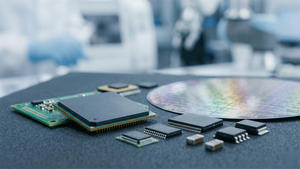
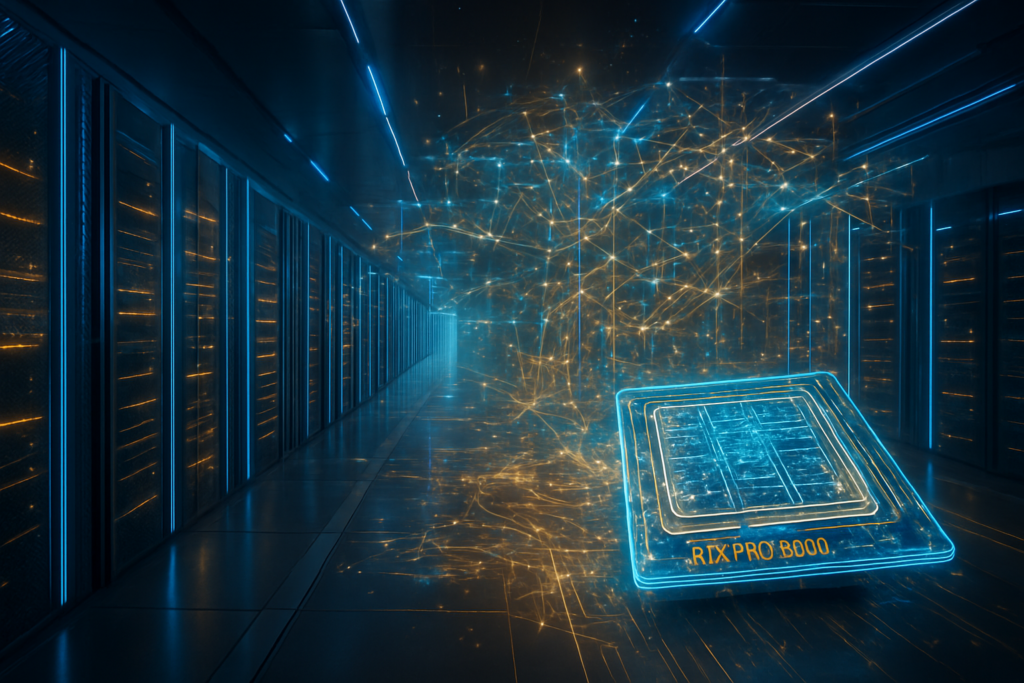
The technical heart of the G7e instance is the NVIDIA Corporation (NASDAQ: NVDA) RTX PRO 6000 Blackwell Server Edition. Built on a cutting-edge 5nm process, this GPU features 96 GB of ultra-fast GDDR7 memory, providing a staggering 1.6 TB/s of memory bandwidth. This 85% increase in bandwidth over the previous G6e generation is critical for eliminating the "memory wall" often encountered in LLM inference. Furthermore, the inclusion of 5th-Generation Tensor Cores introduces native support for FP4 precision via a second-generation Transformer Engine. This allows for doubling the effective compute throughput while maintaining model accuracy through advanced micro-scaling formats.
One of the most transformative aspects of the G7e is its ability to handle large-scale models on a single GPU. With 96 GB of VRAM, developers can now run massive models like Llama 3 70B entirely on one card using FP8 precision. Previously, such models required complex sharding across multiple GPUs, which introduced significant latency and networking overhead. By consolidating these workloads, AWS has significantly simplified the deployment architecture for mid-sized LLMs, making it easier for startups and mid-market enterprises to leverage high-end AI capabilities.
The instances also benefit from massive improvements in networking and ray tracing. Supporting up to 1600 Gbps of Elastic Fabric Adapter (EFA) bandwidth, the G7e is designed for seamless multi-node scaling. On the graphics side, 4th-Generation RT Cores provide a 1.7x boost in ray tracing throughput, enabling real-time neural rendering and the creation of ultra-realistic digital twins. This makes the G7e not just an AI powerhouse, but a premier platform for the burgeoning field of spatial computing and industrial simulation.
The rollout of Blackwell-based instances creates immediate strategic advantages for AWS in the "cloud wars." By being the first to offer Blackwell silicon, AWS has secured a vital headstart over rivals Microsoft Azure and Google Cloud, who are still largely focused on scaling their existing H100 and custom TPU footprints. For AI startups, the G7e offers a more cost-effective middle ground between general-purpose GPU instances and the ultra-expensive P5 or P6 clusters. This "Goldilocks" positioning allows AWS to capture the high-volume inference market, which is expected to outpace the AI training market in total spend by the end of 2026.
Major AI labs and independent developers are the primary beneficiaries of this development. Companies building "agentic" workflows—AI systems that perform multi-step tasks autonomously—require low-latency, high-throughput inference to maintain a "human-like" interaction speed. The 2.3x performance boost directly translates to faster response times for AI agents, potentially disrupting existing SaaS products that rely on slower, legacy cloud infrastructure.
Furthermore, this launch intensifies the competitive pressure on other hardware manufacturers. As NVIDIA continues to dominate the high-end cloud market with Blackwell, companies like AMD and Intel must accelerate their own roadmaps to provide comparable memory density and low-precision compute. The G7e’s integration with the broader AWS ecosystem, including SageMaker and the Amazon Parallel Computing Service, creates a "sticky" environment that makes it difficult for customers to migrate their optimized AI workflows to competing platforms.
The introduction of the G7e instance fits into a broader industry trend where the focus is shifting from raw training power to inference efficiency. In the early years of the generative AI boom, the industry was obsessed with "flops" and the size of training clusters. In 2026, the priority has shifted toward the "Total Cost of Inference" (TCI). The G7e addresses this by maximizing the utility of every watt of power, a critical factor as global energy grids struggle to keep up with the demands of massive data centers.
This milestone also highlights the increasing importance of memory architecture in the AI era. The transition to GDDR7 in the Blackwell architecture signals that compute power is no longer the primary bottleneck; rather, the speed at which data can be fed into the processor is the new frontier. By being the first to market with this memory standard, AWS and NVIDIA are setting a new baseline for what "enterprise-grade" AI hardware looks like, moving the goalposts for the entire industry.
However, the rapid advancement of these technologies also raises concerns regarding the "digital divide" in AI. As the hardware required to run state-of-the-art models becomes increasingly sophisticated and expensive, smaller developers may find themselves dependent on a handful of "hyperscalers" like AWS. While the G7e lowers the TCO for those already in the ecosystem, it also reinforces the centralized nature of high-end AI development, potentially limiting the decentralization that some in the open-source community have advocated for.
Looking ahead, the G7e is expected to be the catalyst for a new wave of "edge-cloud" applications. Experts predict that the high memory density of the Blackwell Server Edition will lead to more sophisticated real-time translation, complex robotic simulations, and more immersive virtual reality environments that were previously too latency-sensitive for the cloud. We are likely to see AWS expand the G7e family with specialized "edge" variants designed for local data center clusters, bringing Blackwell-level performance closer to the end-user.
In the near term, the industry will be watching for the release of the "G7d" or "G7p" variants, which may feature different memory-to-compute ratios for specific tasks like vector database acceleration or long-context window processing. The challenge for AWS will be managing the immense power and cooling requirements of these high-performance instances. As TDPs for individual GPUs continue to climb toward the 600W mark, liquid cooling and advanced thermal management will become standard features of the modern data center.
The launch of the AWS EC2 G7e instances marks a definitive moment in the evolution of cloud-based artificial intelligence. By bringing the NVIDIA Blackwell architecture to the masses, AWS has provided the industry with the most potent tool yet for scaling LLM inference and spatial computing. With a 2.3x performance increase and the ability to run 70B parameter models on a single GPU, the G7e significantly lowers the barrier to entry for sophisticated AI applications.
This development cements the partnership between Amazon and NVIDIA as the foundational alliance of the AI era. As we move deeper into 2026, the impact of the G7e will be felt across every sector, from automated customer service agents to real-time industrial digital twins. The key takeaway for businesses is clear: the era of "AI experimentation" is over, and the era of "AI production" has officially begun. Stakeholders should keep a close eye on regional expansion and the subsequent response from competing cloud providers in the coming months.
This content is intended for informational purposes only and represents analysis of current AI developments.
TokenRing AI delivers enterprise-grade solutions for multi-agent AI workflow orchestration, AI-powered development tools, and seamless remote collaboration platforms.
For more information, visit https://www.tokenring.ai/.