SHERIDAN, WY / ACCESS Newswire / March 17, 2026 / The creator economy has rapidly evolved into one of the most influential forces shaping the modern internet. Millions of creators now build audiences across platforms like YouTube, TikTok, and Instagram, generating billions of dollars annually through advertising, brand partnerships, affiliate marketing, and digital products.
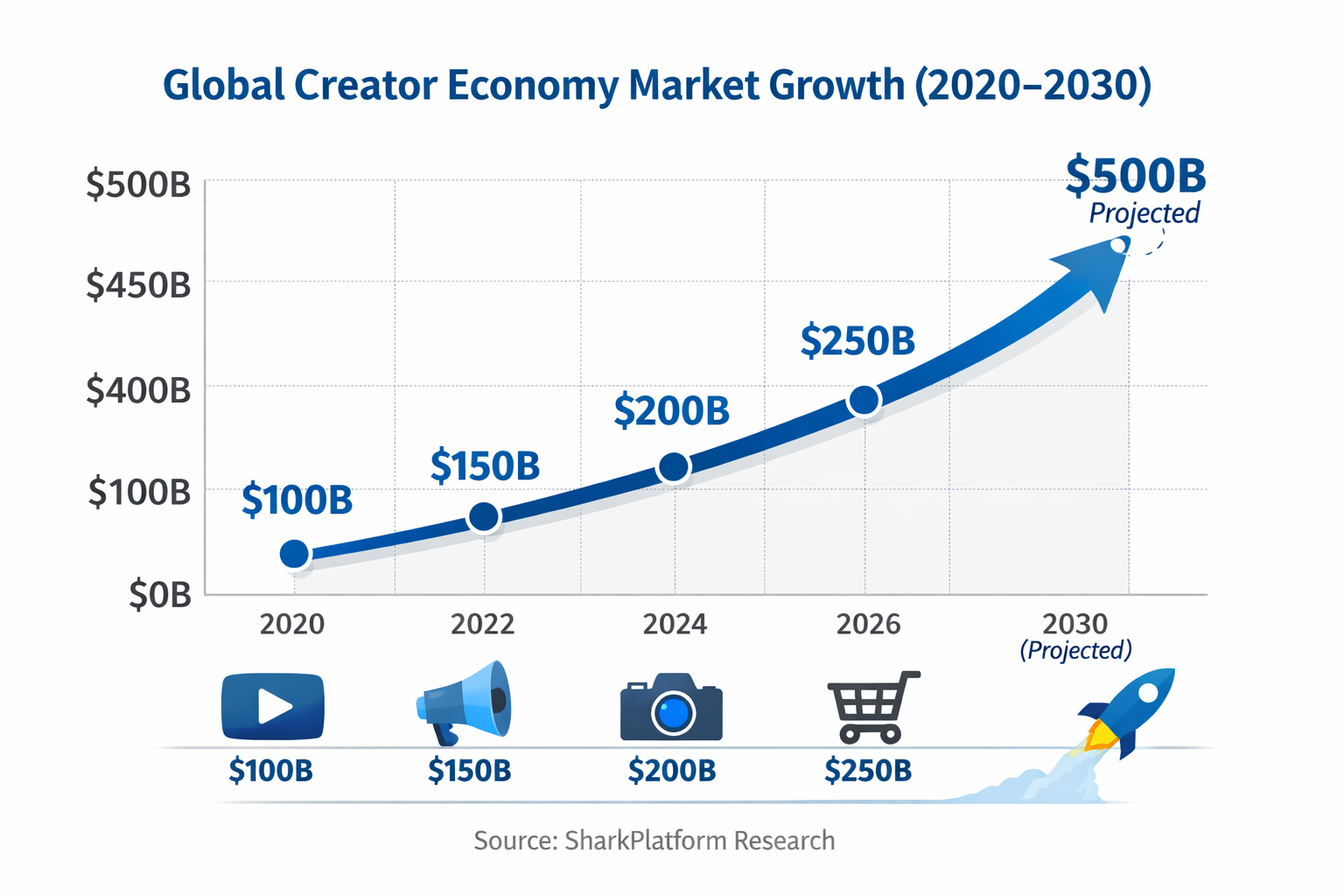
Figure 1. Global creator economy market growth projection from $100B in 2020 to $500B by 2030. Source: SharkPlatform Creator Economy Research.
For marketers, investors, and entrepreneurs, understanding the scale and trajectory of the creator economy is essential.
According to research compiled in SharkPlatform's Creator Economy Statistics dataset, the creator economy now represents a multi-hundred-billion-dollar global industry and continues to grow at a remarkable pace.
Below is a comprehensive breakdown of creator economy statistics for 2026, including market size, growth trends, platform data, and monetization insights.
Creator Economy Market Size Statistics
The creator economy has expanded dramatically over the past decade as social media platforms introduced monetization programs and brand partnerships.
Key statistics include:
The creator economy is estimated to exceed $250 billion globally in 2026.
Analysts project the market could reach $500 billion by 2030.
More than 200 million people worldwide identify as content creators.
Around 50 million creators are considered professional or semi-professional.
Over 2 million creators earn six-figure incomes annually from their content.
Creator-led marketing campaigns now represent a rapidly growing portion of global digital advertising.
Industry research published by SharkPlatform's creator monetization analysis indicates that creator-driven media is increasingly replacing traditional digital advertising channels.
Creator Economy Growth Statistics
The number of creators worldwide continues to rise as more individuals turn content creation into a career.
Important growth statistics include:
The number of creators online has increased more than 10× since 2015.
Over 165 million new creators joined major social platforms between 2020 and 2025.
Roughly one in four internet users publishes some form of content online.
More than 30% of Gen Z consider becoming a creator a viable career path.
The creator workforce is expanding faster than many traditional media industries.
These trends suggest that the creator economy remains in the early stages of long-term growth.
Influencer Marketing Statistics
Influencer marketing is one of the primary revenue drivers within the creator economy.
Key insights include:
The global influencer marketing industry is expected to reach $34 billion in 2026.
Brands now allocate up to 25% of digital marketing budgets to influencer campaigns.
Micro-influencers frequently generate higher engagement rates than celebrity influencers.
Sponsored posts and brand partnerships represent one of the largest income streams for creators.
A deeper breakdown of influencer revenue models is explored in SharkPlatform's Instagram influencer research
Creator Platform Statistics
Large social platforms play a central role in the growth of the creator economy by providing both distribution and monetization opportunities.
YouTube Statistics
YouTube remains one of the most powerful platforms for creators.
Over 2.7 billion monthly active users watch YouTube videos.
More than 2 million creators participate in the YouTube Partner Program.
YouTube has paid creators over $70 billion since launching its revenue sharing program.
TikTok Statistics
TikTok has rapidly become a dominant force in creator growth.
TikTok now exceeds 1.6 billion global users.
Short-form video has become one of the fastest-growing content formats online.
Many creators have built multi-million-follower audiences within a few years.
Instagram Statistics
Instagram remains one of the most important platforms for influencer marketing.
Instagram hosts over 200 million creator and business accounts.
Influencer collaborations on Instagram generate billions of dollars in annual brand partnerships.
Creator Income Statistics
Creator income varies significantly depending on audience size, niche, and monetization strategy.
Key income insights include:
Many creators earn less than $1,000 per year from their content.
Top creators can generate millions of dollars annually through sponsorships and product launches.
Affiliate marketing has become an increasingly popular revenue stream for creators.
Subscription communities and digital products are helping creators diversify their income.
A deeper analysis of creator revenue strategies is explored in SharkPlatform's YouTube creator monetization guide
How Creators Make Money
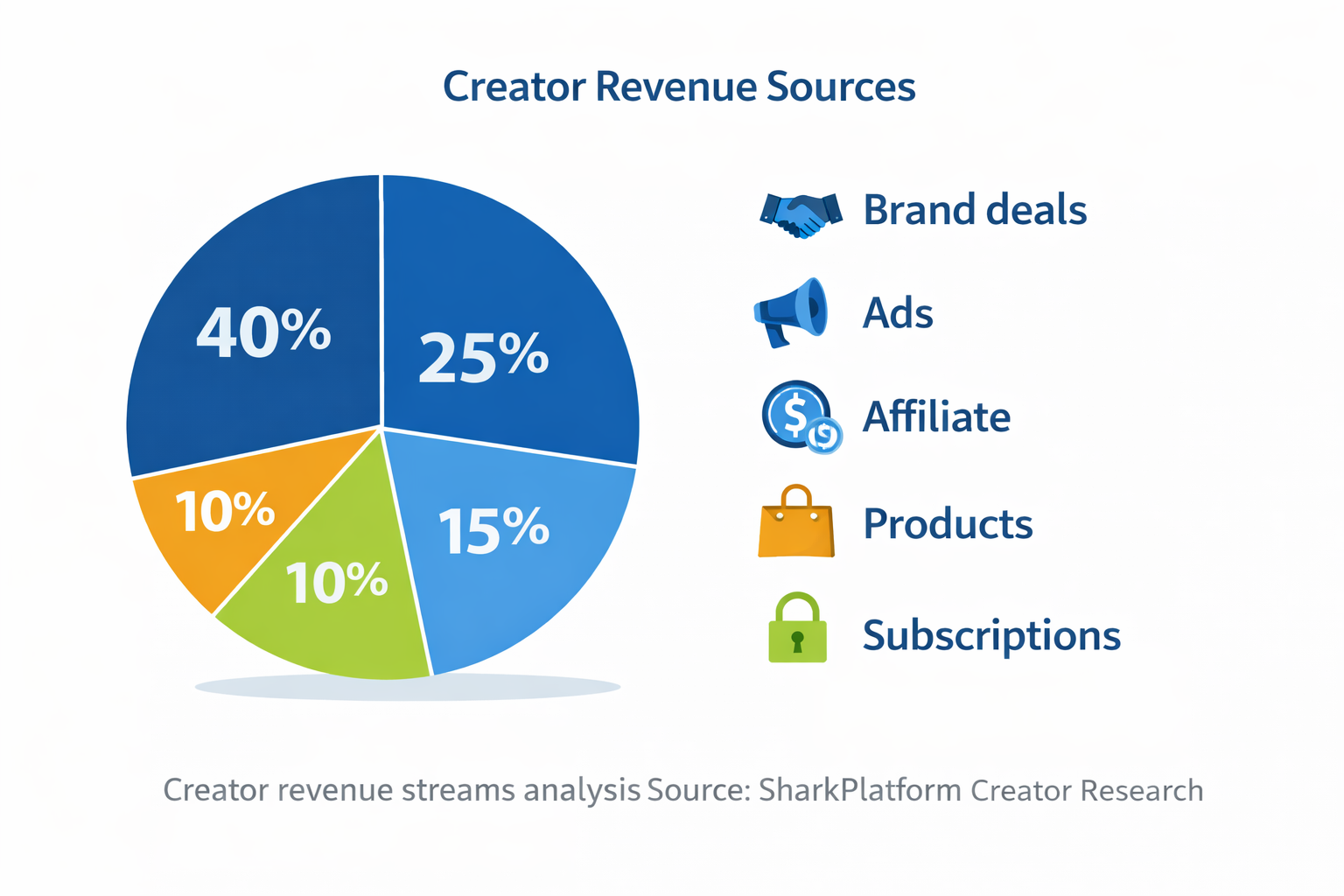
Figure 2. Primary revenue streams used by creators, including brand partnerships, advertising, affiliate marketing, digital products, and subscriptions. Source: SharkPlatform Creator Monetization Analysis.
Creators typically monetize their audiences through several key revenue channels.
Brand Partnerships
Brands pay creators to promote products or services to their audiences.
Advertising Revenue
Platforms like YouTube share advertising revenue with creators.
Affiliate Marketing
Creators earn commissions when followers purchase products through affiliate links.
Digital Products
Many creators sell courses, ebooks, or memberships.
Subscriptions
Paid communities and exclusive content platforms provide recurring revenue.
Successful creators typically combine multiple monetization strategies rather than relying on a single income source.
Key Creator Economy Trends
Several trends are shaping the future of the creator economy.
Professionalization of Creators
Many creators now operate as full businesses with teams, agencies, and management structures.
Creator-Led Brands
More creators are launching their own product lines and startups.
Multi-Platform Strategies
Creators increasingly distribute content across multiple platforms to reduce algorithm risk.
Data-Driven Creator Marketing
Brands are investing heavily in creator analytics and intelligence platforms to identify high-performing creators.
The Future of the Creator Economy
The creator economy is expected to continue expanding as digital media consumption grows globally.
Key predictions include:
Continued growth in creator-led brands and digital products
Increased competition among platforms to attract creators
Greater investment in creator marketing infrastructure
Rising demand for creator analytics and industry data
Final Thoughts
The creator economy is transforming how content is produced, distributed, and monetized worldwide. As millions of individuals turn their creativity into profitable online businesses, creators are becoming powerful economic drivers across industries.
For marketers, brands, and entrepreneurs, understanding creator economy trends is essential as digital influence continues to reshape global marketing.
The complete creator economy statistics dataset and research library can be explored at:
https://sharkplatform.com/creator-economy-statistics
Media contact:
SharkPlatform
Media Relations
hello@sharkplatform.com
https://sharkplatform.com
SOURCE: SharkPlatform
View the original press release on ACCESS Newswire