

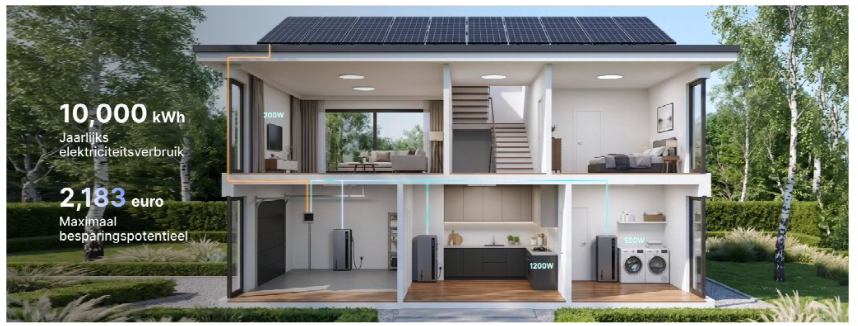
Match Your Home Battery to Your PV Setup: Avoid Compatibility Mistakes and Get Maximum Solar Value
Many Dutch households with rooftop solar panels start exploring home battery storage to increase self‑consumption, reduce high evening grid costs and add emergency backup capability. However, not every home battery works seamlessly with every solar installation. Choosing the wrong system can lead to compatibility issues, sub‑par performance or unnecessary high costs for hardware you do not actually need.
This practical buyer's guide helps you evaluate storage options whether you have just installed new solar panels or own a well‑established PV system with older inverters. Conow Home Battery delivers flexible storage hardware built to work with a wide variety of solar set‑ups, from new hybrid PV installations to existing string‑ and micro‑inverter systems. Many homeowners overlook critical compatibility details and end up disappointed, even when selecting a battery with attractive headline kWh specifications.
Step One: Audit Your Existing Solar Installation First
Before comparing battery capacities or prices, take stock of your current solar hardware. These four points heavily influence which battery solution will fit your home:
- Inverter type: Standard string inverter, micro‑inverters, or hybrid inverter that is already battery‑ready.
- Inverter age and condition: If your inverter is reaching its end‑of‑life, replacing it together with storage may become economically attractive.
- Current solar yield and household consumption: How much surplus solar energy do you produce on an average sunny day?
- Your main goals: Higher solar self‑consumption, grid outage backup, or a combination of both.
Micro‑inverter systems in particular require careful attention: DC‑coupled battery retrofits are generally not feasible, leaving AC‑coupled storage as the primary practical option. Also verify your inverter manufacturer documentation to check how third‑party battery retrofits may impact existing warranty conditions.
AC‑Coupled versus DC‑Coupled Home Batteries: Core Differences for Solar Compatibility
The biggest technical decision for pairing a battery with solar panels is choosing between AC‑coupled and DC‑coupled system architecture. Each option has clear pros and cons, depending on whether your solar installation is brand‑new or already operational.
AC‑Coupled Home Battery
An AC‑coupled home battery connects on the alternating‑current side, after your existing solar inverter. The battery unit contains its own bidirectional inverter. Surplus AC solar power from your PV inverter is converted back to DC for battery storage and converted back to AC when you consume stored energy at home.
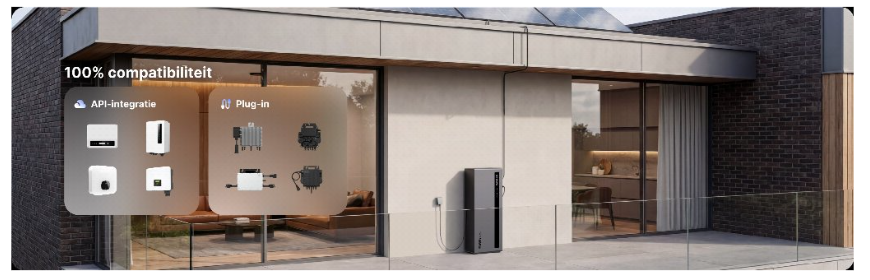
Key advantages: You keep your current solar panels and inverter completely unchanged. Works with string inverters, micro‑inverters and almost all existing solar hardware. Great for retrofits. Conow Atlas 6000 AC Home Battery uses this AC‑coupled principle. It reads solar production via CT‑sensors or inverter API connections and requires no modifications to your existing PV installation. AirMesh wireless parallel expansion allows you to add more battery units gradually as your household energy demand grows.
Downside: Multiple energy conversion steps create moderate round‑trip efficiency losses (typically 88‑92 %). This trade‑off is widely accepted in retrofit scenarios where replacing a fully functional inverter would generate far higher overall costs.
DC‑Coupled / Hybrid‑Inverter Battery Solution
DC‑coupled storage connects on the direct‑current side between your solar panels and a hybrid inverter. Solar DC‑power flows directly into the battery before being converted to household AC power, resulting in slightly better round‑trip efficiency.
Advantages: Fewer conversion losses. Ideal when you install solar panels and battery together as one brand‑new system.
Major drawbacks for existing PV owners: In nearly all retrofit cases you must remove your working solar inverter and install a new hybrid model. This adds substantial hardware and installation expense. It only makes economic sense if your old inverter is already defective or scheduled for replacement in the near future.
Quick Decision Checklist
- Choose AC‑coupled: You already have working solar hardware, especially micro‑inverters; you want to avoid discarding functional equipment; you value future‑proof flexible expansion.
- Choose DC‑coupled hybrid setup: You are buying solar panels and battery at the same time; your old inverter needs replacement anyway.
Home Battery for Solar Panels product portfolios focus heavily on AC‑coupled retrofit‑friendly hardware, addressing the large group of Dutch homeowners who want to upgrade their existing solar installation without unnecessary hardware replacement.
Key Hardware Requirements for Reliable Solar‑Battery Integration
A compatible battery is more than just a battery cabinet. For correct operation together with your solar panels, these additional components matter:
- CT current transformers or API‑inverter connection: Measures real‑time solar surplus and household consumption so the battery knows when it can safely charge from excess PV‑power.
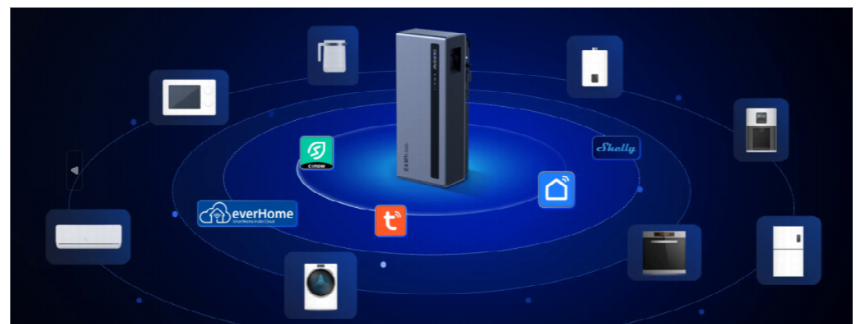
- Home Energy Management System (HEMS): The intelligent control layer. It optimizes charging from solar surplus, peak‑hour discharging, backup reserve management and can support dynamic electricity tariffs.
- UPS island‑mode capability: If you require backup power during grid failures, explicitly verify that your selected battery supports seamless off‑grid transfer; not every AC‑coupled unit includes this feature by default.
- Appropriate operating environment: LFP home batteries require suitable ambient temperatures. Premium models offer built‑in cold‑weather heating and high IP ratings for protected garage, patio or balcony placement.
Sizing Your Battery To Match Your Solar Yield And Household Load
Do not size your battery purely based on the kWp rating of your solar panels. Correct sizing starts from your real‑world solar surplus and your household evening‑time consumption profile.
- Review 3‑6 months of your solar inverter yield data to understand typical midday surplus energy.
- Calculate your average evening household energy draw after sunset.
- Decide how much emergency backup capacity you require: only critical loads (fridge, router, lighting) or extended whole‑house support.
- Think ahead: Will you add an EV‑charger or heat‑pump in coming years? Modular batteries allow you to expand capacity later without replacing your initial investment.
Oversizing leads to high upfront costs while your battery rarely fills up with solar surplus. Undersizing means you still purchase large amounts of expensive evening grid power despite owning solar panels and storage. Usable capacity, not nominal headline capacity, should be your primary sizing metric.
Common Mistakes When Pairing Home Batteries With Solar Panels
- Selecting DC‑coupled hybrid‑replacement for retrofit, even though your existing solar inverter still has many years of service‑life remaining.
- Buying purely based on advertised nominal kWh figures, ignoring usable capacity, depth of discharge and continuous power output.
- Installing an AC‑coupled battery without proper CT‑sensor or API data‑connection, resulting in incorrect charging behaviour and minimal improvement in solar self‑consumption.
- Assuming every home battery automatically delivers blackout backup power, without verifying UPS / island‑mode specifications.
- Forgetting to check inverter‑warranty implications when retrofitting third‑party battery storage onto your existing solar installation.
- Ignoring seasonal differences: summer solar surplus is much higher than winter PV‑generation, your battery must perform well year‑round.
Conclusion
Adding a home battery to your solar panels can greatly raise self‑consumption, lower energy bills and deliver emergency resilience, but success depends heavily on picking the right system architecture for your existing hardware. For most households with already‑installed solar panels, AC‑coupled storage represents the least‑disruptive and most cost‑effective upgrade path. DC‑coupled hybrid systems shine mainly for completely new solar‑and‑battery builds.
Before purchasing, audit your inverter type and age, analyse your real solar surplus and household consumption, and clarify whether you also need outage backup functionality. Prioritise modular expandable systems to accommodate future energy‑intensive devices such as heat pumps or EV chargers. If you are researching storage to pair with your solar installation, Conow offers retrofit‑ready AC‑coupled hardware including the Atlas 6000 AC thuisbatterij, delivering smart AI‑driven energy management, wireless capacity expansion and reliable emergency backup for Dutch households.
FAQs
Q1: Can I add a home battery to any existing solar panel installation?
A: Almost always yes by choosing an AC‑coupled battery solution. You retain your solar panels and existing inverter. You will normally need current‑transformer sensors or API‑access to read solar‑production data for proper battery control.
Q2: Is DC‑coupled always better because of higher efficiency?
A: Higher theoretical round‑trip efficiency only counts when you install solar and battery together. For retrofits, the extra cost of replacing a functional inverter usually outweighs small efficiency gains.
Q3: Can a home battery work with micro‑inverter solar systems?
A: Yes, only via AC‑coupled storage. DC‑coupled retrofits are technically not practical for micro‑inverter set‑ups.
Q4: Does every solar‑paired home battery offer blackout backup power?
A: No. Backup power is an optional feature. Always check explicitly for UPS‑capable island‑mode before ordering if outage resilience is important for your household.
Q5: Can I expand battery capacity at a later date for my solar system?
A: Only with modular, parallel‑capable platforms. Fixed single‑pack batteries cannot easily be upgraded. Modular AC‑coupled systems allow adding extra battery units without replacing your existing hardware.