As of March 2, 2026, the global economy finds itself at a critical crossroads in the transition toward a decarbonized future. At the center of this shift is Freeport-McMoRan Inc. (NYSE: FCX), a premier international mining company and the world’s largest publicly traded producer of copper. While energy markets have historically been dominated by oil and gas majors, the narrative in 2026 has shifted decisively toward "electrification metals." Freeport-McMoRan, with its massive reserves and strategic pivot toward innovative extraction technologies, has become the bellwether for the industrial appetite of the 21st century.
Historical Background
Freeport-McMoRan’s journey began in 1912 with the founding of the Freeport Sulphur Company. However, its modern identity was forged through two era-defining milestones. The first was the 1981 merger with McMoRan Oil & Gas, led by the legendary James Robert "Jim Bob" Moffett. This set the stage for the discovery and development of the Grasberg district in Papua, Indonesia—a site that would become the crown jewel of the company's portfolio and one of the world’s most productive copper and gold mines.
The second transformative event occurred in 2007, when Freeport acquired Phelps Dodge for $26 billion. This acquisition was a masterstroke of consolidation, turning Freeport into a global powerhouse by adding massive North American assets like the Morenci mine in Arizona and South American operations like Cerro Verde in Peru. After a brief and ill-fated foray into the oil and gas sector in the early 2010s, the company has spent the last decade returning to its roots as a "pure-play" copper giant.
Business Model
Freeport’s business model is elegantly simple but operationally complex: it identifies, extracts, and processes base metals with a heavy emphasis on copper (approximately 75-80% of revenue), supplemented by gold and molybdenum. The company operates through three primary geographic segments:
- North America: Centered in Arizona and New Mexico, providing a stable, low-risk foundation and supplying nearly 70% of the U.S. domestic copper demand.
- South America: Massive scale operations in Peru (Cerro Verde) and Chile (El Abra), characterized by long-life reserves.
- Indonesia: The PT Freeport Indonesia (PTFI) segment, which operates the Grasberg complex. This is a high-margin, high-volume underground operation that produces significant gold as a byproduct, effectively lowering the "net cash cost" of copper production.
Stock Performance Overview
Over the past decade, FCX has been a high-beta play on the global economy.
- 10-Year Horizon: Investors who entered in 2016 during the commodity trough have seen substantial returns, driven by the company’s debt-reduction program and the rising "Green Premium" for copper.
- 5-Year Horizon: Performance has been bolstered by the successful transition of Grasberg to 100% underground mining and the post-pandemic commodity surge.
- 1-Year Horizon: The stock faced volatility in late 2025 due to an operational "mud rush" incident at Grasberg which temporarily curtailed production. However, as of March 2026, the stock has recovered much of that ground, trading at a premium compared to its diversified mining peers due to its direct leverage to copper prices, which are currently hovering near record highs.
Financial Performance
Despite the operational challenges of late 2025, Freeport-McMoRan entered 2026 with a robust balance sheet.
- Revenue & EBITDA: 2025 revenue reached approximately $25.9 billion. Adjusted EBITDA remained strong at $10.0 billion, demonstrating the high-margin nature of their assets.
- Debt Profile: The company has maintained a disciplined capital structure, with net debt sitting at roughly $2.3 billion. This is a far cry from the $20 billion debt load the company carried a decade ago.
- Cash Flow: Operating cash flow remains a highlight, allowing the company to fund its $4.3 billion capital expenditure budget for 2026 primarily through internal resources while maintaining a progressive dividend policy.
Leadership and Management
In June 2024, a new era began at Freeport as Kathleen Quirk took the helm as CEO, succeeding Richard Adkerson. Quirk, a 35-year veteran of the company and former CFO, has been widely praised by analysts for her steady hand. Her leadership style focuses on "America’s Copper Champion" strategy—prioritizing organic growth and technological innovation over the expensive, risky M&A that has plagued the mining industry in previous cycles. The board’s continuity and Quirk’s deep relationship with the Indonesian government are seen as key stabilizing factors for the stock.
Products, Services, and Innovations
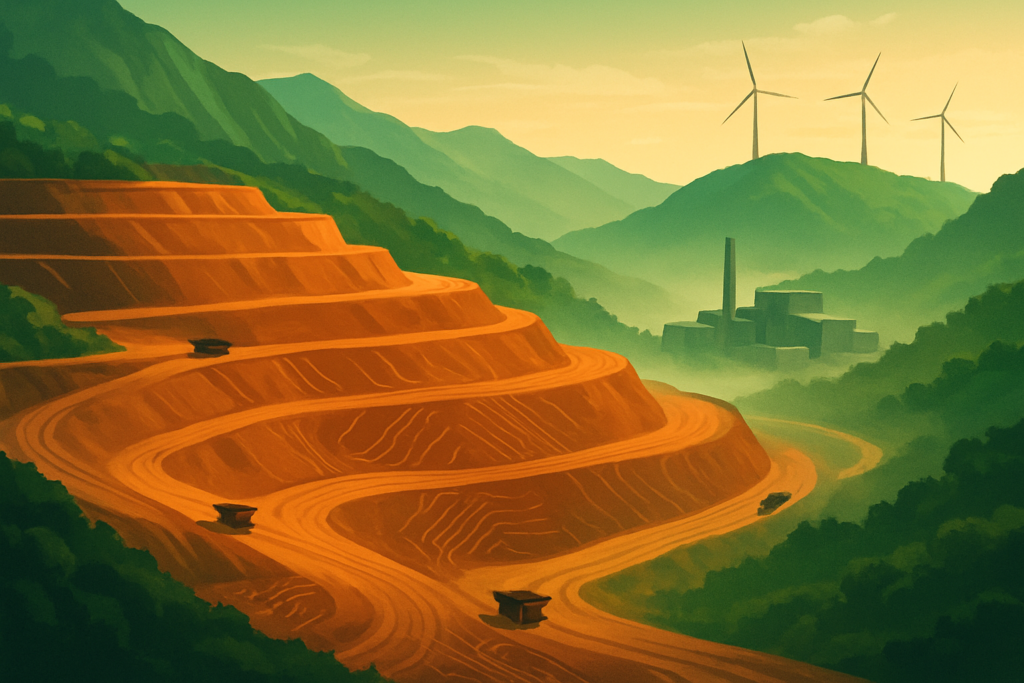
Freeport's most significant innovation in 2026 is the Americas Leach Innovation Initiative. Traditionally, copper is extracted through smelting, but FCX has pioneered a "leach-to-copper" process using proprietary catalysts (partnered with Jetti Resources).
- The "Hidden Mine": By treating old waste rock and low-grade stockpiles with this new technology, FCX is producing "new" copper with almost zero additional mining cost.
- Scale: In early 2026, this technology is contributing an annual run rate of 300 million pounds of copper—roughly the size of a mid-tier mine—at a cost of less than $1.00 per pound.
- Downstreaming: The completion of the Manyar Smelter in Indonesia in 2025 has also allowed the company to satisfy local "downstreaming" requirements, ensuring full market access for Indonesian concentrates.
Competitive Landscape
Freeport occupies a unique niche compared to its rivals, BHP (NYSE: BHP) and Rio Tinto (NYSE: RIO).
- Pure-Play vs. Diversified: Unlike BHP and Rio, which are heavily exposed to iron ore and coal, FCX is almost entirely tied to copper. When copper prices rise, FCX typically outperforms the broader mining indices.
- Market Share: While BHP produces more total copper by volume, Freeport is often cited as the "marginal price setter" due to its influence on the U.S. and Indonesian markets.
- Geopolitical Moat: Its dominant position in the United States makes it a preferred partner for the U.S. government as it seeks to secure domestic supply chains for critical minerals.
Industry and Market Trends
The "Copper Crunch" of 2026 is the primary macro driver. Three factors are fueling this:
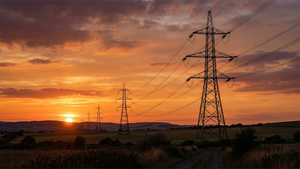
- AI Data Centers: Since 2024, the explosion of AI infrastructure has required massive upgrades to power grids, which are copper-intensive.
- Renewable Infrastructure: Wind and solar farms require 3-5 times more copper than traditional coal or gas plants.
- Supply Deficits: Very few new large-scale copper mines have been commissioned globally in the last five years due to environmental and permitting hurdles, leading to a structural supply-demand deficit.
Risks and Challenges
Despite its strengths, FCX is not without significant risks:
- Operational Risk: The 2025 mudflow at Grasberg served as a stark reminder of the technical challenges inherent in deep underground block-cave mining.
- Geopolitical Sensitivity: While relations with Indonesia are currently stable following the 2026 MOU, the company remains subject to the political winds of Jakarta and the 2041 stake transfer agreement.
- Commodity Volatility: As a pure-play, any significant slowdown in global industrial activity—particularly in China or the U.S.—would disproportionately hit FCX's bottom line.
Opportunities and Catalysts
- Bagdad Expansion: A potential doubling of capacity at the Bagdad mine in Arizona remains a significant near-term catalyst.
- Leaching Upside: If the leaching technology can be scaled to its 800-million-pound target by 2030, it would effectively add a massive "virtual mine" to FCX's portfolio with industry-leading margins.
- Permit Extensions: The recent MOU in Indonesia secures operations through 2041 and beyond, removing a major long-term overhang for institutional investors.
Investor Sentiment and Analyst Coverage
Wall Street remains largely bullish on FCX as of March 2026. The consensus "Buy" rating is supported by the view that copper is entering a multi-year supercycle. Institutional ownership remains high, with major funds viewing FCX as a core ESG-compliant holding because of its role in the energy transition. Retail sentiment often fluctuates with the copper price, but the "leaching" narrative has captured the imagination of tech-focused investors who see FCX as more than just a traditional "dirt-moving" company.
Regulatory, Policy, and Geopolitical Factors
Government policy has become a tailwind for FCX. In the United States, the Inflation Reduction Act and subsequent 2025 "Onshoring Initiatives" have provided incentives for domestic mineral production. Conversely, in Indonesia, the "Downstreaming" mandate has forced the company to invest heavily in local smelting. The ability of Kathleen Quirk and her team to navigate these conflicting nationalistic policies is perhaps the company's greatest intangible asset.
Conclusion
Freeport-McMoRan stands in 2026 as a revitalized giant. By surviving a decade of debt deleveraging and technical transitions, it has positioned itself at the nexus of the global energy and AI revolutions. While operational risks in Indonesia and the inherent volatility of commodity markets remain, the company’s "America’s Copper Champion" strategy—underpinned by breakthrough leaching technology—offers a compelling narrative of growth without the traditional risks of greenfield development. For investors, FCX is no longer just a mining stock; it is a fundamental bet on the physical infrastructure of the modern world.
This content is intended for informational purposes only and is not financial advice.