The global silver market is currently experiencing a historic moment, as the precious metal has surged to a fresh all-time record high, breaching the US$61 per ounce mark in early December 2025. This monumental ascent, which saw silver's value double in 2025 and significantly outpace gold's impressive 60% gain, signals a potent confluence of factors driving an extraordinary bullish momentum. The immediate implications are profound, sparking fervent discussions among investors, industrial players, and market analysts about silver's renewed prominence as both a safe-haven asset and a critical industrial commodity.
This record-breaking performance has ignited a strong sense of optimism for further gains, with some experts eyeing targets as high as $65 or even $100 per ounce in the near future. However, the rapid climb also introduces a note of caution, as some technical indicators suggest the rally might be overextended, hinting at potential profit-taking and price corrections. Nevertheless, the surge is unequivocally attracting substantial investment demand, reinforcing silver's position in a volatile global economic landscape marked by inflationary pressures, geopolitical tensions, and an insatiable demand from burgeoning high-tech industries.
The Unfolding Narrative: How Silver Reached its Zenith
The recent surge in silver prices, culminating in a fresh record high of approximately US$61.90 per ounce around December 9-10, 2025, marks a significant moment for the global commodities market. This remarkable ascent was not an isolated event but rather the culmination of several powerful, intertwined factors that have been building momentum throughout the year.
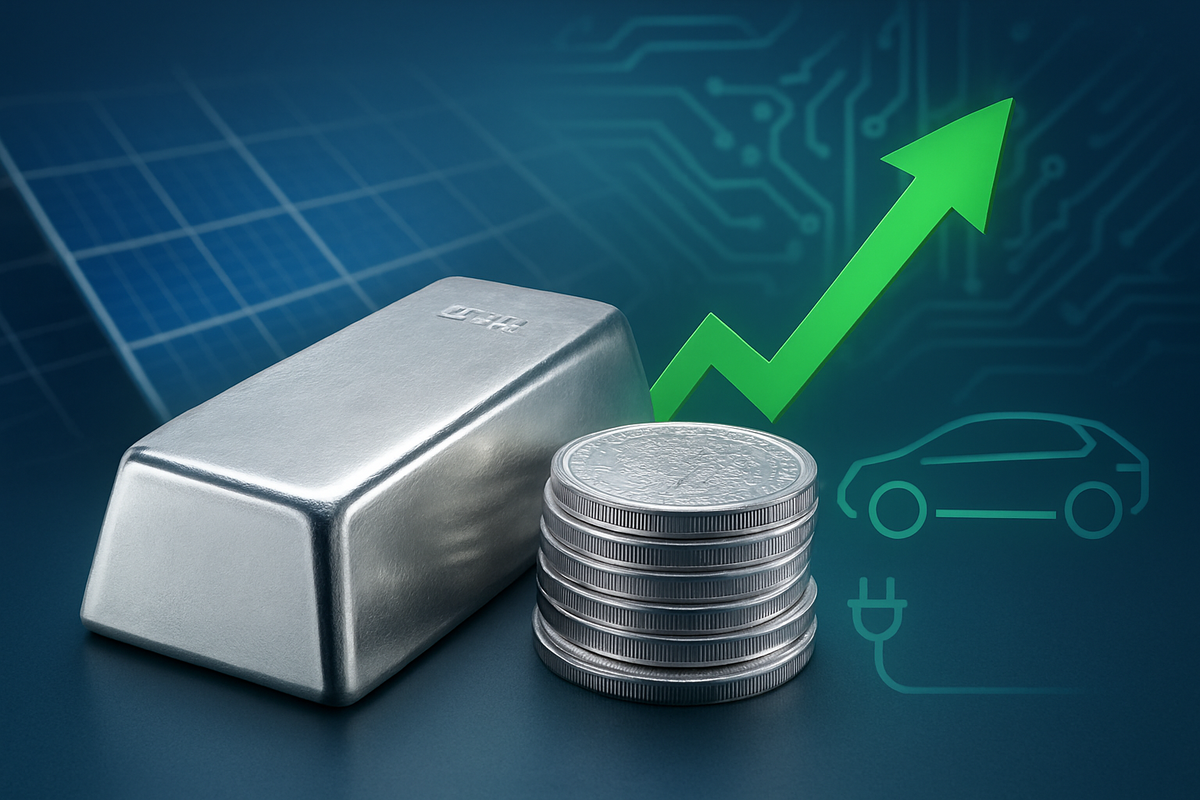
A primary driver behind silver's explosive rally is the insatiable and growing industrial demand. Silver is not merely a precious metal; it is a critical component in a multitude of cutting-edge technologies. The burgeoning solar energy sector, for instance, relies heavily on silver paste for photovoltaic cells, and with global renewable energy initiatives accelerating, demand from this segment has been relentless. Similarly, the rapid electrification of the automotive industry and the increasing sophistication of modern electronics, including the rollout of 5G technology, artificial intelligence (AI), and data centers, all contribute to a robust and often price-inelastic demand for silver. Manufacturers in these sectors find it challenging to substitute silver due to its unparalleled electrical conductivity and other unique properties, creating a consistent floor for demand even as prices climb.
Beyond its industrial applications, investment demand has played an equally pivotal role. In an era characterized by persistent inflation concerns, escalating government debt, and heightened geopolitical instability, investors have increasingly turned to silver as a tangible safe-haven asset and an effective hedge against currency debasement. The metal's historical role as a monetary reserve asset, coupled with the ongoing trend of de-dollarization, has further burnished its appeal. This renewed investor interest is evident in the substantial inflows into silver-backed Exchange Traded Products (ETPs) and aggressive buying on price dips by both retail and institutional investors, who view silver as a credible alternative to gold, especially given its historical undervaluation relative to the yellow metal.
Macroeconomic conditions have also provided a fertile ground for silver's ascent. Expectations of interest rate cuts by the US Federal Reserve have been a significant catalyst, as lower interest rates typically reduce the opportunity cost of holding non-yielding assets like silver, making them more attractive. Furthermore, a weakening U.S. dollar makes dollar-denominated commodities more affordable for international buyers, stimulating demand. Global economic growth, even if uneven, tends to boost industrial activity, thereby increasing demand for silver. Lastly, supply constraints have exacerbated price pressures. Factors such as mining disruptions, increasingly stringent environmental regulations affecting production, and dwindling global inventories in key trading hubs like London and China have created a severe tightness in the market, amplifying the upward trajectory of prices.
Market Winners and Losers in the Silver Boom
The dramatic ascent of silver prices to record highs creates a clear delineation of winners and losers across the global financial landscape, profoundly impacting public companies spanning the mining sector, industrial manufacturing, and investment vehicles.
At the forefront of the beneficiaries are silver mining companies and streaming companies. For primary silver producers such as Fresnillo Plc (LSE: FRES), Pan American Silver Corp. (NASDAQ: PAAS), First Majestic Silver Corp. (NYSE: AG), Hecla Mining Company (NYSE: HL), and Endeavour Silver (NYSE: EXK), higher silver prices directly translate into augmented revenues and significantly expanded profit margins. As their operational costs for extraction and refining are relatively fixed, each incremental increase in the per-ounce price of silver contributes almost entirely to their bottom line. This windfall incentivizes increased exploration and development activities, promising future production growth. Similarly, streaming companies like Wheaton Precious Metals Corp. (NYSE: WPM), which purchase a fixed percentage of future silver production at predetermined low prices, stand to gain immensely. Wheaton, for example, reportedly acquires silver for around $5.75 per ounce through 2029, meaning the current market price of over $60 per ounce generates substantial, low-risk profits. The stock prices of these companies often exhibit leveraged exposure to silver's movements, leading to considerable appreciation, as seen with First Majestic Silver's recent surge.
Investment vehicles designed to track silver prices also emerge as significant winners. Physical silver-backed Exchange Traded Funds (ETFs) such as the iShares Silver Trust (NYSE Arca: SLV) and the Sprott Physical Silver Trust (NYSE Arca: PSLV) see their Net Asset Value (NAV) directly appreciate with the rising price of the metal, offering investors a straightforward way to participate in the rally. ETFs focused on silver mining companies, like the Global X Silver Miners ETF (NYSE Arca: SIL) and the Amplify Junior Silver Miners ETF (NYSE Arca: SILJ), benefit from the improved financial performance and surging stock prices of their underlying holdings. Leveraged ETFs, such as ProShares Ultra Silver (NYSE Arca: AGQ), offer magnified returns, albeit with commensurately higher risks. These funds experience increased investor interest, leading to greater inflows and, consequently, higher management fees, further boosting their profitability.
Conversely, companies for whom silver is a critical raw material face significant headwinds. Industrial users, which account for over half of global silver demand, are grappling with sharply increased production costs. Solar panel manufacturers, including major players like First Solar (NASDAQ: FSLR), are particularly exposed, as silver paste is indispensable in photovoltaic cells. Reports indicate that silver accounted for 14% of solar module production costs in 2025, a substantial jump from 5% in 2023. This surge directly compresses their profit margins unless they can fully pass on these costs to consumers, which is often challenging in competitive markets.
Similarly, electronics companies such as Apple Inc. (NASDAQ: AAPL), Samsung Electronics Co., Ltd. (KRX: 005930), Intel (NASDAQ: INTC), and Qualcomm (NASDAQ: QCOM) rely on silver for semiconductors, connectors, and various electronic components in smartphones, computers, and 5G infrastructure. Rising silver prices translate into higher input costs, potentially squeezing their margins or necessitating price adjustments for their end products. The automotive industry, especially manufacturers of Electric Vehicles (EVs), also feels the pinch, as EVs utilize significantly more silver in their complex electrical systems and charging infrastructure than traditional vehicles. Lastly, jewelry and silverware manufacturers and retailers face increased material costs, compelling them to raise retail prices, which can lead to a slowdown in sales as consumers become more price-sensitive. While efforts are underway to find alternative materials or reduce silver content, its unique properties often make direct substitution difficult, leaving many industrial users vulnerable to its price volatility.
Broader Implications and Historical Context
Silver's unprecedented surge to a record high in December 2025 is not merely a fleeting market anomaly but a potent reflection of profound shifts in global industry trends and macroeconomic dynamics. This rally underscores silver's unique dual identity as both a precious metal and an indispensable industrial commodity, with industrial applications now accounting for a dominant 55-59% of its total global demand. This structural shift fundamentally differentiates the current rally from historical surges primarily driven by monetary concerns.
The robust and growing industrial demand is a cornerstone of this trend. Sectors such as solar energy (photovoltaics), automotive electrification, and advanced electronics and technology are voracious consumers of silver. Electric vehicles, for instance, demand significantly more silver (25-50 grams per unit) than traditional internal combustion vehicles, while the expansion of 5G, AI, and IoT technologies further solidifies silver's role due to its superior conductivity. This demand is occurring against a backdrop of a persistent structural supply deficit for five consecutive years. Approximately 70% of silver is produced as a byproduct of other metal mining, severely limiting the responsiveness of supply to price increases. Declining ore grades and lengthy development timelines for new projects further exacerbate this constraint. For many manufacturers, silver, though essential, represents a relatively small portion of total production costs, making demand largely price-inelastic in the short term and thereby driving prices higher.
The ripple effects extend across the precious metals complex. While gold has also seen substantial gains, silver has significantly outperformed it in 2025, appreciating over 100% compared to gold's 60% year-to-date increase. This outperformance has significantly impacted the gold-to-silver ratio, which has fallen from a peak above 105 to around 68-78. Historically, a higher ratio suggests silver is undervalued, and its current compression signals a correction in silver's relative value, driven by strong industrial demand. This dynamic suggests that silver may continue to outperform gold as its industrial utility provides a structural floor and upward pressure on its price.
From a broader economic perspective, the silver surge reflects persistent global inflation and a waning confidence in traditional monetary policy tools. Investors are increasingly seeking tangible assets that cannot be devalued by central bank actions, signaling a defensive posture amidst economic uncertainty. Higher input costs for industrial users of silver could contribute to broader inflationary pressures across various economies, as businesses may pass these expenses on to consumers. Furthermore, the strong performance of precious metals can influence wider investment trends, potentially redirecting capital from traditional equity markets. Regulatory shifts are also at play; the U.S. has officially designated silver as a "critical mineral," acknowledging its strategic importance for the global energy transition. This reclassification could lead to policy-driven demand and broaden its procurement base, while global trade policies, including tariffs, are creating supply chain disruptions and increasing refining costs, further tightening global supply. Historically, silver has a precedent for dramatic surges during periods of economic instability and high inflation, such as the 1970s stagflation and the aftermath of the 2008 Global Financial Crisis, though the current rally is uniquely bolstered by robust industrial demand. This, coupled with the ongoing trend of de-dollarization, where nations reduce reliance on the U.S. dollar, further enhances silver's appeal as an intrinsic value asset, making it more affordable for international buyers and driving demand.
What Comes Next: Navigating the Silver Frontier
The silver market, having just scaled unprecedented heights, now stands at a critical juncture, presenting both compelling opportunities and inherent challenges for investors. In the short term, the bullish momentum is expected to largely persist, though with characteristic volatility. Technical analyses suggest that any modest pullbacks or consolidations in price could be viewed as attractive buying opportunities, as the underlying drivers remain robust. The monetary policy stance of the U.S. Federal Reserve will be a pivotal determinant; a dovish approach with anticipated interest rate cuts would likely be bullish for silver, reducing the opportunity cost of holding non-yielding assets and potentially weakening the dollar. Conversely, a hawkish shift could trigger profit-taking and a temporary price retracement.
Looking at the long term, the outlook for silver remains overwhelmingly optimistic, primarily underpinned by two powerful forces: persistent structural supply deficits and accelerating industrial demand. The global silver market is currently in its seventh consecutive year of a supply deficit, a trend projected to continue into 2026. This imbalance is exacerbated by the inelasticity of mine supply, as 70-80% of silver is a byproduct of other metal mining, making it difficult to ramp up production solely in response to silver prices. Simultaneously, industrial applications now consume over half of global silver, a proportion that is steadily increasing. Sectors like solar photovoltaics (PV), electric vehicles (EVs), and advanced consumer electronics and AI are driving this demand, with silver's unmatched conductivity making it indispensable. This industrial demand is largely price-inelastic, ensuring its availability is prioritized over cost for manufacturers.
Market opportunities abound for strategic investors. Investing on dips, leveraging silver for portfolio diversification as a hedge against inflation and economic uncertainty, and gaining exposure to the burgeoning green economy are key avenues. The potential for a "silver squeeze" also exists, given heavily diminished freely traded inventories, which could lead to sharp price increases on even modest demand spikes. Investors can gain exposure through silver-backed ETFs or by investing directly in silver mining companies. However, market challenges include silver's inherent price volatility, which is higher than gold due to its dual role. The inelasticity of supply remains a structural hurdle, and despite overall bullish sentiment, some analysts warn of potential corrections (15-40%) after such a rapid ascent. Long-term, sustained, excessively high prices could eventually lead to demand destruction as industries seek alternatives.
In a bullish scenario, which is considered highly probable, silver could average around $55 per ounce in 2026, with some forecasts ranging from $50 to $75 an ounce. Bank of America maintains a long-term target of $65 per ounce, while technical analysis points to a potential move into the $70-$77 region. Highly bullish forecasts even suggest triple-digit prices, potentially reaching $100 or even $200-$400 per ounce, should the supply-demand "brick wall" fully materialize. These outcomes are contingent on continued supply-demand imbalances, robust industrial demand, supportive monetary policies (lower rates, weaker USD, inflation expectations), geopolitical stability, and a favorable gold-silver ratio. Conversely, a bearish scenario, though less probable, could see a significant global economic slowdown impacting industrial demand, or a hawkish shift in central bank policies. In such a case, silver prices could consolidate or retrace, with some analysts suggesting a potential correction if the market is currently overvalued.
Comprehensive Wrap-up and Investor Outlook
Silver's journey to a fresh record high of approximately US$61.84 per ounce on December 10, 2025, represents a landmark event in the commodities market, driven by an exceptional alignment of monetary, structural, and physical market forces. The metal's staggering 100% year-to-date gain in 2025, significantly outperforming gold, underscores its re-emerging prominence. Key takeaways from this remarkable performance include the undeniable impact of tightening supply, inelastic industrial demand from booming sectors like solar and electric vehicles, and strong investor momentum fueled by expectations of Federal Reserve interest rate cuts. However, a cautionary note emerges from technical indicators such as a bearish Relative Strength Index (RSI) divergence, hinting at potential overextension and the possibility of a near-term correction, alongside a compressed gold-to-silver ratio suggesting silver may be relatively expensive.
Moving forward, the market outlook for silver remains broadly bullish into 2026, primarily supported by persistent supply deficits and an accelerating industrial demand that is increasingly price-inelastic. With industrial consumption now accounting for over half of total demand, and no viable substitutes in many high-performance applications, silver's foundational support is robust. Major banks and analysts generally project continued upside, with average forecasts for 2026 ranging from $56–$65 per ounce, and more aggressive technical models stretching towards $72 and $88. Some highly bullish predictions even foresee silver potentially reaching triple-digit figures in the long run.
For investors, vigilance and strategic positioning are paramount in the coming months. Key indicators to watch include the Federal Reserve's decisions on interest rates, global inflation expectations, the strength of the U.S. dollar, and industrial demand data, particularly manufacturing Purchasing Managers' Index (PMI) figures and developments in green technologies, EVs, and AI. Monitoring global silver mining production, inventory data, gold prices, and the gold-to-silver ratio will also provide crucial insights into market dynamics. Technical indicators like RSI divergences and key support/resistance levels should be closely observed for potential trend shifts. Potential risks include silver's inherent volatility, a sharper-than-expected global economic slowdown, a "higher-for-longer" interest rate scenario, and the long-term risk of demand destruction if prices become excessively high.
In conclusion, silver stands as a compelling asset in the current economic climate, offering both diversification benefits and exposure to critical growth sectors. Investors should consider a long-term perspective, potentially employing dollar-cost averaging to mitigate volatility. Choosing the right investment method—physical silver, mining stocks, or ETFs—requires careful consideration of individual risk tolerance and cost implications. While the recent rally has been historic, understanding silver's unique characteristics, including its volatility and the interplay of industrial and monetary demand, will be crucial for navigating its dynamic future.
This content is intended for informational purposes only and is not financial advice