Few things are more frustrating than carefully applying a screen protector to your iPad Air only to watch tiny bubbles creep beneath the surface, distorting your display and undermining the very protection you paid for. These stubborn air pockets don't just look unsightly—they can reduce touch responsiveness, compromise screen clarity, and make your premium tablet feel cheap. For iPad Air owners who demand perfection from their accessories, bubbles represent an unacceptable compromise.
But what if the solution isn't just about the screen protector itself? What if pairing an ultra thin iPad Air case with cutting-edge technology like TORRAS Tora·Airfree™ could eliminate bubbles entirely? This combination promises something that tech-savvy users have long sought: effortless, bubble-free installation paired with crystal-clear protection that lasts. Whether you've struggled with failed applications in the past or you're setting up a brand-new iPad Air, this guide explores how modern design and innovative adhesive technology are finally putting bubble problems to rest.
The Anatomy of Screen Protector Bubbles: Why They Happen
Understanding why bubbles form is the first step toward eliminating them permanently. The most common culprit is microscopic dust particles trapped between the screen and the adhesive layer during application. Even a single speck invisible to the naked eye can create a noticeable bubble that expands over time as air migrates toward the contamination point. Improper alignment compounds the problem—when a protector is lifted and repositioned repeatedly, static electricity attracts more particles while the adhesive weakens with each attempt.
Adhesive quality itself plays a significant role. Cheaper screen protectors use uniform adhesive layers with no mechanism for trapped air to escape, essentially sealing bubbles permanently in place. Temperature and humidity during application also matter; cold environments make adhesives less pliable, while excessive moisture introduces condensation beneath the surface. For tech enthusiasts who rely on their iPad Air's Retina display for color-accurate work, photo editing, or media consumption, these bubbles aren't merely cosmetic annoyances. They scatter light, create dead zones in touch responsiveness, and degrade the optical clarity that makes premium tablets worth owning. The frustration is real—and it demands a solution that addresses root causes rather than symptoms.
Ultra Thin iPad Air Case: Your First Line of Defense
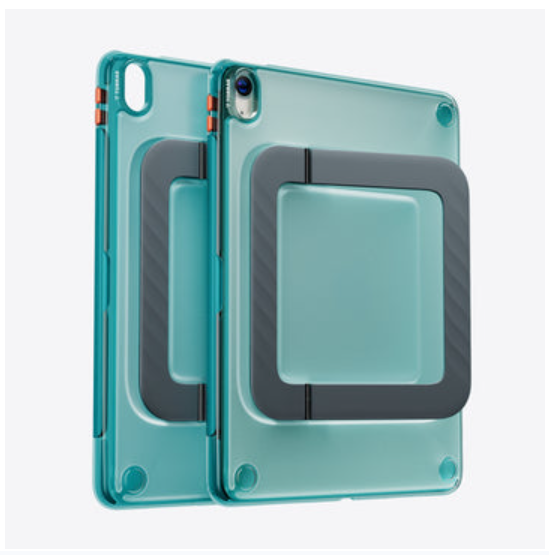
A screen protector doesn't exist in isolation—it's part of an ecosystem that includes your case, and the wrong case can actually contribute to bubble formation. Thick, poorly designed cases create raised edges that catch during screen protector application, introduce uneven pressure points along the display margins, and leave gaps where dust infiltrates over time. An ultra thin iPad Air case solves these problems by maintaining a flush profile that sits nearly level with the screen surface, giving your protector a clean, unobstructed canvas to adhere to.
Precise cutouts are essential here. When a case is engineered with sub-millimeter accuracy around the display edges, it eliminates the lip interference that causes protectors to lift at corners—one of the primary entry points for air that eventually becomes bubbles. The slim profile also means you can apply firm, even pressure across the entire screen without the case flexing or creating resistance. Beyond installation benefits, an ultra thin case integrates seamlessly with magnetic accessories, keyboard attachments, and charging solutions without adding bulk that shifts the protector's position during daily use. Think of it as the foundation: get the case right, and every layer above it performs better.
Tora·Airfree™ Technology: A Breakthrough in Screen Protection
What is Tora·Airfree™?
Tora·Airfree™ represents a fundamental rethinking of how screen protectors bond to glass surfaces. Unlike conventional adhesives that create a sealed barrier trapping air permanently, this technology incorporates a network of microscopic air-release channels engineered into the adhesive layer itself. These channels function like invisible escape routes—when you place the protector on your iPad Air's display, any trapped air naturally migrates through these pathways toward the edges, dissipating entirely within seconds. The adhesive also features a self-healing silicone composition that reflows after air displacement, creating a complete bond with zero voids. This isn't a surface coating that wears off; it's an architectural change to how the adhesive layer is structured at a microscopic level, meaning the bubble-resistant properties remain intact throughout the protector's entire lifespan.
How It Ensures Bubble-Free Clarity
The practical benefits extend well beyond easy installation. Because Tora·Airfree™ eliminates air pockets completely, the optical path between your eyes and the iPad Air's Retina display remains uninterrupted—light passes through without scattering or distortion, preserving the color accuracy and sharpness that professionals depend on for creative work. The technology achieves over 99% light transmittance, making the protector virtually invisible once applied. Scratch resistance is built into the equation as well, with a hardened surface layer that withstands daily contact without compromising clarity over months of use. For tech enthusiasts pairing this with an ultra thin iPad Air case, the combination is particularly effective: the case maintains edge alignment that prevents peeling, while Tora·Airfree™ handles the adhesion science beneath. Together, they create a protection system where bubbles simply cannot form during installation or develop gradually through normal use—solving the problem from both structural and chemical angles simultaneously.
The Ultimate Bubble-Free Installation Guide
Pre-Installation Preparation
Success starts before you ever touch the screen protector. Begin by removing your iPad Air from its ultra thin case and powering down the device—an active screen generates static that attracts dust particles. Choose your workspace carefully: a bathroom immediately after running hot water works surprisingly well, as steam settles airborne dust without leaving moisture on surfaces. Avoid bedrooms where fabric fibers float constantly, or kitchens where grease particles linger invisibly in the air. Gather your tools: a lint-free microfiber cloth, the dust-removal stickers included with quality protectors, a piece of transparent tape for stubborn specks, and a flat squeegee card. Clean the iPad Air's screen using the microfiber cloth in single directional strokes rather than circular motions, which redistribute particles instead of removing them. Follow up with the adhesive dust stickers, pressing them firmly across every millimeter of the display surface. Hold the screen at an angle under bright light to inspect for remaining contaminants—even one particle will create a bubble. Only proceed when the surface appears absolutely flawless under direct illumination.
Step-By-Step Application Process
With your screen pristine, peel back only the top third of the protective backing from your Tora·Airfree™ protector, creating a hinge that allows controlled placement. Align the exposed adhesive portion with the top edge of your iPad Air's display, using the speaker cutout and front camera as reference points for precise positioning. Once the top edge sits perfectly, lower the protector gradually while using your squeegee card to press from the center outward toward the edges in slow, deliberate strokes. The Tora·Airfree™ air-release channels work best when you allow them time to function—rushing creates pressure pockets that even advanced adhesive technology needs a moment to resolve. If you notice the alignment drifting, the silicone adhesive allows you to lift gently and reposition without the degradation that plagues conventional protectors. Continue the center-outward squeegee motion as you work toward the bottom edge, maintaining consistent pressure throughout. The key to bubble-free installation is patience during this stage: let gravity and the air channels do their work rather than forcing adhesion through aggressive pressing.
Post-Installation Checks
Once fully applied, examine the screen under bright light from multiple angles. Small bubbles visible immediately after application with Tora·Airfree™ technology typically self-resolve within 24 to 48 hours as air migrates through the microscopic channels—resist the urge to press them out aggressively. For any stubborn spots, place your squeegee card flat against the surface and push gently toward the nearest edge, giving trapped air a clear path to exit. If you spot a dust particle creating a persistent bubble, use a small piece of tape to lift the nearest corner of the protector just enough to reach the contamination point, remove the particle with a second piece of tape, then re-lay the protector smoothly. Now reinstall your ultra thin iPad Air case, checking that the case edges sit flush against the protector's borders without overlapping or creating pressure ridges. Run your finger along the perimeter where case meets protector—any lifting or gaps here will eventually allow dust ingress that causes bubbles weeks later. A properly paired ultra thin case should frame the protector seamlessly, locking everything in place for long-term clarity.
Maximizing Adhesion: Tips and Tricks for Longevity
Maintaining bubble-free clarity over weeks and months requires ongoing attention to a few key factors. Temperature extremes are your enemy—leaving your iPad Air in a hot car or exposing it to freezing conditions causes the adhesive layer to expand and contract, potentially creating micro-gaps where air infiltrates gradually. Store and use your device within normal room temperature ranges whenever possible. Clean your screen protector's surface weekly with a slightly damp microfiber cloth to prevent oil and debris buildup along the edges where your ultra thin case meets the protector, as accumulated grime can work its way beneath the border over time. If you notice edge lifting beginning at any corner, address it immediately by pressing firmly with a squeegee card rather than waiting for dust to enter the gap. Tech-savvy users who frequently remove their cases for accessory swaps should develop a habit of checking protector alignment each time—even minor shifts create vulnerable points. With TORRAS Tora·Airfree™ technology, the silicone adhesive maintains its bonding strength through hundreds of micro-adjustments, but prevention remains easier than correction for lasting optical perfection.
Slim Case and Airfree™ Technology: The Complete Bubble-Free Solution
The question posed at the outset—can an ultra thin iPad Air case truly eliminate bubble problems?—has a clear answer when you combine the right components. An ultra thin case provides the structural foundation, maintaining flush edges that prevent dust infiltration and protector lifting while keeping your iPad Air sleek and functional. Tora·Airfree™ technology addresses the adhesion challenge at its core, using microscopic air-release channels and self-healing silicone to make bubbles physically incapable of persisting beneath your screen protector.
For tech-savvy users who refuse to compromise on display clarity, touch responsiveness, or aesthetic perfection, this pairing represents a genuine leap forward. No more failed installations, no more frustrating repositioning attempts, and no more watching bubbles slowly develop weeks after application. The combination delivers what you actually need: effortless bubble-free installation that stays flawless through months of daily use. If screen protector bubbles have been your recurring frustration, adopting this integrated approach transforms the experience from a dreaded chore into a simple, one-time process—letting you focus on what your iPad Air was built for rather than fighting with its accessories.