New guidance from ContrastConnect details decision authority and escalation paths for remote contrast coverage incidents.
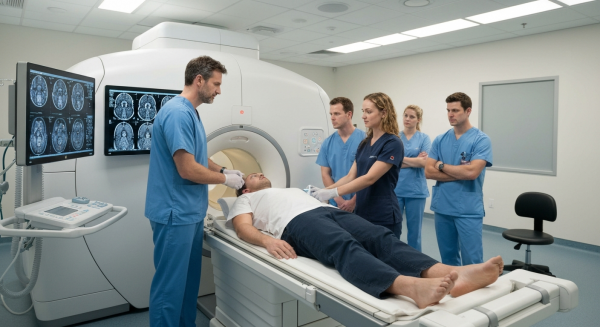
-- ContrastConnect has released a guide detailing decision authority and escalation paths for remote contrast coverage incidents, responding directly to the Centers for Medicare & Medicaid Services' permanent authorization of virtual direct supervision for contrast procedures.
More information is available at https://www.contrast-connect.com/blog-post/remote-contrast-coverage-decision-authority-escalation-paths-and-approval-structure
The guide's author explains that patient safety is predicated on compliance, and therefore, facilities must establish clear escalation protocols to meet and exceed federal standards. ContrastConnect recommends that structured incident response be treated as a regulatory mandate rather than as an optional operational enhancement.
Undefined escalation paths create documented patient safety risks and compliance failures, particularly in meeting The Joint Commission's National Patient Safety Goals standard NPSG 02.03.01 on timely communication of critical test results. ContrastConnect's operational data shows that inconsistent alert escalation in radiology leads to delayed responses to contrast reactions, although the first two minutes often determine patient outcomes. Before remote radiologists can direct care, onsite staff actions during this critical window require structured protocols that define who makes decisions, when escalation occurs, and how communication flows among technologists, remote physicians, and emergency services.
To meet this compliance gap, the ContrastConnect guide details a three-tier escalation structure. This framework assigns distinct, non-overlapping responsibilities across onsite technologists, remote radiologists, and emergency services. In addition, it establishes a zero-to-ten-minute response timeline with decision checkpoints at two, five, and ten minutes, clarifying when each role activates and what actions must occur at each stage.
According to the resource, CMS requires imaging centers billing Medicare to maintain audit-ready documentation verifying physician availability, supervision method, and real-time two-way audiovisual communication for every supervised exam. This compliance burden demands that administrators document the presence of remote supervision, the specific actions taken at each escalation stage, the timestamps of physician directives, and the patient's response to treatment. The guide clarifies what must be recorded during incidents, how documentation supports CMS audits, and which elements satisfy both ACR guidelines and federal billing requirements.
According to company operational metrics, ContrastConnect supervises more than 75,000 contrast exams monthly and manages over 130 contrast reactions each month, with documented zero missed responses. Radiologists on the platform handle five to ten reactions daily, providing clinical depth grounded in real-world incident management rather than theoretical frameworks.
For more details, visit https://www.contrast-connect.com/
Contact Info:
Name: Dor Shoshan
Email: Send Email
Organization: ContrastConnect
Address: Las vegas, Las Vegas, NV 89109, United States
Website: https://www.contrast-connect.com/
Source: PressCable
Release ID: 89197892
Should you come across any errors, concerns, or inconsistencies within this press release's content, we urge you to reach out without delay by contacting error@releasecontact.com (it is important to note that this email is the authorized channel for such matters, sending multiple emails to multiple addresses does not necessarily help expedite your request). Our committed team will promptly address your feedback within 8 hours and take appropriate measures to resolve any identified issues or guide you through the removal process. Providing accurate and dependable information remains our utmost priority.