SINGAPORE, SG / ACCESS Newswire / July 3, 2026 / In the crowded landscape of embodied AI, humanoid robotics developers are preoccupied with predicting the future. Everyone wants to define what the "right" path looks like, but few are looking in the rearview mirror. This lack of historical perspective has led to a persistent industry bottleneck: the market has plenty of impressive lab demos, but very few "blue-collar" humanoids ready to do actual, rugged field work.
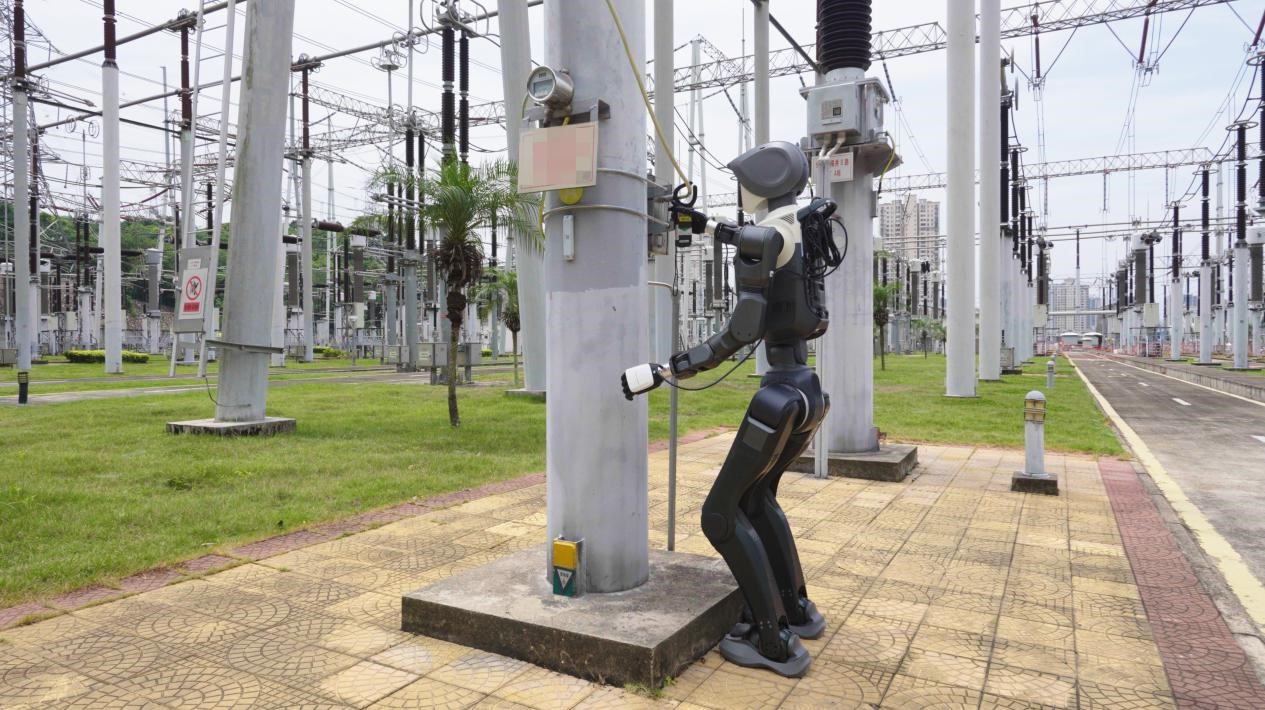
The newly updated DR02 humanoid robot by DEEP Robotics is a notable exception. Rather than launching just another experimental prototype into an already saturated market, the company is introducing a pragmatic, field-ready platform backed by a decade of industrial pedigree.
DEEP Robotics is not starting from scratch. Their quadrupedal "Jueying" and wheeled-legged "Lynx" platforms are already deployed across 45 overseas countries and regions, covering more than 1,200 unique industrial scenarios-ranging from high-voltage substations to disaster response. This operational footprint has yielded substantial commercial traction: according to Frost & Sullivan, DEEP Robotics ranked first globally in quadruped robot industry application revenue in 2025.
The company's strategic differentiator is simple yet formidable: reusability. Rather than re-learning complex operational environments, rebuilding client trust, or redefining engineering standards from scratch, DEEP Robotics has systematically ported a decade of field-proven "industrial-grade capability" directly into the dual-legged DR02, seamlessly closing the loop between navigation, physical manipulation, and commercial viability.
Scenario Reusability: Why Power Grids and Emergency Response are the True Starting Line
In the humanoid sector, developers often fall into the trap of "a hammer looking for a nail"-building a highly complex bipedal hardware platform first, and then searching for a viable business case.
DEEP Robotics operates in reverse, defining its hardware based on deep, pre-existing domain expertise. Choosing high-voltage substations as the primary deployment ground for the DR02 is not a play for short-term attention; it is a logical extension of the company's established footprint.
Since 2019, DEEP Robotics has collaborated with major global power grid operators to explore real-world robotic applications. By 2022, the company's X20 firefighting and rescue quadruped was already bridging the gap between advanced locomotion and hazardous scouting. More recently, in 2024, its utility inspection solutions were deployed in underground utility tunnels for Singapore's SP Group, with the first batch of the project's second phase delivered the following year.
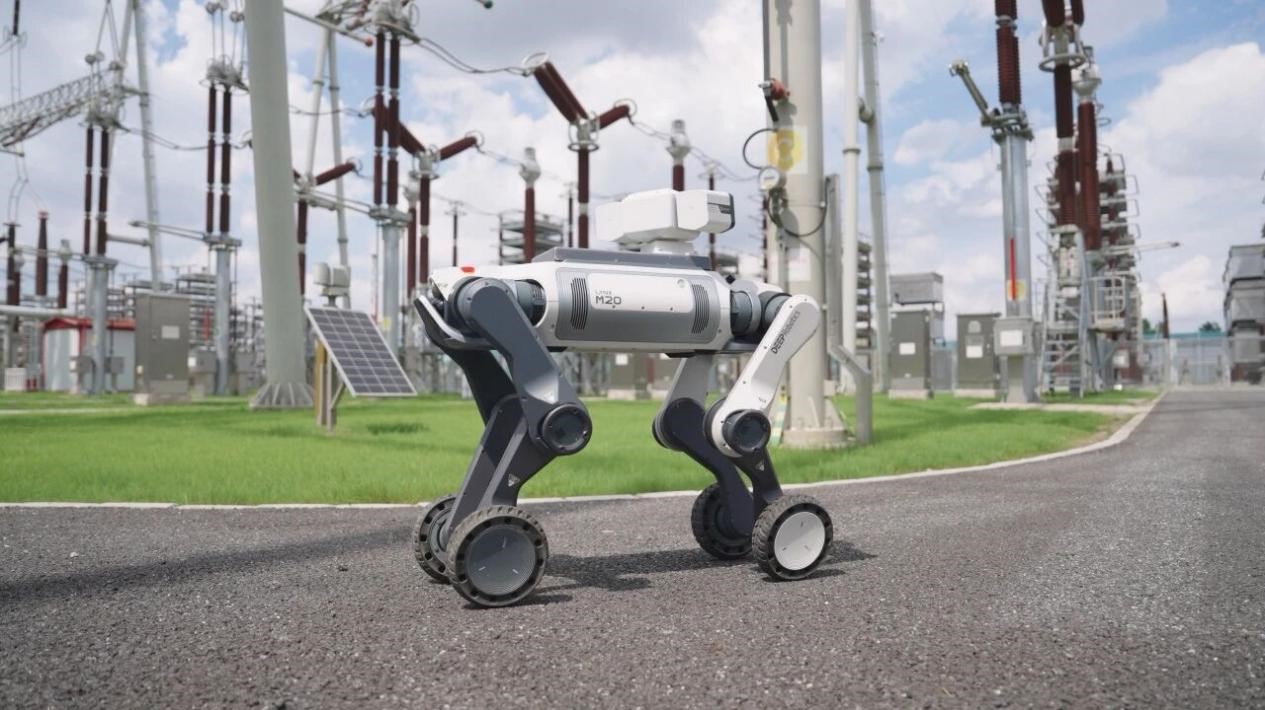
Through these harsh deployments, the engineering team gained invaluable, battle-tested knowledge. They understood the blind spots of inspection systems, the impact of high electromagnetic interference in substations, and the exact standardization of human operational workflows.
These facilities-ranging from 220kV substations and underground utility tunnels to heavy industrial steel plants-were originally built around human ergonomics. The heights of the cabinets, the positions of the manual switches, and the design of the grounding lines all match human proportions.
The immediate benefit of the DR02's humanoid form factor is that it eliminates the need to retrofit these existing environments. Standing at a height close to a standard adult male, the DR02 features 7 degrees of freedom (DOF) in each arm and 6-DOF dexterous hands. Combined with computer vision models and precision force control, it can locate switch positions, perform power-on and power-off operations, and clamp grounding cables to read electrical currents-all without modifying the facility's infrastructure.
This marks a profound shift from passive "inspection" to active "physical interaction." While a quadruped solves the problem of getting "eyes" into dangerous areas, a humanoid solves the problem of getting "hands" to do the actual work.
In outdoor emergency response, the same logic applies. The DR02 can carry equipment (such as dual fire extinguishers) across rugged terrain and steep slopes, dynamically planning its footsteps to clear obstacles. Where quadrupeds previously acted as scouts, the humanoid takes on physical intervention, creating a highly complementary robotic team.
Technical Reusability: Porting Rugged Reliability to Two Legs
The hardest part of humanoid robotics is not making them walk; it is making them survive. DEEP Robotics has systematically migrated its legacy of reliability engineering from its legged platforms to the DR02.
All-Weather Resilience: While most humanoids are optimized for climate-controlled indoor labs, the DR02 is the world's first full-size humanoid to achieve a full-body IP66 ingress protection rating. Operating reliably in temperatures ranging from -20°C to 55°C, it can transition seamlessly between freezing cold-storage facilities and high-heat industrial plants.
-
Systemic Locomotion Upgrades: Rather than focusing solely on basic walking, the DR02 pushes control boundaries across three vectors:
Whole-Body Coordination: The robot features advanced self-recovery capabilities, allowing it to stand up autonomously from a flat, prone position. Active waist joint control dynamically regulates the center of gravity during rapid turns or high-impact movements.
Dynamic Disturbance Rejection: The DR02 maintains a highly stable stance during deep squats or lateral high kicks. During testing, the robot successfully absorbed external disturbances (such as sudden water splashes) without breaking its operational sequence.
Natural Fluidity: The control system coordinates joint torques at microsecond intervals, eliminating the rigid, jerky movements typical of early-stage humanoids. This allows for fluid, biological motions, as demonstrated in the robot's public Tai Chi performances.
Perception-Control Loop: Real-time gait planning is closed via integrated LiDAR and vision systems, allowing the robot to actively climb stairs and bypass obstacles on the fly
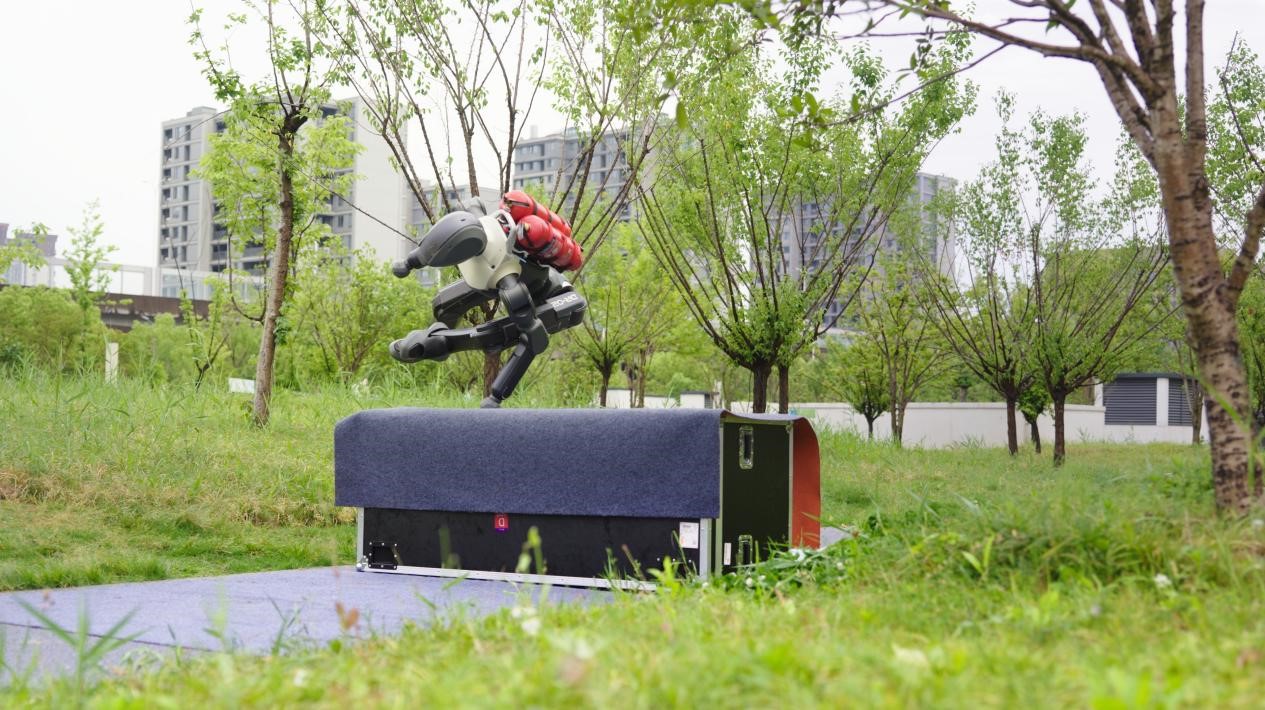
Pragmatic Industrial Engineering: Addressing the critical industrial pain point of downtime, the DR02 features a modular quick-swap design. Entire arm and leg assemblies can be swapped out on-site in a matter of hours, rather than days. Equipped with 275 TOPS of onboard computing power and multi-sensor fusion, the platform is designed to scale with future software updates.
Ultimately, DEEP Robotics is not building a reliability framework from scratch; it is migrating an engineering ecosystem already refined by real-world data across 500+ industrial clients.
The 'Tech for Good' Paradigm and the Commercial Loop
To transition from a tech novelty to a viable business, a humanoid must master three phases: navigation, manipulation, and commercialization.
While many startups struggle to bridge the gap between lab demonstrations and field deployment, DEEP Robotics has bypassed this bottleneck by leveraging its pre-existing commercial infrastructure. The DR02 does not need to build market trust from zero; it can immediately plug into the commercial channels and client networks established during the quadruped era.
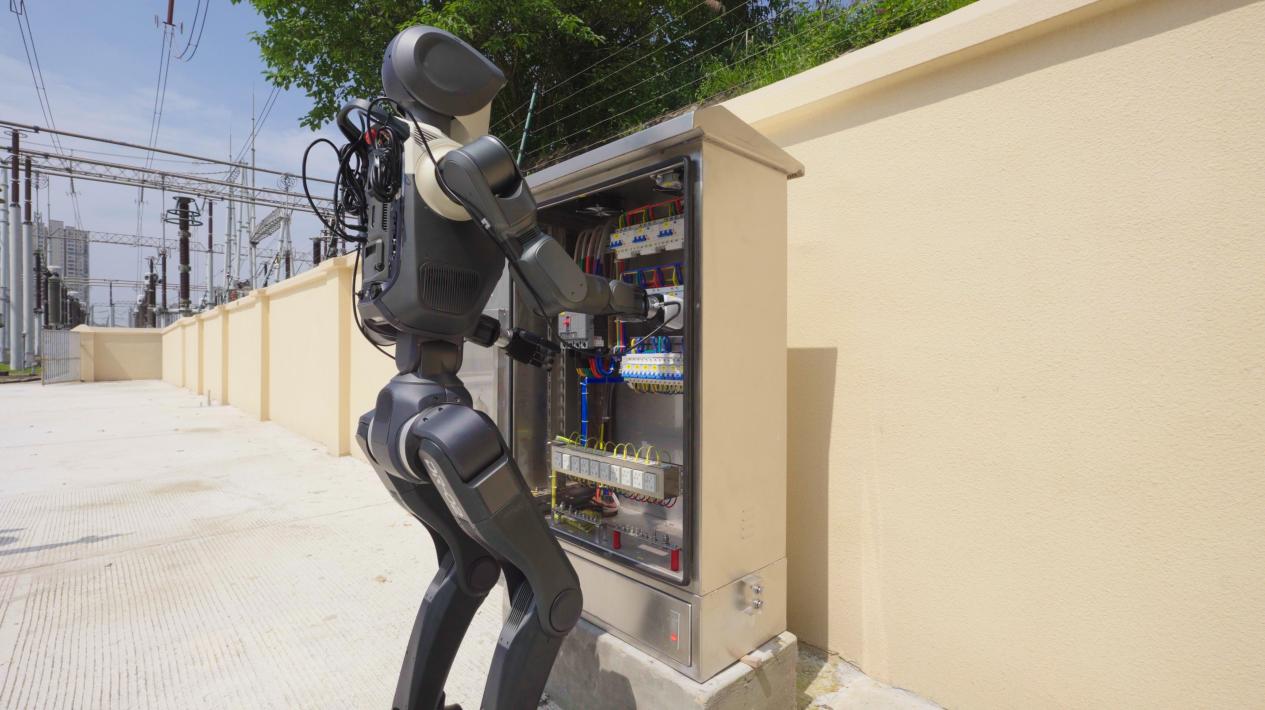
This pragmatic business model is guided by a broader philosophy. Rather than aiming to replace human labor entirely, the company focuses on the "3D" tasks-those that are Dull, Dirty, and Dangerous.
As DEEP Robotics Founder and CEO Zhu Qiuguo notes, the core mission of robotics is to "enhance and serve humans," stepping in to take over high-risk, repetitive tasks when humans are in harm's way. This explains why the company consistently deploys its systems in some of the most unforgiving, high-stress environments.
The humanoid race will not be won by the flashiest demo video, but by the platform that can safely and reliably take over the jobs humans cannot or should not do. By porting its battle-tested industrial blueprint to two legs, DEEP Robotics is quietly demonstrating what a pragmatic, scalable path to commercialization looks like.
Company: DEEP Robotics
Contact: Vivian Chen
Email: chenlingjia@deeprobotics.cn
Website: https://www.deeprobotics.cn/en
SOURCE: DEEP Robotics
View the original press release on ACCESS Newswire