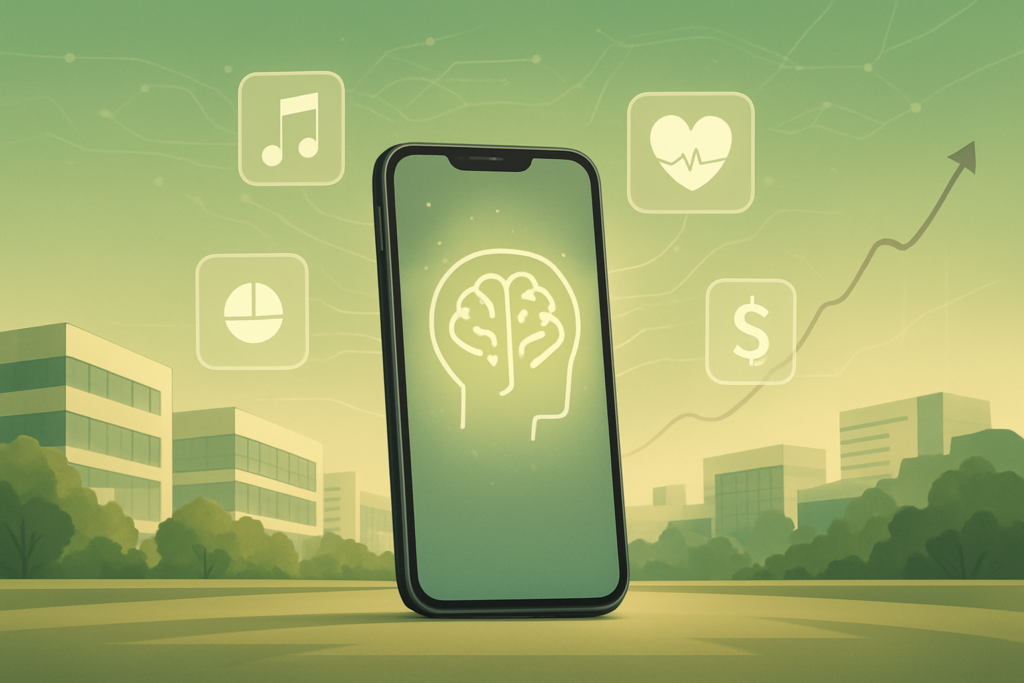
As of March 20, 2026, Apple Inc. (NASDAQ: AAPL) remains the quintessential benchmark for the global technology sector. Long defined by its hardware prowess, the Cupertino giant has spent the last 24 months navigating one of the most significant strategic pivots in its 50-year history: the transition from a device-centric company to an "Intelligence-as-a-Service" powerhouse. With a market capitalization hovering near the $3.8 trillion mark, Apple is currently at a critical crossroads. Investors are weighing the success of its "Apple Intelligence" rollout against mounting regulatory pressures in the United States and Europe, and a shifting leadership bench that marks the beginning of the post-Cook era.
Historical Background
Founded in a suburban garage in 1976 by Steve Jobs, Steve Wozniak, and Ronald Wayne, Apple’s trajectory has been defined by radical reinvention. After the early success of the Apple II and the revolutionary Macintosh, the company faced a near-collapse in the mid-1990s before the triumphant return of Steve Jobs in 1997. The ensuing "Golden Age" saw the launch of the iMac, iPod, and the 2007 debut of the iPhone—the device that fundamentally changed global communication and commerce.
Under the leadership of Tim Cook, who took the helm in 2011, Apple transformed from a product visionary into an operational juggernaut. The last decade has been characterized by the massive expansion of the Services segment and the successful vertical integration of silicon through the "M-series" and "A-series" chips, decoupling Apple's performance from traditional component cycles.
Business Model
Apple’s business model is a masterclass in ecosystem "stickiness." It relies on a hardware-software-services flywheel where high-end devices serve as entry points into a high-margin services environment.
- iPhone: Remains the primary revenue driver, accounting for roughly 50% of total sales. The iPhone 17 series, launched in late 2025, has been the focal point of the recent "AI Supercycle."
- Services: This segment—including the App Store, iCloud+, Apple Music, Apple Pay, and Apple TV+—has become the company’s most profitable engine. In late 2025, Services officially overtook the iPhone as the largest contributor to Apple's total gross profit.
- Wearables, Home, and Accessories: Includes the Apple Watch, AirPods, and the Vision Pro. While the Apple Watch dominates the wrist, this segment has seen recent volatility as the VR/AR market matures.
- Mac and iPad: Driven by proprietary Apple Silicon, these segments cater to professional and educational markets, maintaining steady, premium-tier market share.
Stock Performance Overview
Over the last decade, AAPL has been a cornerstone of the modern equity portfolio.
- 10-Year Horizon: Since 2016, the stock has grown more than 1,000% (split-adjusted), driven by the transition to services and aggressive share buybacks.
- 5-Year Horizon: The stock navigated the pandemic-era boom, a 2022 inflationary correction, and a massive 2023-2024 recovery.
- 1-Year Horizon: Shares hit an all-time high of $288.62 in December 2025. As of March 20, 2026, the stock has consolidated around the $252 level, reflecting a 12% gain over the past 12 months as the market digests the spring 2026 Siri AI overhaul.
Financial Performance
Apple’s fiscal year 2025 results, concluded recently, showcased the company’s immense pricing power.
- Revenue: Reached a record $416.16 billion, up 6.4% year-over-year.
- Net Income: Hit $112.01 billion, a nearly 20% increase from the previous year, fueled by high-margin software sales.
- Margins: Gross margins reached an all-time high of 46.9%.
- Cash Position: Apple continues to generate staggering free cash flow, maintaining a "net cash neutral" goal while returning billions to shareholders via a dividend that has seen 13 consecutive years of increases and a massive $110 billion share repurchase program authorized in 2025.
Leadership and Management
Apple is currently undergoing its most significant executive transition in two decades. While Tim Cook remains CEO, the "Next Gen" leadership team is now firmly in place:
- Kevan Parekh (CFO): Succeeded Luca Maestri on January 1, 2025, bringing a focus on capital allocation efficiency.
- Sabih Khan (COO): Assumed the role in mid-2025, managing the complex diversification of supply chains into India and Vietnam.
- Amar Subramanya (VP of AI): A key hire from the broader tech industry, he now leads the "Apple Intelligence" division following the retirement of John Giannandrea.
- Jennifer Newstead (General Counsel): Joined in early 2026 to navigate the company's increasingly complex global legal battles.
Products, Services, and Innovations
The focus of 2026 is "Personal Intelligence."
- Apple Intelligence: The highly anticipated "LLM Siri" overhaul, which allows for fully conversational and multi-step tasks across apps, is rolling out this month. This marks Apple's major move to monetize generative AI through device upgrades rather than subscription fees.
- Vision Pro & "Vision Air": After sluggish sales of the $3,499 Vision Pro, Apple has shifted its roadmap. Reports indicate a "Vision Air" headset priced near $1,800 is in late-stage development for 2027.
- Smart Glasses: Rumors of "Apple Glasses"—a lightweight, audio-and-camera-focused wearable similar to Meta (NASDAQ: META) Ray-Bans—have intensified, with production expected to start in late 2026.
Competitive Landscape
Apple faces a multi-front war:
- The AI Race: Google (NASDAQ: GOOGL) and Microsoft (NASDAQ: MSFT) have a lead in cloud-based LLMs, but Apple’s advantage lies in its "Edge AI" (on-device processing) and its 2.2 billion active device install base.
- China: Huawei has seen a massive resurgence in the high-end market, challenging the iPhone’s dominance in its most important international market.
- Premium Smartphones: Samsung (OTC: SSNLF) continues to innovate in foldables, a category Apple has yet to enter, though rumors of a "Foldable iPhone" persist for 2027.
Industry and Market Trends
Three macro trends are currently shaping Apple's environment:
- Edge AI: The shift from processing AI in the cloud to processing on the device itself. Apple’s NPU (Neural Processing Unit) lead in its chips gives it a structural advantage here.
- Supply Chain Decoupling: The "China Plus One" strategy is in full effect, with India now accounting for nearly 18% of iPhone production as of early 2026.
- Sustainability: Apple’s "2030 Carbon Neutral" goal is a major driver of R&D, influencing everything from materials (no leather) to supply chain logistics.
Risks and Challenges
- Antitrust Litigation: The US Department of Justice’s landmark lawsuit alleging an illegal smartphone monopoly is scheduled for trial in early 2026. An adverse ruling could force Apple to open iMessage or the App Store further.
- AI Execution: If the 2026 Siri overhaul fails to meet high consumer expectations, the expected "Supercycle" for the iPhone 18 could stall.
- China Exposure: Despite diversification, Apple remains heavily reliant on Chinese manufacturing and consumer demand, both of which are subject to geopolitical tensions.
Opportunities and Catalysts
- Siri Monetization: If Apple Intelligence becomes indispensable, it could drive the fastest replacement cycle in iPhone history.
- Health Tech: Deepening integration of non-invasive glucose monitoring and advanced sleep apnea detection in the Apple Watch (Series 12) represents a multi-billion dollar healthcare opportunity.
- Advertising: Apple’s "Search Ads" business in the App Store continues to grow, providing a high-margin revenue stream that leverages its first-party data.
Investor Sentiment and Analyst Coverage
Wall Street remains "Modestly Bullish" on AAPL. The consensus price target currently sits near $294.
- Bulls point to the Services growth and the "sticky" ecosystem that makes it difficult for users to leave.
- Bears highlight the "AI lag" compared to Microsoft and the potential for a "lost decade" in the Vision Pro segment.
- Institutional Holdings: Apple remains the top holding for many index and mutual funds, though some hedge funds have trimmed positions in early 2026 due to valuation concerns relative to growth.
Regulatory, Policy, and Geopolitical Factors
The regulatory environment is Apple’s greatest headwind.
- EU Digital Markets Act (DMA): Apple has been forced to allow third-party app stores and alternative payment methods in Europe. While the financial impact has been manageable so far, the "contagion" of similar laws to Japan and the UK is a concern.
- India: Local regulators are scrutinizing App Store fees, mirroring the EU’s concerns, creating friction in Apple’s fastest-growing market.
Conclusion
As of March 20, 2026, Apple Inc. is no longer just a smartphone company; it is a sprawling digital utility. While the "hardware-first" era is maturing, the "Intelligence" era offers a massive new frontier for growth. Investors must balance the company’s unparalleled financial strength and ecosystem moat against the looming specter of government-mandated "unbundling." For the long-term investor, Apple’s ability to turn "privacy" into a premium product feature remains its most durable competitive advantage. The coming 12 months, headlined by the real-world performance of its AI Siri overhaul and the outcome of its DOJ trial, will likely determine if Apple can maintain its title as the world's most valuable company.
This content is intended for informational purposes only and is not financial advice.