Across cafes, restaurants, and catering operations,PLAhas become one of the most popular plant-based alternatives to traditional single-use plastic. You see it in cold cups, lids, straws, takeout containers, and disposable cutlery every day. But while PLA is widely used, it remains one of the most misunderstood materials in sustainable foodservice packaging.Many customers and business owners assume that because PLA comes from plants, it will biodegrade anywhere. That’s simply not true. Compostable performance depends on strict testing, controlled environmental conditions, and third-party certification—not marketing language. Understanding these certifications is essential for restaurant owners, operators, and buyers who want to avoid greenwashing, stay compliant, and deliver on genuine sustainability promises.
TABLE OF CONTENTS
- 1.What Are PLA Certification Standards?
- 2.What Makes a PLA Product Truly Compostable?
- 3.Key PLA Certification Standards You Need to Know
- 4.Industrial vs. Home Composting: What Restaurants Must Know
- 5.PFAS-Free Certification & Food Contact Safety
- 6.How to Verify PLA Certifications Before Buying
- 7.How PLA Certifications Apply to Everyday Compostable Products
- 8.Custome Your Compostable Packaging with MVIECOPACK
What Are PLA Certification Standards?
PLA certification standards are independent, science-backed testing protocols that verify whether aPLA productwill fully break down safely and completely under defined composting conditions within a set period. These certifications exist to protect businesses from misleading “compostable” claims that lack real-world testing evidence.PLA (polylactic acid) is a bio-based polymer made from renewable materials like corn starch, cassava, or sugarcane. But being plant-based does not automatically make a product certified compostable. A product must pass rigorous laboratory testing by an accredited third party to earn that label.For restaurants, certifications provide legally defensible, verifiable proof that your disposables will break down in commercial composting systems. TheFTC Green Guidesclearly state that terms like “compostable” require reliable scientific evidence—and third-party certification seals are how you prove it.
What Makes a PLA Product Truly Compostable?
A PLA product is only truly compostable if it has been tested and certified to meet strict international standards for disintegration, biodegradation, and eco-toxicity. A generic “compostable” label with no certification is just a marketing claim, not a verified fact.To earn certified compostable status, a PLA product must meet these requirements:
- Controlled composting conditions: Breakdown occurs at specified temperatures and moisture levels (industrial or home).
- Safe material formulation: No toxic additives, heavy metals, or harmful residues.
- Third-party testing: Independent labs verify complete biodegradation and disintegration.
Standard PLA requires the high heat of industrial composting (55–60°C) to decompose. It will not break down in standard backyard compost bins. Some specialized PLA formulas use enzyme technology to enable breakdown at ambient temperatures (20–30°C), making home compostability possible—but this is not true for most PLA products.
Key PLA Certification Standards You Need to Know BPI Certification (North America)
BPI (Biodegradable Products Institute) is the leading third-party certifier for compostable products in North America, with more than 51,000 certified items. The BPI seal confirms a product meets ASTM D6400 standards and will break down safely in commercial composting facilities.BPI certification requires:
- Full biodegradation and disintegration
- No eco-toxicity
- Safe, residue-free compost
- Publicly searchable certification records
TÜV Austria OK Compost
TÜV Austria is the global leader in bioplastics certification, offering two distinct labels:
- OK Compost INDUSTRIAL: For high-heat commercial composting (55–60°C).
- OK Compost HOME: For ambient-temperature home composting (20–30°C).
Home compost certification is extremely rare for standard PLA, as it requires special enzyme-enhanced formulation.
ASTM D6400 & ASTM D6868
These are testing standards, not certifications.
- ASTM D6400: Governs compostable plastics for industrial systems.
- ASTM D6868: Covers compostable coatings and films.
Passing these tests is required for certification, but test results alone are not equivalent to BPI or TÜV certification.
EN 13432 (European Union)
EN 13432 is the primary European standard for industrial compostability, mirroring ASTM D6400. It is required for most compostable food packaging sold in the EU market.
Industrial vs. Home Composting: What Restaurants Must Know
The single biggest mistake businesses make is assuming all compostable products work in any system. Industrial and home composting are completely different environments.
|
Factor |
Industrial Composting |
Home Composting |
| Temperature | 55–60°C (controlled high heat) | 20–30°C (ambient) |
| System | Managed commercial facilities | Backyard bins, unregulated |
| PLA Compatibility | Standard PLA works | Only enzyme-modified PLA works |
| Certifications | BPI, OK Compost INDUSTRIAL, ASTM D6400, EN 13432 | OK Compost HOME only |
Standard PLA will not decompose in home compost. Always match certification to your local waste infrastructure.
PFAS-Free Certification & Food Contact Safety
Compostability certifications do not test for food-contact safety. PFAS (per- and polyfluoroalkyl substances) are harmful chemicals often found in food packaging—and they require separate third-party testing.For restaurant use, always confirm:
- Third-party PFAS-free verification
- Lab test reports (not just self-claims)
- Compliance with regional food-contact regulations
A compostable label does not guarantee a product is safe for food service.
How to Verify PLA Certifications Before Buying
Avoid greenwashing and ensure compliance with these steps:
- Search the BPI public database to confirm valid certification.
- Ask for certificate numbers from BPI or TÜV Austria.
- Check for official logos on packaging and spec sheets.
- Request third-party lab reports, including PFAS testing.
- Reject vague claims like “plant-based” or “natural” without certification.
Legitimate suppliers will share full documentation. Those who cannot are a red flag.
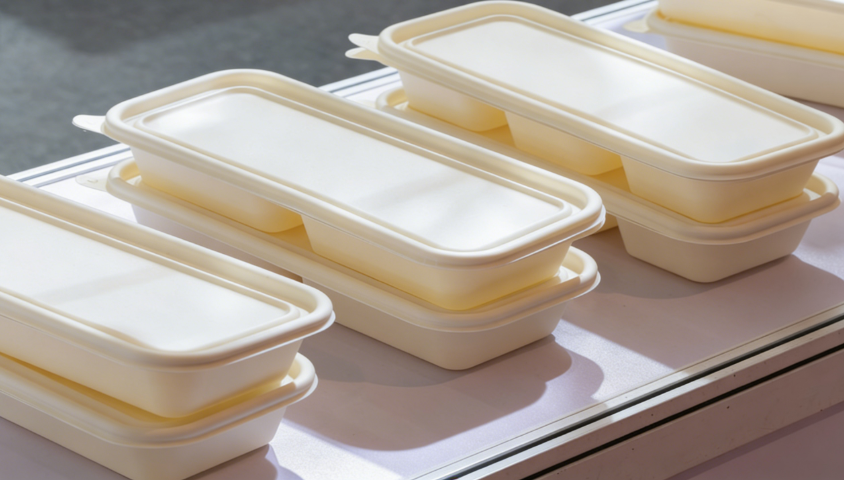
How PLA Certifications Apply to Everyday Compostable ProductsIf you’re choosing compostable items for your cafe, event, or business, knowing which certifications match which products makes everything simpler — and ensures your eco-friendly choices actually work as intended. Here’s how real-world wrapped cutlery and tableware align with common PLA certifications:Individually Wrapped Compostable Cutlery: Our most popular wrapped utensil sets are BPI-certified and meet ASTM D6400, meaning they break down safely in industrial composting facilities. Perfect for catering, parties, and foodservice, the sealed wrapping stays hygienic while supporting your zero-waste goals.Plant-Based PLA Cold Cups: Made from standard PLA, these clear cups carry BPI certification and are suitable for industrial composting. They work beautifully for iced drinks, smoothies, and cold beverages without sacrificing performance or sustainability. Compostable Wrapped Straws: Designed for greater flexibility, our compostable straws come with both BPI certification and TÜV Austria OK Compost Industrial approval, making them widely accepted in commercial compost systems. Eco-Friendly Takeaway Containers: Built for durability and safety, our compostable bowls and containers use certified PLA materials and meet industrial compost standards, so you can serve meals confidently without single-use plastic. When you match certifications to real products, you’re not just “going green” — you’re making choices that actually break down, reduce waste, and fit naturally into your operation.Custome Your Compostable Packaging with MVIECOPACK
PLA is a high-value solution for reducing single-use plastic in food service—but only when paired with valid third-party certifications. Our product owne Certifications like BPI, TÜV Austria OK Compost, ASTM D6400, and EN 13432 turn sustainability claims into measurable, compliant action. For restaurant owners, the goal isn’t just to use compostable packaging—it’s to use packaging that actually works as promised, supports your waste diversion goals, and earns customer trust.
Media Contact
Company Name: MVI stands
Email: Send Email
Country: China
Website: https://www.mviecopack.com/