I am no spring chicken when it comes to market analysis and experience operating with bulls, bears, and pigs. However, I am a chicken when it comes to one key aspect of my investment process. And it has been that way for decades, even when I had a lot less to lose. I’m a defense-first investor.
If that makes me a chicken, I will wear it proudly. Because, as I see it, investing is much more about extending beyond what you make in the working world, plus other sources of income (real estate investments, a business you run, inheritance, etc.).
Investing, to me, has never been a tool to become wealthy or to get rich quickly. It is to stay wealthy slowly. And maybe we should even change “wealthy” to “solvent,” given the percentage of investors using margin and incurring other types of bets in their financial lives.
Stocks, exchange-traded funds (ETFs), and other investment vehicles are simply tools we can use to get what we want out of the money we have. But they don’t have to be. You can use investments to accomplish something akin to betting on sports. But if that’s your goal, this article won’t help you much. It will bore you.
Because to lead with risk management in a story about investing is about as out of touch with the pulse of today’s mainstream investor as any I can think of. And that is precisely my point here. This is a great time to be in the minority when it comes to defending, not chasing.
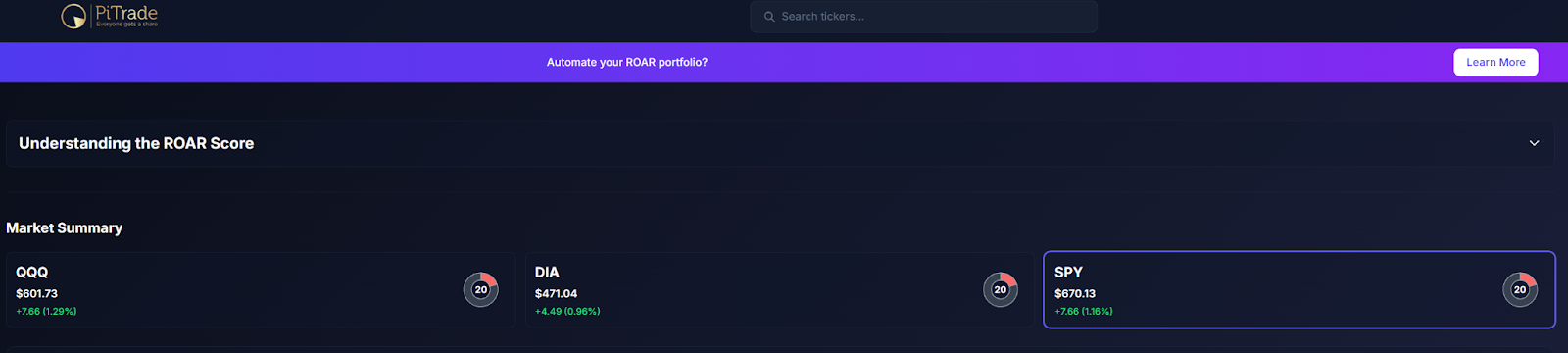
I do not know what the market’s next major turn will be — only that it is more likely to be down than up. That’s based on my ROAR score analysis of the major indexes, which as of Monday afternoon were all in red territory, with scores of 20. That’s on a 100-point scale and indicates a higher-than-normal risk level.
It is one thing to want to invest in a way that balances defense along with offense. It is quite another to even know where to start. To help investors get out of the starting gate, I went back through my decades of being a practitioner and writer and put together my own top-10 list. Here it is.
Top 10 Ways to Adopt a Risk Management Mindset
- Prioritize avoiding big loss (ABL): The primary goal of risk management is to eliminate large drawdowns, which are the biggest threat to an investor's lifestyle and long-term success.
- Adopt an adaptive mindset: Investors must realize that markets evolve; assuming that what worked in the past will work now is a mistake.
- Use ETFs as tactical tools: ETFs should be viewed as a flexible toolbox for portfolio construction, allowing investors to slice and dice the market to exploit inefficiencies and hedge risks.
- Balance offense and defense: Successful investing requires a tactical combination of aggressive growth pursuits and defensive maneuvers rather than just "making picks."
- Embrace humility over arrogance: Effective risk management requires the humility to admit mistakes, learn from market history, and distinguish between personal genius and a simple bull market.
- Ignore Wall Street noise: Factors like the Fed, Congress, and price-to-earnings (P/E) ratios are often less important than maintaining a systematic, disciplined investment process.
- Focus on the reward-risk tradeoff: Risk should be managed actively first. Once risk is controlled, the secondary goal is to make as much profit as possible.
- Implement a "depth chart" strategy: Manage a portfolio like a pro sports team by using a depth chart to rank ETFs as very strong, average, or weak based on current market conditions.
- Redefine traditional concepts: Modern markets require a new understanding of outdated concepts. For example, trading traditional risk tolerance for a personal "volatility comfort zone."
- Preparation over prediction: Since risk exists at all times, even if it doesn't always result in immediate loss, it is better to be prepared for any market environment than to watch a retirement fund collapse just before it is needed.
After the historically strong stock market environment we’ve lived through, that means the transition to a not-so-happy period could be more sudden than many realize. And it can last longer, too.
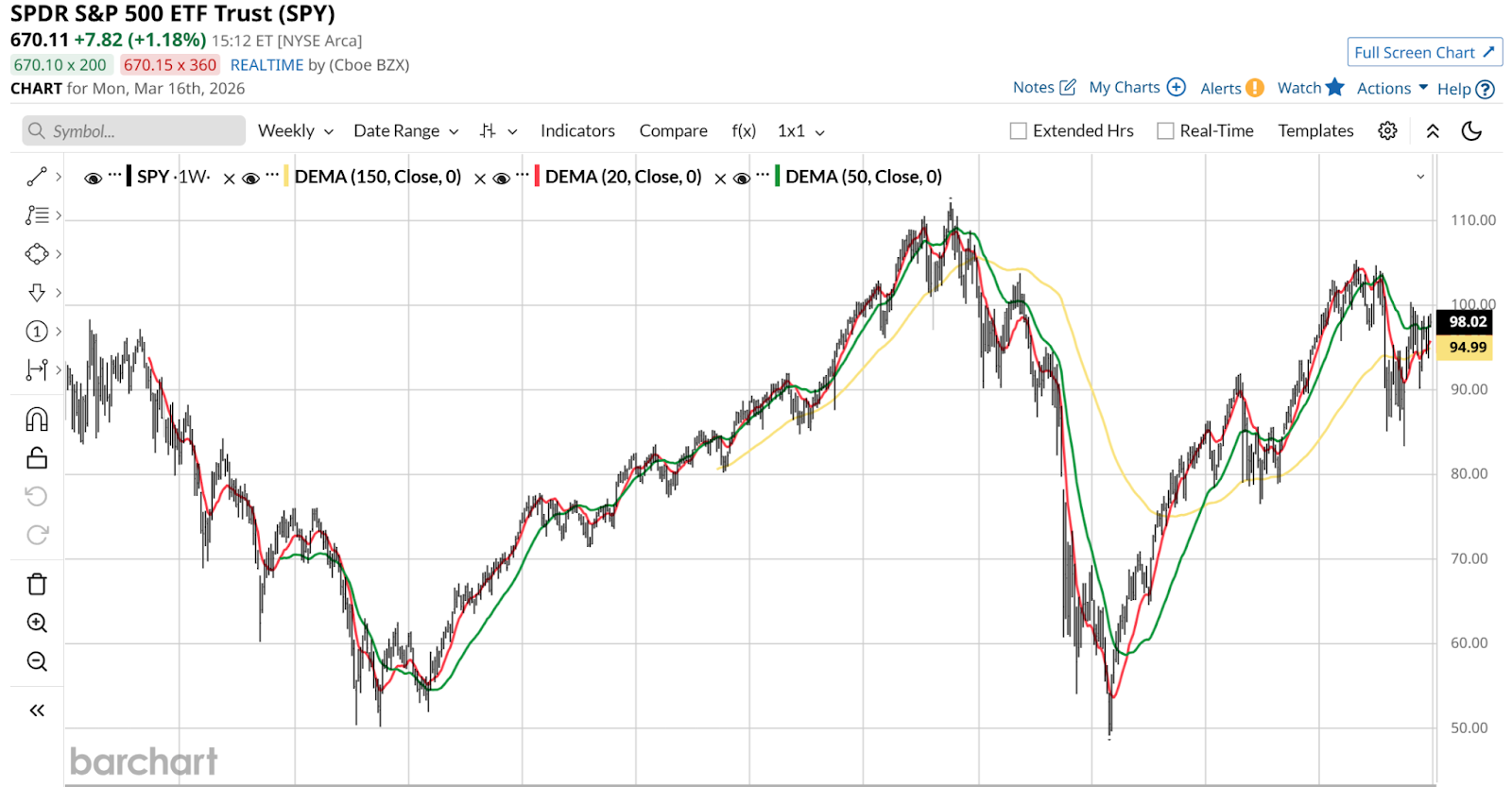
That was the case when the dot-com bubble burst in early 2000. As we see here, the SPDR S&P 500 ETF Trust (SPY) ETF traded at the same level at the end of 2011, a full 12 years later! Twelve years of nothing can set a plan back quite a ways.
So when it comes to risk management, being proactive in learning about it is much better than scrambling when the masses do. That is, when the fire is already burning up and down Wall Street.
Rob Isbitts created the ROAR Score, based on his 40+ years of technical analysis experience. ROAR helps DIY investors manage risk and create their own portfolios. For Rob's written research, check out ETFYourself.com.
On the date of publication, Rob Isbitts did not have (either directly or indirectly) positions in any of the securities mentioned in this article. All information and data in this article is solely for informational purposes. For more information please view the Barchart Disclosure Policy here.
More news from Barchart
- My Top 10 Ways to Adopt a Risk Management Mindset — While It Still Matters
- Stock Index Futures Muted as Oil Prices Resume Advance After Iran Strikes, FOMC Meeting in Focus
- Stocks Set to Open Higher as Bond Yields Fall, Fed Meeting and Middle East Conflict in Focus
- Iran War, Fed Conundrum and Other Key Things to Watch this Week