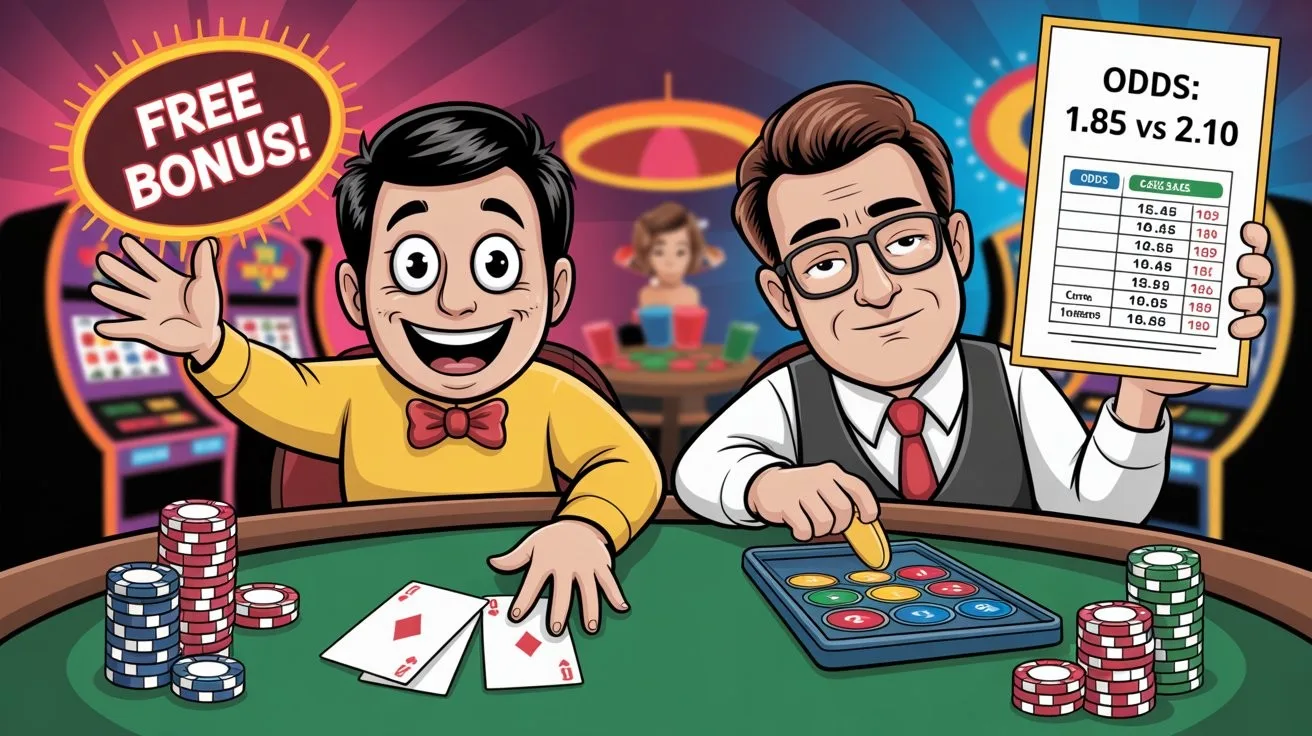
From the outside, betting looks simple: place a wager, hope for a win, collect a payout. Online platforms amplify that simplicity with bright offers and generous-looking bonuses designed to draw attention fast. For many casual players, those incentives shape where and how they bet.
But experienced bettors operate under a different logic. Over time, they learn that bonuses don’t change outcomes – pricing does. And in betting, pricing is expressed through odds.
The Gap Between How Betting Is Marketed and How It Works
Betting promotions are designed to feel like value. Extra funds, matched deposits, and “risk-free” bets suggest an advantage before the first wager is even placed. In reality, these offers sit on top of the same betting markets everyone else is using.
Odds, by contrast, are not marketing tools. They are pricing mechanisms. Each set of odds represents how likely an outcome is believed to be, adjusted for the bookmaker’s margin. That margin – not the bonus – is where long-term cost or value is determined.
This disconnect between perception and reality is similar to what StreetInsider often reports in financial markets: incentives influence participation, but price determines performance.
Where Experienced Bettors Actually Start Their Evaluation
Pricing Comes First, Everything Else Follows
When seasoned bettors assess a platform, the first question isn’t “What’s the bonus?” It’s “How sharp are the odds?” Competitive pricing across markets signals efficiency, liquidity, and lower hidden costs.
This is why bettors evaluating platforms – including when accessing markets through a goldbet casino login – typically review odds consistency before even looking at promotional terms. A strong bonus attached to weak pricing simply increases exposure without improving probability.
In other words, experienced bettors prefer a smaller edge applied consistently over a larger incentive that disappears after conditions are met.
Odds as a Measurement Tool, Not a Guess
Odds convert uncertainty into numbers. They reflect probability, market sentiment, and risk allocation. Understanding odds allows bettors to quantify value instead of reacting emotionally.
This principle is identical to how traders evaluate assets: entry incentives may attract attention, but the price determines whether a position makes sense. As Investopedia explains, odds translate probability into potential return, forming the mathematical foundation of betting decisions.
Bonuses do not affect probability. They simply alter how much money is temporarily in play.
Why Bonuses Often Distort Decision-Making
Bonuses introduce constraints: wagering requirements, minimum odds, limited markets, and expiration dates. These conditions subtly push bettors into placing wagers they might otherwise skip.
From a risk perspective, this is problematic. Forced volume increases variance. Time pressure reduces selectivity. Restrictions limit strategic flexibility.
Experienced bettors recognize this pattern early. Rather than allowing bonuses to dictate behavior, they structure bets around value opportunities – even if that means declining promotions entirely.
StreetInsider has explored similar dynamics in investing, where incentives can encourage overtrading or poor timing. Betting psychology follows the same rules.
Expected Value: The Quiet Metric Behind Every Decision
What separates experienced bettors from casual ones is not prediction accuracy – it’s how outcomes are evaluated.
Professionals think in terms of expected value (EV). A wager is attractive only if the odds offered are better than the true probability of the outcome. If they aren’t, no bonus can justify the bet.
This mindset accepts short-term losses as part of a long-term strategy. It also explains why experienced bettors appear indifferent to promotions: EV compounds, bonuses do not.
Line Movement and Market Awareness
Odds are not static. They move as information enters the market – injuries, weather, lineup changes, betting volume. Experienced bettors monitor these movements closely.
Spotting mispriced odds before correction is where real opportunity lies. This behavior mirrors financial arbitrage, where timing and price inefficiencies matter more than incentives.
Bonuses, by comparison, are predictable. They offer no informational advantage and do not respond to market signals.
Psychological Discipline Over Excitement
Bonuses are emotional by design. They trigger urgency, excitement, and a sense of advantage. Odds require patience, calculation, and restraint.
Experienced bettors work to eliminate cognitive biases such as the gambler’s fallacy – the belief that outcomes “even out” over time. Probability doesn’t remember past results, and odds don’t reward emotional decisions.
This discipline is learned through experience – often after realizing that bonuses encourage behavior that undermines long-term performance.
The Long View: Why Odds Win Every Time
Over hundreds or thousands of bets, small differences in odds have a dramatic impact. Better pricing means higher payouts on wins and smaller losses on misses. No bonus can replicate that effect consistently.
This is why professional bettors gravitate toward platforms known for tight margins rather than aggressive promotions. In betting, as in markets, efficiency beats spectacle.
Conclusion
Bonuses make betting louder. Odds make it smarter.
Experienced bettors understand that lasting success doesn’t come from chasing offers, but from understanding pricing, probability, and discipline. They treat betting as a market – not a game – and make decisions accordingly.
In the end, the difference isn’t about how much extra money you’re offered. It’s about how well the price reflects reality.