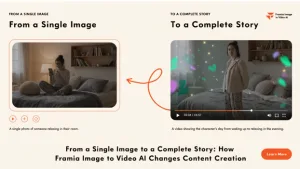
Every memorable video starts with an idea. The challenge has always been turning that idea into something people want to watch. Traditional video production often requires cameras, editing software, motion graphics, and countless hours of work before the final result is ready.
Modern image to video AI technology allows creators to transform a single image into an engaging video with realistic movement, cinematic effects, and dynamic scenes. Instead of spending hours editing every frame, creators can focus on developing better ideas while artificial intelligence handles much of the technical work.
This shift is changing how businesses, marketers, educators, and creators produce visual content. Rather than replacing creativity, AI is giving people more freedom to experiment, publish faster, and reach audiences with compelling videos. Among the newest platforms driving this change, Framia has become a trusted choice for creators looking for a simple yet powerful way to generate professional-quality AI videos.
Every Great Video Begins with One Strong Visual
Many successful marketing campaigns begin with a single photograph, illustration, product image, or concept sketch. In the past, transforming these visuals into videos meant rebuilding everything inside editing software.
nstead of treating an image as the final product, creators can now use it as the starting point for an entirely new visual experience. Smooth camera movement, animated environments, and realistic transitions can all be generated automatically, giving static visuals a fresh level of impact.
For brands that already have thousands of marketing images, this opens the door to creating new content without starting from scratch.
Building Content at the Speed Modern Marketing Demands
Digital marketing moves quickly. A product launch, seasonal campaign, or trending topic can appear and disappear within days. Waiting a week to finish a promotional video often means missing valuable opportunities.
This is one reason image to video AI has become an essential creative tool. Instead of slowing down production with complicated editing workflows, AI helps teams generate videos while ideas are still fresh. Businesses can respond to market trends more quickly, publish consistently, and keep audiences engaged without dramatically increasing production costs.
For growing companies, this ability to scale content creation efficiently has become a significant competitive advantage.
Better Visual Storytelling Without Technical Barriers
Storytelling remains one of the most powerful ways to connect with an audience. However, creating visually engaging stories has traditionally required advanced editing skills. Platforms like Framia simplify that process by allowing creators to describe the type of motion they want while AI generates the visual transitions and movement automatically.
Instead of learning complex animation techniques, creators can concentrate on the message they want to communicate. This makes professional-quality storytelling accessible to freelancers, entrepreneurs, educators, and small businesses that previously lacked dedicated video production resources.
One Platform, Many Creative Possibilities
One reason image to video AI continues to gain popularity is its flexibility. The same technology can support many different industries and creative projects. Online retailers can transform product photos into promotional videos. Travel companies can animate destination photography for advertising campaigns.
Architects can present design concepts with dynamic visual movement. Teachers can make educational presentations more engaging. Content creators can develop eye-catching videos for social media using existing artwork or photography. Instead of investing in multiple production tools, creators can use a single AI-powered workflow across different project types.
Why Framia Fits Modern Creative Workflows
A good AI platform should improve productivity without making creativity more complicated. Framia follows this principle by offering a straightforward workflow from beginning to end.
Uploading an image, describing the desired result, and generating a finished video takes only a fraction of the time required by traditional editing software.
The platform also produces smooth animations that feel natural rather than distracting. This consistency allows creators to focus on publishing content instead of repeatedly correcting AI-generated results. For professionals working under tight deadlines, this reliability is just as valuable as speed.
Creativity Grows When Repetitive Work Disappears
Video editing involves many repetitive tasks.
- Adjusting timelines.
- Creating transitions.
- Managing camera movement.
- Rendering multiple versions.
While these steps are necessary, they often consume time that could be spent developing stronger ideas.
Image to video AI changes this balance. By automating technical processes, creators have more freedom to experiment with different concepts, visual styles, and storytelling approaches.

Instead of producing one version of a project, they can quickly test multiple creative directions before choosing the strongest result.
Turning Existing Images into Long-Term Creative Assets
Many businesses already own a large collection of visual content. Product photos, brand graphics, blog illustrations, event photography, and promotional banners often remain unused after their original campaign ends. With image to video AI, these assets gain a second life.
Instead of designing new visuals for every campaign, creators can transform existing images into engaging videos that feel fresh and modern. A single product image can become a promotional advertisement, while a travel photograph can evolve into a short cinematic clip for social media.
This approach helps businesses maximize the value of their existing content while reducing production costs and saving valuable time.
Delivering Better Experiences Across Every Platform
Every digital platform has its own audience, but one thing remains consistent—video attracts attention.
Whether content is published on YouTube, Instagram, TikTok, Facebook, LinkedIn, or a company website, motion naturally captures interest more effectively than static visuals.
Rather than creating separate videos for every platform, creators can use Framia to produce versatile content that can be adapted for different formats and audiences.
This flexibility allows brands to maintain a consistent visual identity while reaching customers wherever they spend their time online.
Small Improvements That Make a Big Difference
Although AI automates much of the production process, a few simple habits can noticeably improve the final result.
- Choose high-resolution images with clear subjects whenever possible.
- Keep backgrounds clean if the main focus should stand out.
- Write prompts that clearly describe the type of movement and atmosphere you want to create.
- Generate more than one version before selecting the final video.
- Review every output carefully to ensure it matches your brand style and messaging.
These small adjustments help the AI produce smoother, more professional-looking videos.
Why Framia Continues to Stand Out
As more AI video generators become available, many focus on adding numerous features. While extra tools can be useful, they often make the creative process more complicated. Framia takes a different approach.
The platform emphasizes simplicity without sacrificing quality. Its workflow is easy to understand, making it accessible for first-time users while still delivering results suitable for professional projects. Video generation is fast, animations remain consistent, and the overall experience encourages creativity rather than slowing it down with unnecessary technical steps.
For businesses that produce content regularly, these advantages translate into higher productivity and more efficient marketing campaigns.
Supporting Every Stage of Content Creation
Image to video AI is no longer limited to a single type of creator. Marketing teams use it to build advertising campaigns. Online stores showcase products in a more engaging format. Educators create visually rich learning materials. Designers present concepts more effectively. Bloggers transform article graphics into videos that increase reader engagement.
Because the technology adapts to different industries, creators can rely on one platform for a wide variety of projects instead of switching between multiple editing tools.
Looking Ahead
Artificial intelligence continues to improve at an impressive pace, and image to video generation is evolving alongside it. Future advancements are expected to deliver even smoother motion, greater creative control, faster rendering, and more accurate interpretation of user prompts. As these capabilities expand, creators will be able to produce increasingly sophisticated videos with even less manual effort. Rather than replacing human creativity, AI will continue to remove technical barriers, giving creators more time to focus on ideas, storytelling, and meaningful communication.