Most men buy glasses the way they buy a spare house key: quickly, once, and without much thought about how it will feel six months later. Then the frames slide down during a meeting, the arms start pinching behind the ears by mid-afternoon, and the lenses sit at an angle that quietly blurs the bottom of the screen. None of that is a vision problem. It is a fit problem, and it is fixable. Frames built for men carry a specific set of demands. Faces tend to run wider through the temples and cheekbones, which changes how a frame has to be constructed to stay level. Schedules run long, moving from a desk to a commute to a weekend that involves actual weather. And one pair usually has to handle all of it, because most men are not rotating through a wardrobe of eyewear. Understanding what makes a frame fit, hold its shape, and last turns a frustrating purchase into a genuinely comfortable one.
Fit Comes First, Style Follows
A frame that fits correctly disappears. You stop noticing it within a minute of putting it on, and you stop pushing it back up your nose. Achieving that has less to do with the label than with three measurements working together across the width of your face. The frame front needs to be roughly as wide as your face at the temples. The bridge needs to rest on your nose without pressing into the sides. The arms need to reach your ears without flaring outward or squeezing inward. Get one of the three wrong and the other two start compensating in ways you feel by the end of the day.
Broader faces run into trouble most often at the frame front. When the total width falls short, the hinges sit inboard of your temples and the arms have to flare outward to reach your ears. That flare concentrates all of the holding pressure on two small points behind the ears, which is precisely where tension headaches begin. It also pushes the lenses closer to your lashes. Shoppers browsing Men's Eyeglasses collections tend to filter by shape first and never check total width, then wonder why a frame they admired in photographs feels like a clamp by lunchtime.
The Numbers Printed Inside the Temple
Nearly every frame carries three numbers stamped on the inside of one arm, generally in the order of lens width, bridge width, and temple length. Lens width is the horizontal size of a single lens. Bridge width is the gap between the two. Temple length runs from hinge to tip. Double the lens width, add the bridge, and you have a close approximation of the frame front, which is the figure worth comparing against your own face. Measure temple to temple with a soft tape in front of a mirror and you have a target to shop against. Anything within a few millimeters of it will sit level.
Temple length matters more than most people expect. Arms that are too short pull the frame front forward and leave pressure marks above the ears. Arms that are too long slip, because there is nothing behind the ear to anchor them. If a frame is otherwise correct and only the arms feel wrong, an optician can move the bend point on most acetate and metal temples in a few minutes using heat or pliers. That single adjustment resolves a surprising share of comfort complaints.
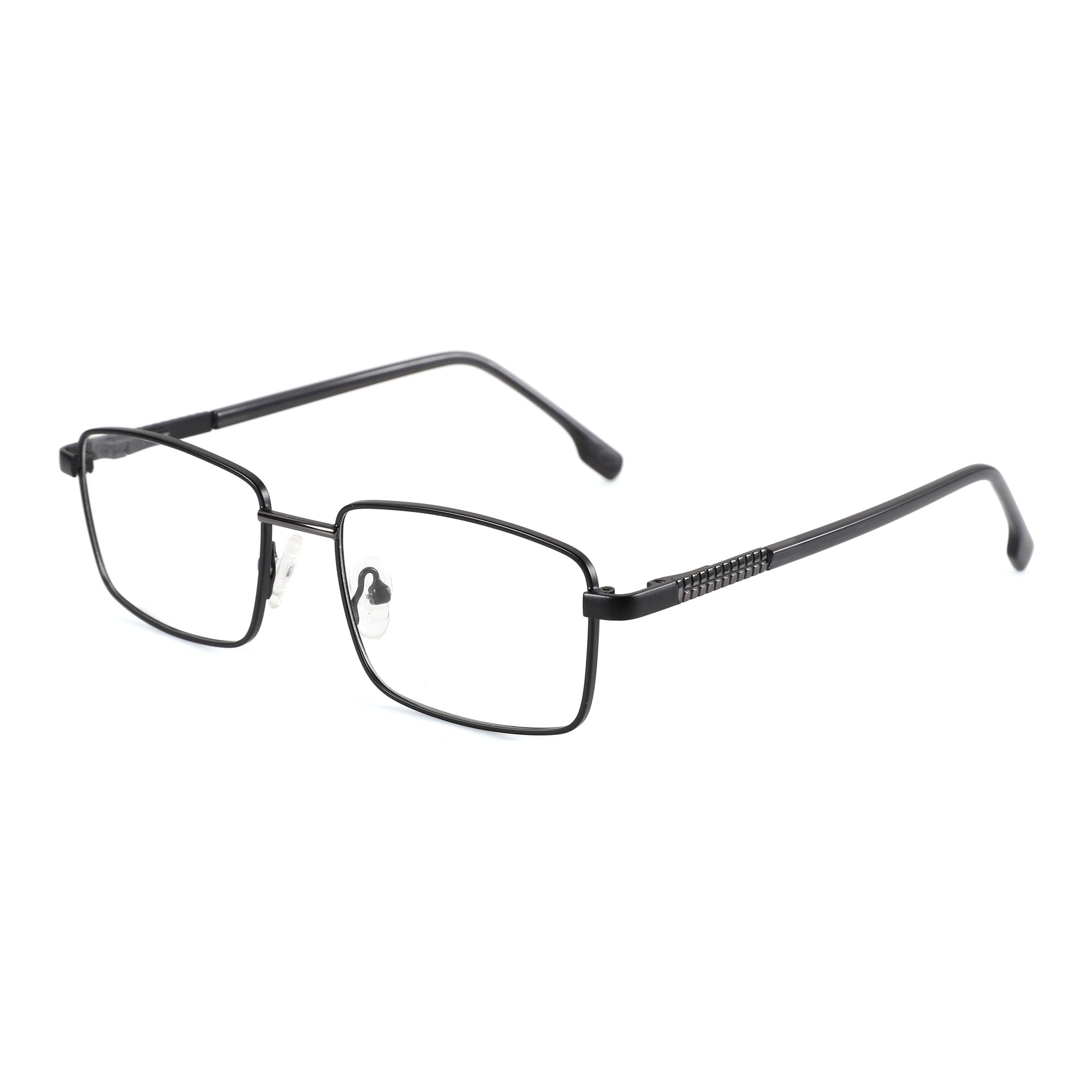
One Pair, Monday Through Sunday
The honest constraint for most men is that a single frame has to cover everything. That is not a compromise so much as a design brief, and it points toward a fairly specific set of choices. Neutral finishes carry the most range. Warm brown, gunmetal, matte black, and tortoise read as deliberate in a conference room and unremarkable at a barbecue. High-gloss finishes and saturated colors are the opposite: they anchor themselves to one context and feel out of place everywhere else.
Shape follows the same logic. Rectangles and softly squared frames cross between formal and casual without drawing attention to the transition, because they echo the proportions people already expect on a face. Sharp geometric shapes and heavy retro silhouettes announce themselves, which is a fine choice if the announcement is intentional and a problem if you only own one pair.
What Actually Breaks, and Why
Weekend use is harder on eyewear than office use, and the failure points are consistent enough to predict. Hinges loosen. Temple tips crack where they curve. Metal frames fatigue at the thin arms holding the nose pads. Almost every one of those failures traces back to the same habit: pulling glasses off with one hand, which twists the frame front against a single hinge thousands of times.
Small construction details buy real durability against that. Silicone nose pads and keyhole bridges hold better on skin that gets warm, while smooth plastic saddle bridges start migrating downward. Matte surfaces hide the fine scratches that gloss displays under every light. Spring hinges absorb the flex of pushing frames up onto your head and letting them snap back, a motion that steadily works barrel hinges loose. Before committing to a frame, open and close one arm slowly. Good hinge action gives even resistance through the full arc and stops cleanly. Grit, play, or noticeable asymmetry between the two sides only gets worse.
Material Sets the Ceiling
Frame material determines how much repair and adjustment a pair can absorb before it is finished. Acetate is a dense plant-based plastic with color running through the full thickness, so surface scuffs polish out rather than exposing a pale layer underneath. It can also be reheated and reshaped, meaning a frame knocked out of alignment usually comes back instead of going in a drawer. Injection-molded plastic weighs less and costs less, but once it cools into shape there is very little an optician can do with it.
On the metal side, titanium and stainless steel flex under load and return, which forgives the occasional accident involving a back pocket. Monel, common across mid-range metal frames, adjusts beautifully and corrodes faster in sweat, so it rewards regular rinsing. Brands that publish material details in their frame descriptions, ZENOTTIC among them, make this easier to evaluate than photographs ever will.
Keeping a well-chosen frame in good condition takes a handful of habits rather than any special product:
- Remove glasses with both hands, one on each arm, to spare the hinges.
- Rinse under lukewarm water before wiping, so dust is not dragged across the coating.
- Use a microfiber cloth and skip paper towels, shirt hems, and anything containing alcohol or ammonia.
- Store them in a case at night instead of face-down on a nightstand.
- Never leave them on a dashboard, where summer heat softens acetate and degrades lens coatings.
Shape, Proportion, and the Face Underneath
Face-shape guidance gets treated as rigid law when it is really one principle applied repeatedly: contrast reads better than repetition. Angular frames add definition to rounder faces. Softer curves and rounded corners take the edge off a strong jaw or a squared forehead. Beyond that starting point, proportion does more work than shape. The top rim should track your brow line without hiding it, and your pupils should sit just above the vertical middle of each lens. Frames riding too low make eyes look tired in a way no prescription can correct.
Skin and hair tone serve as a useful tiebreaker when two frames fit equally well. Cooler complexions and gray or black hair tend to sharpen alongside gunmetal, cool gray, and clear-edged acetates. Warmer complexions and brown, red, or sandy hair sit more comfortably with tortoise, warm brown, and bronze.
Progressive lenses add one more requirement worth raising before anything is ordered. Very shallow frame fronts leave too little vertical room for the reading zone, which forces an awkward chin lift to read anything close. A slightly deeper front solves it without changing the overall look much at all. The same fit logic applies to screen work: lenses sitting closer to the face keep more of a monitor in focus at once, and that distance is controlled by bridge selection and nose pad adjustment rather than by the lens itself.
The Details That Decide How Long a Frame Lasts
Comfortable eyewear comes down to unglamorous specifics. A frame front that matches your face width. Temple arms bent at the right point. Hinges that move cleanly. A material that can be adjusted rather than replaced when something goes slightly wrong. Almost none of that is visible in a product photograph, which explains why so many men end up owning frames that looked right and felt wrong. Start with the temple measurement and shop against it, then treat shape and color as refinements rather than starting points. If one pair has to work Monday through Sunday, lean toward a neutral finish and a moderately squared shape, and weigh material more heavily than color. Build the small habits, two hands on the arms, a case at night, a rinse before wiping, and a frame that fit properly on day one will still fit properly years later. That is the practical payoff: sharper sight, no pressure points, and one less thing to think about every morning.