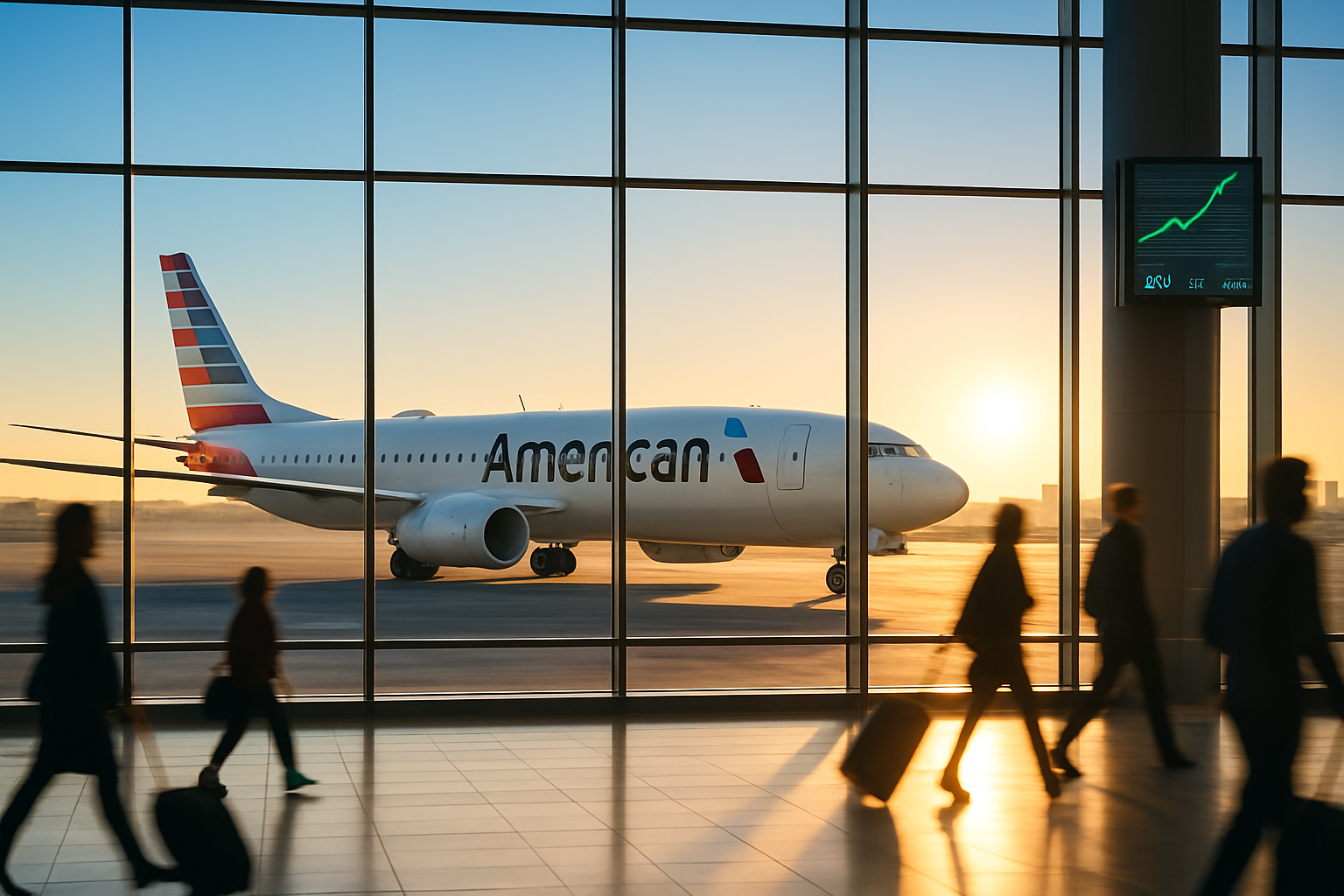
Shares of American Airlines (NASDAQ: AAL) surged by more than 3% on Monday, December 22, 2025, as a wave of positive sentiment swept through the aviation sector. The jump is the latest highlight in a remarkable month-long rally for the carrier, which has seen its market valuation climb nearly 28% since late November. Investors are increasingly bullish on the industry's ability to capitalize on record-breaking holiday travel demand and a more favorable macroeconomic environment.
The immediate implications of this surge suggest a robust end to the fiscal year for major carriers. With domestic travel hitting historic peaks and operational efficiencies improving across the board, American Airlines is positioning itself as a leader in the post-pandemic recovery’s next phase. This rally reflects not just seasonal strength, but a fundamental shift in how analysts view the long-term profitability of the world’s largest airline by fleet size.
The Catalyst: Strategic Upgrades and Record Demand
The 3.11% climb on Monday was triggered by a confluence of positive catalysts that converged just as the peak winter travel season began. A primary driver was a significant analyst upgrade from UBS, which raised its rating on American Airlines to "Buy" and hiked its price target from $14 to $20. The upgrade underscored a growing belief that the market has significantly underestimated American’s potential for revenue expansion, particularly in its ability to capture a larger share of the recovering corporate travel market.
The timeline of this ascent began in early December when American Airlines finalized a lucrative co-branded credit card agreement with Citigroup Inc. (NYSE: C). The new "AAdvantage Globe" card deal is projected to contribute approximately $1.5 billion in incremental pre-tax income by 2026. This long-term revenue stream, combined with the airline's recent success in resolving technical software bugs in its Airbus A320 fleet with minimal disruption, has bolstered investor confidence in the management’s operational execution.
Market reactions were further fueled by data from the Transportation Security Administration (TSA) and AAA. Forecasts indicate a record 122.4 million Americans will travel during the year-end holiday period (Dec 20 – Jan 1), with domestic air travel projected to exceed 8 million passengers for the first time in history. Real-time screening data from the weekend preceding December 22 confirmed these projections, with TSA reporting over 2.8 million passengers on Friday and 2.7 million on Sunday, maintaining a high-velocity throughput that bodes well for fourth-quarter earnings.
Winners and Losers in a Shifting Sky
While American Airlines is the clear beneficiary of today’s momentum, the broader sector is also feeling the lift. Competitors such as Delta Air Lines (NYSE: DAL) and United Airlines Holdings (NASDAQ: UAL) saw sympathetic gains as the "rising tide" of travel demand lifted all major boats. These legacy carriers are benefiting from a flight to quality, as passengers increasingly opt for reliable, full-service options during the chaotic holiday season. International players like LATAM Airlines Group S.A. (OTCPK: LTMAY) also reached 52-week highs, signaling that the optimism is not confined to domestic borders.
Conversely, the struggles of ultra-low-cost carriers (ULCCs) have created a vacuum that American is eager to fill. Spirit Airlines (NYSE: SAVE), which entered bankruptcy proceedings in late 2025, has been the primary "loser" in this narrative. The restructuring of Spirit has allowed American to aggressively move into domestic and Latin American routes that were previously price-competitive battlegrounds. By capturing this displaced market share, American is gaining unprecedented pricing power in key regions, a move that analysts believe will sustain its margin growth into 2026.
Fuel prices have also played a dual role in the sector's current standing. While a recent intraday spike in West Texas Intermediate (WTI) crude to $57.80 per barrel caused some jitters, the long-term trend has been favorable. For the first time in four years, the national average gas price dropped below $3.00 per gallon in December, significantly lowering the operational overhead for fuel-heavy industries. This "fuel cushion" has allowed airlines to absorb short-term volatility while maintaining their bullish profit forecasts.
The "Golden Age of Travel" and Industry Consolidation
This event fits into a broader industry trend that some are calling the "Golden Age of Travel." Initiatives promoted by the Department of Homeland Security have introduced new airport efficiencies, such as expanded military and family screening lanes, which have reduced friction for travelers. These systemic improvements, combined with a post-pandemic cultural shift toward "experience-based" spending, have made air travel more resilient to economic headwinds than in previous cycles.
The ripple effects of Spirit Airlines' bankruptcy cannot be overstated. It marks a significant period of industry consolidation that mirrors the major mergers of the early 2010s. For American Airlines, this means less pressure to engage in "fare wars" that historically eroded profits. Instead, the company is pivoting toward a high-margin strategy focused on premium seating and its highly profitable loyalty programs.
Historically, airline stocks have been notoriously volatile, often falling victim to sudden spikes in oil prices or geopolitical instability. However, the current precedent suggests a more disciplined industry. Unlike the pre-2020 era, carriers are now more focused on debt reduction and capital allocation. American's recent guidance, which expects a fourth-quarter EPS range of $0.45 to $0.75, signals a decisive return to profitability that is attracting value investors who see the stock as still trading at a significant discount to its intrinsic value.
Navigating the 2026 Horizon
Looking ahead, the short-term outlook for American Airlines remains tied to the successful execution of its holiday flight schedule. Any major weather disruptions or technical outages could dampen the current enthusiasm. However, the long-term trajectory is increasingly defined by the integration of its new financial partnerships and the expansion of its "premium" service offerings. The strategic pivot toward loyalty-based revenue is expected to provide a more stable income floor, shielding the company from the traditional boom-and-bust cycles of the aviation industry.
Market opportunities are also emerging in the international arena. As American captures more of the market share left behind by struggling domestic competitors, it can reallocate its larger wide-body aircraft to high-demand transatlantic and transpacific routes. The challenge will be managing the increased labor costs that have become a standard fixture of the post-2023 landscape. Investors will be watching closely to see if the revenue gains from the Citibank deal and premium seating can outpace the rising cost of pilot and crew contracts.
A New Altitude for Investors
The 3% surge in American Airlines shares on December 22 is more than just a seasonal blip; it is a validation of the company's strategic restructuring and the broader resilience of the travel sector. With record passenger volumes and a more consolidated competitive landscape, the "Big Three" carriers—American, Delta, and United—are entering 2026 with significant momentum. The key takeaway for the market is that the airline industry has successfully transitioned from a state of survival to one of strategic expansion.
Moving forward, the market will likely remain sensitive to geopolitical events that affect fuel prices, but the underlying demand for travel appears decoupled from minor economic fluctuations. For investors, the focus should remain on American’s ability to hit its 2026 income targets and the continued growth of its AAdvantage program. As the "Golden Age of Travel" takes flight, American Airlines seems well-positioned to remain at the front of the cabin.
This content is intended for informational purposes only and is not financial advice