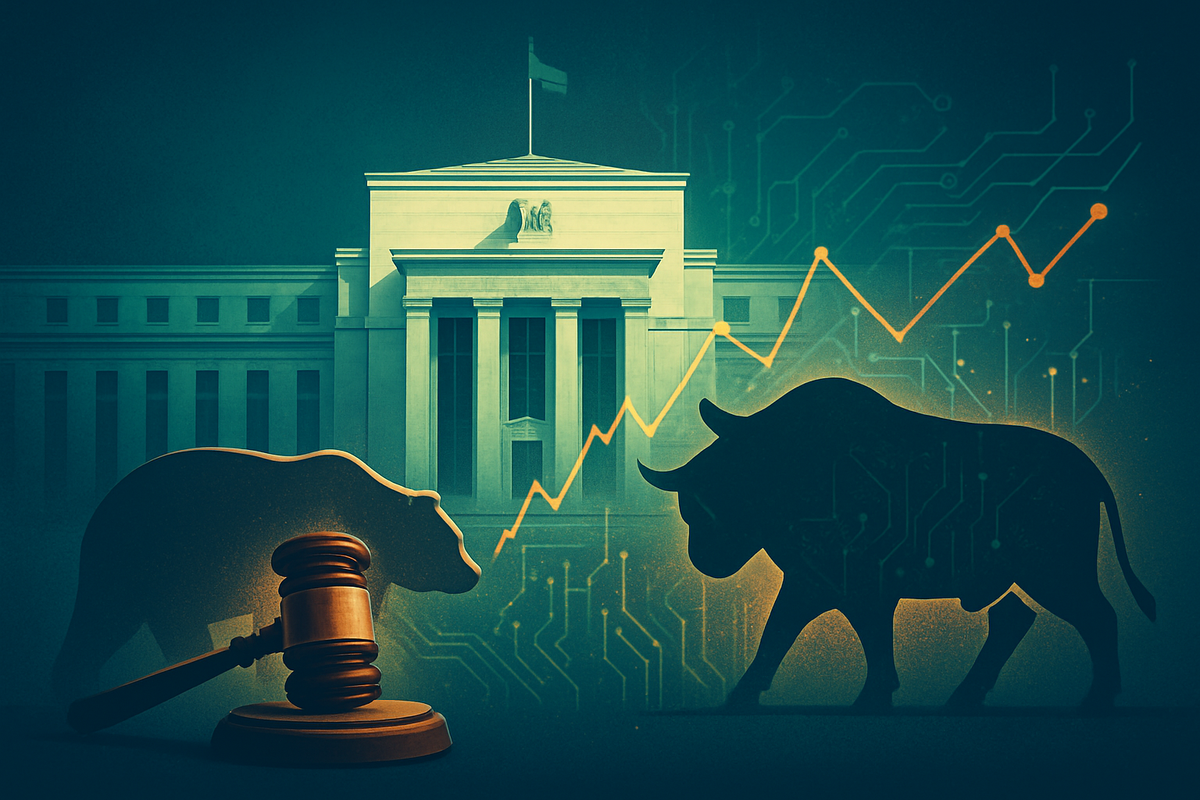
As December 2025 approaches, financial markets are bracing for a highly anticipated decision from the Federal Reserve, with a consensus building around a 25-basis-point interest rate cut. This potential shift in monetary policy marks a significant turning point, signaling the Fed's response to a cooling labor market and persistent, albeit moderating, inflationary pressures. The move is expected to inject a fresh wave of optimism into equity markets, potentially fueling growth-oriented sectors, but also introduces new layers of complexity and volatility as investors weigh the implications for corporate earnings, consumer behavior, and the broader economic trajectory.
The upcoming Federal Open Market Committee (FOMC) meeting, scheduled for December 9-10, is set to be a defining moment for the year-end economic outlook. While a rate cut is largely priced in by the markets, the nuances of the Fed's statement, its forward guidance, and the inevitable dissenting votes within the committee will be scrutinized for clues about the pace and extent of future policy adjustments. This decision arrives amidst a backdrop of mixed economic signals, including delayed key data releases due to a recent government shutdown, which has added an element of uncertainty to the Fed's deliberations and heightened market anticipation.
The Fed's Balancing Act: Navigating Inflation, Employment, and Data Gaps
The Federal Reserve finds itself at a critical juncture, attempting to strike a delicate balance between taming inflation and supporting a softening labor market. Market indicators, including the CME FedWatch tool, currently assign an 80% to 89% probability of a 25-basis-point interest rate reduction. This strong expectation is largely influenced by recent dovish commentary from key Fed officials, such as New York Fed President John Williams and Fed Governor Christopher Waller, who have suggested that economic conditions now allow for policy adjustments.
However, the path to a rate cut is not without internal friction. The FOMC is experiencing a growing divergence between its "hawk" members, who prioritize stringent measures against inflation, and "dove" members, who advocate for more accommodative policies to bolster a weakening job market. Boston Fed President Susan Collins, for example, has expressed reservations about a December cut, highlighting ongoing concerns about inflation stability. This internal debate suggests that the upcoming vote is unlikely to be unanimous, potentially featuring more dissenting opinions than observed in the October meeting.
Adding to the complexity, the recent government shutdown has led to significant delays in crucial economic data releases from the Bureau of Labor Statistics (BLS), including October's jobs and inflation reports. This data vacuum means policymakers will be making their December decision without the most current economic pulse, relying instead on earlier figures and projections. What is clear from available data is that inflation, while showing signs of moderation, remains stubbornly above the Fed's 2% target, with the annual rate increasing to 3% in September 2025 and projected to reach 3.1% by the end of Q4. Concurrently, the U.S. labor market is demonstrably cooling, with nonfarm payrolls increasing by a mere 12,000 in October and private sector jobs unexpectedly falling by 32,000 in November, marking the largest decline since March 2023. The unemployment rate has also edged up, reaching 4.1% in October and 4.4% in September, reinforcing the argument for a more accommodative monetary stance.
Winners and Losers: Corporate Fortunes in a Lower Rate Environment
A Federal Reserve interest rate cut in December 2025 could significantly reshape the competitive landscape for public companies, creating distinct winners and losers across various sectors. The primary beneficiaries are likely to be growth-oriented companies, particularly within the technology and innovation sectors, which often rely on future earnings potential and higher valuations. Lower borrowing costs make it cheaper for these companies to finance expansion, research and development, and acquisitions, thereby boosting their growth prospects. Large technology firms like Apple (NASDAQ: AAPL), Microsoft (NASDAQ: MSFT), and Amazon (NASDAQ: AMZN), which have robust growth pipelines and often carry significant R&D expenses, could see their investment returns amplified.
Conversely, the financial sector, particularly traditional banks such as JPMorgan Chase (NYSE: JPM) and Bank of America (NYSE: BAC), might face headwinds. Lower interest rates typically compress net interest margins (NIM), the difference between the interest banks earn on loans and pay on deposits. While a stronger economy spurred by rate cuts could increase loan demand, the immediate impact on profitability could be negative. However, a robust economic environment could also lead to increased M&A activity and capital markets transactions, which could partially offset the pressure on NIMs for diversified financial institutions.
Companies with high debt loads or those in capital-intensive industries stand to gain from reduced interest expenses. Sectors such as real estate, utilities, and certain manufacturing firms could see improved profitability and balance sheet health as their cost of servicing existing debt decreases and new financing becomes more affordable. Conversely, dividend-paying stocks and defensive sectors like consumer staples and utilities, which often attract investors seeking stable income in a high-rate environment, might become less attractive as bond yields fall and other growth opportunities emerge. Investors might rotate out of these "safe haven" assets in search of higher returns in riskier, growth-oriented segments of the market.
Broader Implications: Economic Trends, Geopolitics, and AI's Enduring Influence
The Federal Reserve's anticipated December rate cut is more than just a policy adjustment; it's a significant indicator of broader economic trends and a potential catalyst for ripple effects across industries and global markets. The decision reflects the ongoing battle with inflation, which, despite showing signs of cooling, remains above the Fed's target. The persistence of inflation, exacerbated by potential future tariffs and geopolitical tensions, suggests that the journey back to the 2% target will be protracted, potentially extending into 2026. This prolonged inflationary environment could continue to impact consumer purchasing power and corporate input costs, even with lower borrowing rates.
The cooling U.S. labor market, evidenced by slowing job creation and rising unemployment, is a key factor driving the Fed's dovish pivot. This trend aligns with a broader global slowdown in certain sectors, and the Fed's move could be seen as an attempt to prevent a more severe economic contraction. Globally, other central banks will be watching closely, and a U.S. rate cut could influence their own monetary policy decisions, potentially leading to a more synchronized easing cycle worldwide or, conversely, creating currency fluctuations if policies diverge significantly.
One of the most powerful and enduring market catalysts remains Artificial Intelligence (AI). Investments in AI continue to drive investor sentiment and market concentration, particularly within the "Magnificent 7" technology stocks. Global AI spending is projected to reach $375 billion in 2025 and increase by another 33% in 2026. A lower interest rate environment could further accelerate this trend, making it cheaper for companies to invest in AI research, development, and infrastructure, thereby amplifying the sector's growth trajectory and potentially widening the valuation gap between AI leaders and laggards. However, this concentration also raises concerns about market breadth and potential bubbles. The recent government shutdown and ongoing political dynamics, including discussions about Chairman Powell's potential non-reappointment in May 2026, add another layer of uncertainty, as changes in Fed leadership could significantly alter future monetary policy direction.
What Comes Next: Navigating a Shifting Economic Landscape
Looking beyond December, the Federal Reserve's rate cut is likely to set the stage for a period of dynamic market adjustments and strategic pivots. In the short term, investors can anticipate continued volatility as the market digests the Fed's forward guidance. While a 25-basis-point cut is largely expected, the FOMC's accompanying statement and updated economic projections (the "dot plot") will be crucial in shaping expectations for future rate moves. Goldman Sachs, for instance, anticipates a pause in the rate-cutting cycle in January 2026, followed by further cuts in March and June, aiming to bring the federal funds rate down to a terminal level of 3% to 3.25%. This projected trajectory suggests a measured approach to easing, rather than an aggressive series of cuts, allowing the Fed flexibility to respond to incoming economic data.
For businesses, lower borrowing costs present opportunities for strategic expansion, refinancing existing debt at more favorable rates, and increased capital expenditures. Companies that have delayed investment decisions due to higher interest rates might now find the environment more conducive to growth initiatives. However, they must also contend with persistent inflation and a potentially weaker consumer, necessitating careful strategic planning. Market opportunities may emerge in sectors that are particularly sensitive to interest rates, such as housing, automotive, and capital goods, as demand could see a rebound. Conversely, challenges might arise for sectors that thrive in high-rate environments or those that face intense competition in a more growth-focused market.
Longer term, the Fed's shift towards an easing cycle could signal a broader recalibration of monetary policy, moving away from the restrictive stance of 2023-2024. This could lead to a sustained period of lower interest rates, impacting everything from pension fund returns to corporate bond yields. Investors will need to adapt their portfolios, potentially favoring riskier assets with higher growth potential over traditional income-generating investments. The effectiveness of the Fed's forward guidance will also be a key watchpoint; the committee has been engaged in internal discussions about the appropriate use of this tool, with some experts suggesting it should be reserved for critical situations to avoid "locking in" the Fed and creating unnecessary market turbulence.
A New Chapter: Market Outlook and Investor Vigilance
The Federal Reserve's anticipated December 2025 interest rate cut marks the beginning of a new chapter for financial markets. The decision, driven by a combination of cooling labor market conditions and persistent inflationary pressures, signals a pivot towards a more accommodative monetary policy. While this move is largely expected to bolster investor confidence and provide a tailwind for growth-oriented sectors, particularly technology and innovation, it also ushers in a period of heightened scrutiny and potential volatility. The internal divisions within the FOMC, coupled with the uncertainties stemming from delayed economic data and ongoing geopolitical tensions, underscore the complex environment in which this decision is being made.
Moving forward, investors should remain vigilant and adaptable. Key takeaways include the likelihood of continued, albeit moderating, inflation, a Federal Reserve committed to its 2% target but with a willingness to support the labor market, and the enduring influence of technological advancements like AI as a primary market driver. The market's trajectory in the coming months will be heavily influenced by the Fed's subsequent actions, particularly its guidance on future rate adjustments and its response to incoming economic data. Corporate earnings reports, especially from the technology sector, will continue to provide critical insights into company-specific performance and broader economic health.
Ultimately, the December rate cut is not a panacea but rather a strategic adjustment in a dynamic economic landscape. Investors should watch for further signs of inflation moderation, the health of the labor market, and any shifts in the Fed's communication strategy. Maintaining a diversified portfolio, staying informed about macroeconomic developments, and being prepared for potential market fluctuations will be crucial for navigating the opportunities and challenges that lie ahead in this evolving financial environment.
This content is intended for informational purposes only and is not financial advice