As of December 17, 2025, Tesla, Inc. (TSLA/NASDAQ) continues to command significant attention in the global markets, operating at the nexus of electric vehicles (EVs), clean energy, and cutting-edge artificial intelligence (AI). Co-founded in 2003, with Elon Musk taking the helm as CEO in 2008, Tesla’s mission to accelerate the world's transition to sustainable energy remains its guiding principle.
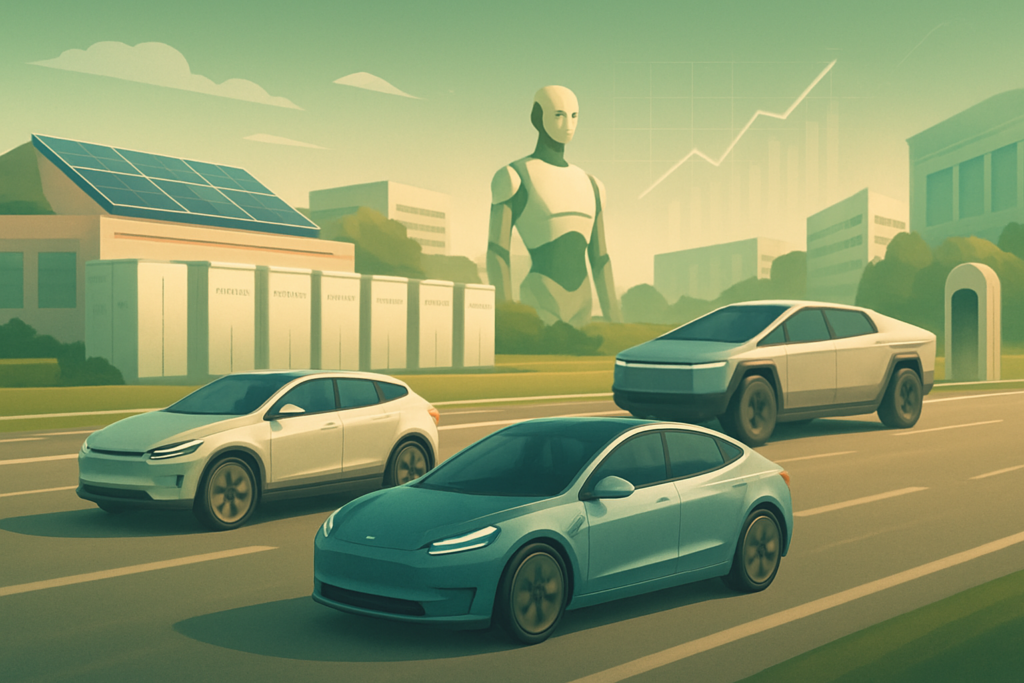
In late 2025, Tesla is intensely focused on several transformative initiatives. A primary driver of current market interest is its rapid progress in autonomous driving, with Elon Musk confirming the commencement of fully driverless robotaxi testing in Austin, Texas. This development is pivotal to the company's long-term vision, shifting its valuation beyond traditional automotive metrics towards an AI-driven mobility platform. Concurrently, Tesla is making significant strides in humanoid robotics, with its Optimus robot poised for a production ramp-up in 2025, signaling an official entry into the commercial robotics market.
To counter increasing competition and stabilize sales, Tesla is also strategically introducing more affordable EV models, such as the anticipated "Model Q" or "Model 2," slated for launch in the first half of 2025. This move aims to broaden its market appeal, particularly in the face of a general downturn in the U.S. EV market and the expiration of federal tax credits. Beyond automotive, Tesla's energy division, encompassing Powerwall and Megapack storage systems, is experiencing robust growth, with a new Megafactory in Shanghai commencing production in Q1 2025. This segment is increasingly recognized as a critical pillar for future revenue and profitability, contributing to grid stability and renewable energy integration. Tesla's continued relevance stems from its pioneering role in EV adoption, its relentless pursuit of AI and autonomy, and its expanding footprint in the global energy sector, even as it navigates intense competition and regulatory scrutiny.
2. Historical Background
Tesla, Inc. (originally Tesla Motors) has profoundly impacted the automotive and energy industries since its inception, marked by a dynamic founding story, rapid product development, and strategic evolution. Named after the inventor Nikola Tesla, the company's journey highlights a consistent drive towards sustainable energy and technological innovation.
Founding Story
Tesla Motors was incorporated on July 1, 2003, by American engineers Martin Eberhard and Marc Tarpenning in San Carlos, California. Eberhard served as the CEO and Tarpenning as CFO, with their initial vision being to build a high-performance electric sports car, inspired by the positive reception to General Motors' EV1 experiment. They aimed to create a car manufacturer that was also a technology company, focusing on core technologies like batteries, software, and proprietary motors. Ian Wright joined them a few months later.
In February 2004, Elon Musk led Tesla's Series A funding round, investing $6.5 million of the $7.5 million raised, becoming the company's chairman and largest shareholder. J.B. Straubel joined in May 2004 as chief technical officer. While Musk is widely recognized, a lawsuit settlement in 2009 allowed Eberhard, Tarpenning, Wright, Musk, and Straubel to all be recognized as co-founders.
Early Milestones
Tesla's early years were characterized by ambitious development and significant financial challenges:
- 2006: Roadster Prototype Unveiled The prototype for Tesla's first car, the all-electric Roadster, was showcased. It boasted an unprecedented range of 245 miles (394 km) on a single charge and could go from 0 to 60 mph in under 4 seconds.
- 2007-2008: Leadership Changes and Roadster Production Martin Eberhard resigned as CEO in 2007 and was eventually replaced by Elon Musk in October 2008. The Roadster entered production in March 2008, with Elon Musk receiving the first vehicle. Approximately 2,450 Roadsters were sold, priced around $109,000, making it a luxury item.
- 2009: Financial Struggles and Strategic Partnerships Despite the Roadster's launch, Tesla faced significant financial difficulties. Daimler AG acquired a 10% stake for $50 million, and Tesla secured a $465 million loan from the Department of Energy, providing crucial working capital.
- 2010: Initial Public Offering (IPO) Tesla went public on the Nasdaq in June 2010, raising $226 million by selling 13.3 million shares at $17 each. This made Tesla the first U.S. carmaker to go public since Ford in 1956.
- 2011-2012: Model S and Supercharger Network Tesla unveiled the prototype for the Model S, its first sedan, in 2011. The Model S entered full production in June 2012 and was critically acclaimed, winning numerous automotive awards. Production of the Roadster ceased in January 2012. In 2012, Tesla also launched its first Supercharger charging stations in California, offering quick charging services.
Key Transformations and Strategic Shifts
Tesla's evolution has been marked by several significant transformations:
- Shift to Broad Differentiation: Initially, Tesla pursued a "differentiation focus" strategy, targeting early adopters in the high-end EV market with unique products like the Roadster. As production costs declined and brand popularity grew, the company shifted to a "broad differentiation" strategy, aiming to attract a wider range of customers across the automotive market with environmentally friendly technology.
- Vertical Integration: Tesla has increasingly focused on vertical integration, seeking control over various aspects of its operations, from software to battery manufacturing. The company's investment in battery technology, including the development of its 4680 battery cells, has been pivotal in driving down costs.
- Global Expansion and Gigafactories: Tesla embarked on a strategy of global expansion, establishing large manufacturing facilities known as Gigafactories. Key examples include Gigafactory Nevada (announced 2014), Gigafactory Shanghai (started 2019), Gigafactory Berlin (started 2020), and Gigafactory Texas (started 2020). These factories enable scalable production, reduce costs, and align with local market demands.
- Diversification into Energy: In 2015, Tesla entered the solar power and energy storage markets, announcing products like the Powerwall for residential use and Powerpack for commercial applications. The acquisition of SolarCity in 2016 further solidified this strategic shift, leading to the company rebranding from "Tesla Motors" to "Tesla, Inc." in 2017 to reflect its broader energy focus.
- Focus on AI and Robotics: As of late 2025, Tesla's "Master Plan 4.0" heavily emphasizes AI and robotics as core to its future, including continued advancements in Autopilot and Full Self-Driving (FSD) capabilities, and plans for a Robotaxi.
Significant Product Launches
Tesla's product roadmap has expanded from niche sports cars to a diversified lineup:
- Roadster (2008): The company's first production vehicle, a high-performance electric sports car that demonstrated the viability of EVs.
- Model S (2012): A luxury electric sedan that significantly boosted Tesla's market presence and revenues, becoming a best-seller in its category.
- Model X (2015): A crossover SUV featuring distinctive "Falcon Wing" doors, combining SUV features with car-like attributes.
- Model 3 (2017): Positioned as Tesla's first mass-market affordable electric car, it received over 325,000 paid reservations within a week of its prototype showing. It became the world's best-selling electric car from 2018 to 2021.
- Model Y (2020): A smaller, less expensive crossover SUV sharing many components with the Model 3, which has become Tesla's best-selling vehicle worldwide.
- Tesla Semi (2022): An all-electric heavy-duty truck, entering limited production.
- Cybertruck (2023): An electric pickup truck with a distinctive, angular design, which began production in November 2023. A second-generation Roadster is also anticipated for release in 2025.
3. Business Model
Tesla's business model as of December 17, 2025, is characterized by its vertical integration and a strategic evolution beyond solely automotive manufacturing to encompass energy solutions and advanced AI/robotics. The company operates on a "full vehicle sales + self-charging network" model, with a layered approach to its long-term vision.
Primary Revenue Sources
Tesla's revenue streams are diverse, though automotive sales remain the largest contributor:
- Automotive Sales: This segment, including electric vehicle sales and regulatory credits, is projected to account for 74% of Tesla's total revenues in fiscal year 2025, totaling an estimated $77 billion.
- Services and Other Revenue: This rapidly growing segment is expected to reach $12 billion in 2025, encompassing vehicle service and maintenance, Supercharging fees, Full Self-Driving (FSD) subscriptions, and other automotive-related offerings.
- Energy Generation and Storage: This segment is experiencing significant growth, with projected revenues of $15 billion in 2025. This includes the sale and deployment of solar products and battery storage solutions.
Product Lines
1. Vehicles:
Tesla's current vehicle lineup includes the Model S, Model X, Model 3, Model Y, Cybertruck, and the Semi.
- Mass Market Vehicles: Tesla continues to expand its offerings to broader audiences. In October 2025, the Model 3 and Model Y "Standard" variants were launched, providing compelling range at attractive price points. A new, more affordable model, sometimes referred to as "Model Q," is anticipated to launch in the first half of 2025, aiming to further broaden the customer base.
- Specialty Vehicles:
- The Cybertruck began shipping in November 2024 from Gigafactory Texas.
- The Tesla Semi, a heavy-duty electric truck, is expected to enter full volume production in late 2025.
- The second-generation Roadster, a high-performance sports car, is also slated for production in 2025 after previous delays.
- The Model YL, a six-seat variant of the Model Y, is also mentioned for a 2025 release.
2. Energy Products:
Tesla's energy division focuses on sustainable energy generation and storage solutions.
- Battery Storage: This includes the Powerwall for residential use and the Megapack and the newly unveiled Megablock for industrial and utility-scale energy storage. Tesla achieved record energy storage deployments in Q3 2025, driven by the ramp-up of Megafactory Shanghai and Powerwall deployments.
- Solar Products: Tesla offers solar panels and solar roofs for energy generation.
- Manufacturing Expansion: Tesla expects its lithium refinery in Texas to begin production in Q4 2025, and LFP (Lithium Iron Phosphate) battery lines in Nevada to start production in Q1 2026, aiming to localize and de-risk its battery supply chains.
Services
Tesla's service offerings are integral to its ecosystem:
- Charging (Supercharger Network): Tesla continues to expand its global Supercharger network. The introduction of V4 Supercharger cabinets enables faster charging for passenger vehicles (up to 500kW) and the Tesla Semi (up to 1,200kW). A significant development is the widespread adoption of Tesla's North American Charging Standard (NACS) by other major EV manufacturers by 2025, positioning the Supercharger network as a stable source of recurring revenue.
- Full Self-Driving (FSD): FSD (Supervised) is available as a subscription service, providing advanced driver assistance features. Tesla is making an aggressive push with FSD, planning to launch a paid FSD Unsupervised (Robotaxi) service in Austin by June 2025, with further expansion to California and other U.S. markets. Licensing FSD technology to other automakers is also under discussion.
- Service Centers: While still facing some challenges with parts availability and occasional repeat visits for repairs, Tesla has improved appointment availability, with customers typically able to secure appointments within a week. During service visits exceeding one business day, Tesla automatically extends active subscriptions (like FSD and Premium Connectivity) or free trials to compensate owners for downtime. Tesla also provides loaner vehicles, often with unlimited Supercharging and FSD, to customers whose cars are in for service.
- Other Services: This includes Premium Connectivity subscriptions for in-car features like real-time traffic visualization and streaming, vehicle accessories and merchandise, financing and insurance options, and over-the-air software updates that continuously improve vehicle functionality and introduce new features.
Market Segments and Customer Base
Tesla's target market is evolving, moving from a niche luxury segment to a broader consumer base.
- Demographics: As of 2025, Tesla's primary customer segments are affluent, tech-savvy, and environmentally conscious consumers. The median age of a Tesla owner is approximately 48, with an average household income of about $144,341. While predominantly male (74%), there's a growing number of female buyers. A significant portion (70%) of owners do not have children at home. Tesla is actively targeting lower and middle-income consumers with its new, more affordable vehicle offerings.
- Psychographics: Customers value cutting-edge technology, performance, design, and environmental sustainability. Owning a Tesla is often associated with status and aligning with eco-conscious values.
- Geographic Focus: Tesla maintains a significant global presence, with the United States as its largest market (though its U.S. EV market share decreased to 46% in Q1 2025). China remains the second-largest market, followed by Europe. Tesla is also strategically expanding into developing markets such as India, Southeast Asia, and Latin America.
- New Segments: The company is targeting new customer segments, including fleet operators and commercial vehicle customers, alongside expanding its energy storage solutions for commercial and industrial sectors.
Tesla's business model is increasingly framed as a "layered company." The electric vehicle business forms the foundational layer, generating cash flow and providing a platform for software-driven services. The middle layer is the autonomous driving business, envisioned as a high-margin mobility platform. The top layer, representing the long-term future, is the robotics business, particularly with the Optimus humanoid robot, which is expected to see external deliveries begin in late 2025. This strategic shift emphasizes Tesla as an "AI-driven platform company with physical products."
4. Stock Performance Overview
Tesla (TSLA/NASDAQ) has demonstrated a highly dynamic and often volatile stock performance over the past decade, characterized by periods of exponential growth, significant pullbacks, and a consistent outperformance of broader market benchmarks over the longer term. As of December 17, 2025, the company's trajectory reflects its evolution from an electric vehicle (EV) pioneer to a broader artificial intelligence and robotics powerhouse.
Past 1 Year Performance (December 2024 – December 2025)
The past year for Tesla stock has been a rollercoaster, culminating in a new record high. On December 17, 2025, TSLA closed at $489.88. This marked its first record close since December 17, 2024, after trading above $490 intraday for the first time. The stock's 52-week low was $214.25, reached in early April 2025. Through December 11, 2025, Tesla's share price rose 8.8%. The year-to-date (YTD) total return for TSLA in 2025 is 21.31%.
-
Significant Price Movements & Key Drivers:
- Early 2024 Slump: The year began with a sharp 30% plunge in TSLA's stock price during the first quarter of 2024, attributed to concerns over declining revenues and vehicle margin pressures. Factors contributing to a downward trend in the first half of 2024 included a slowing adoption rate of EVs, declining Tesla sales, increased competition from rivals like BYD, and general economic uncertainty.
- Mid-to-Late 2024 Recovery and "Trump Bump": Tesla shares were up more than 70% in 2024, with a significant portion of these gains occurring after Donald Trump's election victory in November 2024, due to anticipated policy support.
- Early 2025 Politicization and Sales Decline: By February 2025, a perceived "bromance" between Elon Musk and President Trump soured, leading to increased politicization of the business and anti-Tesla protests. This, combined with slower sales in China, put the company on track for an annual sales decline and pushed the stock to its 52-week low in early April.
- Late 2025 AI and Robotics Surge: The stock "stormed back" as Tesla advanced its plans for artificial intelligence (AI) and robotics. The approval of an ambitious compensation plan for Elon Musk and the anticipation of a SpaceX IPO also boosted investor confidence.
- Robotaxi Developments: A major catalyst in late 2025 was Elon Musk's update on driverless robotaxis, confirming that Tesla began testing fully autonomous vehicles in Austin, Texas, with plans to expand operations to several other cities by year-end. The year 2025 was seen as a "strategic clarification" for Tesla, where the company repositioned itself less as an automaker and more as an AI-driven platform focusing on autonomy and robotics, with the stock reacting more to FSD, autonomy milestones, and Optimus robot demonstrations than traditional delivery numbers.
- Energy Division Growth: Tesla's energy generation and storage segment, including products like the Megapack, continued to be a strong performer with high margins and increasing demand, contributing to revenue diversification.
-
Comparison to Benchmarks:
- Over the past 12 months, TSLA slightly underperformed the S&P 500, with TSLA delivering an 8.8% return through December 11, 2025, while the S&P 500 gained 13.4% (14.8% total return with dividends). However, another source indicates that as of December 15, 2025, TSLA's YTD return was 17.70%, slightly outperforming the SPDR S&P 500 ETF (SPY) at 17.17%.
Past 5 Years Performance (December 2020 – December 2025)
Over the past five years, Tesla has experienced "explosive growth," solidifying its position as a global leader in the EV segment. The 5-year total return for TSLA stock is 135.99%. An investment of $1,000 in TSLA stock five years ago would be worth $2,359.85 today.
-
Significant Price Movements & Key Drivers:
- 2020-2021 Boom: Tesla closed 2020 at $232.22 and 2021 at $352.26 (split-adjusted). This surge was fueled by four consecutive profitable quarters, inclusion in the S&P 500 index in December 2020, and increasing global demand for EVs.
- 2022 Slump: A significant downturn occurred in 2022, with the stock opening at $382.58 and closing the year at $123.18. This slump was largely due to a restrictive economic environment, rising US interest rates, declining EV sales, increased competition (particularly in China), and concerns surrounding Elon Musk's acquisition of Twitter.
- 2023 Rebound: Stocks began to rebound in 2023, with Tesla being a prime beneficiary. Price cuts, increased production, and efforts to improve profitability helped sentiment recover, and the stock rose to a high of $299.29 in July 2023.
- Continued Innovation and Expansion: Over this period, Tesla continued its global expansion with new Gigafactories in Austin, Texas, and Berlin, significantly increasing its production capacity. Advancements in Full Self-Driving (FSD) technology and the growth of its energy solutions business also played crucial roles.
-
Comparison to Benchmarks:
- TSLA's 5-year appreciation of 126% outpaced the S&P 500's 102.4% return. Its 5-year total return of 135.99% places it in the top 10% of its industry. The annualized return for TSLA over five years was 18.02%, compared to SPY's 14.55%.
Past 10 Years Performance (December 2015 – December 2025)
Over the last decade, Tesla has undergone a fundamental transformation, evolving from a niche EV manufacturer to a global leader in clean energy, autonomous driving, and electric vehicles. The 10-year total return for TSLA stock is a remarkable 3,033.43%. This represents an annualized return of 40.94%.
-
Significant Price Movements & Key Drivers:
- Exponential Growth: Since its Initial Public Offering (IPO) in June 2010 at $17 per share, Tesla has seen dramatic price changes. An investor who bought $1,000 worth of Tesla stock at the IPO would have $306,534 today, representing a 46.51% compound annual growth rate over 15 years.
- Product Launches and Expanding Portfolio: Key product launches like the Model X (2015), Model 3 (2017), Model Y (2020), Tesla Semi (2022), and Cybertruck (2023) significantly expanded its market reach and revenue streams.
- Gigafactory Expansion: The development and ramp-up of Gigafactories in Nevada, New York, Shanghai (2019), Berlin (2020), and Texas (2020) were critical for scaling production and meeting burgeoning demand. The Shanghai Gigafactory, in particular, was the first automobile factory in China fully owned by a foreign company and began production less than a year after groundbreaking.
- Technological Advancements: Continuous innovation in battery technology, charging infrastructure (Supercharger network), and advancements in autonomous driving capabilities (FSD) have been central to its growth.
- Energy Solutions: The expansion of Tesla's energy division, including solar panels, Powerwall, and Megapack, further diversified its business beyond just automotive, capitalizing on the global shift towards renewable energy.
- Regulatory Support and Incentives: Government regulations and incentives favoring electric vehicle adoption worldwide have also positively influenced Tesla's market performance.
-
Comparison to Benchmarks:
- Between December 16, 2015, and December 16, 2025, Tesla delivered an astonishing 3,110.1% return, vastly outperforming the S&P 500 (GSPC), which returned 233.1% over the same period.
- Over the past 10 years, TSLA's annualized return of 40.94% significantly outperformed the S&P 500 (SPY), which yielded a 14.88% annualized return.
In summary, Tesla's stock performance over the past one, five, and ten years highlights its position as a disruptive force in multiple industries. While experiencing significant volatility, particularly in response to macroeconomic conditions, competitive pressures, and controversies surrounding its CEO, Elon Musk, its long-term growth has been driven by continuous innovation in EVs, autonomous driving, robotics, and energy solutions, consistently outperforming the broader market over extended periods. The company's future valuation is increasingly tied to its AI and robotics initiatives rather than solely its automotive sales.
5. Financial Performance
Tesla's Q3 2025 Financial Performance Reflects Record Revenue and Deliveries Amidst Significant Margin Compression and Strategic Investments
Tesla (TSLA/NASDAQ) reported its Q3 2025 financial results on October 22, 2025, showcasing record revenue and vehicle deliveries. However, profitability metrics experienced a notable decline due to aggressive pricing strategies, increased operating expenses, and reduced regulatory credit income. The company's focus on future growth through AI and energy solutions remains a key theme.
Key Financial Metrics (Q3 2025):
- Revenue Growth: Tesla achieved a total revenue of $28.1 billion in Q3 2025, marking a 12% increase year-over-year (YoY) and surpassing analyst expectations.
- Automotive revenue reached $21.2 billion, up 6% YoY.
- Energy Generation and Storage revenue surged by 44% YoY to $3.4 billion, achieving a record gross profit of $1.1 billion.
- Services and Other revenue grew by 25% YoY to $3.5 billion.
- Earnings:
- GAAP Net Income was $1.4 billion.
- Non-GAAP Net Income stood at $1.8 billion.
- GAAP Earnings Per Share (EPS) was $0.39.
- Non-GAAP EPS was $0.50, falling short of analyst estimates of $0.54-$0.55.
- Margins:
- Total GAAP Gross Margin declined to 18.0% from 19.8% in Q3 2024, representing a 185 basis point (bp) decrease YoY.
- Operating Margin compressed significantly to 5.8% from 10.8% in the prior year, a 501 bp reduction.
- Automotive gross margin excluding regulatory credits was approximately 15.4%.
- Operating Income: Income from operations decreased by 40% YoY to $1.6 billion.
- Debt Levels (as of September 2025): Tesla's long-term debt was reported at $5,609 million.
- Cash Flow (Q3 2025):
- Operating cash flow reached $6.2 billion.
- Free Cash Flow hit a record of nearly $4.0 billion.
- Quarter-end cash, cash equivalents, and investments totaled $41.6 billion.
Valuation Metrics (as of December 17, 2025):
- P/E Ratio (TTM): As of December 17, 2025, Tesla's trailing twelve-month (TTM) P/E ratio is 326.59. This is significantly higher than industry averages, reflecting high investor expectations for future growth.
- EV/EBITDA: The EV/EBITDA ratio for Tesla Inc (TSLA) is 134.3 as of December 17, 2025. This metric also suggests a premium valuation compared to historical averages and industry benchmarks.
Significant Trends and Concerns:
- Margin Compression Despite Record Deliveries: While Tesla achieved record vehicle deliveries of 497,099 units in Q3 2025, up 7% YoY, its profitability suffered. This was primarily driven by aggressive price cuts implemented to stimulate demand amidst increasing competition, higher operating expenses (including significant investments in AI and R&D), and a decrease in high-margin regulatory credit revenue.
- Strength in Energy Business: The Energy Generation and Storage segment continues to be a strong growth area for Tesla, with substantial revenue and gross profit increases. This diversification beyond automotive sales is a positive trend.
- Record Free Cash Flow: The company generated a record free cash flow of nearly $4.0 billion, indicating strong operational efficiency and cash generation capabilities, which supports its ambitious product roadmap.
- Impact of Expiring Tax Credits: A significant concern is the potential "pull-forward" of demand in Q3 2025 due to U.S. consumers rushing to purchase EVs before the federal tax credit expired. This could lead to a noticeable slowdown in vehicle demand in Q4 2025 and into 2026.
- High Valuation and Investor Expectations: Tesla's valuation metrics, particularly its P/E and EV/EBITDA ratios, remain exceptionally high. This suggests that investors are pricing in substantial future growth and successful execution of its long-term strategies, leaving little room for error.
- Investments in AI, Robotics, and Autonomous Driving: Operating expenses increased by 50% YoY, largely due to significant investments in AI, R&D projects, and higher selling, general, and administrative (SG&A) costs. The company is heavily focused on developing its Optimus humanoid robots and Robotaxi platform, with plans for a Cybercab launch in Q2 2026.
- Competitive Landscape: The global EV market is becoming increasingly competitive, with strong challenges from both established automakers and new entrants, particularly from Chinese brands. This heightened competition is a contributing factor to Tesla's pricing adjustments and margin pressures.
- Regulatory Scrutiny: Ongoing investigations, such as the National Highway Traffic Safety Administration's probe into FSD-equipped Teslas, contribute to cost, risk, and potential brand overhang.
- Elon Musk's Influence and Compensation: Shareholder attention is also on CEO Elon Musk's robotaxi and AI work, and an upcoming vote on his compensation package. There are concerns that Musk might take key AI projects outside of Tesla if his ownership stake isn't increased, which could compromise Tesla's essential AI strategy.
6. Leadership and Management
As of December 17, 2025, Tesla's leadership and management are characterized by the influential role of CEO Elon Musk, a team of key executives, a board of directors facing scrutiny over compensation and independence, a strategic pivot towards artificial intelligence and robotics, and a corporate governance reputation marked by significant controversies and recent leadership changes.
CEO: Elon Musk
Elon Musk serves as Tesla's Chief Executive Officer and Director, spearheading the company's overarching vision, product innovation, and strategic direction across electric vehicles (EVs), AI, robotics, and energy solutions.
Strategic Approach: In 2025, Tesla's strategic focus underwent a significant clarification, repositioning the company less as an automaker and more as an AI-driven platform company with physical products. While electric vehicles remain foundational, the future emphasis is heavily placed on autonomy and robotics, particularly the development of driverless Robotaxis and the Optimus humanoid robot. Tesla has launched a limited, geofenced robotaxi pilot in Austin, Texas, and by December 2025, confirmed testing truly unsupervised rides, aiming for commercial operation and mass production of purpose-built autonomous vehicles like the Cybercab by April 2026. Musk envisions a future where vehicle owners can integrate their cars into a decentralized robotaxi network. The Optimus robot project also continues to show improvements in movement, balance, and task execution, with a bold vision for general-purpose robots in various sectors.
Recent Changes/Controversies: A major development in November 2025 saw Tesla shareholders approve a new, performance-linked pay package for Elon Musk, potentially worth up to $1 trillion in Tesla stock over the next decade, tied to ambitious market capitalization and operational milestones. This package had previously faced rejection by a Delaware judge in January 2024 due to significant governance flaws, raising questions about conflicts of interest and compromising the board's independence in negotiations.
Key Executives
Tesla's executive leadership team is designed to be lean yet impactful, overseeing various critical functions. Key executives as of December 2025 include:
- Vaibhav Taneja: Chief Financial Officer (CFO) and Chief Accounting Officer, responsible for global financial operations, reporting, and regulatory compliance. He succeeded Zach Kirkhorn in 2023.
- Tom Zhu: Senior Vice President, Automotive, leading global automotive operations, including manufacturing, sales, and service.
- Andrew Baglino: Senior Vice President, Powertrain & Energy Engineering, overseeing the development of Tesla's energy and powertrain systems, battery architecture, and AI training infrastructure.
Recent Changes/Controversies: Tesla has experienced significant leadership changes and departures throughout 2025. Key figures responsible for the Model Y and Cybertruck projects, Siddhant Awasthi and Emmanuel Lamacchia, resigned on the same day in November 2025. Other high-level exits since mid-2024 and throughout 2025 include the director of the battery team, the head of Tesla's "Dojo" supercomputer team, the vice president of North American sales and service (Omead Afshar was fired in June 2025), the head of HR (Jenna Ferrua), and Milan Kovac, the lead engineer for the Optimus robot program. Some departures have been attributed to internal tensions, Musk's micromanagement, and his divided attention across multiple ventures like xAI and the Department of Government Efficiency (DOGE). These departures have raised concerns about leadership instability and technical depth, particularly in powertrain engineering (with the exit of Andrew Baglino, an 18-year veteran) and battery architecture (Vineet Mehta).
Board of Directors
Robyn Denholm serves as the Chair of Tesla's Board of Directors since 2018. Other notable members of the board include:
- Elon Musk (CEO)
- Kimbal Musk (Elon Musk's brother)
- Ira Ehrenpreis
- James Murdoch
- Kathleen Wilson-Thompson
- Joe Gebbia
- JB Straubel
- Jack Hartung
Recent Changes/Controversies: Tesla's board compensation has been a major source of controversy. Since 2004, the board has reaped over $3 billion in stock awards, an amount significantly exceeding that of directors at other major U.S. technology firms. Much of this compensation has come from stock options rather than shares, a practice criticized by corporate governance experts for magnifying upside potential with limited downside risk and potentially compromising directors' objectivity. Kimbal Musk alone has earned nearly $1 billion, and director Ira Ehrenpreis $869 million, from these stock options. A shareholder lawsuit in 2021 led to the suspension of new stock grants, and a Delaware court ruled that excessive pay and personal ties had compromised CEO-pay negotiations. In 2025, despite a four-year suspension of pay for some directors, average annual compensation for Tesla board members between 2018 and 2024 remained more than double that of Meta directors, the next highest-paid among "Magnificent Seven" tech companies.
Company's Governance Reputation
Tesla's governance reputation as of December 2025 is a contentious issue, frequently drawing criticism from corporate governance experts and shareholders.
- Executive and Board Compensation: The extraordinary compensation packages for both Elon Musk and the board of directors are central to governance concerns, raising questions about accountability and potential conflicts of interest.
- Board Independence: Critics argue that the significant financial ties and close relationships among some board members, particularly with Elon Musk, compromise their ability to provide independent oversight.
- Musk's Influence and Leadership Style: Elon Musk's "superstar CEO" status, his influential role in key decisions, and his often-controversial public statements and political activities have been linked to a "brand crisis" for Tesla, alienating some customers and investors. His divided attention across multiple companies (Tesla, SpaceX, xAI, Neuralink, and a federal commission in 2025) has also been cited as a factor in executive departures.
- High Executive Turnover: The numerous high-level executive departures in 2025 suggest leadership instability and potential issues with internal management and retention, with some former executives reportedly citing Musk's micromanagement.
- Regulatory Scrutiny and Legal Issues: Tesla faces ongoing scrutiny from federal prosecutors, securities regulators, and the National Highway Traffic Safety Administration regarding claims made about its "Autopilot" and "Full Self-Driving" (FSD) software. As of December 2025, the California Department of Motor Vehicles has accused Tesla of exaggerating the capabilities of its driver-assistance technology and is poised to suspend the company's sales in California for 30 days if marketing practices are not changed. There is also a criminal probe from the US Department of Justice concerning these self-driving claims. The company has also faced shareholder lawsuits over past events, such as Musk's 2018 tweet about taking the company private.
- Shareholder Rights: Despite a shareholder vote approving Musk's compensation package, underlying judicial concerns about governance flaws persist, highlighting a potential disconnect between shareholder approval and robust governance practices. In December 2025, former President Donald Trump directed federal regulators to review proxy advisory firms (like ISS and Glass Lewis), which Musk had criticized for their recommendations against his compensation package, indicating ongoing debates about external influence on corporate governance.
7. Products, Services, and Innovations
Tesla, as of December 17, 2025, continues to be a prominent force in the automotive and energy sectors, driven by its diverse product and service offerings and an ambitious innovation pipeline. The company's strategy focuses on electric vehicles, energy solutions, and cutting-edge artificial intelligence and robotics to maintain its competitive edge.
Tesla's Current Product and Service Offerings
1. Vehicle Lineup:
Tesla's current vehicle offerings span various segments, with ongoing updates and expansions:
- Sedans:
- Model 3: Available in Standard Rear-Wheel Drive (RWD) and Long Range (both RWD and All-Wheel Drive) configurations. A refreshed "Highland" version has rolled out in several regions with updated interiors and extended range.
- Model S: Continues to be offered as a luxury sedan, including the high-performance Plaid variant.
- SUVs:
- Model Y: Features Standard Rear-Wheel Drive, Long Range All-Wheel Drive (AWD), and Performance variants. A "Juniper" refresh is expected, along with new options such as a 7-seater configuration and a long-wheelbase "Model Y L" with a six-seat layout.
- Model X: Available in All-Wheel Drive and the high-performance Plaid trims, offering luxury SUV capabilities.
- Trucks:
- Cybertruck: Limited production began in November 2023, with initial customer deliveries shortly after. As of 2025, it is available in the United States, Mexico, Canada, and South Korea in three variants: the tri-motor "Cyberbeast," a dual-motor All-Wheel Drive, and a single-motor Rear-Wheel Drive "Long Range" model. The RWD "Long Range" Cybertruck, while offering up to 350 miles of range, omits certain features like ventilated seats, a rear-seat display, and adaptive air suspension.
- Future Vehicle Introductions:
- "Model Q" / "Redwood": Tesla is developing a more affordable, compact crossover, often referred to as the "Model Q" or codenamed "Redwood." This vehicle is expected to launch in the first half of 2025, potentially priced under $30,000, aiming to significantly boost sales volume in the competitive EV market.
- Cybercab (Robotaxi): A driverless version of the next-generation platform, unveiled in October 2024, is targeting 2026 production. Tesla launched a commercial taxi service, "Tesla Robotaxi," to a small group of invited users in Austin, Texas, in June 2025, utilizing modified Model Y vehicles. By December 2025, driverless testing without human safety monitors had commenced in Austin.
- New Tesla Semi: Volume production of an updated Semi is expected in the second half of 2026, featuring 1,072 horsepower, a 500-mile range, an 850 kWh battery pack, and 1.2 MW charging capability.
- Next-generation Roadster: An unveiling is tentatively planned for April 2026, with production commencing around mid-2027.
- Tesla Robovan/Robus: A concept for a vehicle capable of carrying up to 20 passengers was shown in October 2024, with potential production by 2028.
2. Energy Products:
Tesla's energy division plays a crucial role in its ecosystem, focusing on sustainable energy generation and storage:
- Powerwall: A home battery storage system for backup power and self-consumption of solar energy.
- Solar Roof: Integrated solar panels designed to resemble traditional roofing tiles.
- Megapack: Large-scale battery storage for utility, commercial, and industrial applications.
- Supercharger Network: Tesla continues to expand its global Supercharger network, a key competitive advantage. The adoption of the North American Charging Standard (NACS) by other automakers further solidifies Tesla's position in charging infrastructure, although Tesla owners retain a premium, native experience. Tesla's 2025 Holiday Software Update includes a 3D Supercharger Site Map with live occupancy information for select locations.
3. Software Services:
Software is central to Tesla's value proposition, continuously evolving through over-the-air (OTA) updates:
- Full Self-Driving (FSD) (Supervised): This advanced driver-assistance system is marketed as "Full Self-Driving (Supervised)." An Xpeng CEO described FSD V14.2 as having "near-Level 4" performance in some driving scenarios by December 2025. Tesla has begun testing driverless robotaxis in Austin, aiming for unsupervised rides by the end of 2025, although regulatory hurdles persist in regions like California.
- Connectivity and Infotainment: Tesla regularly rolls out significant software updates. The "2025 Holiday Software Update" introduced enhanced navigation, personalized user profiles, expanded multimedia options, a "Photobooth" feature, and deeper integration of Tesla's Grok AI for intelligent route planning and adaptive driving assistance. Other new features include Dog Mode Live Activity for iPhone users, detailed Dashcam Viewer updates, automatic carpool lane routing, charge limits customizable per location, and a "Phone Left Behind Chime." Entertainment additions include a SpaceX ISS Docking Simulator game, "Tron Mode" visuals, and a "Jingle Rush" Light Show. The update also includes Apple Watch integration for phone key and controls, and the ability to save Dashcam and Sentry Mode clips directly to a phone.
- Over-the-Air Updates: A foundational service, allowing continuous improvement and addition of features to vehicles.
- Insurance: Tesla offers its own insurance services in select markets, leveraging real-time driving data to offer personalized rates.
Innovation Pipeline and R&D Focus
Tesla's R&D efforts are strategically concentrated on several high-impact areas, aiming to push boundaries in AI, robotics, and manufacturing:
- Advanced AI and Autonomy: Tesla's R&D is heavily invested in artificial intelligence for vision and planning, which underpins both its FSD system and humanoid robots.
- AI Chips: Following the discontinuation of its Dojo supercomputer project between August and October 2025 (deemed a "dead end" by Elon Musk), Tesla has pivoted its focus to developing more versatile AI5 and AI6 chips. These chips are designed for both inference and training tasks across vehicles and robots. The company also utilizes Cortex, a large-scale GPU training cluster.
- FSD Evolution: The goal is to achieve unsupervised, fully autonomous driving, with the company aiming for Level 5 autonomy by 2025 and having launched initial paid Robotaxi services in Austin. Tesla leverages data from its millions of vehicles to train deep neural networks for perception and control.
- Humanoid Robotics (Optimus): Tesla has ambitious plans for the mass production of its Optimus humanoid robot. The company aims to produce several thousand units in 2025 and scale up to approximately 500,000 units annually by 2027. Optimus robots are planned for deployment within Tesla's own manufacturing facilities by 2025, with broader commercial availability anticipated by 2026. The upcoming Optimus Gen 3 (expected Q1 2026) is set to feature significant hardware and mobility upgrades, learning autonomously through a "sim-to-real" method, and its hands boast 22 degrees of freedom for delicate tasks.
- Next-Generation Vehicle Platform: R&D is heavily focused on a new, more cost-effective vehicle platform, intended to significantly reduce production costs (by half compared to the Model 3/Y platform). This platform is expected to utilize advanced manufacturing concepts like large single-unit castings (Giga Press) and structural battery packs incorporating 4680 battery cells.
- Battery Technology: Continuous innovation in battery cells (e.g., 4680 cells), battery management systems, and new chemistries aims to improve energy density, range, and cost efficiency. Tesla's in-house battery manufacturing at its Gigafactories is a key R&D and production strategy.
- Manufacturing Innovation: Tesla emphasizes revolutionary manufacturing processes, including the "Unboxed Process" for vehicle assembly, large single-unit castings using Giga Press machines, and a 48-volt architecture to streamline production and reduce costs.
Key Patents:
While specific new patents for late 2025 were not explicitly detailed, Tesla's R&D focus areas inherently involve a significant patent portfolio. Key areas for patenting would include:
- Advanced battery cell designs and manufacturing processes (e.g., 4680 cell structure, dry electrode processes).
- AI chips (AI5, AI6) for autonomous driving and robotics.
- Neural network architectures and algorithms for Full Self-Driving.
- Humanoid robot design, actuation systems, and AI control software for Optimus.
- Innovative manufacturing techniques like the Giga Press and the "Unboxed Process" for vehicle production.
- Thermal management systems for batteries and powertrains.
- Supercharging technology and network integration.
Contribution to Competitive Edge
Tesla's product, service, and innovation strategies collectively contribute to its competitive edge in several ways:
- Technological Leadership: Tesla maintains a strong lead in AI for autonomous driving and advanced battery technology, which underpins the performance and efficiency of its vehicles. The continuous evolution of FSD and the development of Optimus robots position Tesla at the forefront of AI and robotics.
- Integrated Ecosystem and Data Advantage: The seamless integration of hardware, software, charging infrastructure, and energy products creates a powerful ecosystem. Millions of Tesla vehicles on the road constantly gather real-world data, feeding into the AI training loop and accelerating the development of FSD and other AI functionalities, a data moat that competitors struggle to match.
- Manufacturing Innovation and Cost Advantage: Proprietary manufacturing processes like the Giga Press and the "Unboxed Process," combined with in-house battery production, are designed to significantly reduce production costs. This efficiency allows Tesla pricing flexibility to compete in an increasingly crowded market and enables the development of more affordable vehicles like the "Model Q."
- Proprietary Charging Network: The Supercharger network, enhanced by its native experience for Tesla owners and the broader adoption of NACS, remains a significant differentiator, providing convenience and reliability that many competitors lack.
- Brand Recognition and Direct Sales Model: Tesla's strong brand identity and direct-to-consumer sales model provide control over pricing and customer experience, contributing to higher margins and customer loyalty.
- Diversification into Robotics: The ambitious Optimus program signifies Tesla's intent to diversify beyond automotive, potentially unlocking entirely new markets and revenue streams, which Elon Musk has suggested could eventually surpass the value of its car business.
Despite intensifying competition from legacy automakers and nimble Chinese EV manufacturers, which has led to some market share erosion and margin pressures, Tesla's relentless focus on technological innovation, vertical integration, and ecosystem expansion, particularly in AI and robotics, continues to be its core strategy for long-term growth and competitive differentiation.
8. Competitive Landscape
As of December 17, 2025, Tesla (TSLA/NASDAQ) faces a rapidly evolving and intensely competitive electric vehicle (EV) landscape. While still a prominent player, its market dominance is being challenged by traditional automakers, a surge of EV startups, and, most notably, aggressive Chinese manufacturers. Tesla's market share is showing signs of decline in key regions, despite an overall increase in global EV adoption.
Tesla's Market Share and Shifts
Tesla's global market share in Battery Electric Vehicles (BEVs) was approximately 13-13.4% in Q3 2025, ranking second globally. However, some estimates for Q1-Q3 2025 place it around 9%. Global EV sales saw robust growth in Q3 2025, surging 32-48% year-on-year.
Regional Breakdown and Shifts:
- United States: Tesla's share of the U.S. EV market has significantly decreased. In Q3 2025, it dropped to 41%, a notable decline from 48.5% in Q2 2025, 49.3% in Q3 2024, and 53.9% in Q3 2023. Some data even shows a dip to 38% in August 2025. This shift comes amidst a strong surge in U.S. EV sales, partly driven by consumers rushing to purchase before federal tax credits expired on September 30, 2025, which is expected to cause a sales slowdown in Q4.
- Europe: Tesla's market share in the European EV segment has fallen considerably, from a peak of 36% in Q3 2019 to 10.2% in Q3 2025. Year-to-date European deliveries for Tesla are 20% lower compared to 2024. Despite this, Q3 2025 saw a rebound in sales, with a 6.3% quarter-over-quarter increase in registrations, and the Model Y was the best-selling car in Europe in September 2025.
- China: Tesla's global sales in China are down approximately 6% in 2025. Its market share in China saw a steep decline, plummeting from 8.7% in September to just 3.2% in October 2025, hitting a three-year low. Chinese domestic EV giant BYD sold 1.023 million pure electric passenger vehicles in the first half of 2025, outselling Tesla by about 300,000 units. China remains the largest global EV market, accounting for 60% of all global BEV sales in Q3 2025, with NEVs (New Energy Vehicles) reaching 50% of new sales for the first time in 2025.
Key Industry Rivals
1. Traditional Automakers (Legacy Manufacturers):
Traditional automakers are aggressively transitioning to EVs, leveraging their extensive manufacturing expertise and brand recognition. While they still trail in global EV market share, they are gaining ground, particularly in the US and Europe.
- Market Share (U.S. Q3 2025): General Motors (15.1%), Hyundai-Kia (10.3%), Volkswagen Group (8.3%), Ford Motor Co. (7.0%), Honda Motor Co. (5.4%), BMW Group (2.5%), Stellantis (1.6%), Mercedes-Benz Group (1.4%), Toyota Motor Co. (1.0%), and Nissan Corp. (0.9%).
- Market Share (Global Q1-Q3 2025): Volkswagen (~7%), Stellantis (<3%), General Motors (<2%), Ford Motor (<2%). The combined market share of the "Detroit Three" (Ford, GM, Stellantis) is less than 5% globally.
- Competitive Strengths: Existing vast dealer networks, established supply chains, long-standing customer loyalty, and diversified product portfolios (including profitable ICE vehicles to fund EV transitions). Many are investing heavily in EV platforms and battery production. Some, like Volkswagen, Stellantis, and Hyundai, are exploring Extended-Range Electric Vehicles (EREVs) to alleviate range anxiety and cater to a broader market, particularly as EV demand shows signs of slowing in some areas.
- Weaknesses: Slower to adapt to EV technology and software-centric vehicle design compared to Tesla, often burdened by legacy manufacturing processes, and sometimes face higher EV production costs, leading to losses (e.g., Ford's EV division has lost approximately $13 billion since 2021). Their charging infrastructure is not as unified or extensive as Tesla's Supercharger network.
2. EV Startups:
While a few EV startups have gained traction, many face significant challenges in scaling production and achieving profitability.
- Market Share (U.S. Q3 2025): Rivian (3.0%), Lucid Motors (0.6%). Rivian showed strong momentum, with sales up 7.6% year-over-year.
- Competitive Strengths: Often bring innovative designs, niche market focus (e.g., Rivian with electric trucks/SUVs), and modern, unburdened manufacturing approaches.
- Weaknesses: Limited production capacity, significant capital burn, challenges in scaling, and brand recognition still far behind Tesla or legacy automakers. They also lack the extensive service networks of traditional players.
3. Chinese Manufacturers:
Chinese EV manufacturers are the most formidable and rapidly growing competitors, dominating the global market, especially in terms of sales volume and affordability.
- Market Share (Global Q3 2025): BYD Auto Group is the undisputed leader in the global BEV market, with approximately 15.4-22% share (depending on the source and period, some indicate 16% in Q3 2025). Geely Holding Group ranked third globally with a 10% BEV share, achieving 51% YoY growth in Q3 2025. Chery Automobile holds approximately 5% global market share (Q1-Q3 2025).
- Key Players and Developments:
- BYD: Maintained its dominant lead with nearly 0.6 million BEV sales in Q3 2025 (33% YoY increase), driven by strong overseas expansion (27% of sales outside China). BYD's strength lies in its diversified lineup (BEVs and PHEVs), competitive pricing, and vertical integration, including its innovative Blade Battery technology.
- Geely: Benefited from strong momentum across its Galaxy and Zeekr brands, offering accessible pricing with advanced software features.
- Other Chinese Brands (e.g., Nio, Xpeng, Li Auto, Xiaomi, Leapmotor): These companies are intensifying competition within China. Xpeng doubled its revenue year-on-year in Q3 2025, with record deliveries. Nio also saw record revenue, though still faced deep losses. Xiaomi sold 109,000 EVs in Q3 2025, and Leapmotor offers models at half the price of a Model Y.
- Competitive Strengths: Cost advantages through integrated supply chains, rapid model rollout (launching a new model every 1.8 years compared to 5.2 years for non-Chinese brands), and strong domestic government support. They excel in offering more affordable, feature-rich EVs. Chinese manufacturers control over 70% of global EV production.
- Weaknesses: Brand recognition and perception outside of China, particularly in Western markets, may still lag, though they are actively expanding globally.
Tesla's Competitive Strengths
Despite increasing competition, Tesla retains several significant competitive advantages:
- Brand Value and Recognition: Tesla remains the most recognizable EV brand globally, commanding a "cult-like" following and substantial resale value.
- Vertical Integration and Technology Leadership: Tesla's end-to-end control over its production line, from battery manufacturing (Gigafactories and 4680 cells) to software (Full Self-Driving Beta), provides an edge in innovation, speed, and margin control. This allows for superior battery performance, energy density, and range, as well as efficient vehicle operation.
- Advanced Software and AI: Tesla's advanced driver assistance systems (Autopilot/FSD) and over-the-air (OTA) software updates offer continuous improvement, a dynamic vehicle OS, and a seamlessly integrated mobile app, creating a user experience that competitors find hard to match.
- Supercharger Network: Tesla operates the largest fast-charging network globally. While other automakers are adopting Tesla's NACS standard, Tesla owners are expected to retain a premium, native charging experience, potentially strengthening the network's overall utility.
- Direct-to-Consumer Sales Model: This model gives Tesla control over pricing and the customer experience, bypassing traditional dealership complexities.
Tesla's Competitive Weaknesses
Tesla faces several challenges that could impact its long-term competitive position:
- Declining Market Share and Sales Growth: As highlighted, Tesla's market share is eroding in key regions due to intense competition and a maturing EV market. Global sales are down about 10% in 2025 compared to a peak in 2023.
- Product Freshness and Limited Lineup: Concerns exist about declining deliveries due to an aging product lineup and slower introduction of new models compared to rivals, especially Chinese manufacturers. The Cybertruck has faced production delays and mixed reception.
- High Pricing: Tesla's vehicles are still considered premium, limiting accessibility for a broader consumer base, especially against increasingly affordable options from competitors. While Tesla is working on a low-cost EV platform, it is yet to be widely available.
- Manufacturing and Quality Control Issues: The company has faced frequent manufacturing delays and criticisms regarding quality control.
- Regulatory Scrutiny: Tesla's Full Self-Driving (FSD) technology continues to face regulatory hurdles and safety concerns, which could impact its future profitability and rollout.
- Dependence on Elon Musk: The controversial public persona and frequent distractions of its CEO, Elon Musk, can impact brand perception and investor confidence.
In conclusion, while Tesla maintains significant technological and brand strengths, its competitive landscape has become far more challenging by December 2025. The company is experiencing market share erosion across crucial global markets, primarily driven by the aggressive expansion and cost-competitiveness of Chinese EV manufacturers and the accelerated electrification efforts of traditional automakers. Tesla's ability to introduce more affordable models, refine its manufacturing processes, and continue innovating will be critical to navigating this evolving environment.
9. Industry and Market Trends
As of December 17, 2025, Tesla (TSLA/NASDAQ) navigates a dynamic landscape shaped by evolving trends across the EV and renewable energy sectors, macroeconomic shifts, and intricate supply chain dynamics. Consumer demand, while generally robust for EVs, is also subject to cyclical economic effects and shifting sentiment.
Sector-Level Trends: EVs and Renewable Energy
Electric Vehicles (EVs):
The global EV market continues its strong upward trajectory, with sales expected to exceed 20 million worldwide in 2025, representing over a quarter of total car sales globally. Battery Electric Vehicles (BEVs) are consolidating their position as the long-term powertrain solution, while Plug-in Hybrid Electric Vehicles (PHEVs) are increasingly seen as a transitional technology.
- Growth Drivers: Global sustainability goals, rapid technological innovation, and changing consumer preferences are primary drivers. Expanding model availability, improved battery technology, and increased public awareness are also fueling growth. Many new EV models, particularly those starting under $50,000, are seeing strong consumer response, diversifying the market.
- Regional Dynamics: China remains a dominant force, with electric cars projected to reach around 60% of total car sales in the country in 2025, benefiting from continued political support and competitive EV pricing. Emerging markets in Asia and Latin America are experiencing significant growth, with EV sales jumping over 60% in 2024. Countries like Vietnam, Thailand, and Brazil are seeing dramatic rises in EV sales and adoption rates that are now higher than some wealthier nations. In the US, EV sales are projected to reach 2.25 million by year-end 2025, accounting for 9.1% of total vehicle sales, with forecasts of 11.8% in 2026 and 26% by 2030. However, a dip in US sales was observed in October 2025 following the expiration of federal tax credits, though long-term demand is expected to be resilient. Europe saw EV adoption slow in 2024 but sales are rising again in 2025, driven by tightening CO2 regulations.
- Competition: The market is becoming increasingly competitive, with Chinese brands dominating the volume battle, largely due to scale, pricing power, vertical integration, and rapid product cycles.
- Infrastructure and Services: The EV ecosystem is maturing, with emerging opportunities in vehicle-to-grid (V2G) technology, allowing EV owners to participate in energy markets and create new revenue streams. Over-the-air (OTA) updates and continuous digital engagement are also becoming crucial aspects of the automotive industry, enhancing connected services around the vehicle.
Renewable Energy:
The renewable energy sector is experiencing significant momentum, driven by the need to reduce carbon emissions, technological advancements, and the pursuit of energy security.
- Growth and Investment: Renewables are expected to surpass coal-generated electricity for the first time in 2025, accounting for 35% of the global electricity supply. Solar PV, in particular, continues to become cheaper and is anticipated to meet roughly half of the growth in global electricity demand in 2024 and 2025. Record investments and increased demand for clean energy led to substantial growth in 2024, with solar capacity growing by 88%.
- Technological Innovations: Advanced photovoltaic systems, AI and big data for grid management, distributed energy storage systems, green hydrogen, and advanced robotics are key trends. Perovskite solar cells are boosting energy conversion rates, and innovations in wind energy include floating and airborne turbines. Advanced storage solutions like solid-state and flow batteries are being developed for safer and more efficient energy storage.
- Challenges: Grid saturation and instability remain top challenges, with aging infrastructure requiring updates to handle the surge in electricity use. Higher interest rates in some markets are also affecting project costs.
Macro Drivers
Economic Growth:
The global economy has shown resilience but remains fragile. Global growth is projected to slow from 3.2% in 2025 to 2.9% in 2026, before picking up to 3.1% in 2027, according to the OECD. Other projections indicate global economic growth easing slightly to 2.6% in 2025 and 2.5% in 2026.
- Regional Differences: The US economy is projected to expand by just over 2% in 2025, potentially experiencing "stagflation lite" in 2026 with inflation around 3.5% and growth under 2%. China's growth is expected to ease from 5.0% in 2025 to 4.4% in 2026, impacted by the property sector crisis and low private-sector confidence. The Eurozone is projected for subdued growth, around 0.9% in 2025.
- Impact on EV Sales: Lower economic growth and its effect on consumer purchasing power could temper new vehicle sales across all powertrain types, although EV sales shares might remain relatively robust, especially in markets like China where EVs are already price-competitive. Global trade growth has moderated, and weakening labor demand is noted, with job openings falling back to pre-pandemic levels.
Interest Rates:
Central banks globally are navigating a complex environment. The US Federal Reserve is projected to make two rate cuts by the end of 2025, bringing the target range down to 3.75-4.00%. Some forecasts suggest only three more cuts in 2025, keeping the key borrowing benchmark at 3.5-3.75%, still the highest since 2008. The European Central Bank is expected to have interest rates around 1.93% by the end of 2025.
- Impact: Elevated interest rates generally increase financing costs for consumers (auto loans, credit cards) and raise project costs for industries like renewable energy. However, anticipated rate cuts could lead to modestly falling new and used car loan rates.
Supply Chain Dynamics
Battery Materials:
Securing sufficient battery production capacity and critical materials is paramount, with global EV sales projected to reach 26.8 million units by 2030.
- Material Shortages: Demand for critical materials like lithium, nickel, and cobalt is surging, creating bottlenecks. China dominates global lithium-ion battery production (70%) and cobalt sourcing (70% from DRC), leading automakers to diversify suppliers to mitigate geopolitical risks.
- Technological Advancements: Innovations such as solid-state batteries and alternative cathode/anode materials are improving energy efficiency, safety, and cost-effectiveness, driving demand for new materials. Battery recycling technologies are also gaining traction to create a more circular supply.
- Regional Capacity: While North America is shifting from an undersupply in 2025 (addressed by imports) to a projected oversupply in 2030, other regions may not have enough local capacity to meet domestic demand. Europe's factories have the capacity to meet approximately two-thirds of domestic battery cell demand in 2025. However, an oversupply of batteries is predicted globally in both 2025 and 2030 if demand slows or remains on its current trajectory.
Chips (Semiconductors):
The semiconductor supply chain is experiencing a significant shift in demand, primarily driven by AI data centers.
- AI vs. Automotive: AI data centers now dominate demand for high-performance chips, commanding priority and higher prices, leaving other industries like automotive to compete for a smaller share of available supply. As EV adoption cools in some segments, overall semiconductor demand from automakers has softened, as EVs typically use more chips than internal combustion engine vehicles.
- Bottlenecks and Risks: OEMs are increasingly aware that semiconductor shortages could emerge by late 2025 and worsen through 2026, particularly in power discrete components and packaging. The key bottleneck is in back-end packaging and assembly, where investment has been limited, rather than wafer output. Supply chain vulnerabilities remain due to critical inputs being concentrated in a few regions.
- Mitigation Strategies: Companies are diversifying sourcing (over 70% implementing dual sourcing), regionalizing supply chains (60%), and viewing inventory as a strategic buffer against volatility. Automotive and industrial chip markets are anticipated to begin recovering in the second half of 2025 as inventory pressures subside.
Cyclical Effects on Consumer Demand
Consumer demand for EVs shows a complex picture. While global EV sales are growing, there are regional variations and shifts in sentiment.
- Overall Growth: Global EV sales continued to accelerate in 2025, reaching adoption levels that indicate a mature and irreversible shift towards electrified mobility. In the US, more than 1.2 million light-duty EVs were sold through the first three quarters of 2025, exceeding previous full-year records.
- Affordability and Choice: Expanded EV model availability, especially in more affordable segments (under $50,000), is a key driver of growth, attracting a wider range of consumers.
- Shifting Sentiment and Incentives: A new study from December 2025 indicates a significant drop in interest for EVs among gasoline-powered vehicle drivers (down 20%) and hybrid drivers (down 19% year-over-year). This shift is attributed to the expiration of federal tax credits and concerns about charging infrastructure and range. Consequently, some automakers are re-focusing on hybrids to meet consumer demand.
- Economic Impact: Lower GDP growth and higher tariffs could dampen overall car sales, including EVs. However, for China, robust demand is expected due to continued policy support and competitive pricing. In the US, while Q3 2025 saw strong growth ahead of tax credit expiration, October sales declined sharply. The impact of economic slowdowns can lead to significant declines in car sales across all powertrains, as seen historically.
10. Risks and Challenges
As of December 17, 2025, Tesla (TSLA/NASDAQ) navigates a complex landscape marked by significant operational, regulatory, controversial, and market-related challenges. While the company continues its pivot towards becoming an AI-driven platform focused on autonomy and robotics, its traditional automotive business faces considerable headwinds.
Operational Risks
Tesla faces several operational hurdles that impact its production capabilities and supply chain efficiency:
- Production Challenges: Production delays have affected key projects such as the Cybercab and Semi. Furthermore, the Fremont plant operates below capacity due to issues like labor disputes and parts shortages. The planned launch of a more affordable Model Y, which was initially expected in the first half of 2025, has been delayed, potentially pushing into 2026.
- Supply Chain Bottlenecks: The company continues to experience supply chain bottlenecks. Geopolitical tariff risks, particularly the expiration of the U.S.-China tariff truce on August 12, 2025, have led to a substantial 145% surge in import costs for Chinese-sourced components, directly threatening the profitability of future projects.
- Manufacturing Inefficiency and Costs: Tesla acknowledges internal challenges related to inefficiency and high manufacturing costs, which contribute to narrowing margins.
Regulatory Risks
Tesla is under intense regulatory scrutiny across multiple jurisdictions, particularly concerning its advanced driver-assistance systems and environmental practices:
- Full Self-Driving (FSD) and Autopilot Scrutiny:
- California DMV Actions: The California Department of Motor Vehicles (DMV) has ruled that Tesla's marketing of its "Autopilot" and "Full Self-Driving" (FSD) features is misleading. The state issued a 90-day ultimatum, starting December 16, 2025, for Tesla to clarify or remove deceptive advertisements. Failure to comply could result in a 30-day suspension of Tesla's license to sell and manufacture electric vehicles in California. The DMV's decision underscores concerns that Tesla's marketing fosters dangerous overconfidence in a Level 2 driver-assistance system, which still requires constant human supervision.
- NHTSA Investigations: The U.S. National Highway Traffic Safety Administration (NHTSA) has initiated multiple probes into FSD, investigating numerous reports of traffic violations and crashes, including incidents of red light running, improper lane changes, and collisions resulting in injuries. Tesla's "Mad Max" driving mode, rolled out in October 2025, which allows vehicles to exceed posted speed limits and make aggressive lane changes, has further intensified this scrutiny.
- Legal and Financial Implications: A Miami jury recently awarded $240 million in a wrongful death case involving Autopilot. Overall, a surge in investor lawsuits and regulatory probes related to FSD safety presents material risks to Tesla's operational flexibility and reputation.
- European Regulatory Hurdles: In Europe, the full availability of FSD could be delayed until 2028 due to stringent EU regulatory revisions, including the proposed Artificial Intelligence Act, which classifies autonomous driving as a "high-risk" AI application requiring extensive safety testing.
- Robotaxi Ambitions: Tesla's public discussions about imminent robotaxi services have triggered regulatory alarms, particularly in California and at the federal level, due to a lack of necessary driverless operation permits in some jurisdictions. Regulators are increasingly focusing on communication transparency.
- Environmental Regulations:
- Factory Emissions: Tesla's Bay Area facility has faced repeated admonishments and fines from local air quality districts and the EPA for releasing toxic air pollution from its paint shops.
- Hazardous Waste: In 2024, dozens of California counties sued Tesla over claims of illegally dumping hazardous waste. The company settled for $1.5 million, agreeing to mandatory training and independent waste audits.
- Climate Standards: While Tesla publicly urged the U.S. EPA to maintain the endangerment finding for greenhouse gas regulations, a potential weakening of these federal rules could impact the value of regulatory credits, a significant revenue source for Tesla.
- Electric Truck Regulations: Shifting regulations in states like California and Oregon regarding zero-emission commercial trucks create an uncertain environment for Tesla's Semi program and the broader EV heavy-duty sector.
Controversies
Controversies surrounding Tesla's CEO, Elon Musk, and product quality continue to pose challenges:
- CEO Behavior and Public Persona: Elon Musk's polarizing public persona and increasing political involvement, including his role leading the Department of Government Efficiency (DOGE), have alienated some potential buyers and led to consumer backlash. Musk himself acknowledged that his businesses suffered due to his DOGE work. This has raised concerns among investors about whether Tesla is receiving his full attention, especially during a period requiring sharp execution.
- Leadership Instability: Abrupt executive departures and internal restructurings have further "muddied" Tesla's execution capabilities.
- "Texting and Driving" Claim: Musk's statement in December 2025 that Tesla's FSD (Supervised) system would soon "allow you to text and drive" sparked legal backlash and safety concerns, as current laws classify it as a driver-supervised vehicle, meaning drivers are responsible for attention to the road.
- Executive Compensation: Senator Bernie Sanders branded Musk's controversial proposed $1 trillion pay package as "insanity," reflecting growing public backlash against income inequality.
- Quality Control: Tesla vehicles have faced criticism for inconsistent build quality, including issues such as panel gaps and paint imperfections.
Market Risks
Tesla faces a more challenging market environment characterized by increasing competition, softening demand, and macroeconomic pressures:
- Intensifying Competition: The electric vehicle market has matured, with numerous competitors rapidly closing the gap on Tesla. The company's U.S. market share eroded to 43% by Q2 2025, and its European presence collapsed to 2.8% by June 2025. Chinese rivals like BYD have particularly gained ground through localized production, aggressive pricing, and diversified product lines, even surpassing Tesla in key markets and showing significant sales growth in regions like Germany. Legacy automakers and new startups are introducing compelling alternatives.
- Weakening Demand: Tesla faces a potential second consecutive year of declining sales in 2025. U.S. sales plummeted to under 40,000 units in November 2025, marking the lowest monthly figure in nearly four years. Global EV sales growth has slowed significantly, from 40% in the prior year to 20% in 2025.
- Aging Product Lineup: Critics argue that Tesla's aging Model 3 and Model Y lineup, which hasn't seen major refreshes in years, makes the company vulnerable to newer competition.
- Expired Incentives: The expiration of federal EV tax credits at the end of 2024 removed a key incentive that previously bolstered demand.
- Consumer Hesitation: Consumer concerns over charging infrastructure and range anxiety persist.
- Pricing Pressure: Tesla has resorted to aggressive discounting and price cuts to stimulate demand, a strategy that is now showing its limits in the current environment. These pricing pressures are weighing on the company's margins. Current aggressive lease pricing, designed to boost end-of-year deliveries, is heavily subsidized and unsustainable, with significant price hikes anticipated for December 26, 2025.
- Macroeconomic Factors: High interest rates contribute to a slowdown in global EV adoption. Geopolitical tensions, tariffs, and diminishing EV subsidies act as macroeconomic headwinds, impacting profitability and market positioning. Tesla's financial performance has shown deteriorating fundamentals, with revenue declines and plummeting net income in early 2025. The company's valuation remains elevated, trading at a premium based on long-term potential, despite weakening fundamentals and institutional investors divesting in Q3 2025, leading some to consider the stock overvalued.
11. Opportunities and Catalysts
As of December 17, 2025, Tesla (TSLA/NASDAQ) stands at a pivotal juncture, with a range of opportunities and catalysts poised to drive its growth across diverse sectors. The company is strategically redefining itself beyond just an electric vehicle (EV) manufacturer, increasingly emphasizing its role as an AI-driven platform company with significant advancements in autonomy, robotics, and energy solutions.
Key Opportunities and Catalysts:
1. Growth Levers (New Products & Market Expansion)
- Affordable New Models (Model 2/Redwood): Tesla is set to introduce a new entry-level vehicle, codenamed "Redwood" and widely anticipated as the "Model 2," with production slated to begin in mid-2025. This compact crossover/hatchback is expected to be priced between $25,000 and $30,000, potentially as low as $20,000-$21,800, aiming to tap into a broader, more accessible market segment and significantly increase sales volume.
- Cybertruck Expansion: The single-motor Rear-Wheel Drive (RWD) variant of the Cybertruck is scheduled for release in 2025, expanding the initial offerings that began limited production in late 2023. The Cybertruck is currently sold in the United States, Mexico, Canada, and South Korea, with further global rollout anticipated.
- Refreshed Existing Models:
- A new Standard Rear-Wheel Drive variant of the Model Y was introduced in 2025, priced at $39,990, alongside expectations for a refreshed seven-seat configuration. Additionally, a 6-seater Model Y L, launched in China in August 2025, is projected for an international launch in Q1 2026.
- The Model 3 Highland refresh, featuring improved aerodynamics and new interiors, continues to bolster demand.
- Dedicated Autonomous Vehicles (Cybercab/Robotaxi): The Cybercab, or Robotaxi, is designed for purely autonomous use and is expected to launch in 2026, with a projected price around $25,000-$30,000. Tesla aims for an ambitious production target of 2 million Cybercabs annually by the end of 2026, potentially revolutionizing urban mobility and ride-sharing.
- New Tesla Semi & Roadster: The Tesla Semi received a facelift with enhancements anticipated in 2026 for mass production. The next-generation Roadster is tentatively planned for unveiling on April 1, 2026, with production commencing around mid-2027.
- Market Expansion: Tesla's growth strategy includes market expansion, such as the opening of its first showroom in India in 2025. Furthermore, the global Model Y refresh has shown increasing demand, particularly in Asia.
2. New Technologies
- Full Self-Driving (FSD) Software & Robotaxi Services:
- Tesla's FSD software continues to advance rapidly, with the latest update (version 13.2) introducing features like reverse driving and auto-parking.
- The "miles to critical disengagement" metric for FSD v14.1.x demonstrated a greater than 20x improvement, reaching over 9,200 miles from 441, marking the most significant sequential improvement in four years of testing and indicating a nearing breakthrough in unsupervised autonomy.
- Unsupervised FSD was launched as a paid service in Austin, Texas, in June 2025, with plans for broader U.S. coverage by year-end (subject to regulatory approval) and unsupervised personal FSD use in select cities. Full production of the dedicated Cybercab is targeted for April 2026.
- Regulatory approvals are crucial catalysts: full FSD approval in China is expected by February-March 2026, following partial approval in June 2025. In Europe, national approval in the Netherlands is anticipated by February 2026, paving the way for an EU-wide rollout. These approvals will open up vast new markets for FSD and Robotaxi services.
- Robotics (Optimus Humanoid Robot):
- Optimus production is ramping up significantly in 2025, with a target of 1,000 units for internal deployment at Tesla plants (Giga Texas) by year-end. Elon Musk projects 5,000-10,000 units in 2026, with external deliveries potentially starting in late 2025.
- The Gen 2 model features 40 degrees of freedom in its hands, improved battery life (8 hours), reduced weight (73 kg), and a manufacturing cost of $20,000 per unit using "unboxed" techniques.
- Optimus is designed for practical applications, including factory automation (boosting efficiency by 25% in tasks like battery pack assembly) and household chores, integrating with xAI's Grok for natural language interaction. Analysts forecast Optimus could contribute $1 trillion to Tesla's valuation by 2030.
- Advanced Battery Technologies:
- Aluminum-ion batteries: Announced in August 2025, these batteries promise up to 745 miles of range and a full charge in just 15 minutes, with production costs potentially 30% lower than current lithium-ion batteries. Tesla aims to integrate them into production vehicles within 18-24 months. They could offer double the energy density of standard lithium-ion batteries and maintain 88% capacity after 5,000 charge cycles.
- "Tera-Cell" battery technology: Unveiled in November 2025, it promises a 40% increase in energy density, translating to over 600 miles of range and an 80% charge in under 15 minutes, addressing key barriers to EV adoption.
- Sodium-Ion, Solid-State, and LFP Short Blade batteries: Elon Musk announced these for 2025, touting charging times as low as 10 minutes and lifespans up to a million miles or 50 years. Sodium-ion batteries, in particular, offer a cheaper, more abundant alternative to lithium.
- 4680 Battery: The third generation is under development, aiming to exceed 300 Wh/kg and reduce costs through dry electrode manufacturing.
- Energy Storage Business Growth: Tesla's energy division, driven by demand for Powerwall and Megapack storage systems, is expected to grow its capacities by 50% in 2025. This expansion is supported by a new Megapack factory in China and full capacity operation at its US Megafactory.
3. M&A Potential
While specific M&A targets or rumors for Tesla are not prominently highlighted in the provided information as of December 2025, the company's strong cash position ($33 billion in Q3 2024) and low debt could provide the flexibility for strategic acquisitions if opportunities arise that align with its AI, robotics, or energy ambitions.
4. Near-Term Events
- Earnings Reports:
- Tesla last reported Q3 2025 earnings on October 22/23, 2025.
- The next earnings announcement for Q4 2025 is unconfirmed but is estimated to occur between January 23-28, 2026, or potentially February 4, 2026.
- Product Launches:
- Production start for the Model 2/Redwood in mid-2025.
- Release of the Cybertruck RWD variant in 2025.
- International launch of the 6-seater Model Y L in Q1 2026.
- Unveiling of the Roadster tentatively planned for April 1, 2026.
- Regulatory Approvals:
- Full regulatory approval for FSD in China is anticipated by February-March 2026.
- National approval for FSD in the Netherlands by February 2026 is expected to facilitate an EU-wide rollout.
- Continued testing and expansion of unsupervised FSD/Robotaxi services in multiple US cities through the end of 2025 and into 2026, following initial driverless tests in Austin, Texas.
Other Catalysts:
- Elon Musk's Renewed Focus: Musk has indicated a significant shift in focus back to Tesla, which is perceived as a positive catalyst by investors, especially after a period of decreased involvement.
- Shifting Investor Perception: Investors are increasingly valuing Tesla based on its long-term opportunities in autonomy and robotics, rather than solely on automotive sales metrics, transforming the stock's narrative.
- Favorable Trade Environment: Recent tariffs on imported vehicles in April 2025 under the Trump Administration could benefit Tesla due to its strong domestic manufacturing presence.
12. Investor Sentiment and Analyst Coverage
As of December 17, 2025, investor sentiment for Tesla (TSLA/NASDAQ) presents a complex picture, characterized by a prevailing "Hold" consensus among Wall Street analysts, highly divergent price targets, significant institutional activity, and a retail investor base heavily influenced by the company's long-term artificial intelligence (AI) and robotaxi ambitions, often outweighing near-term fundamental concerns.
Wall Street Analyst Coverage and Price Targets
The consensus among Wall Street analysts for Tesla (TSLA) is currently a "Hold" rating. Across various reports, the number of analysts covering TSLA ranges from 26 to 56, but the overall sentiment leans neutral. For instance, out of 33 analysts, 12 recommend "Buy," 12 suggest "Hold," and 9 advise "Sell." Another perspective from 26 analysts indicates 23% Strong Buy, 23% Buy, 31% Hold, 12% Sell, and 12% Strong Sell ratings. Similarly, an average recommendation of 2.7 (on a scale of 1=Strong Buy to 5=Sell) from 54 brokerage firms also points to a "Hold" status.
Price targets for TSLA vary significantly, reflecting the wide range of opinions on the company's future. The median one-year price target is $386.42, implying a potential downside of 18.70% from recent trading prices. The average target price across 42 analysts is $377.50, with estimates ranging from a bearish $19.05 to a highly bullish $600.00. This average also suggests a downside of approximately 17.75% from the December 15, 2025, price of $458.96. Other average price targets reported include $379.08 and $400.86.
Recent notable analyst price targets and ratings include:
- Wedbush (Dan Ives): Maintained an "Outperform" rating with a $600.0 price target (December 15, 2025).
- Piper Sandler (Alexander Potter): Maintained an "Overweight" rating with a $500.0 price target (December 9, 2025).
- Morgan Stanley (Adam Jonas): Downgraded to "Equal-Weight" but raised the price target from $410 to $425 (December 8, 2025).
- Mizuho (Vijay Rakesh): Maintained "Outperform" but slightly lowered the price target from $485 to $475 (November 25, 2025), though Mizuho also recently raised its target from $475 to $530.
- Goldman Sachs (Mark Delaney):): Maintained a "Neutral" rating and a $400.00 price target, citing concerns over potential regulatory challenges in California regarding Tesla's Autopilot system (December 17, 2025).
Hedge Fund Movements and Institutional Investor Positions
Hedge fund activity and institutional ownership in TSLA have shown dynamic shifts throughout 2025. In Q2 2025, institutional ownership surged as prominent players like Vanguard Group and Goldman Sachs significantly increased their holdings, positioning Tesla as a top addition to hedge fund portfolios, often alongside other AI-driven tech giants like Amazon and Microsoft. By the end of Q3 2025, 99 hedge funds reported holding TSLA in their portfolios, an increase from 85 in the previous quarter. Overall, hedge funds are reported to hold approximately 66.2% of the stock.
However, the institutional landscape is not uniform. As of December 8, 2025, institutional owners held 48.12% of the company's float, with 117 institutions having entirely liquidated their positions over the past year. Despite some selling, major institutional holders like Vanguard Group Inc, BlackRock, Inc., State Street Corp, and JPMorgan Chase & Co. remain significant shareholders. Notably, Norges Bank and Vanguard increased their positions recently.
Insider trading activity reveals a mixed signal: while Director Kimbal Musk and CFO Vaibhav Taneja engaged in selling shares, CEO Elon Musk made 25 purchases totaling over 2.5 million shares, valued at nearly $1 billion, within the last six months, with no reported sales.
Retail Investor Chatter and Trends
Retail investor sentiment appears largely bullish, driven primarily by Tesla's long-term vision in AI, robotics, and robotaxi technology, often overshadowing concerns about its core electric vehicle (EV) business fundamentals. Tesla shares saw a significant surge on December 17, 2025, in pre-market trading, signaling renewed investor confidence specifically in its robotaxi ambitions. Analysts highlighted Morgan Stanley's projection of scaling an autonomous vehicle fleet to a million units by 2035, fueling optimism. Investors seem to be betting on Tesla's ability to monetize its existing EV fleet through autonomous features, moving focus from long-term R&D to potential tangible revenue streams.
Despite this optimism, some retail chatter reflects skepticism regarding the timeline and efficacy of Full Self-Driving (FSD), with comments noting delays since 2016.
Significant Shifts in Sentiment or Consensus
Tesla's sentiment has undergone significant shifts throughout 2025. The stock experienced a challenging start to the year, sliding over 30% in the first three months. This downturn was attributed to weakening sales in key markets like Europe and China, intensified competition from rivals such as BYD, and investor unease over CEO Elon Musk's increasing involvement in politics, which was perceived to divert his attention from the company.
However, sentiment began to rebound, with shares more than doubling from an April low. This recovery was largely fueled by renewed investor enthusiasm for Musk's vision in AI and robotics, a narrative that has increasingly become a dominant factor in Tesla's valuation, often overshadowing concerns about its core EV business.
The third quarter of 2025 saw record vehicle deliveries, partially boosted by a rush of buyers ahead of the expiration of the $7,500 U.S. federal EV tax credit. However, analysts anticipate a weaker Q4, citing intensifying competition, diminishing impact of price cuts, the absence of tax credit incentives, and potential brand backlash due to Musk's political activities.
Despite these near-term headwinds and fundamental concerns, the stock surged to a new all-time high in mid-December 2025. This indicates a clear divergence: while short-term fundamental outlooks raise caution, long-term speculative optimism, particularly around Tesla's AI and robotaxi potential, continues to drive investor confidence and stock performance. This trend highlights that Tesla's valuation is heavily influenced by future technological leadership rather than solely current vehicle performance.
Short interest in TSLA has fluctuated, with 78.30 million shares shorted as of November 28, 2025, representing 3.28% of the public float. This indicates a slight increase from 71.19 million shares on November 14, 2025, but a decrease from earlier levels in 2025 where it reached 81 million shares, reflecting a mixed but generally significant level of bearish bets earlier in the year.
13. Regulatory, Policy, and Geopolitical Factors
As of December 17, 2025, Tesla (TSLA/NASDAQ) operates within a dynamic and complex global landscape shaped by evolving regulatory frameworks, significant policy shifts, and persistent geopolitical tensions. These factors present both substantial challenges and strategic opportunities for the electric vehicle (EV) and clean energy giant.
Regulatory and Compliance Factors
Tesla faces increasing scrutiny across multiple regulatory domains, particularly concerning its advanced driver-assistance systems and overall vehicle safety.
-
Autonomous Driving (Autopilot & Full Self-Driving – FSD): This remains a prominent area of regulatory contention. Tesla is under "intensifying public-policy scrutiny" and has drawn "regulatory alarm" over its communications regarding "imminent robotaxi services" and the capabilities of its Full Self-Driving technology.
- In California, regulators have accused Tesla of "overselling" its Autopilot and FSD features, leading to a recommended temporary suspension of its license to sell or manufacture vehicles in the state if marketing practices are not adjusted. Tesla plans to dispute this ruling.
- The National Highway Traffic Safety Administration (NHTSA) has initiated multiple investigations into Tesla's FSD. These include probes into 2.4 million vehicles (October 2024), 58 reported FSD violations (such as running red lights, improper lane changes, and crashes resulting in injuries), and 2.6 million Teslas for issues related to their "remote driving feature".
- The introduction of Tesla's "Mad Max driving mode" in October 2025, which allows vehicles to exceed posted speed limits and make aggressive lane changes, has ignited significant regulatory backlash from NHTSA.
- In Europe, the proposed Artificial Intelligence Act classifies autonomous driving as a "high-risk" AI application, necessitating extensive safety testing and ethical impact assessments. This could delay the full deployment of FSD in the region until at least 2028. Data privacy concerns under GDPR and unresolved liability issues further complicate FSD approvals in European markets.
- The U.S. federal government is working to modernize Federal Motor Vehicle Safety Standards (FMVSS) for autonomous driving to reduce costs and enhance safety. However, a unified national law for autonomous vehicles is still lacking, resulting in a fragmented regulatory environment with numerous states introducing their own laws on testing, cybersecurity, insurance, and data reporting.
-
EV Safety Standards: China is setting a new global benchmark for EV battery safety. Its updated GB 38031-2025 standard, effective July 2026, mandates that batteries must not experience fire or explosion for two hours following thermal runaway initiation and must provide a 5-minute warning to occupants. This standard also introduces internal heating as a testing trigger, making it considerably more stringent than current European regulations.
-
Emissions Standards: The European Union's 2025 emission standards mandate that overall fleet emissions reach 93.6 grams of CO2 per kilometer. To avoid substantial fines, several major automakers, including Stellantis, Toyota, Ford, Subaru, Leapmotor, and Mazda, are forming "Super pools" by purchasing carbon credits from Tesla, whose all-electric fleet generates a surplus.
- However, there are indications that the EU is softening its 2035 ban on new combustion-engine vehicles, potentially shifting to a 90% CO2 reduction target instead of 100%. This move, influenced by lobbying from traditional European automakers, could extend the market life of plug-in hybrids and erode Tesla's financial advantage from selling emissions credits.
-
Recalls: Tesla has initiated several recalls in 2025.
- A significant recall involves over 239,000 vehicles (Model 3, S, X, Y from 2023-2025 model years) due to a computer circuit board issue that could lead to the loss of the rearview camera image, violating FMVSS 111. This issue is primarily addressed through over-the-air (OTA) software updates, with physical replacements for failed components.
- Other recalls include certain 2021-2025 Model S and Model X vehicles for incorrect airbag horn pads, 2024-2025 Cybertrucks for potentially detaching exterior trim panels, and 2024-2026 models for overly bright front parking lights. These follow a major recall in December 2024 affecting over 2 million vehicles for a defective Autopilot system.
Policy Factors: Government Incentives for EVs and Renewable Energy
Government policies continue to play a crucial role in shaping the EV market and supporting renewable energy adoption, directly impacting Tesla's automotive and energy divisions.
- EV Purchase Incentives: Government incentives, such as tax exemptions, reduced registration fees, and relaxed traffic restrictions, continue to stimulate EV sales in various regions. Tesla's upcoming low-cost EV model, planned for launch in the first half of 2025, faces uncertainty regarding its eligibility for the $7,500 federal subsidy under the U.S. Inflation Reduction Act (IRA).
- Renewable Energy and Battery Storage Incentives: These incentives are vital for Tesla Energy.
- The U.S. Inflation Reduction Act (IRA) and the "One Big Beautiful Bill Act" (July 2025) have extended the Investment Tax Credit (ITC) to include standalone battery storage systems, providing a 30% rebate on costs for systems installed from 2022 through 2032.
- However, for residential installations, the 30% federal tax credit under the Residential Clean Energy Credit (Section 25D) is slated to expire after December 31, 2025, creating a rush for homeowners to install systems before the deadline.
- State and local governments, along with utility companies, offer additional incentives and rebates for battery storage solutions.
- Internationally, Australia significantly expanded its "Cheaper Home Batteries Program" in December 2025, increasing funding from $2.3 billion to an estimated $7.2 billion over four years. This program aims to facilitate over 2 million battery installations by 2030, with incentives tied to usable capacity and small-scale technology certificates.
Geopolitical Factors
Geopolitical dynamics, particularly U.S.-China relations and broader supply chain vulnerabilities, pose significant risks and opportunities for Tesla's global operations.
-
U.S.-China Trade Tensions: The escalating trade war between the U.S. and China represents a major challenge.
- Increased tariffs, with the U.S. imposing up to 145% and China retaliating with 125% levies on U.S. exports, have made American-made Tesla vehicles (like the Model S and Model X) prohibitively expensive in China. Consequently, Tesla stopped taking new orders for these imported models in China as of April 2025.
- Tesla's dependence on Chinese components for its vehicles, even for those assembled in the U.S., exposes it to "outsized" cost pressures from these "mega-tariffs".
- A temporary U.S.-China trade truce that reduced tariffs expired on August 12, 2025, raising the risk of tariffs reverting to 145%. This could severely impact production costs for future models like the Cybercab.
- To mitigate these risks, Tesla is reportedly instructing its suppliers to phase out Chinese-sourced parts for U.S.-made cars by 2027, aiming to build more resilient supply chains. The company has also encouraged Chinese suppliers to establish operations in Mexico and Southeast Asia to potentially circumvent tariffs.
- Rising nationalism in China contributes to a challenging market, with local EV competitors like BYD gaining significant market share.
- Elon Musk's close ties with Chinese officials are under increasing strain amidst the escalating trade conflict. His political affiliations are also seen as a potential factor influencing sales and investor sentiment.
-
Global Supply Chains & Manufacturing: Tesla acknowledges its "very reliant" on a global supply chain, and new tariffs are expected to impact its business and profitability. The company is actively diversifying its manufacturing footprint to enhance resilience against geopolitical risks. This includes expanding battery cell investment at its German Gigafactory, which aims to reduce logistics costs and geopolitical exposure. While approximately 40% of Tesla's battery materials suppliers are Chinese, the company is seeking to diversify its sourcing.
-
Competition and Market Dynamics: Intense global competition, particularly from Chinese EV manufacturers like BYD, is contributing to declining sales, market share losses, and margin compression for Tesla. BYD notably surpassed Tesla in EV deliveries and profitability in the first quarter of 2025. The potential softening of EU emissions targets, which might extend the life of hybrid vehicles, could further benefit European and Asian competitors, eroding Tesla's competitive edge as a pure EV manufacturer. This overall trend of reduced enthusiasm for purely electric cars in the U.S. and Europe risks ceding global leadership in electrification to China.
-
Opportunities: Despite the risks, Tesla has opportunities in the expanding market for energy storage solutions. Continued global demand for renewable energy and grid stability intensifies the market for products like Tesla's Megapack 3 and Megablock, presenting a significant growth avenue.
14. Outlook and Scenarios
As of December 17, 2025, Tesla (TSLA/NASDAQ) stands at a pivotal juncture, actively transitioning its core identity from primarily an electric vehicle (EV) manufacturer to a full-stack artificial intelligence (AI) and robotics enterprise. This strategic pivot, coupled with evolving market dynamics and technological advancements, defines its future outlook. The company's stock is currently trading near its all-time high, reflecting significant investor expectations tied to its ambitious long-term projects despite some near-term challenges in its automotive segment.
Short-Term Outlook (Next 1-2 years: 2026-2027)
Current Landscape (Late 2025):
Tesla's core automotive business is experiencing headwinds. Q1 2025 deliveries saw a 9% year-over-year decline, its first substantial volume contraction in a decade, attributed to factory retoolings, brand perception issues, and new tariffs. Record vehicle deliveries in Q3 2025 came at the expense of profit margins, which are expected to be around 16.5% to 17.0% (excluding regulatory credits), less than half of their 2021 peak. This margin pressure is due to aggressive price cuts and intense competition, particularly from Chinese EV manufacturers like BYD, which now holds a significant global market share. Tesla's U.S. sales hit a four-year low in November 2025, partly due to the expiration of the $7,500 federal EV tax credit.
However, Tesla's energy storage segment (Megapack, Powerwall) is a bright spot, posting record gross profits in Q3 2025, fueled by demand from AI data centers, and is projected to double its revenue to $18 billion by 2026.
Bull Case (2026-2027):
- FSD and Robotaxi Monetization: Tesla successfully launches its fully driverless Robotaxi network by mid-2026, with the Cybercab (a driverless vehicle without steering wheel or pedals) entering volume production by the end of 2026. Regulatory approvals in key markets like Europe and China for FSD expansion are secured in Q1 2025, leading to significant software revenue. The economic model of robotaxis, with projected operating costs of $0.20-$0.40 per mile, becomes highly compelling, attracting a large user base and generating substantial recurring revenue with high margins (40-50%).
- Optimus Progress: Low-volume production of Optimus robots for internal use begins in 2025, demonstrating their utility in Tesla's factories. High-volume production for external companies begins in 2026, showcasing the robot's capabilities in various industrial and commercial applications, generating early revenue streams beyond automotive.
- Next-Gen Platform: The new, cost-reduced next-generation EV platform is successfully implemented, leading to the launch of new, more affordable vehicle models or "Standard" versions of existing models. This helps Tesla regain market share and improve automotive margins through manufacturing efficiencies, offsetting competitive pressures.
- Energy Growth: The energy segment continues its rapid expansion, becoming a substantial and stable contributor to overall revenue and profitability, effectively cushioning any lingering weakness in the automotive sector.
Bear Case (2026-2027):
- Autonomy Delays/Failures: Full Self-Driving (FSD) technology faces persistent regulatory hurdles globally, particularly for Level 4/5 autonomy, significantly delaying robotaxi deployment and monetization beyond mid-2026. Technical challenges or safety incidents erode public trust and regulatory confidence, limiting widespread adoption.
- Optimus Immaturity: Optimus robot development proves slower and more costly than anticipated, failing to achieve significant internal deployment or commercial viability by 2026-2027. Skepticism regarding its general-purpose viability persists.
- Intensified EV Competition & Margin Erosion: The highly competitive EV market continues to drive down vehicle prices, further compressing Tesla's automotive gross margins. Chinese manufacturers expand aggressively into new markets, and traditional automakers catch up on technology and scale, making it difficult for Tesla to differentiate solely on its vehicles.
- Macroeconomic Headwinds: A global economic downturn or sustained high interest rates negatively impact consumer demand for high-value purchases like EVs and adoption of new, unproven technologies.
- Leadership Distractions: Elon Musk's involvement with other ventures or controversial statements detracts from Tesla's focus and brand image, impacting investor and consumer sentiment.
Long-Term Outlook (3-5+ years: 2028-2030 and beyond)
Bull Case (2028-2030+):
- Dominant AI/Robotics Powerhouse: Tesla successfully executes its transformation into a "full-stack AI physical infrastructure firm." The Robotaxi network achieves global scale, disrupting traditional transportation and generating trillions in market opportunity, with Tesla managing its own fleet and enabling owners to earn passive income.
- Optimus Mass Production & Impact: Tesla achieves its ambitious target of producing one million Optimus robots annually by 2029, deploying them across various industries and potentially in homes, addressing labor shortages and boosting productivity across society. This establishes a new, massive revenue stream, potentially making humanoid robots its largest product category.
- Energy Grid Transformation: The energy storage business, including Megapack and Powerwall, plays a critical role in global grid modernization and renewable energy adoption, becoming a multi-billion dollar segment that complements Tesla's AI infrastructure vision.
- Sustainable Manufacturing: The next-generation platform and advanced manufacturing techniques (e.g., "Unboxed Process," Giga Press, 4680 cells) lead to unprecedented cost efficiencies and production volumes for both vehicles and robots. Tesla could reach its goal of producing 20 million vehicles annually by 2030.
- Valuation Surge: Analyst projections in the bull case see Tesla's market cap potentially reaching $7 trillion by 2029, with stock prices ranging from $1,100 to $3,100 by 2029-2030, driven by the success of AI, FSD, and Optimus.
Bear Case (2028-2030+):
- AI/Autonomy Failure to Launch: FSD fails to achieve Level 4/5 autonomy at scale or faces insurmountable legal and ethical challenges, preventing the widespread deployment of robotaxis. The expected high-margin software revenue never materializes, and Tesla remains primarily an automotive company.
- Optimus Niche or Flop: Optimus robots prove to be too complex, expensive, or limited in capability for mass adoption, becoming a niche product or failing to gain significant market traction against specialized robotics solutions.
- EV Market Commoditization: The EV market fully commoditizes, with Tesla losing its premium pricing power and struggling to maintain profitability against a proliferation of cheaper, high-quality alternatives from global competitors. Its market share continues to erode globally.
- Capital Intensity and Debt: The ambitious AI and robotics projects require immense capital, forcing Tesla to raise significant external capital that dilutes shareholders, without delivering commensurate returns.
- Regulatory & Public Backlash: Increased scrutiny over data privacy, AI ethics, and autonomous vehicle safety leads to stringent regulations that stifle innovation and deployment, particularly in its high-growth AI ventures.
- Leadership Exodus/Succession Issues: Key talent departs, or a lack of clear succession planning for its charismatic but often controversial CEO creates uncertainty and hinders execution.
Potential Strategic Pivots or Key Inflection Points:
- Successful Robotaxi Deployment: The ability to launch and scale a truly unsupervised, commercially viable robotaxi service globally would be a monumental inflection point, transforming Tesla's revenue model from selling vehicles to selling transportation-as-a-service.
- Optimus Commercialization: Achieving mass production and widespread commercial adoption of the Optimus humanoid robot for external use, beyond internal factory applications, would signify a massive expansion of Tesla's addressable market.
- Next-Generation Vehicle Platform Success: The successful launch and high-volume, low-cost production of vehicles built on the new platform could reignite automotive growth, especially if it leads to a genuinely affordable mass-market EV (despite the apparent cancellation of the "Model 2" in favor of robotaxis).
- Energy Storage Dominance: The energy segment's continued explosive growth, potentially eclipsing automotive revenue in profitability, could solidify Tesla's position as a diversified energy and AI company rather than solely an EV maker.
- Regulatory Landscape Shift: Significant changes in autonomous driving regulations, either enabling or severely restricting FSD and robotaxi deployment, will be critical. The outcome of ongoing legal challenges and public perception will heavily influence this.
- Competitive Landscape Evolution: How traditional automakers and new EV players respond to Tesla's strategic pivot will be crucial. If competitors rapidly advance in AI/robotics or flood the market with highly competitive EVs, Tesla's need for successful diversification becomes even more acute.
In conclusion, Tesla is at an "asymmetric future", where its valuation is increasingly tied to its long-term AI and robotics aspirations, potentially unlocking unprecedented growth if successful. However, the journey is fraught with significant execution risks, regulatory hurdles, and intense competition, making for a highly volatile and uncertain, yet potentially transformative, outlook.
15. Conclusion
Tesla (TSLA/NASDAQ) has navigated a challenging yet transformative 2025, marked by fluctuating financial performance, intensifying competition in its core electric vehicle (EV) business, and significant strides in its ambitious AI, robotics, and energy sectors. As of December 17, 2025, a balanced perspective for investors highlights both substantial opportunities and considerable risks.
Key Findings from 2025:
1. Mixed Financial Performance and Shifting Revenue Drivers:
Tesla experienced a volatile financial year in 2025. Q1 saw a significant decline, missing revenue and EPS expectations, with automotive revenue dropping 20% year-over-year (YoY) and operating income falling 66% due to Model Y production line changeovers. Q2 also reported revenue and net income declines, alongside a 13.5% decrease in deliveries compared to Q2 2024. However, Q3 presented a stronger picture, achieving record vehicle deliveries of 497,099 units (+7% YoY) and record energy storage deployments (+81% YoY). This drove a 12% YoY increase in total revenue to $28.1 billion and record free cash flow. The Q3 surge was partly attributed to demand being pulled forward in the U.S. due to the phasing out of the federal EV tax credit. Despite record revenue in Q3, operating income still decreased 40% YoY, and gross margins compressed, indicating pricing pressures and increased operating expenses.
2. Intensified Competition and Declining EV Market Share (Especially in Europe):
The competitive landscape for EVs has stiffened considerably, with strong challenges from traditional automakers and particularly Chinese manufacturers like BYD. Tesla's market share in Europe saw a significant drop, falling from 16.8% in January-July 2024 to 7.7% in January-July 2025. European sales plummeted, with a 37% decline in May 2025 and over a 30% average drop across major countries in Q1 2025, despite the overall European EV market continuing to grow. This decline has raised concerns about Tesla's brand image and the perceived outdatedness of some models amidst newer competition.
3. Accelerated Progress in AI, Autonomy, and Energy Storage:
While automotive sales faced headwinds, Tesla made significant technological advancements.
- Full Self-Driving (FSD): The FSD system (v14.2.1.25) demonstrated continuous improvements in late 2025, particularly in speed profile refinements, lane change confidence, and speed limit recognition for highway driving. FSD adoption reportedly rose by approximately 25% since versions 12/13.
- Robotaxi/Cybercab: A limited Robotaxi service launched in Austin in June 2025, with plans for broader U.S. coverage by year-end (subject to regulatory approval) and unsupervised personal FSD use in select cities. Full production of the dedicated Cybercab is targeted for April 2026.
- Battery Technology: Tesla announced revolutionary aluminum-ion (Tera-Cell) battery technology in late 2025, promising a 40% increase in energy density, over 600 miles of range, and ultra-fast charging (80% in under 15 minutes). This technology, along with LFP Shortblade, solid-state, and sodium-ion batteries, aims to significantly reduce production costs and extend battery life, with integration into production vehicles expected within 18-24 months.
- Energy Storage: Energy storage deployments reached a record 12.5 GWh in Q3 2025, with robust growth in this segment.
- Robotics (Optimus): Tesla continued to emphasize its humanoid robot, Optimus, with prototypes expected in months and production ramp-up starting in 2026. Optimus V3 is anticipated in Q1 2026. Elon Musk has stated that Optimus could account for a substantial portion of Tesla's future valuation.
4. Leadership Scrutiny and Strategic Refocus:
Elon Musk's involvement in politics caused investor unease in early 2025, raising concerns about his attention being diverted from Tesla. However, he later publicly committed to refocusing on the company, which positively impacted investor sentiment. The company's strategic narrative has visibly shifted, increasingly emphasizing its identity as an AI and robotics company rather than solely an automaker.
Investor Watchpoints (as of 12/17/2025):
Short-Term (Next 6-12 Months):
- Demand and Pricing Power in Automotive: Monitor delivery numbers and average selling prices (ASPs) closely. Continued aggressive price cuts could further compress margins, even if they boost sales volume. The impact of the expiring U.S. EV tax credit in Q4 2025 and Q1 2026 on demand will be critical.
- Cybertruck and Next-Gen Vehicle Ramp-Up: Observe the production ramp-up of the Cybertruck and the introduction of the more affordable next-generation vehicle, expected in the second half of 2025. Delays or unforeseen production challenges could impact revenue projections.
- European and Chinese Market Performance: Watch for any signs of stabilization or recovery in Tesla's declining market share in Europe and its performance in the highly competitive Chinese market. Increased competition from local players will likely continue to exert pressure.
- FSD Regulatory Progress and Robotaxi Expansion: While FSD technology shows improvement, regulatory approvals and the pace of Robotaxi service expansion beyond initial limited deployments will be key indicators of short-term progress in autonomous revenue generation.
- Gross Margins: Pay close attention to automotive and overall gross margins. Continued erosion could signal deeper issues with competition and pricing strategy.
Long-Term (1-5 Years and Beyond):
- Successful Monetization of Autonomy (FSD/Robotaxi/Cybercab): Tesla's long-term valuation increasingly hinges on the successful, scalable, and profitable deployment of its FSD software and Robotaxi network. The transition from FSD (Supervised) to true Level 4/5 autonomy and widespread regulatory acceptance are paramount. The ability to launch Cybercab in volume by 2026, as targeted, and expand services to significant populations will be a major catalyst.
- Advancements and Production of New Battery Technology: The successful scaling and integration of the announced aluminum-ion (Tera-Cell) and other next-generation battery technologies into production vehicles could provide a significant competitive advantage in range, charging speed, and cost, reinforcing Tesla's leadership in battery innovation.
- Diversification into AI and Robotics (Optimus): The progress of the Optimus humanoid robot and its potential to contribute meaningfully to Tesla's revenue streams will be a long-term watchpoint. Analysts are increasingly viewing Tesla as an AI company, making Optimus a critical component of its future value.
- Energy Business Growth: The sustained growth and profitability of Tesla's energy generation and storage business (Powerwall, Megapack) can provide a stable, growing revenue stream less directly exposed to the cyclical nature of vehicle sales.
- Global Manufacturing Footprint and Cost Efficiency: Tesla's ability to further expand its global manufacturing capacity (e.g., Gigafactory Mexico) and implement innovative production processes (like the "Unboxed Process" and large single-unit castings for next-gen vehicles) will be crucial for maintaining cost leadership and scaling production efficiently.
- Leadership and Capital Allocation: Elon Musk's continued focus on Tesla and strategic capital allocation across its diverse ventures (EVs, FSD, Robotaxi, Optimus, Energy) will remain a critical factor in the company's long-term success.
Conclusion:
Tesla remains a high-risk, high-reward investment. While its core EV business faces significant near-term pressure from increased competition and slowing demand in key markets, its ambitious long-term vision in AI, autonomous driving, robotics, and advanced energy solutions offers substantial growth potential. For investors, Tesla's future is increasingly tied to the successful execution and commercialization of these emergent technologies. The stock's current high valuation (P/E ratio around 300) reflects significant future growth expectations, making it particularly sensitive to progress in these areas and susceptible to volatility. A discerning investor will monitor not just vehicle delivery numbers, but more importantly, the tangible advancements and monetization strategies in Tesla's AI-driven initiatives and energy solutions.
This content is intended for informational purposes only and is not financial advice