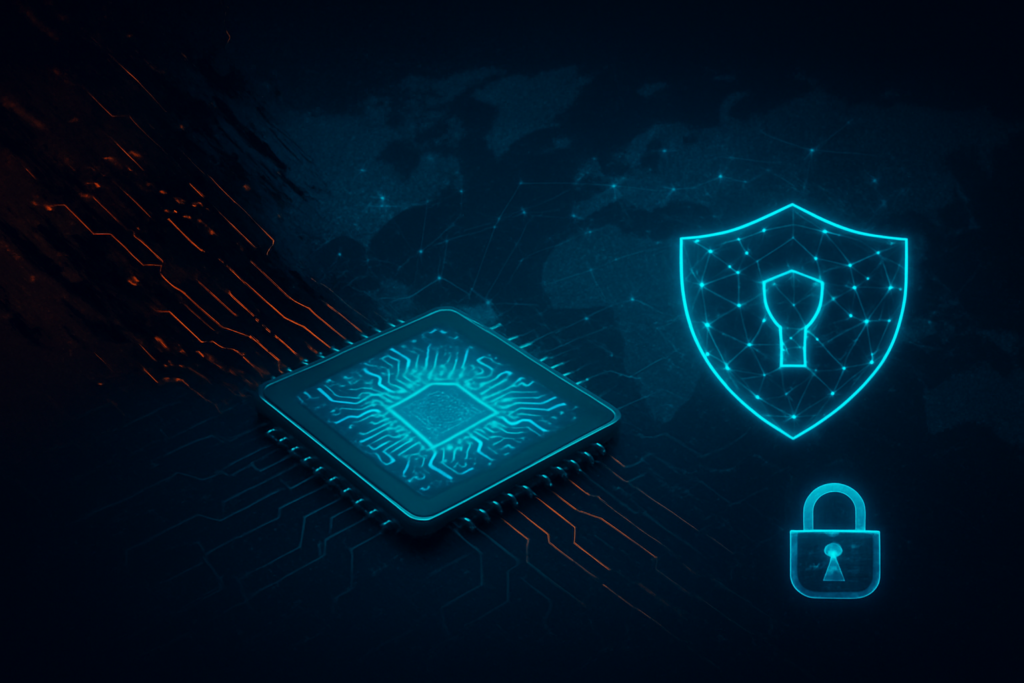
The foundational layer of modern technology, the semiconductor ecosystem, finds itself at the epicenter of an escalating cybersecurity crisis. This intricate global network, responsible for producing the chips that power everything from smartphones to critical infrastructure and advanced AI systems, is a prime target for sophisticated cybercriminals and state-sponsored actors. The integrity of its intellectual property (IP) and the resilience of its supply chain are under unprecedented threat, demanding robust, proactive measures. At the heart of this battle lies Artificial Intelligence (AI), a double-edged sword that simultaneously introduces novel vulnerabilities and offers cutting-edge defensive capabilities, reshaping the future of digital security.
Recent incidents, including significant ransomware attacks and alleged IP thefts, underscore the urgency of the situation. With the semiconductor market projected to reach over $800 billion by 2028, the stakes are immense, impacting economic stability, national security, and the very pace of technological innovation. As of December 12, 2025, the industry is in a critical phase, racing to implement advanced cybersecurity protocols while grappling with the complex implications of AI's pervasive influence.
Hardening the Core: Technical Frontiers in Semiconductor Cybersecurity
Cybersecurity in the semiconductor ecosystem is a distinct and rapidly evolving field, far removed from traditional software security. It necessitates embedding security deep within the silicon, from the earliest design phases through manufacturing and deployment—a "security by design" philosophy. This approach is a stark departure from historical practices where security was often an afterthought.
Specific technical measures now include Hardware Security Modules (HSMs) and Trusted Execution Environments (TEEs) like Intel SGX (NASDAQ: INTC) and AMD SEV (NASDAQ: AMD), which create isolated, secure zones within processors. Physically Unclonable Functions (PUFs) leverage unique manufacturing variations to create device-specific cryptographic keys, making each chip distinct and difficult to clone. Secure Boot Mechanisms ensure only authenticated firmware runs, while Formal Verification uses mathematical proofs to validate design security pre-fabrication.
The industry is also rallying around new standards, such as the SEMI E187 (Specification for Cybersecurity of Fab Equipment), SEMI E188 (Specification for Malware Free Equipment Integration), and the recently published SEMI E191 (Specification for SECS-II Protocol for Computing Device Cybersecurity Status Reporting) from October 2024. These standards mandate baseline cybersecurity requirements for fabrication equipment and data reporting, aiming to secure the entire manufacturing process. TSMC (NYSE: TSM), a leading foundry, has already integrated SEMI E187 into its procurement contracts, signaling a practical shift towards enforcing higher security baselines across its supply chain.
However, sophisticated vulnerabilities persist. Side-Channel Attacks (SCAs) exploit physical emanations like power consumption or electromagnetic radiation to extract cryptographic keys, a method discovered in 1996 that profoundly changed hardware security. Firmware Vulnerabilities, often stemming from insecure update processes or software bugs (e.g., CWE-347, CWE-345, CWE-287), remain a significant attack surface. Hardware Trojans (HTs), malicious modifications inserted during design or manufacturing, are exceptionally difficult to detect due to the complexity of integrated circuits.
The research community is highly engaged, with NIST data showing a more than 15-fold increase in hardware-related Common Vulnerabilities and Exposures (CVEs) in the last five years. Collaborative efforts, including the NIST Cybersecurity Framework 2.0 Semiconductor Manufacturing Profile (NIST IR 8546), are working to establish comprehensive, risk-based approaches to managing cyber risks.
AI's Dual Role: AI presents a paradox in this technical landscape. On one hand, AI-driven chip design and Electronic Design Automation (EDA) tools introduce new vulnerabilities like model extraction, inversion attacks, and adversarial machine learning (AML), where subtle data manipulations can lead to erroneous chip behaviors. AI can also be leveraged to design and embed sophisticated Hardware Trojans at the pre-design stage, making them nearly undetectable. On the other hand, AI is an indispensable defense mechanism. AI and Machine Learning (ML) algorithms offer real-time anomaly detection, processing vast amounts of data to identify and predict threats, including zero-day exploits, with unparalleled speed. ML techniques can also counter SCAs by analyzing microarchitectural features. AI-powered tools are enhancing automated security testing and verification, allowing for granular inspection of hardware and proactive vulnerability prediction, shifting security from a reactive to a proactive stance.
Corporate Battlegrounds: Impact on Tech Giants, AI Innovators, and Startups
The escalating cybersecurity concerns in the semiconductor ecosystem profoundly impact companies across the technological spectrum, reshaping competitive landscapes and strategic priorities.
Tech Giants, many of whom design their own custom chips or rely on leading foundries, are particularly exposed. Companies like Nvidia (NASDAQ: NVDA), a dominant force in GPU design crucial for AI, and Broadcom (NASDAQ: AVGO), a key supplier of custom AI accelerators, are central to the AI market and thus significant targets for IP theft. A single breach can lead to billions in losses and a severe erosion of competitive advantage, as demonstrated by the 2023 MKS Instruments ransomware breach that impacted Applied Materials (NASDAQ: AMAT), causing substantial financial losses and operational shutdowns. These giants must invest heavily in securing their extensive IP portfolios and complex global supply chains, often internalizing security expertise or acquiring specialized cybersecurity firms.
AI Companies are heavily reliant on advanced semiconductors for training and deploying their models. Any disruption in the supply chain directly stalls AI progress, leading to slower development cycles and constrained deployment of advanced applications. Their proprietary algorithms and sensitive code are prime targets for data leaks, and their AI models are vulnerable to adversarial attacks like data poisoning.
Startups in the AI space, while benefiting from powerful AI products and services from tech giants, face significant challenges. They often lack the extensive resources and dedicated cybersecurity teams of larger corporations, making them more vulnerable to IP theft and supply chain compromises. The cost of implementing advanced security protocols can be prohibitive, hindering their ability to innovate and compete effectively.
Companies poised to benefit are those that proactively embed security throughout their operations. Semiconductor manufacturers like TSMC and Intel (NASDAQ: INTC) are investing heavily in domestic production and enhanced security, bolstering supply chain resilience. Cybersecurity solution providers, particularly those leveraging AI and ML for threat detection and incident response, are becoming critical partners. The "AI in Cybersecurity" market is projected for rapid growth, benefiting companies like Cisco Systems (NASDAQ: CSCO), Dell (NYSE: DELL), Palo Alto Networks (NASDAQ: PANW), and HCL Technologies (NSE: HCLTECH). Electronic Design Automation (EDA) tool vendors like Cadence (NASDAQ: CDNS) and Synopsys (NASDAQ: SNPS) that integrate AI for security assurance, such as through acquisitions like Arteris Inc.'s (NASDAQ: AIP) acquisition of Cycuity, will also gain strategic advantages by offering inherently more secure design platforms.
The competitive landscape is being redefined. Control over the semiconductor supply chain is now a strategic asset, influencing geopolitical power. Companies demonstrating superior cybersecurity and supply chain resilience will differentiate themselves, attracting business from critical sectors like defense and automotive. Conversely, those with weak security postures risk losing market share, facing regulatory penalties, and suffering reputational damage. Strategic advantages will be gained through hardware-level security integration, adoption of zero-trust architectures, investment in AI for cybersecurity, robust supply chain risk management, and active participation in industry collaborations.
A New Geopolitical Chessboard: Wider Significance and Societal Stakes
The cybersecurity challenges within the semiconductor ecosystem, amplified by AI's dual nature, extend far beyond corporate balance sheets, profoundly impacting national security, economic stability, and societal well-being. This current juncture represents a strategic urgency comparable to previous technological milestones.
National Security is inextricably linked to semiconductor security. Chips are the backbone of modern military systems, critical infrastructure (from communication networks to power grids), and advanced defense technologies, including AI-driven weapons. A disruption in the supply of critical semiconductors or a compromise of their integrity could cripple a nation's defense capabilities and undermine its technological superiority. Geopolitical tensions and trade wars further highlight the urgent need for nations to diversify supply chains and strengthen domestic semiconductor production capabilities, as seen with multi-billion dollar initiatives like the U.S. CHIPS Act and the EU Chips Act.
Economic Stability is also at risk. The semiconductor industry drives global economic growth, supporting countless jobs and industries. Disruptions from cyberattacks or supply chain vulnerabilities can lead to massive financial losses, production halts across various sectors (as witnessed during the 2020-2021 global chip shortage), and eroded trust. The industry's projected growth to surpass US$1 trillion by 2030 underscores its critical economic importance, making its security a global economic imperative.
Societal Concerns stemming from AI's dual role are also significant. AI systems can inadvertently leak sensitive training data, and AI-powered tools can enable mass surveillance, raising privacy concerns. Biases in AI algorithms, learned from skewed data, can lead to discriminatory outcomes. Furthermore, generative AI facilitates the creation of deepfakes for scams and propaganda, and the spread of AI-generated misinformation ("hallucinations"), posing risks to public trust and societal cohesion. The increasing integration of AI into critical operational technology (OT) environments also introduces new vulnerabilities that could have real-world physical impacts.
This era mirrors past technological races, such as the development of early computing infrastructure or the internet's proliferation. Just as high-bandwidth memory (HBM) became pivotal for the explosion of large language models (LLMs) and the current "AI supercycle," the security of the underlying silicon is now recognized as foundational for the integrity and trustworthiness of all future AI-powered systems. The continuous innovation in semiconductor architecture, including GPUs, TPUs, and NPUs, is crucial for advancing AI capabilities, but only if these components are inherently secure.
The Horizon of Defense: Future Developments and Expert Predictions
The future of semiconductor cybersecurity is a dynamic interplay between advancing threats and innovative defenses, with AI at the forefront of both. Experts predict robust long-term growth for the semiconductor market, exceeding US$1 trillion by the end of the decade, largely driven by AI and IoT technologies. However, this growth is inextricably linked to managing escalating cybersecurity risks.
In the near term (next 1-3 years), the industry will intensify its focus on Zero Trust Architecture to minimize lateral movement in networks, enhanced supply chain risk management through thorough vendor assessments and secure procurement, and advanced threat detection using AI and ML. Proactive measures like employee training, regular audits, and secure hardware design with built-in features will become standard. Adherence to global regulatory frameworks like ISO/IEC 27001 and the EU's Cyber Resilience Act will also be crucial.
Looking to the long term (3+ years), we can expect the emergence of quantum cryptography to prepare for a post-quantum era, blockchain technology to enhance supply chain transparency and security, and fully AI-driven autonomous cybersecurity solutions capable of anticipating attacker moves and automating responses at machine speed. Agentic AI, capable of autonomous multi-step workflows, will likely be deployed for advanced threat hunting and vulnerability prediction. Further advancements in security access layers and future-proof cryptographic algorithms embedded directly into chip architecture are also anticipated.
Potential applications for robust semiconductor cybersecurity span numerous critical sectors: automotive (protecting autonomous vehicles), healthcare (securing medical devices), telecommunications (safeguarding 5G networks), consumer electronics, and critical infrastructure (protecting power grids and transportation from AI-physical reality convergence attacks). The core use cases will remain IP protection and ensuring supply chain integrity against malicious hardware or counterfeit products.
Significant challenges persist, including the inherent complexity of global supply chains, the persistent threat of IP theft, the prevalence of legacy systems, the rapidly evolving threat landscape, and a lack of consistent standardization. The high cost of implementing robust security and a persistent talent gap in cybersecurity professionals with semiconductor expertise also pose hurdles.
Experts predict a continuous surge in demand for AI-driven cybersecurity solutions, with AI spending alone forecast to hit $1.5 trillion in 2025. The manufacturing sector, including semiconductors, will remain a top target for cyberattacks, with ransomware and DDoS incidents expected to escalate. Innovations in semiconductor design will include on-chip optical communication, continued memory advancements (e.g., HBM, GDDR7), and backside power delivery.
AI's dual role will only intensify. As a solution, AI will provide enhanced threat detection, predictive analytics, automated security operations, and advanced hardware security testing. As a threat, AI will enable more sophisticated adversarial machine learning, AI-generated hardware Trojans, and autonomous cyber warfare, potentially leading to AI-versus-AI combat scenarios.
Fortifying the Future: A Comprehensive Wrap-up
The semiconductor ecosystem stands at a critical juncture, navigating an unprecedented wave of cybersecurity threats that target its invaluable intellectual property and complex global supply chain. This foundational industry, vital for every aspect of modern life, is facing a sophisticated and ever-evolving adversary. Artificial Intelligence, while a primary driver of demand for advanced chips, simultaneously presents itself as both the architect of new vulnerabilities and the most potent tool for defense.
Key takeaways underscore the industry's vulnerability as a high-value target for nation-state espionage and ransomware. The global and interconnected nature of the supply chain presents significant attack surfaces, susceptible to geopolitical tensions and malicious insertions. Crucially, AI's double-edged nature means it can be weaponized for advanced attacks, such as AI-generated hardware Trojans and adversarial machine learning, but it is also indispensable for real-time threat detection, predictive security, and automated design verification. The path forward demands unprecedented collaboration, shared security standards, and robust measures across the entire value chain.
This development marks a pivotal moment in AI history. The "AI supercycle" is fueling an insatiable demand for computational power, making the security of the underlying AI chips paramount for the integrity and trustworthiness of all AI-powered systems. The symbiotic relationship between AI advancements and semiconductor innovation means that securing the silicon is synonymous with securing the future of AI itself.
In the long term, the fusion of AI and semiconductor innovation will be essential for fortifying digital infrastructures worldwide. We can anticipate a continuous loop where more secure, AI-designed chips enable more robust AI-powered cybersecurity, leading to a more resilient digital landscape. However, this will be an ongoing "AI arms race," requiring sustained investment in advanced security solutions, cross-disciplinary expertise, and international collaboration to stay ahead of malicious actors. The drive for domestic manufacturing and diversification of supply chains, spurred by both cybersecurity and geopolitical concerns, will fundamentally reshape the global semiconductor landscape, prioritizing security alongside efficiency.
What to watch for in the coming weeks and months: Expect continued geopolitical activity and targeted attacks on key semiconductor regions, particularly those aimed at IP theft. Monitor the evolution of AI-powered cyberattacks, especially those involving subtle manipulation of chip designs or firmware. Look for further progress in establishing common cybersecurity standards and collaborative initiatives within the semiconductor industry, as evidenced by forums like SEMICON Korea 2026. Keep an eye on the deployment of more advanced AI and machine learning solutions for real-time threat detection and automated incident response. Finally, observe governmental policies and private sector investments aimed at strengthening domestic semiconductor manufacturing and supply chain security, as these will heavily influence the industry's future direction and resilience.
This content is intended for informational purposes only and represents analysis of current AI developments.
TokenRing AI delivers enterprise-grade solutions for multi-agent AI workflow orchestration, AI-powered development tools, and seamless remote collaboration platforms.
For more information, visit https://www.tokenring.ai/.