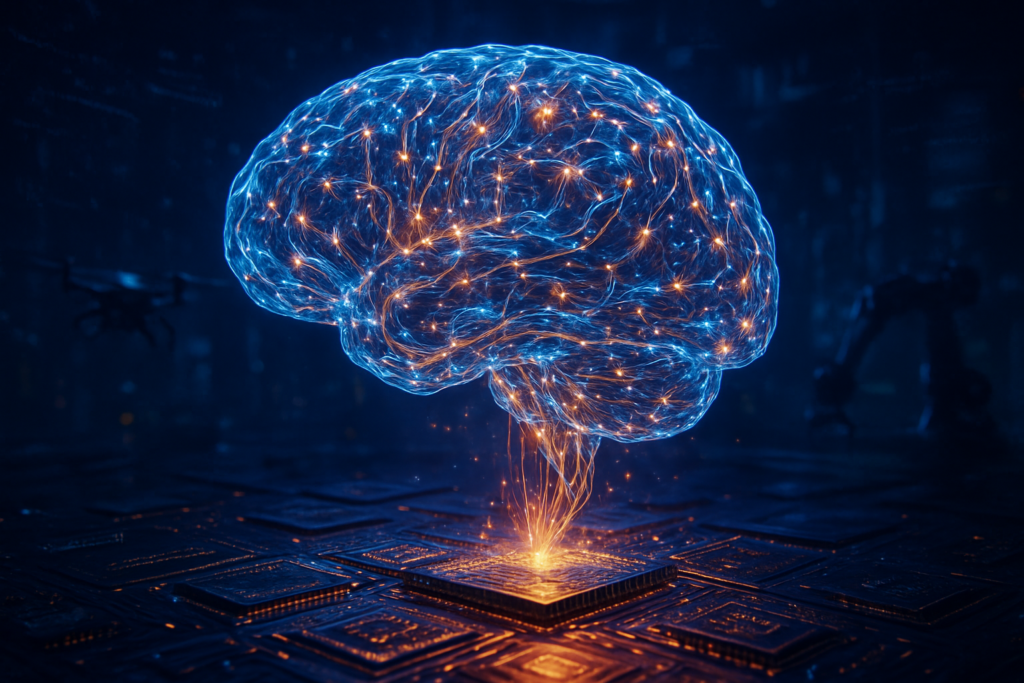
As traditional silicon architectures approach a "sustainability wall" of power consumption and efficiency, the race to replicate the biological efficiency of the human brain has moved from the laboratory to the professional classroom. In a series of landmark announcements this January, semiconductor giant Intel (NASDAQ: INTC) and the innovative Dutch startup Innatera have launched specialized neuromorphic engineering programs designed to cultivate a "neuromorphic-ready" talent pool. These initiatives are centered on teaching hardware designers how to build "silicon brains"—complex hardware systems that abandon traditional linear processing in favor of the event-driven, spike-based architectures found in nature.
This shift represents a pivotal moment for the artificial intelligence industry. As the demand for Edge AI—AI that lives on devices rather than in the cloud—skyrockets, the power constraints of standard processors have become a bottleneck. By training a new generation of engineers on systems like Intel’s massive Hala Point and Innatera’s ultra-low-power microcontrollers, the industry is signaling that neuromorphic computing is no longer a research experiment, but the future foundation of commercial, "always-on" intelligence.
From 1.15 Billion Neurons to the Edge: The Technical Frontier
At the heart of this educational push is the sheer scale and efficiency of the latest hardware. Intel’s Hala Point, currently the world’s largest neuromorphic system, boasts a staggering 1.15 billion artificial neurons and 128 billion synapses—roughly equivalent to the neuronal capacity of an owl’s brain. Built on 1,152 Loihi 2 processors, Hala Point can perform up to 20 quadrillion operations per second (20 petaops) with an efficiency of 15 trillion 8-bit operations per second per watt (15 TOPS/W). This is significantly more efficient than the most advanced GPUs when handling sparse, event-driven data typical of real-world sensing.
Parallel to Intel’s large-scale systems, Innatera has officially moved its Pulsar neuromorphic microcontroller into the production phase. Unlike the research-heavy prototypes of the past, Pulsar is a production-ready "mixed-signal" chip that combines analog and digital Spiking Neural Network (SNN) engines with a traditional RISC-V CPU. This hybrid architecture allows the chip to perform continuous monitoring of audio, touch, or vital signs at sub-milliwatt power levels—thousands of times more efficient than conventional microcontrollers. The new training programs launched by Innatera, in partnership with organizations like VLSI Expert, specifically target the integration of these Pulsar chips into consumer devices, teaching engineers how to program using the Talamo SDK and bridge the gap between Python-based AI and spike-based hardware.
The technical departure from the "von Neumann bottleneck"—where the separation of memory and processing causes massive energy waste—is the core curriculum of these new programs. By utilizing "Compute-in-Memory" and temporal sparsity, these silicon brains only process data when an "event" (such as a sound or a movement) occurs. This mimics the human brain’s ability to remain largely idle until stimulated, providing a stark contrast to the continuous polling cycles of traditional chips. Industry experts have noted that the release of Intel’s Loihi 3 in early January 2026 has further accelerated this transition, offering 8 million neurons per chip on a 4nm process, specifically designed for easier integration into mainstream hardware workflows.
Market Disruptors and the "Inference-per-Watt" War
The launch of these engineering programs has sent ripples through the semiconductor market, positioning Intel (NASDAQ: INTC) and focused startups as formidable challengers to the "brute-force" dominance of NVIDIA (NASDAQ: NVDA). While NVIDIA remains the undisputed leader in high-performance cloud training and heavy Edge AI through its Jetson platforms, its chips often require 10 to 60 watts of power. In contrast, the neuromorphic solutions being taught in these new curricula operate in the milliwatt to microwatt range, making them the only viable choice for the "Always-On" sensor market.
Strategic analysts suggest that 2026 is the "commercial verdict year" for this technology. As the total AI processor market approaches $500 billion, a significant portion is shifting toward "ambient intelligence"—devices that sense and react without being plugged into a wall. Startups like Innatera, alongside competitors such as SynSense and BrainChip, are rapidly securing partnerships with Original Design Manufacturers (ODMs) to place neuromorphic "brains" into hearables, wearables, and smart home sensors. By creating an educated workforce capable of designing for these chips, Intel and Innatera are effectively building a proprietary ecosystem that could lock in future hardware standards.
This movement also poses a strategic challenge to ARM (NASDAQ: ARM). While ARM has responded with modular chiplet designs and specialized neural accelerators, their architecture is still largely rooted in traditional processing methods. Neuromorphic designs bypass the "AI Memory Tax"—the high cost and energy required to move data between memory and the processor—which is a fundamental hurdle for ARM-based mobile chips. If the new wave of "neuromorphic-ready" engineers successfully brings these power-efficient designs to the mass market, the very definition of a "mobile processor" could be rewritten by the end of the decade.
The Sustainability Wall and the End of Brute-Force AI
The broader significance of the Intel and Innatera programs lies in the growing realization that the current trajectory of AI development is environmentally and physically unsustainable. The "Sustainability Wall"—a term coined to describe the point where the energy costs of training and running Large Language Models (LLMs) exceed the available power grid capacity—has forced a pivot toward more efficient architectures. Neuromorphic computing is the primary exit ramp from this crisis.
Comparisons to previous AI milestones are striking. Where the "Deep Learning Revolution" of the 2010s was driven by the availability of massive data and GPU power, the "Neuromorphic Era" of the mid-2020s is being driven by the need for efficiency and real-time interaction. Projects like the ANYmal D Neuro—a quadruped robot that uses neuromorphic "brains" to achieve over 70 hours of battery life—demonstrate the real-world impact of this shift. Previously, such robots were limited to less than 10 hours of operation when using traditional GPU-based systems.
However, the transition is not without its concerns. The primary hurdle remains the "Software Convergence" problem. Most AI researchers are trained in traditional neural networks (like CNNs or Transformers) using frameworks like PyTorch or TensorFlow. Translating these to Spiking Neural Networks (SNNs) requires a fundamentally different way of thinking about time and data. This "talent gap" is exactly what the Intel and Innatera programs are designed to close. By embedding this knowledge in universities and vocational training centers through initiatives like Intel’s "AI Ready School Initiative," the industry is attempting to standardize a difficult and currently fragmented software landscape.
Future Horizons: From Smart Cities to Personal Robotics
Looking ahead to the remainder of 2026 and into 2027, the near-term expectation is the arrival of the first truly "neuromorphic-inside" consumer products. Experts predict that smart city infrastructure—such as traffic sensors that can process visual data locally for years on a single battery—will be among the first large-scale applications. Furthermore, the integration of Loihi 3-based systems into commercial drones could allow for autonomous navigation in complex environments with a fraction of the weight and power requirements of current flight controllers.
The long-term vision of these programs is to enable "Physical AI"—intelligence that is seamlessly integrated into the physical world. This includes medical implants that monitor cardiac health in real-time, prosthetic limbs that react with the speed of biological reflexes, and industrial robots that can learn new tasks on the factory floor without needing to send data to the cloud. The challenge remains scaling the manufacturing process and ensuring that the software tools (like Intel's Lava framework) become as user-friendly as the tools used by today’s web developers.
A New Era of Computing History
The launch of neuromorphic engineering programs by Intel and Innatera marks a definitive transition in computing history. We are witnessing the end of the era where "more power" was the only answer to "more intelligence." By prioritizing the training of hardware engineers in the art of the "silicon brain," the industry is preparing for a future where AI is pervasive, invisible, and energy-efficient.
The key takeaways from this month's developments are clear: the hardware is ready, the efficiency gains are undeniable, and the focus has now shifted to the human element. In the coming weeks, watch for further partnership announcements between neuromorphic startups and traditional electronics manufacturers, as the first graduates of these programs begin to apply their "brain-inspired" skills to the next generation of consumer technology. The "Silicon Brain" has left the research lab, and it is ready to go to work.
This content is intended for informational purposes only and represents analysis of current AI developments.
TokenRing AI delivers enterprise-grade solutions for multi-agent AI workflow orchestration, AI-powered development tools, and seamless remote collaboration platforms.
For more information, visit https://www.tokenring.ai/.