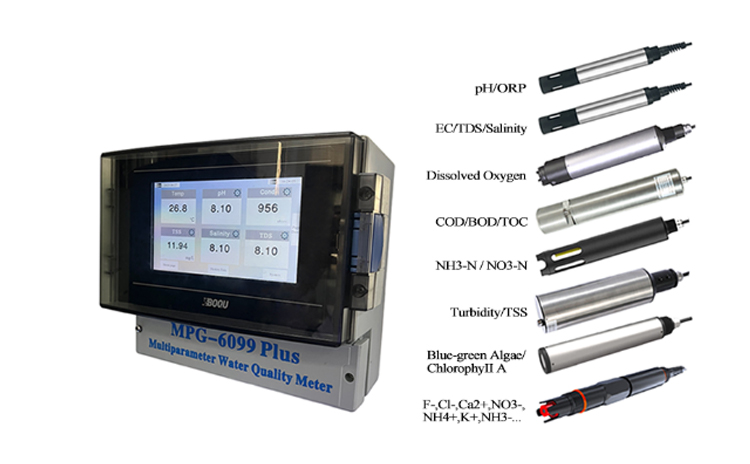
Choosing the right multiparameter water quality sensor requires careful evaluation of several critical factors to ensure it meets your specific testing needs and environmental conditions. Here's a detailed breakdown of the key considerations:
1. Parameter Coverage: aligning with your testing objectives
Essential parameters: Confirm the sensor includes all parameters you need to measure, such as:
•Basic water quality indicators (pH, dissolved oxygen, temperature,Turbidity and conductivity)
•Specialized parameters (if required) like heavy metals, chemical oxygen demand (COD), or biological oxygen demand (BOD)
•Avoid unnecessary features: Don't pay for parameters you won't use
•Don't overlook critical measurements: Ensure you're not missing key parameters for your specific application
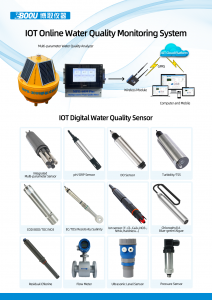
2. Environmental Adaptability: ensuring the sensor can withstand your water conditions
•Temperature extremes: Check if the sensor operates effectively in high or low-temperature environments
•Salinity resistance: For marine applications, ensure the sensor can handle high salt concentrations
•Corrosion resistance: Industrial wastewater applications require sensors with anti-corrosion materials
•Sediment tolerance: If working in turbid or sediment-rich waters, verify the sensor's ability to function properly
3. Accuracy & Stability: guaranteeing reliable measurements
•Calibration requirements: Consider how often the sensor needs calibration - less frequent calibration means more convenience
•Long-term data stability: For continuous monitoring applications (like drinking water treatment plants), ensure the sensor maintains accuracy over time
•Drift characteristics: Evaluate how measurements may shift over extended periods
4. Deployment & Maintenance: matching sensor design to your application
•Deployment options:
Portable sensors for field spot checks
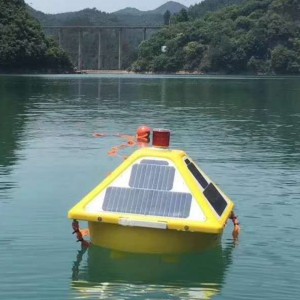
Submersible or fixed sensors for real-time online monitoring
•Maintenance considerations:
Ease of cleaning the sensor components
Simplicity of probe replacement
Overall durability and expected lifespan
5. Data Compatibility: integrating with your existing systems
•Communication protocols: Ensure the sensor can transmit data to your system via:
•Bluetooth for short-range wireless
•4G/5G for remote monitoring
•Modbus for industrial applications
•Data output formats: Verify compatibility with your recording and analysis software
•Integration capabilities: Check if the sensor can be easily incorporated into your existing monitoring infrastructure
Media Contact
Company Name: Shanghai BOQU Instrument Co., Ltd.
Email: Send Email
Country: China
Website: https://www.boquinstruments.com/