HAINAN, CN / ACCESS Newswire / December 16, 2025 / At the 6th Symposium on Global Maritime Cooperation and Ocean Governance, speakers offered diverse perspectives on the issue of climate change, marine ecological conservation, security of sea lanes and submarine infrastructure, and global ocean governance.
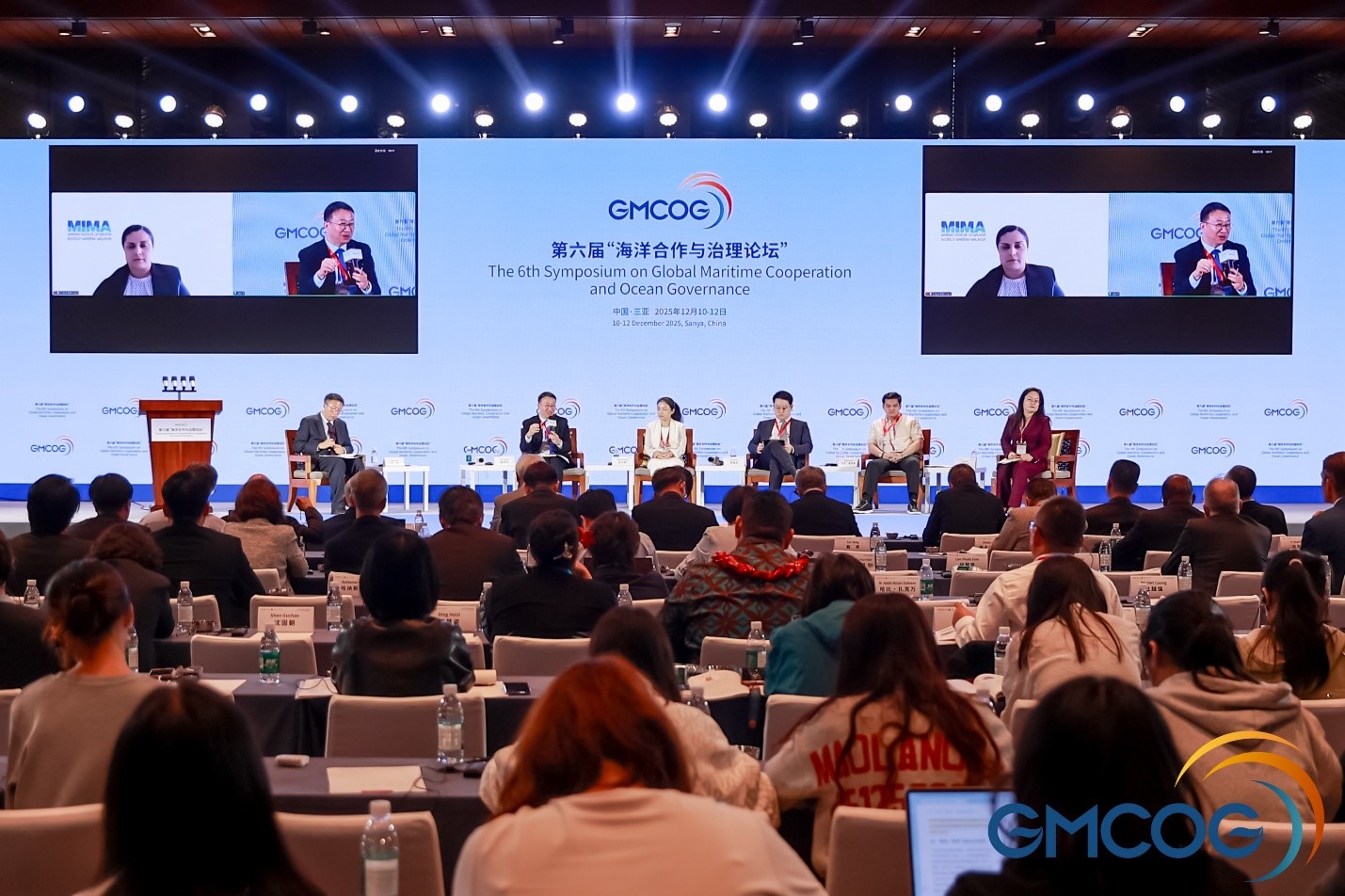
On countering the negative effects of climate change and advancing marine environmental protection, Gao Shu, Professor at Nanjing University, suggested that China should use ecological restoration methods to enhance coastal protection capabilities and construct new types of seawalls. Naporn Popattanachai, Lecturer at the University of Galway, pointed out that in the South China Sea, ocean governance and marine resource management are extremely important, but at the same time, the arrangements for them are progressing slowly. He advises regional states to clarify their demands, and to work together to build a solid foundation for cooperation.
On the security of sealanes and submarine infrastructure, Harrison Pretat from CSIS pointed out that due to the difficulty in ascertaining instructions from states, catching the vessel, and weakness of vessel. He predicts that the international society will continue to see tensions in submarine cables for the years to come.
Yan Yan from NISCSS pointed out, the disputes in the South China Sea have not actually affected freedom of navigation and maritime security in the region. Local challenges to navigation, such as piracy and armed robbery in the South China Sea, are also manageable. The littoral states of the South China Sea have made many efforts to protect freedom of navigation and maritime security.
M. Habib Abiyan Dzakwan from CSIS, Indonesia, stressed the importance of submarine cables to regional development. Sea lanes and submarine cables are two interconnected issues - Submarine cables cannot be deployed, repaired, or landed, if the sea lanes are not safe.
Panelists concluded the Symposium with a heated discussion leading to the envision of future pathways for global ocean governance. Zhang Yilun, research associate from ICAS, revealed that China and ASEAN jointly promote multilateralism and, despite external pressures, maintain close cooperation and stable maritime activities that form the foundation for further maritime governance.
Cheryl Rita Kaur, from the Center for Straits of Malacca at Maritime Institute of Malaysia, identified the challenges to global ocean governance in the Strait of Malacca, and suggested that its narrow waterway-as well as future cooperation with user states-will require greater focus on balancing this specific corridor and ensuring sustainable development.
While the Symposium came to an end with the closing remark delivered by Dr. Wu Shicun, global maritime will continue to thrive along with the intellectual and practical results deriving from this fruitful gathering of marine practitioners, private entities, and learned experts around the world.
Company: AOSS Media
Contact Person: Jason
Email: yanzhi.diao@aoss.tv
Website: www.aoss.tv
SOURCE: AOSS Media
View the original press release on ACCESS Newswire