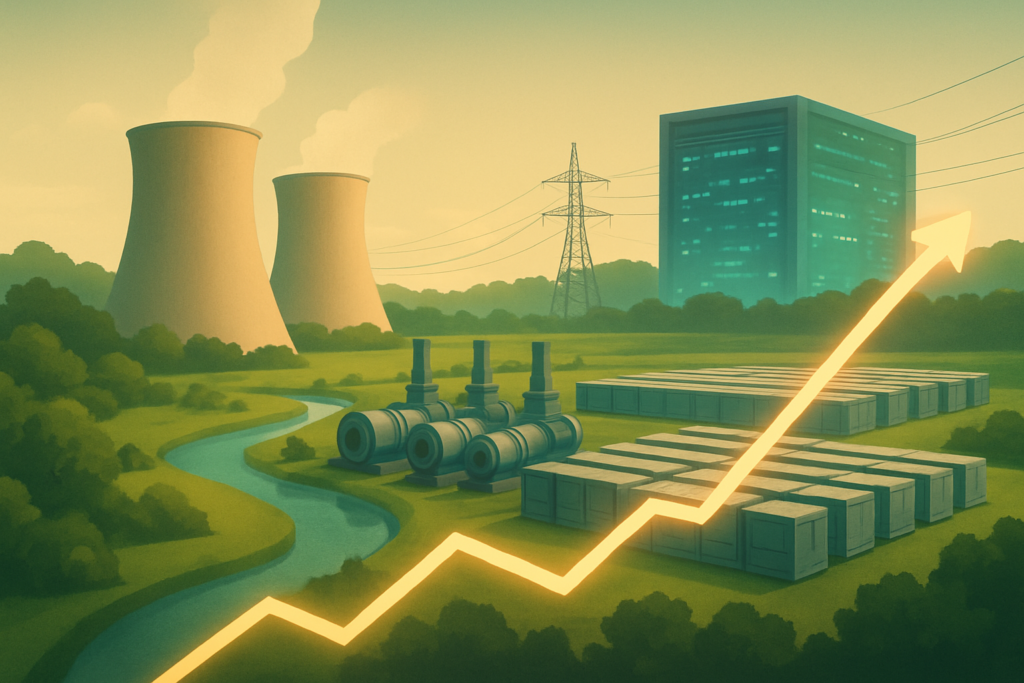
As of January 22, 2026, the intersection of artificial intelligence and energy infrastructure has reached a fever pitch, with Vistra Corp. (NYSE: VST) standing at the very center of the storm. Once viewed as a legacy power producer emerging from a complex bankruptcy, Vistra has reinvented itself as a "Utility 2.0" powerhouse. Today, the company is not just an electricity provider but a critical infrastructure partner for the world’s largest technology firms. With the recent landmark deal to supply over 2,600 megawatts (MW) of nuclear power to Meta Platforms, Vistra has solidified its position as a primary beneficiary of the AI-driven energy boom. However, with this rapid ascent comes intensified regulatory scrutiny and the complexities of managing a massive, aging nuclear fleet in a shifting policy landscape.
Historical Background
Vistra’s story is a remarkable saga of corporate rebirth. The company emerged in October 2016 from the remnants of Energy Future Holdings (EFH), which was the byproduct of a $45 billion leveraged buyout of TXU Corp in 2007—the largest utility bankruptcy in U.S. history. Following a massive restructuring that separated regulated utility assets from competitive generation, Vistra launched as an independent power producer (IPP).
Under aggressive leadership, the company pursued a series of transformative mergers. In 2018, it acquired Dynegy, doubling its size and expanding into the Midwest and Northeast markets. The most pivotal shift occurred in 2024 with the $3.4 billion acquisition of Energy Harbor, which brought a massive 4,000 MW nuclear fleet into the fold. Most recently, in 2025, Vistra finalized a $4 billion acquisition of Cogentrix, adding 5,500 MW of modern natural gas assets. These moves have transitioned Vistra from a Texas-centric coal generator to a diversified, national clean-energy leader.
Business Model
Vistra operates a highly integrated business model that balances power generation (under its Luminant brand) with retail electricity sales (through brands like TXU Energy, Dynegy, and Ambit).
- Generation: Vistra owns and operates approximately 41 GW of capacity. This includes "Vistra Zero" (nuclear, solar, and battery storage) and "Vistra Tradition" (primarily natural gas, with a shrinking coal footprint).
- Retail: With approximately 5 million customers, Vistra’s retail arm provides a crucial "natural hedge." When wholesale electricity prices are low, retail margins typically expand; when prices spike, Vistra’s own generation protects it from having to buy expensive power on the open market.
- Integrated Strategy: This "generation-to-retail" integration allows Vistra to capture the full value chain of an electron, providing more stable cash flows than pure-play generation peers.
Stock Performance Overview
Over the last several years, Vistra has transitioned from a "value" stock to a "growth" darling.
- 1-Year Performance: VST has been one of the top performers in the S&P 500, with shares trading near $160.02 as of today. The stock saw a 10% surge earlier this month following the Meta deal, though it has experienced volatility this week due to regulatory news in the PJM market.
- 5-Year Performance: Investors who held VST through the post-bankruptcy years have seen multi-bagger returns, as the market began to price in the "nuclear scarcity" value driven by data center demand.
- 10-Year Performance: Since its 2016 listing, the stock has significantly outperformed the broader Utilities sector (XLU), reflecting its unique position as an unregulated IPP with high-growth catalysts.
Financial Performance
Vistra’s financials reflect a high-margin business benefiting from rising power prices and strategic acquisitions.
- Earnings: For the 2026 fiscal year, Vistra has initiated EBITDA guidance in the range of $6.8 billion to $7.6 billion, a significant jump from 2025 levels.
- Cash Flow: The company is a "cash-flow machine," projecting Free Cash Flow before Growth (FCFbG) of $3.9 billion to $4.7 billion for 2026.
- Valuation: The stock currently carries a P/E ratio of roughly 56.5x. While high for a utility, analysts argue this reflects "infrastructure-like" long-term contracts with tech giants rather than traditional utility earnings.
- Shareholder Returns: Since 2021, Vistra has returned over $6.7 billion to shareholders, primarily through aggressive buybacks that have retired nearly 30% of the company's outstanding shares.
Leadership and Management
CEO Jim Burke, who took the helm in 2022, is widely credited with Vistra’s "AI-Power" pivot. Burke’s strategy focuses on "disciplined capital allocation"—balancing strategic acquisitions (like Energy Harbor and Cogentrix) with a steadfast commitment to share repurchases. Under his tenure, the management team has transitioned the company’s narrative from a "dirty" coal generator to a clean-energy enabler of the digital economy. The board’s governance is generally viewed as shareholder-friendly, prioritizing total shareholder return (TSR) over empire-building.
Products, Services, and Innovations
Vistra’s competitive edge lies in its diverse and carbon-free generation portfolio:
- Nuclear Power: The "crown jewel" is the four-plant nuclear fleet, including Comanche Peak in Texas and the Energy Harbor assets (Beaver Valley, Davis-Besse, Perry) in the PJM market. Nuclear is the only carbon-free, 24/7 "baseload" power capable of meeting the high-uptime requirements of AI data centers.
- Nuclear Uprates: In a move hailed as an engineering and strategic masterstroke, Vistra is currently executing the largest corporate-supported nuclear uprate program in history, adding 433 MW of "new" capacity to existing reactors to fulfill the Meta contract.
- Battery Storage: Vistra owns the Moss Landing facility in California, one of the world's largest battery systems. Although currently undergoing cleanup and restoration following a fire in early 2025, it represents Vistra’s commitment to balancing renewable intermittency.
Competitive Landscape
Vistra operates in a highly competitive IPP market:
- Constellation Energy (NASDAQ: CEG): Vistra’s primary rival. While CEG has a larger nuclear fleet and pioneered the "Big Tech" PPA with the Microsoft/Three Mile Island deal, Vistra is often preferred by investors for its integrated retail model.
- NRG Energy (NYSE: NRG): A significant competitor in the retail space, but NRG lacks the massive nuclear generation scale that has become the primary valuation driver for Vistra.
- Public Service Enterprise Group (NYSE: PEG): A major player in the PJM nuclear market, but with a more concentrated geographic footprint and a regulated utility component that limits some of the "pure-play" IPP upside.
Industry and Market Trends
The energy sector is currently defined by three major trends:
- The AI Power Crunch: Data centers are projected to consume a significantly larger share of U.S. electricity by 2030. Tech companies are willing to pay a premium for "firm" (24/7) carbon-free power.
- Nuclear Revival: Nuclear energy has undergone a total reputation rehabilitation, moving from a "stranded asset" to the most valuable resource on the grid.
- Electrification: The broader push toward electric vehicles and home heat pumps continues to put upward pressure on total electricity demand, even as traditional coal plants are retired.
Risks and Challenges
Despite its strengths, Vistra faces formidable headwinds:
- Operational Risk: Nuclear plants are aging assets. Unscheduled outages or safety incidents could be catastrophic for both the grid and the company's stock price.
- Moss Landing Setback: The 2025 fire at Moss Landing highlighted the technical risks associated with large-scale battery storage. Phase 2 demolition is still underway, and full restoration is not expected until late 2026.
- Market Volatility: As an IPP, Vistra is exposed to wholesale price swings. While its retail segment and hedges mitigate this, extreme weather events (like Winter Storm Uri) can still create liquidity pressures.
Opportunities and Catalysts
- Further Tech PPAs: With data center developers scouring the country for power, Vistra’s remaining un-contracted nuclear and gas capacity could be sold at record premiums.
- Nuclear Expansion: Beyond uprates, there is growing talk of Vistra exploring Small Modular Reactors (SMRs) or even re-starting retired units at existing sites, following the trend set by peers.
- M&A Potential: As the industry consolidates, Vistra remains a disciplined acquirer of gas assets that can provide dispatchable backup for renewable-heavy grids.
Investor Sentiment and Analyst Coverage
Wall Street is overwhelmingly bullish on Vistra, with most analysts maintaining "Buy" or "Overweight" ratings. The sentiment shift from "Utility" to "AI Infrastructure" has attracted a new class of growth-oriented hedge funds and institutional investors. However, some retail chatter has turned cautious following recent regulatory headlines, with some questioning if the "AI trade" has become overcrowded at these valuations. Institutional ownership remains high, with major players like Vanguard and BlackRock holding significant stakes.
Regulatory, Policy, and Geopolitical Factors
The regulatory environment is the most significant "wildcard" for Vistra in 2026:
- The "OBBBA" Impact: The One Big Beautiful Bill Act (OBBBA) of July 2025 preserved nuclear tax credits but enforced strict rules against foreign-sourced components. This has hindered competitors' new solar/storage builds, making Vistra’s existing domestic fleet more valuable.
- The PJM Intervention: Just last week (January 16, 2026), the White House and several governors urged the PJM grid operator to hold emergency auctions to combat "electric rate shock." A proposed "Bring Your Own Generation" (BYOG) mandate could force tech companies to fund new power plants rather than using existing capacity, potentially cooling the market for co-location deals.
Conclusion
Vistra Corp. has successfully navigated one of the most impressive transformations in modern corporate history. By pivoting toward a "nuclear-plus-retail" strategy, it has positioned itself as the indispensable power provider for the AI era. The recent Meta deal and the company's robust cash-flow profile provide a strong foundation for the future.
However, the "golden era" of unregulated nuclear power is facing its first real test. As the public and regulators push back against rising energy costs driven by data center demand, Vistra must prove it can be both a partner to Big Tech and a reliable, affordable provider for its 5 million retail customers. For investors, Vistra offers a high-octane play on the AI revolution, but one that requires a close watch on the shifting political winds in Washington and the PJM interconnection.
This content is intended for informational purposes only and is not financial advice.